| Read in browser | ||||||||||||||
 Hello and welcome to Bloomberg's weekly design digest. I'm Kriston Capps, staff writer and editor for Bloomberg CityLab and your guide to the world of architecture and the people who build things. This week Chilean architect Smiljan Radić won the Pritzker Architecture Prize, the field's highest honor. The prize was delayed for weeks following Thomas Pritzker's exit as executive chairman of Hyatt Hotels Corp. in February over his relationship with Jeffrey Epstein. Read on for our coverage of the accolade and the controversy. But first: Read this dispatch from Bloomberg CityLab contributor Feargus O'Sullivan on the blaze that consumed Glasgow's Central Station building this week. And sign up to keep up: Subscribe to get the Design Edition newsletter every Sunday.  Firefighters battle a blaze on March 8 at Forsyth House, a landmarked domed building adjacent to Central Station. Photographer: Jeff J. Mitchell/Getty Images My heart broke when I heard that Glasgow's splendid Central Station had gone up in flames last Sunday. It wasn't just the fact that the now-damaged building — a grand Renaissance Revival structure built in yellow sandstone between 1883 and 1905 — is one of the UK's most likable bits of railway architecture. It wasn't even the fact that the fire isn't the first to damage a major Glasgow landmark — the internationally renowned (and still-not-reconstructed) Art Nouveau building that housed the Glasgow School of Art was reduced to a shell by fire in 2018. It was also a small personal twist. I stayed in the station's hotel just last year, while researching how Glasgow's beleaguered city center was finally turning a corner to better times. 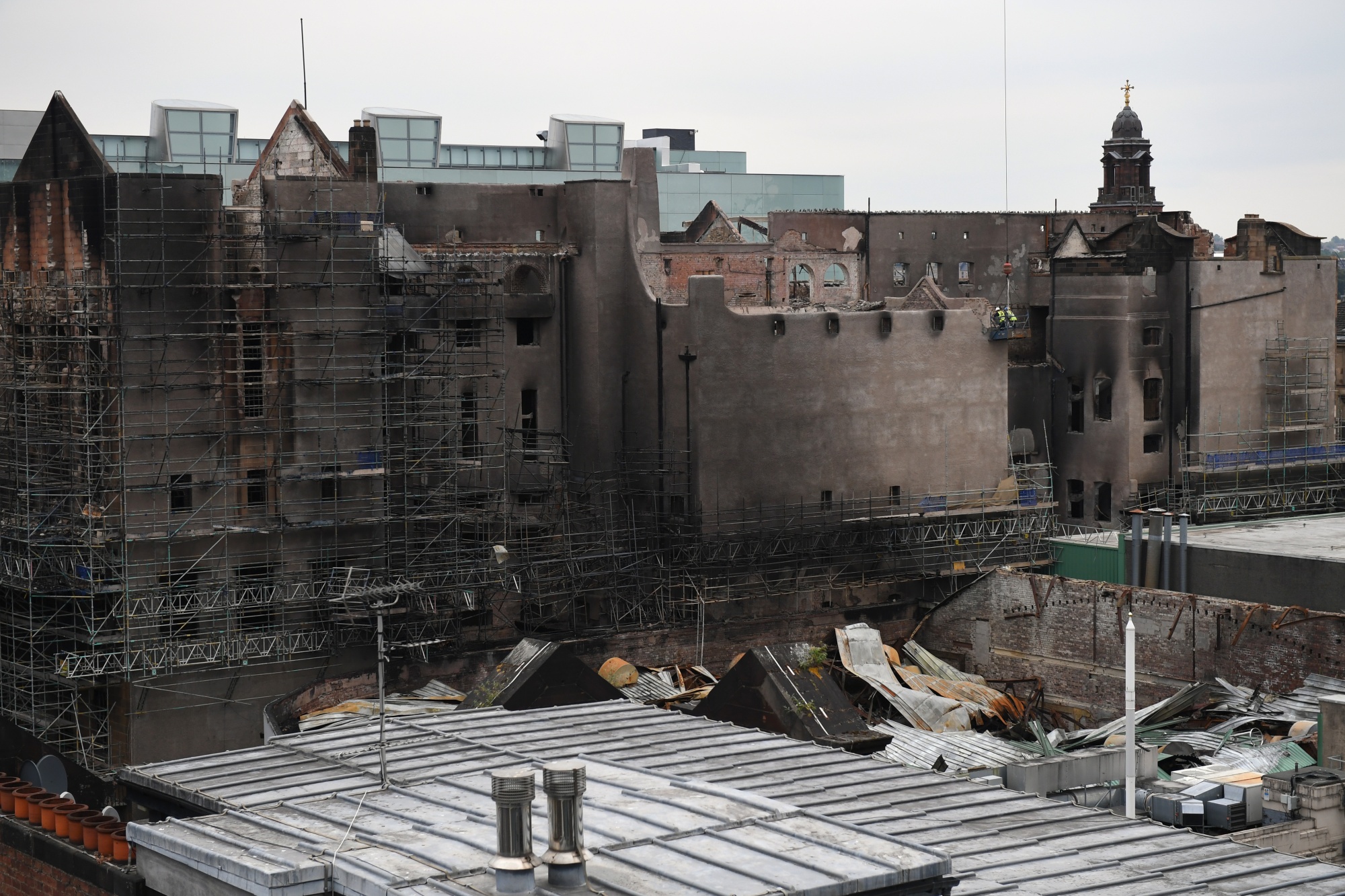 The Glasgow School of Art, a building designed by Charles Rennie Mackintosh in the 1890s, pictured in 2018 after a blaze that destroyed the building. Photographer: Jeff J. Mitchell/Getty Images My belief in the great value of Glasgow's architecture is not local partisanship: I grew up far away in London and bristle involuntarily when people mistake my Irish name for Scottish. Indeed, one of Glasgow's distinctive quirks is that it can feel like somewhere very far from Scotland: the eastern seaboard of the United States. The city's central US-style grid plan — rare in Scotland and all-but-unheard of south of the border — is packed with handsome buildings much like New York brownstones. Further out, its Victorian tenements wouldn't look out of place in Boston's South End or Brooklyn's Park Slope. This resemblance is not coincidental: The beloved turrets of America's Victorian rowhouses are derived more from Scottish than English models. 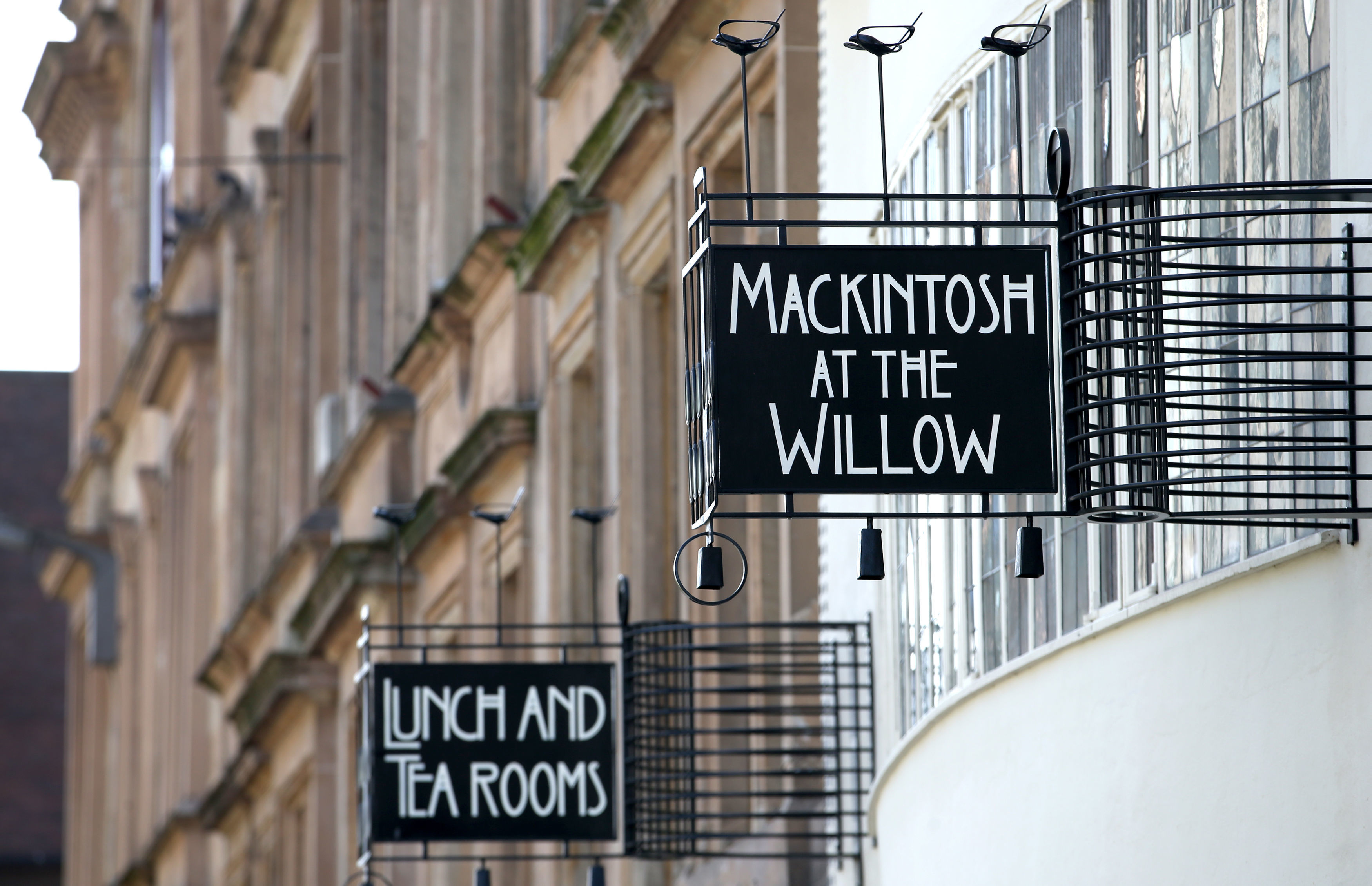 Art Nouveau tea rooms designed by Charles Rennie Mackintosh, blocks from both Central Station and the School of Art. Photographer: Jane Barlow/PA Images/Getty Images 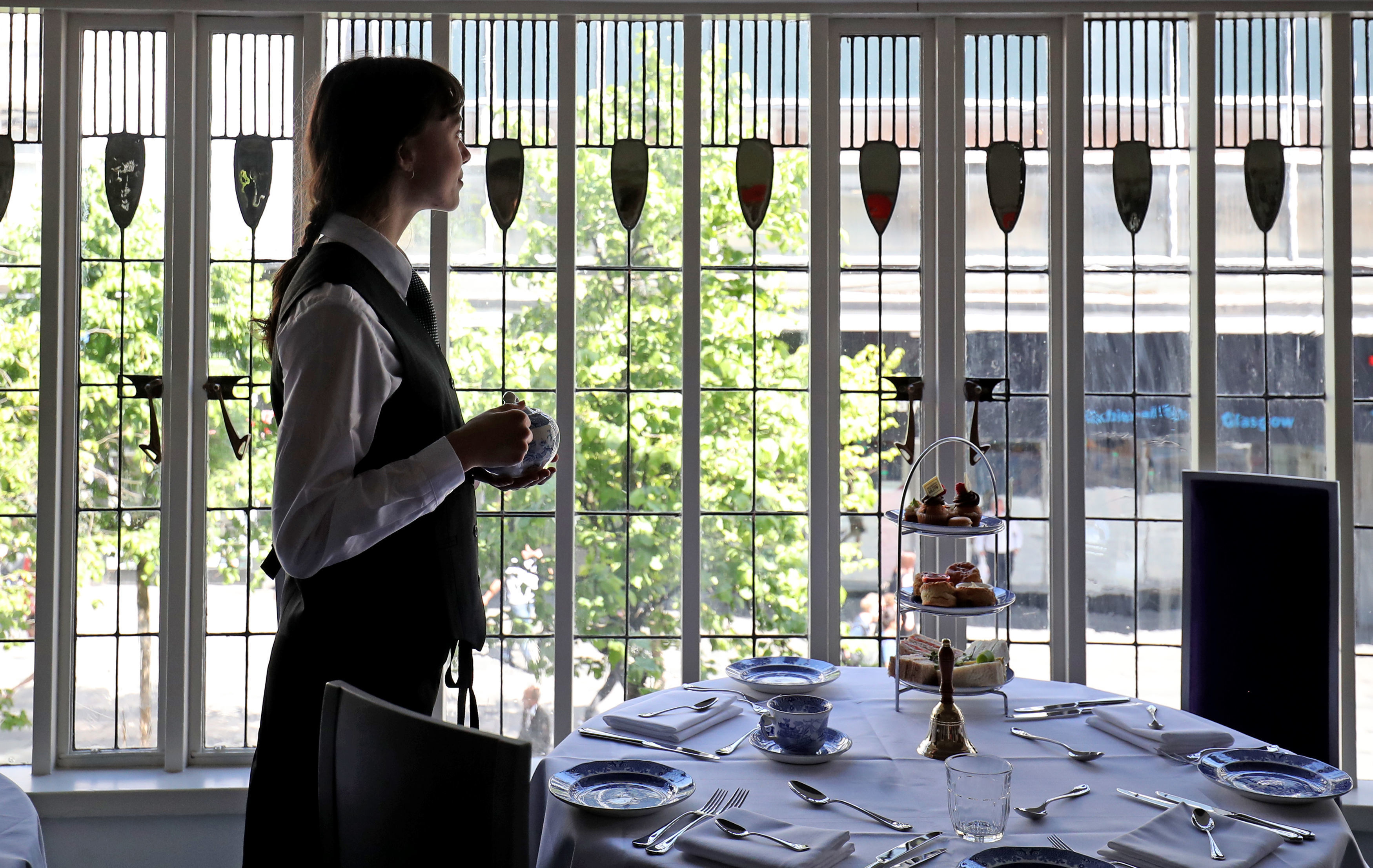 A teasmith at Mackintosh at the Willow following an extensive restoration project. Photographer: Jane Barlow/PA Images/Getty Images Add to this Glasgow's rich seam of grand neoclassical and Gothic Revival architecture — plus its clutch of buildings by Art Nouveau pioneer Charles Rennie Mackintosh — and it's easy to see why the city's built heritage is so valuable. Its fragile state is thus doubly shocking. Despite the Glasgow region's economy being moderately buoyant, buildings in the city core remain in poor condition. Protected by historical listing, they have often been This poor condition creates a vicious cycle. It's possible that Forsyth House, the handsome domed building next to the central station where Sunday's blaze started, would not have burned if it — and central Glasgow in general — had been in better condition. 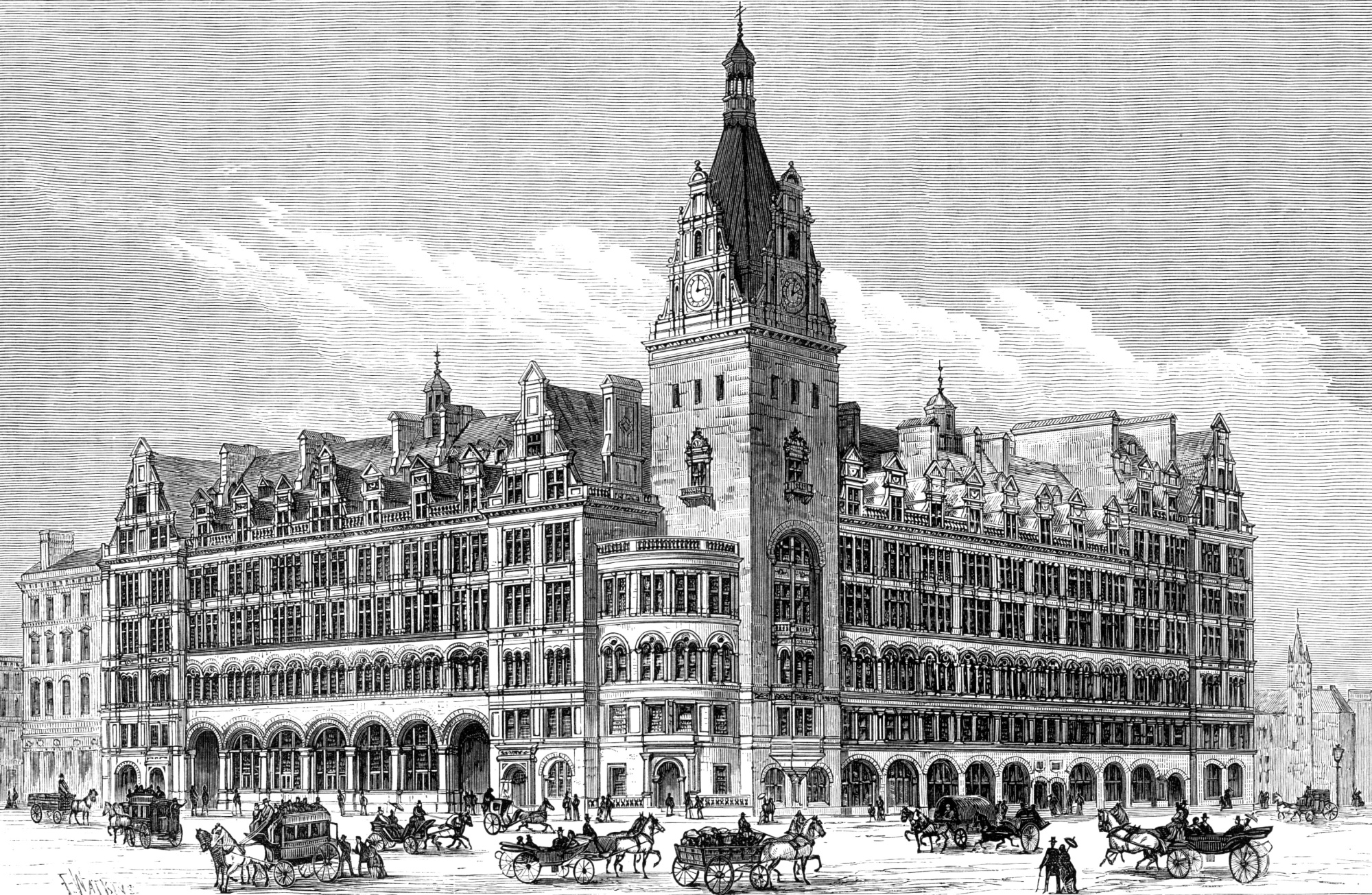 An 1883 drawing of the Central Station Hotel in Glasgow, which today houses the concourse for Central Station. The facade was damaged by the March 8 fire. Photographer: Heritage Images/Hulton Archive/Getty Images Away from the now-smoldering ruin, central Glasgow is hardly depressing: There is life, bustle and evidence of money flowing through. There is also hope that the shock of the fire might create the sense of urgency needed to get the area back on track. Mind you, people also hoped that would be the case after Glasgow's beautiful art school burned down. And look where we are now. Design stories we're writing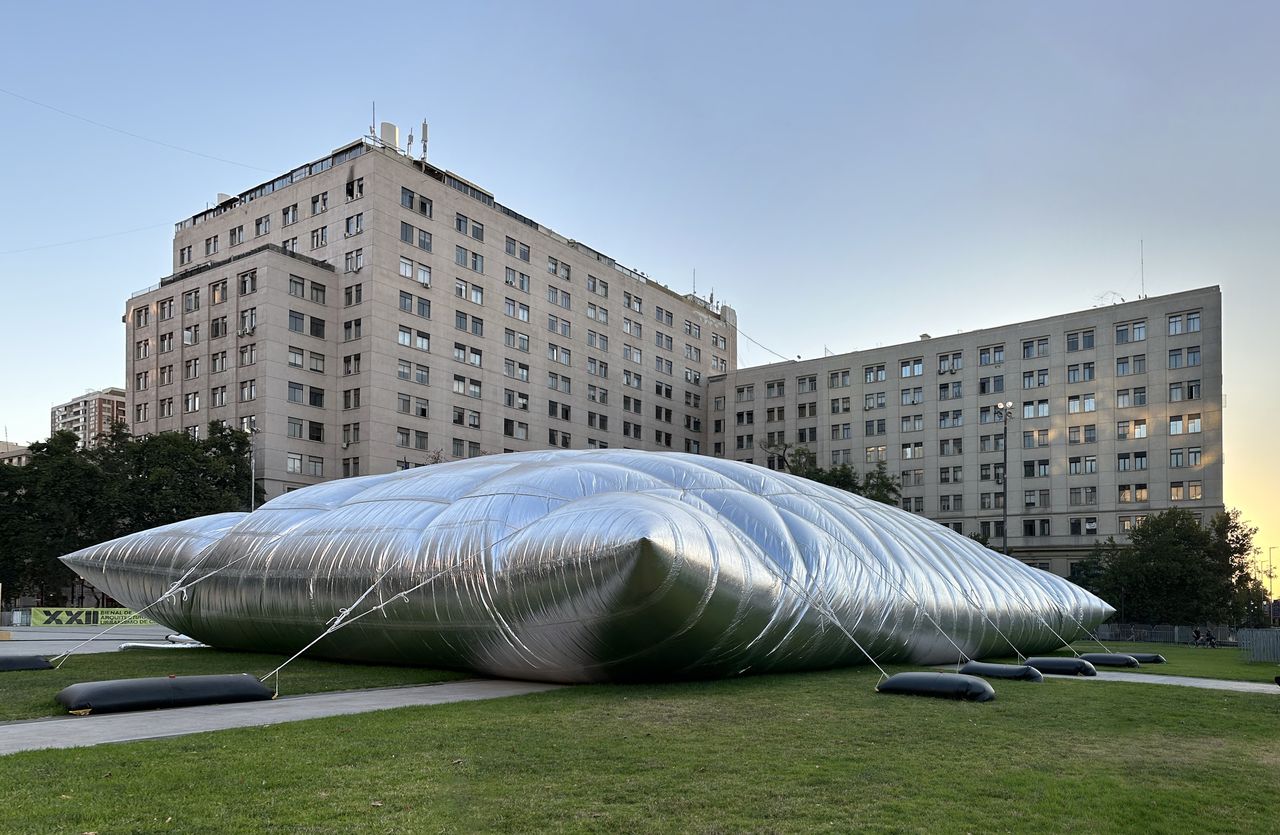 Guatero, a temporary inflatable pavilion designed by Radić for the 2023 Architecture Biennale in Santiago. Photographer: Courtesy of Smiljan Radic Chilean architect Smiljan Radić Clarke was named the winner of the 2026 Pritzker Architecture Prize. A relative unknown until 2014, when his Neolithic-inspired structure for Serpentine Gallery Pavilion in London brought his work wide recognition, Radić practices design like a sculptor. His work emphasizes qualities such as tactility and transparency, often juxtaposing heavy stone boulders with luminescent inflatable materials. In recent years the prize has gone to firms with a social message: Anne Lacaton and Jean-Philippe Vassal won in 2021 for their work adapting public housing towers, for example, while the next year Francis Kéré won the prize for setting a new bar for sustainability. So this award represents something of a return to form — for better or worse — as elevating a singular practitioner for his artistic vision. But the prize itself was subject to extra scrutiny this year, following Thomas Pritzker's departure as executive chairman of the Hyatt Hotels Corp. in February over records that revealed his relationship with Jeffrey Epstein. 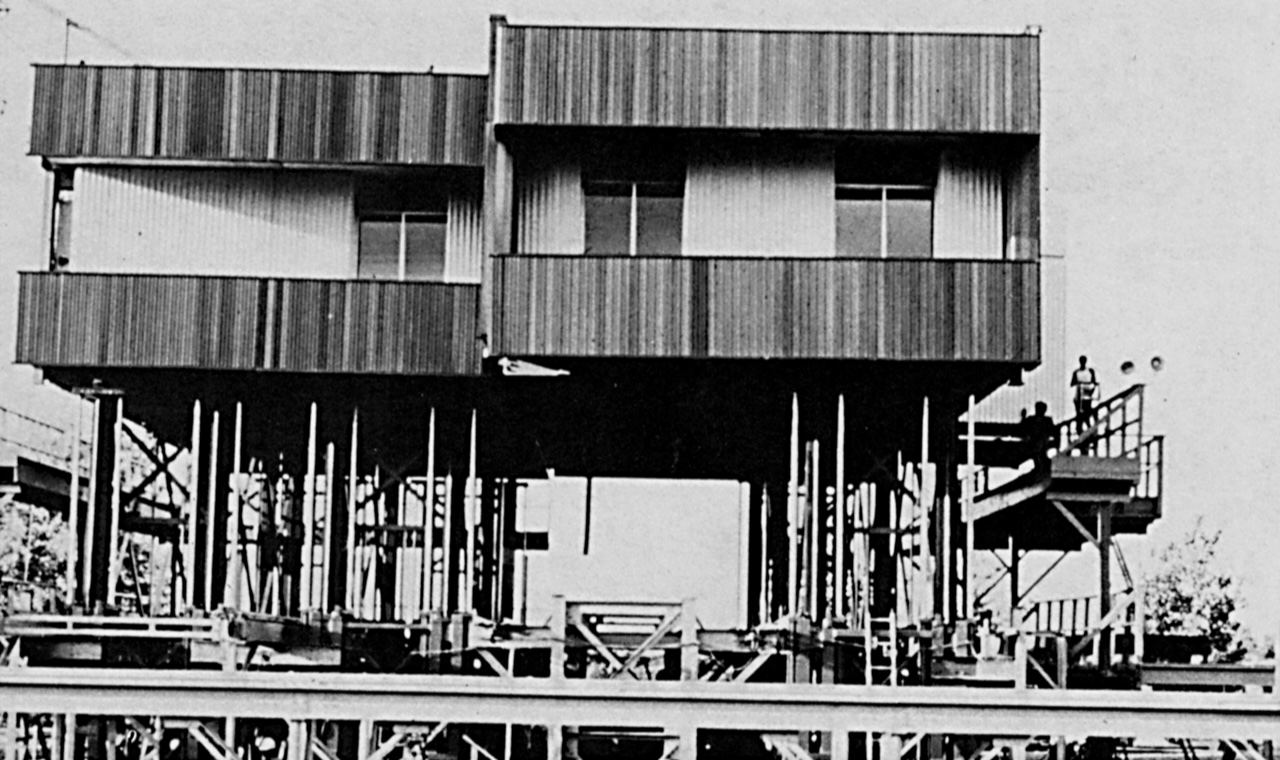 One of the prototypes developed under Operation Breakthrough involved building multi-story structures using hydraulic jacks. Courtesy of the National Public Housing Museum In the 1970s, feds at the US Department of Housing and Urban Development were planning for the future. A program known as Operation Breakthrough tasked builders as well as defense contractors with inventing new ways of building homes at scale using factory technology. The program called for constructing some 26 million new homes, a moonshot that reflected the daring of the Cold War–era space program. Zach Mortice writes up the thrilling experiment — and tragic failure — of America's most ambitious housing agenda, the subject of an exhibit at Chicago's National Public Housing Museum. Design stories we're readingShock and debris from the bombing campaigns by US and Israel across Iran have damaged two historic sites — the 14th-century Golestan Palace in Tehran and 17th-century Chehel Sotoon Palace in Isfahan — leading Iran foreign minister Abbas Araghchi to criticize the UN's cultural arm. "Its silence is unacceptable." (The Guardian) Congratulations to Thomas De Monchaux and Mark Krotov, whose dual reviews of Paul Rudolph at the Met helped to secure a National Magazine Award nomination for the New York Review of Architecture. (NYRA) Ivan Nechepurenko reports on Gang, a local citizen brigade in the Russian city of St. Petersburg that has embraced architectural preservation as a form of resistance. Like any good story about the City on the Neva, it's beautiful and frustrating. "It's understandable why it might look like we're only doing small things. It's because doing big things is forbidden," says Gang founder Ksenia Sidorina. (The New York Times) Martin Austermuhle writes about how the US Commission of Fine Arts members appointed by President Donald Trump are extending his neoclassical agenda to local school buildings in Washington, DC. (The 51st) Read Andrew R. Chow and Connor Greene on a program in Henrico County, Virginia, to use data centers to subsidize homes: "Virginia's program is the first known example in the country to specifically use data center revenue for an affordable housing trust fund." (Time) The old Chicago Stock Exchange Building trading room, a Gilded Age marvel by Dankmar Adler and Louis Sullivan, is once again endangered by demolition plans — this time from the Art Institute of Chicago. (Chicago Sun-Times) The latest renderings for the Washington Commanders stadium have me convinced that the building is a tribute to Dallas architect George Dahl. (The Architect's Newspaper) I wanna know how Alex Bozikovic really feels about Doug Ford's proposal for Toronto's waterfront airport. (The Globe and Mail) Have something to share? Email us. And if you haven't yet signed up for this newsletter, please do so here. More from Bloomberg
Explore all Bloomberg newsletters at Bloomberg.com We're improving your newsletter experience and we'd love your feedback. If something looks off, help us fine-tune your experience by reporting it here. Follow us
You received this message because you are subscribed to Bloomberg's CityLab Design Edition newsletter. If a friend forwarded you this message, sign up here to get it in your inbox.
|




Beacon no more
Milei risks becoming one conservative leader among many ...