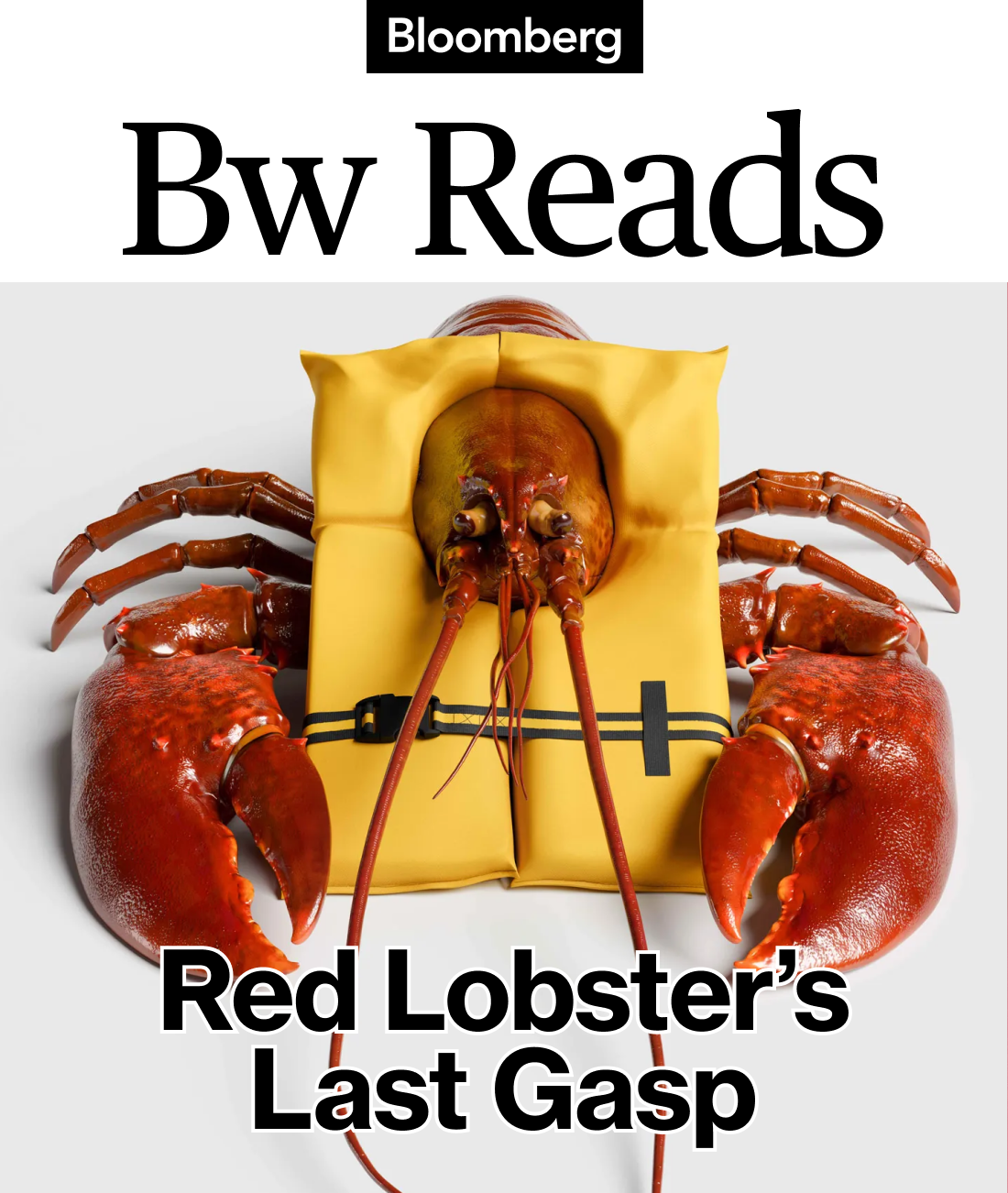
 Welcome to Bw Reads, our weekend newsletter featuring one great magazine story from Bloomberg Businessweek. Today Eliza Ronalds-Hannon and Anders Melin write about the restaurant chain Red Lobster and how a new CEO is pitching a turnaround story while the business is treading water. You can find the whole story online (free) here. If you like what you see, tell your friends! Sign up for the newsletter here. On one of his first days as chief executive officer of Red Lobster, Damola Adamolekun made a bold prediction. The restaurant chain had just emerged from bankruptcy and was bleeding customers and cash. Uncertainty awaited its roughly 30,000 employees, many of whom had gathered for a town hall in late summer 2024 to meet Adamolekun, their sixth CEO in three years. "We're going to execute the greatest comeback in the history of the restaurant industry," he told the crowd. Adamolekun was an unlikely pick to turn around this faded national icon. He was a 35-year-old Nigerian-born MBA who'd worked mostly in finance, with a brief stint leading P.F. Chang's. A Black rising star with Wall Street chops, Adamolekun embarked on a publicity marathon to sell his story. He landed on the pages of the business press and appeared on network morning TV shows. He hobnobbed with lifestyle influencers at Red Lobster's flagship restaurant in New York's Times Square. And he gave podcast interviews on everything from his daily 4 a.m. runs to his ideas for ginning up a menu item to appeal to NFL stars Travis and Jason Kelce. Clad in fitted suits and stockpiled with charisma and confidence, Adamolekun cultivated the impression that he was just the man to restore Red Lobster to glory. "There's very little evidence," he told Charlamagne tha God on his Breakfast Club radio show last year, "of me not excelling at anything that I've tried to do." 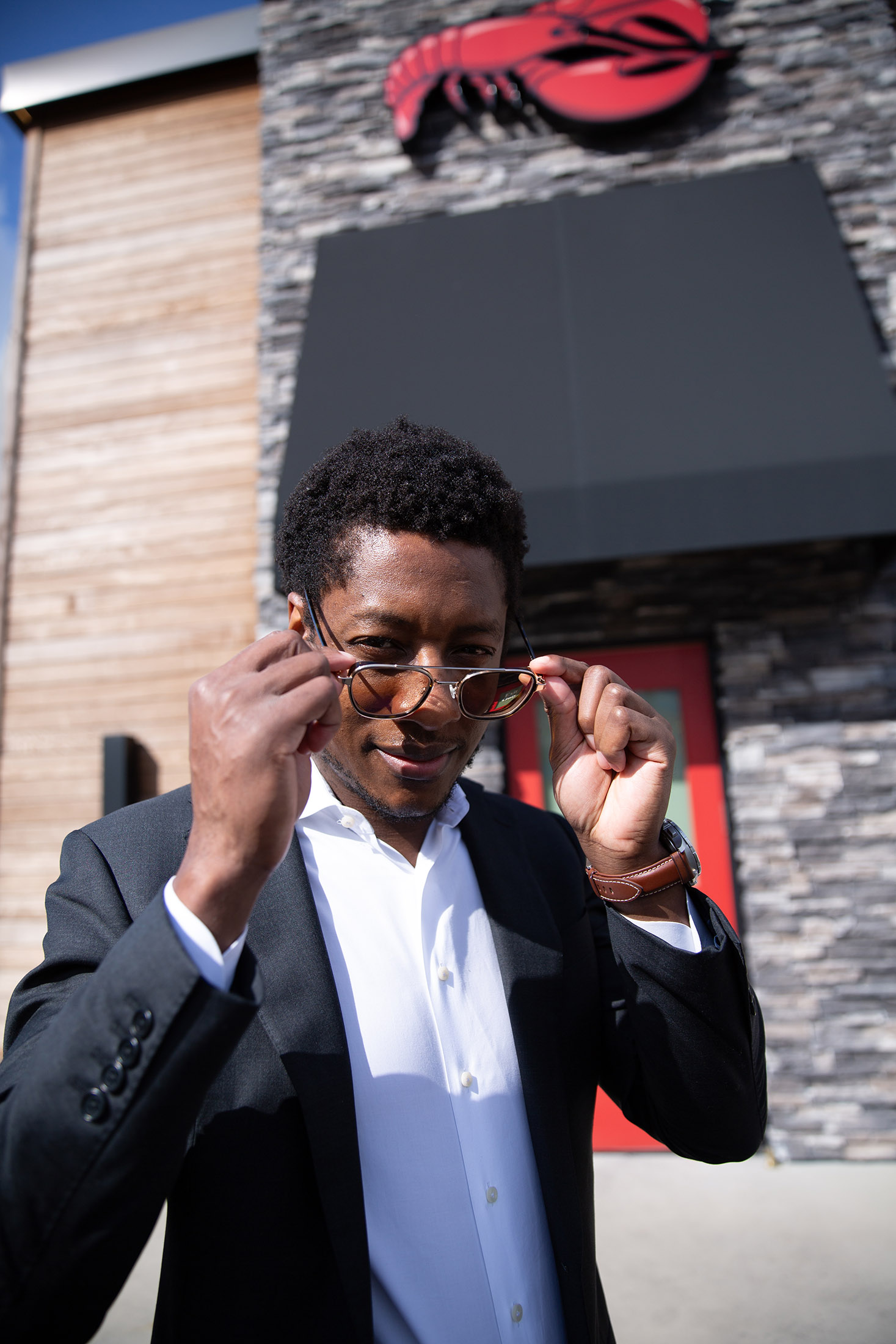 Adamolekun at a Red Lobster in Orlando. Photographer: Josh Aronson for Bloomberg Businessweek Red Lobster, founded in 1968, once defined American casual dining, with more than 700 restaurants in the US and abroad at its peak. Since the early 2000s, an explosion of alternatives, including Chipotle Mexican Grill Inc. and other fast-casual companies, has eroded its market share, along with those of its peers like TGI Friday's. Then came the kind of financial engineering that's hollowed out so many consumer brands. Wall Street pressure pushed Red Lobster's longtime parent, Darden Restaurants Inc., to sell the chain; over the next decade it was passed around to various owners and investors, getting stripped of its quality and real estate along the way. The pandemic followed, which roiled the restaurant industry. Rebounding would be hard under any circumstances, but today it's even worse: Restaurants catering to the middle class have been badly hit by inflation and a financially strained customer base. "Even in the best of times, turning around a chain like Red Lobster isn't easy," says David Henkes, senior principal at industry researcher Technomic. "They could be doing everything right, but it's still a tough time for casual dining." Which may be why Adamolekun has hedged his prediction: It could be the greatest comeback in restaurant history—if he pulls it off. When Adamolekun was hired by Fortress Investment Group, the latest financial firm to inherit the chain, his priority was to stanch the bleeding by getting customers in the door. He applied a fairly standard playbook to lure diners: Streamline the menu, amp up happy hour, encourage staff to deliver a more upscale experience. Meanwhile, he set about overhauling the perception of the brand, making himself the face of it, including starring in a new ad campaign. In late February, Business Insider published a glowing profile of Adamolekun, lauding his performance and turnaround efforts and crediting "the Wall Street wunderkind CEO" for Red Lobster's "having a moment." What's been lost in these premature declarations is that Red Lobster's operational and financial mess remains. Onerous real estate arrangements mean roughly 100 chronically unprofitable restaurants are draining any profit the rest of the chain brings in. While monthly sales are up from the prior year, Red Lobster has lost money in four of the last five quarters and has struggled to turn a profit for years. It also has to contend with years of underinvestment in its restaurants, but with little capital for renovations or hiring, employees have been asked to spruce up aging dining rooms with little but brooms and mops. The chain has cut costs by axing executives, combining roles and even getting rid of discounted gift cards for staff. Some close to Fortress expected that these measures, combined with a sales rebound, would quickly make the chain profitable. By late last year any such hopes were withering, according to conversations with more than a dozen current and former executives, employees, investors and other people familiar with Red Lobster's long decline and current strategy, all of whom asked for anonymity to discuss confidential details about the closely held company. Last year it posted a net loss, and sales were at least 20% below pre-bankruptcy levels. Unless the chain can reduce its rent or exit those unprofitable restaurants, many of the people say, the turnaround seems doomed to fail. 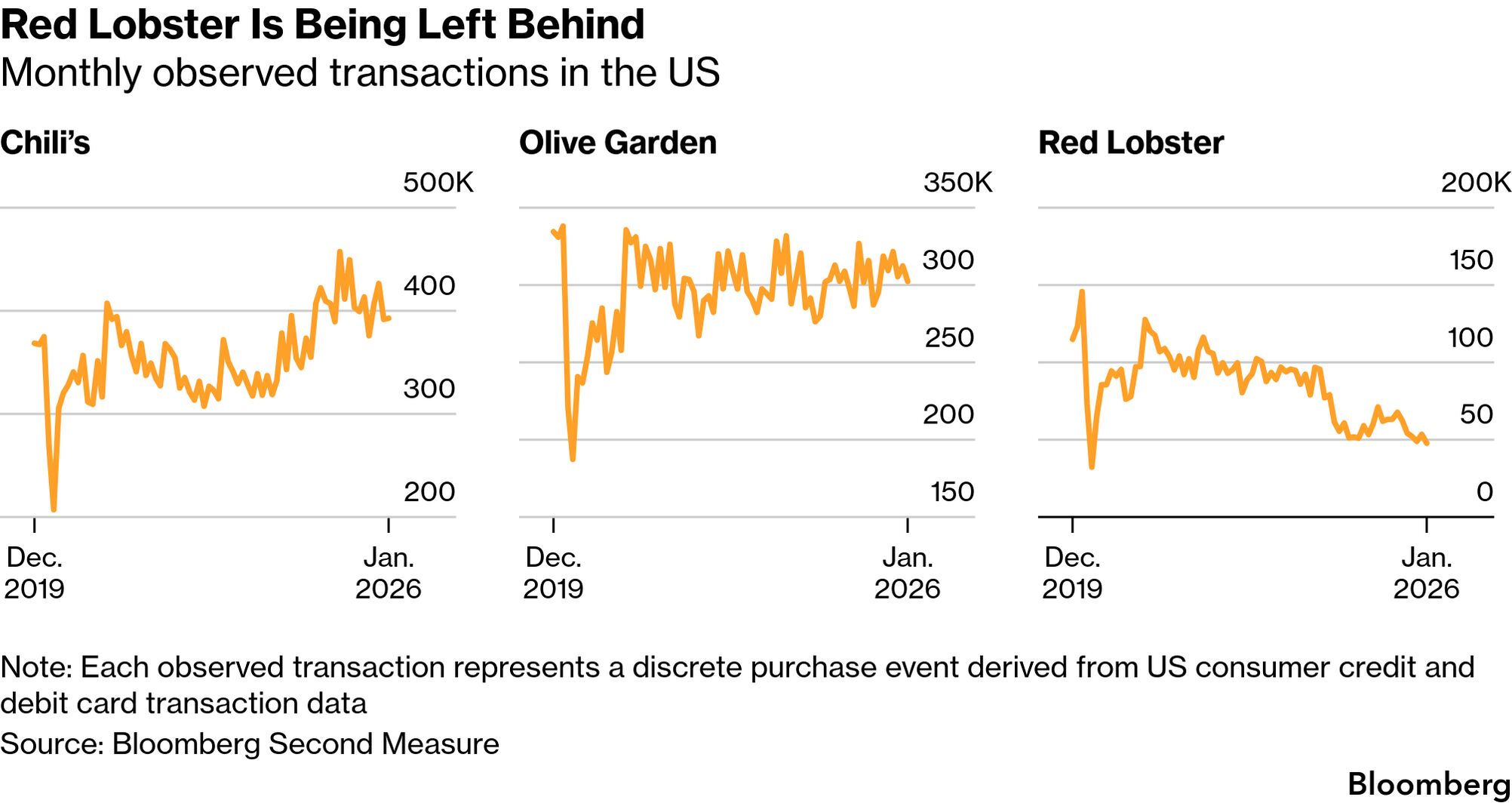 How much time Adamolekun has to fix this depends on Fortress. All told, Fortress and Red Lobster's other two co-owners—investment firms Blue Torch Capital LP and TCW Group Inc.—have invested about $500 million, but the chain is going to need more cash, according to the people interviewed by Bloomberg Businessweek. (Representatives for Fortress and TCW declined to comment, while representatives for Blue Torch did not respond to requests for comment.) Adamolekun says the turnaround is on track, but "there's still lots to do." Yet Fortress and the chain's other owners have grown reluctant to write more checks. In September, TCW reduced the valuation of its stake in Red Lobster to $4 million, a 90% cut from a year earlier, according to regulatory filings. "Fortress is trying to make this work, but they aren't going to continue to throw good money after bad," says a person close to Red Lobster, who wasn't authorized to speak publicly about the situation. Whether they continue to fund its turnaround will depend on Adamolekun's ability to prove he can stop the chain's decline. "If he can't turn it around, there's no way they're going to allow Red Lobster to lose money forever." Read more On the PodcastAmerica's favorite pastime is back, and so is 2008? This week on the Everybody's Business podcast from Bloomberg Businessweek, hosts Max Chafkin and Stacey Vanek Smith cover the bases on the simultaneous cultural renaissance of baseball and the rise of the trillion-dollar private credit industry. Plus, the debut of a new segment! Listen and subscribe to Everybody's Business on Apple, Spotify, iHeart and the Bloomberg Terminal.  More Bw Reads
The Full April Issue Is Online Now Featured in Bloomberg Businessweek, April 2026. Subscribe now. Illustration: enigmatriz for Bloomberg Businessweek Play Alphadots!Our daily word puzzle with a plot twist.  Today's clue: Member of a cross-functional team? More From BloombergLike Businessweek Daily? Check out these newsletters:
Explore all Bloomberg newsletters. We're improving your newsletter experience and we'd love your feedback. If something looks off, help us fine-tune your experience by reporting it here. Follow us
You received this message because you are subscribed to Bloomberg's Businessweek Daily newsletter. If a friend forwarded you this message, sign up here to get it in your inbox.
|



