| Read in browser | ||||||||||||||
 The data center boom is driving a battery boom. For evidence, look no further than today's newsletter, which brings you exclusive news about a new deal for multiday energy storage that relies on rust. Plus, why air pollution is costing lives and hurting economic growth. Someone forward you this email? You can subscribe to the Green Daily for free climate news straight to your inbox six days a week. Going longBy Mark Chediak Form Energy Inc. has reached an agreement to sell batteries that rely on rust and last for days to data center developer Crusoe, as technology companies rush to find resources to meet the growing power needs of artificial intelligence. The battery startup will deliver 12 gigawatt-hours of energy storage to Crusoe starting next year. The terms of the transaction were not disclosed. Form also recently struck a deal to provide a 30 gigawatt-hour battery installation to utility Xcel Energy Inc. to power a Google data center in Minnesota. "This really reaffirms the direction of a lot of the market, which is data centers need that firm, fast capacity," Form Chief Executive Officer Mateo Jaramillo said of the company's new deal. 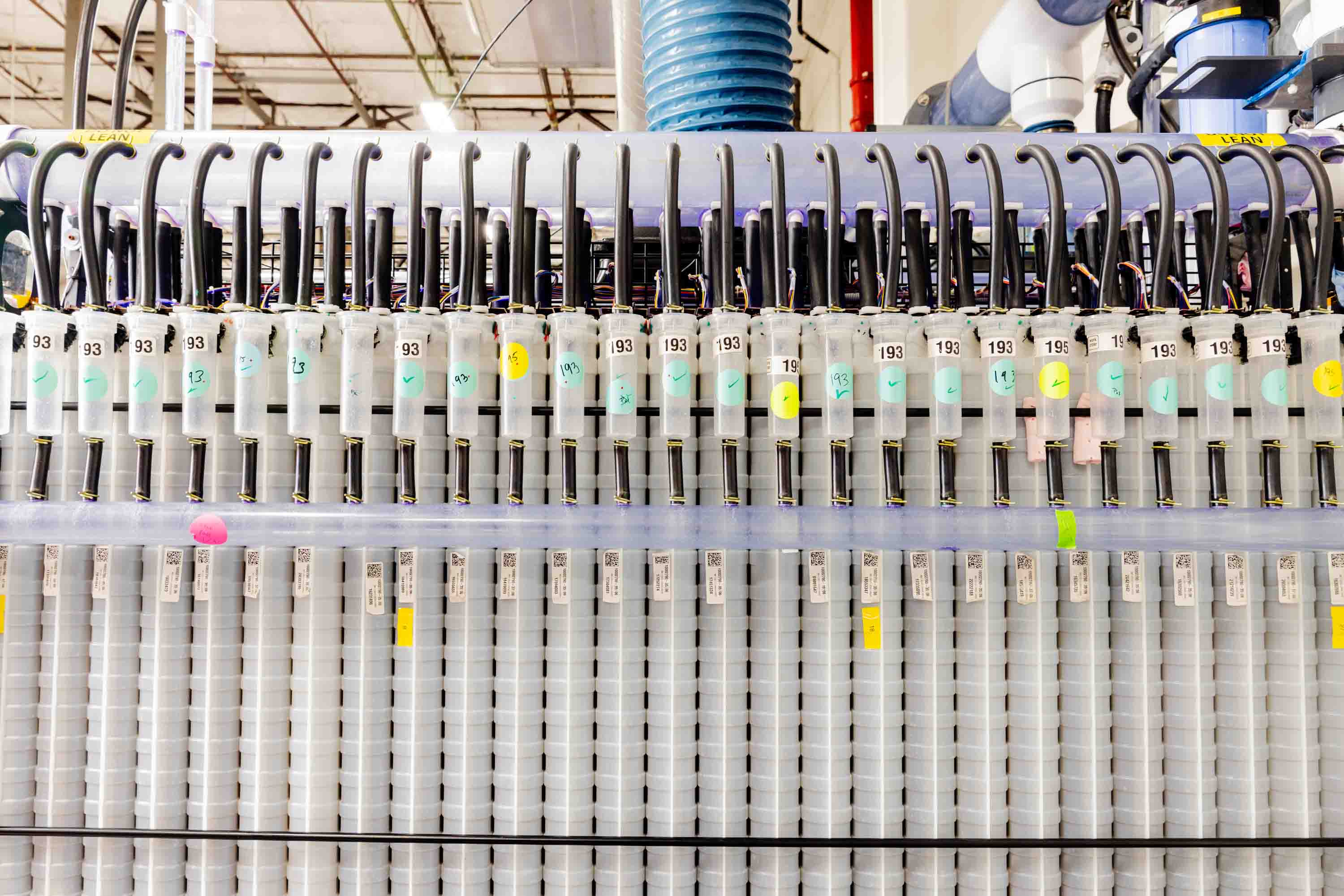 An iron-air battery undergoing testing at Form in Berkeley, California, US. Bloomberg Crusoe said the agreement reflects its approach to building AI infrastructure without necessarily being dependent on the local grid, something the Trump administration has called for as well. The data center developer — which is involved in the massive Stargate project — said its arrangement with Form will protect ratepayers from cost increases and strengthen grid reliability. Long-duration storage remains a niche product, though, and has yet to be deployed at a wide scale. The rush to line up electricity to power data centers is boosting interest in emerging technologies such as Form's iron-air batteries, which can store and discharge electricity for up to 100 hours. Developers see energy storage as a tool that can help get data centers online faster — and potentially without needing to rely on constrained power grids. The vast majority of batteries being installed are lithium-ion, which can typically discharge four hours of power. Long-duration storage can help operators tap power during extended periods of grid stress when electricity prices typically skyrocket. The batteries for Crusoe's data centers will be manufactured at Form's factory in West Virginia, which is ramping up production, Jaramillo said. The startup expects its first energy-storage pilot system to come online this year in Minnesota and has over 75 gigawatt-hours of commercial projects under agreement. Jaramillo said Form's technology is cost-competitive with other resources, including natural gas, though he declined to provide specifics. Form has raised $1.2 billion in financing from investors that include Breakthrough Energy Ventures, TPG Rise Climate and Energy Impact Partners, and it's in the middle of raising another round. The company has been laying the groundwork for an initial public offering that could come within 12 months, Jaramillo added. Subscribe to Bloomberg for unlimited access to all our coverage on batteries and clean technology. Growth opportunity9.6 The number of gigawatt-hours of long-duration energy storage installed around the world last year, according to BloombergNEF. Installations are expected to reach 34 gigawatt-hours in 2026. Meeting needs"Energy storage is one of the essential, most cost-effective and fastest ways for us to provide new power supply." Noah Roberts Executive director, US Energy Storage Coalition US manufacturing capacity for fully assembled battery systems jumped from 7 gigawatt-hours in 2023 to about 70 gigawatt-hours today. That's enough to meet all domestic demand. Today's Big Take podcast Bloomberg reporter Todd Woody and Zero podcast host Akshat Rathi join Sarah Holder to discuss early signs that the high cost of oil is reigniting consumer interest in electric vehicles and how companies and countries are beginning to respond. Listen wherever you get your podcasts. Dirty air threatens growthBy Aaron Clark Global air quality declined in 2025, with more cities reporting standards below international health guidelines on the impact of severe wildfires and pollution from sectors including fossil fuels and agriculture. Data from almost 9,500 cities showed 14% met World Health Organization standards for annual average concentrations of harmful fine-particle matter, or PM2.5, according to a report released Tuesday by IQAir Group. That compared to a total of 17% a year earlier when nearly 9,000 cities were surveyed. 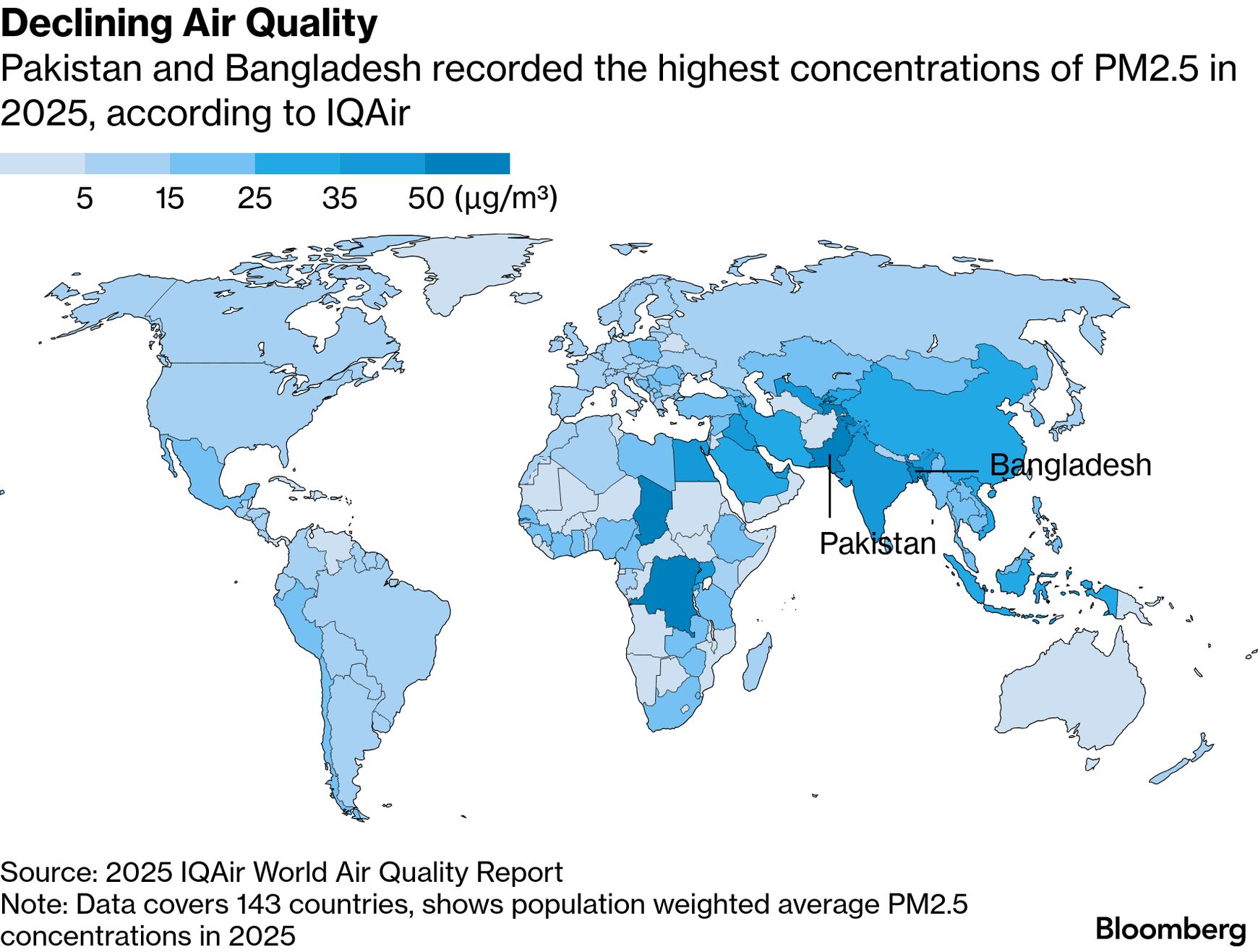 The "productivity of a whole future generation will be linked" to air quality, said Frank Hammes, IQAir's global chief executive officer. "We know that air pollution reduces IQ, we know that air pollution reduces the ability of physical labor, and we know that air pollution ultimately will cost the health system as people need medical attention and drop out of the labor force." Read the full story on Bloomberg More from GreenJPMorgan says aging, run-down grid infrastructure now risks undermining security goals, with everything from extreme weather to cyberattacks posing a growing threat. The US reiterated its criticism of the EU's rules to curb methane emissions from its oil and gas imports, saying that the supply crunch caused by Iran's attacks on Qatari facilities means the bloc can't afford to be too strict. Fermat Capital Management says a European proposal to limit retail investors' access to catastrophe bonds faces serious pushback, as money managers specialized in insurance-linked strategies mount a coordinated front. Photo finish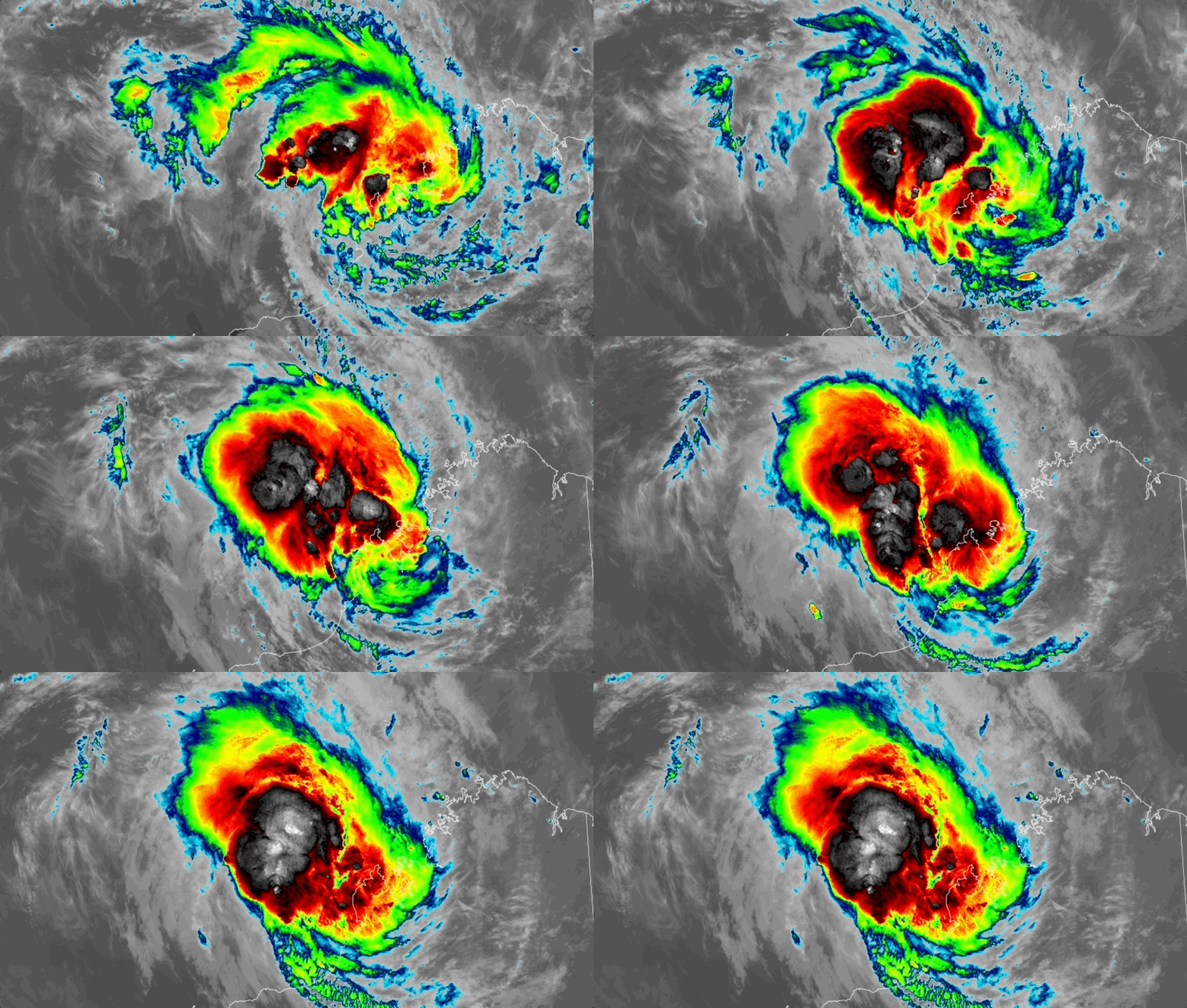 A satellite view of Cyclone Narelle along the Western Australia coast on Tuesday night. Image courtesy of RAMMB/CIRA Cyclone Narelle is barreling along Western Australia's northern coast, fueled by waters as warm as 30C (86F). The storm is expected to mirror the coastline before turning south toward Perth, and several major liquefied natural gas facilities are in its path. They include Chevron's Gorgon and Wheatstone projects, which supply the global market. Narelle last week forced the temporary closure of two Rio Tinto Group bauxite mines in Queensland and the world's largest manganese mine on the Northern Territory's Groote Eylandt. More from Bloomberg
Explore all Bloomberg newsletters. We're improving your newsletter experience and we'd love your feedback. If something looks off, help us fine-tune your experience by reporting it here. Follow us
You received this message because you are subscribed to Bloomberg's Green Daily newsletter. If a friend forwarded you this message, sign up here to get it in your inbox.
|




Tech optimism overrides Iran angst
Bloomberg Morning Briefing Americas ...