| Read in browser | ||||||||||||||
 Hello and welcome to Bloomberg's weekly design digest. I'm Kriston Capps, staff writer and editor for Bloomberg CityLab and your guide to the world of architecture and the people who build things. This week Metro, the Brutalist transit system designed by Harry Weese for Washington, DC, celebrated its 50th birthday. Sign up to keep up: Subscribe to get the Design Edition newsletter every Sunday. 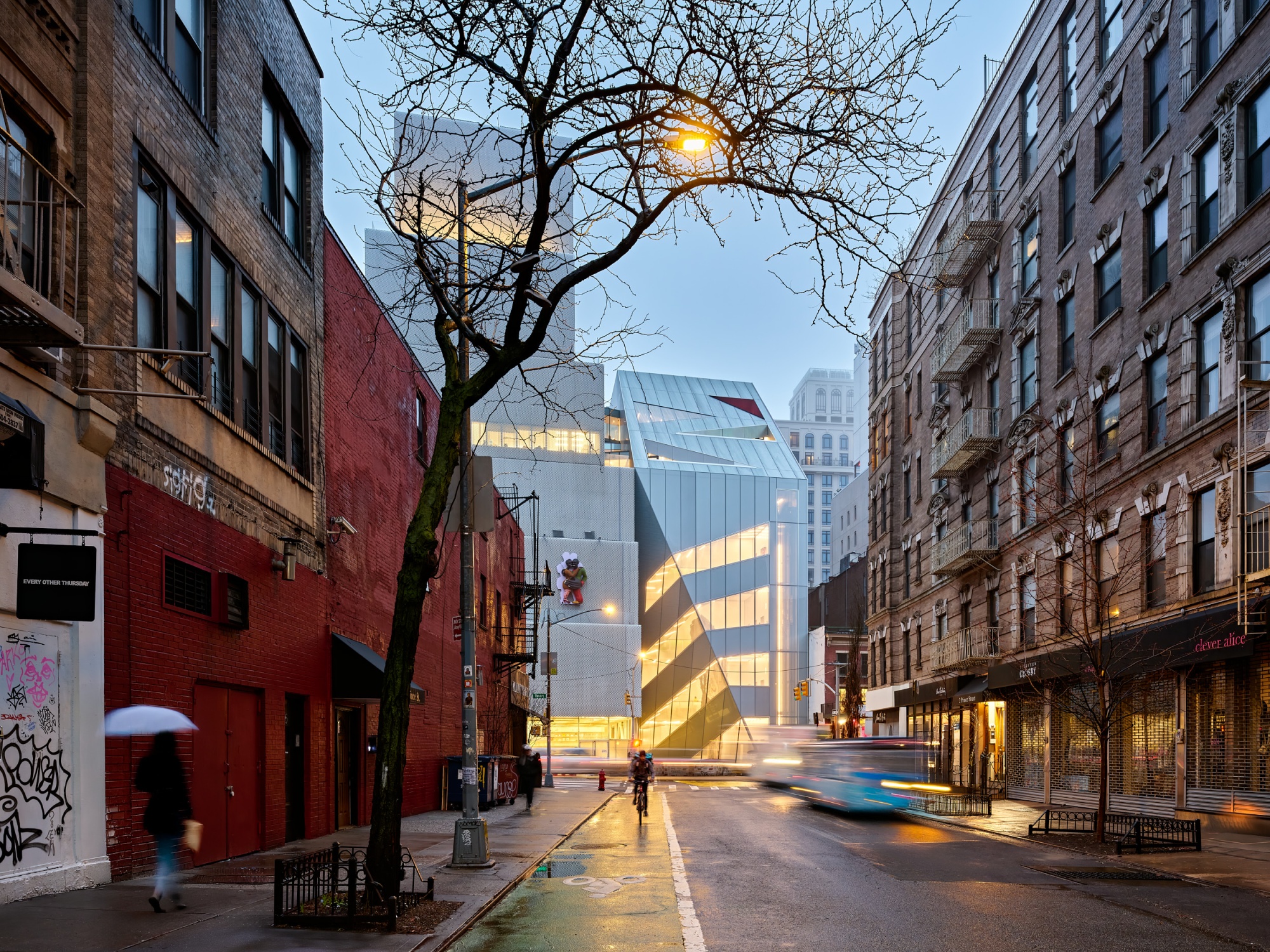 The new New Museum as seen from Prince Street on New York's Lower East Side. Photographer: Jason Keen The New Museum opened an $82 million expansion this week, starting a new chapter for the postwar contemporary art museum on New York's Lower East Side — and turning a page on an important era for New York's art world. Over the last 20 years New York's art institutions have been in growth mode. The Museum of Modern Art and Whitney Museum of American Art both opened major expansions. Right on their heels were New York's mega-dealers: The biggest commercial art galleries got really big, opening warehouse-sized galleries that rival all but the largest museums, at least in terms of space. Caught in the middle, in a sense, was the New Museum — a non-traditional organization that shows postwar contemporary but doesn't collect art — which opened not one but two buildings over this span. The first building, a stack of shimmering boxes by Japanese firm SANAA, arrived in 2007, planting a flag on the Lower East Side. But the arms race was still going: Hyper-charged by the High Line, Chelsea sprouted museum-quality showrooms for contemporary art. In 2019, the mega-gallery Pace Gallery opened its eight-story flagship on West 25th Street — a space bigger than the New Museum. 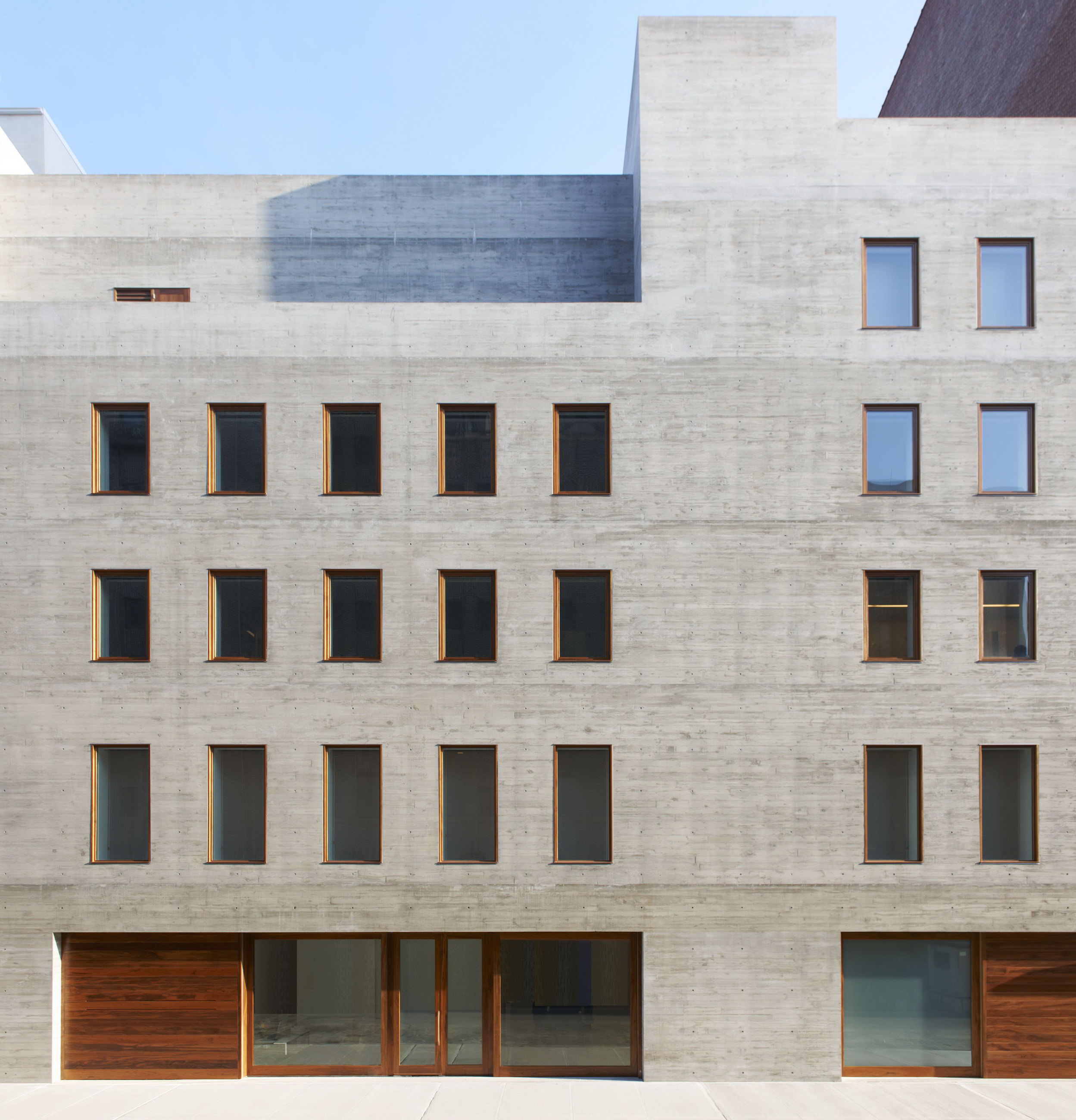 Annabelle Selldorf designed a 30,000-square-foot, purpose-built gallery building in 2013 for David Zwirner, another mega-gallery. Photographer: Jason Schmidt/Selldorf Architects As the "Big Four" mega-dealers Pace, Zwirner, Gagosian and Hauser & Wirth built larger and larger galleries, they also started behaving more and more like museums, producing original retrospectives, monographs and other programming. Zwirner's podcast is on its 10th season. And the dealers brought the heat: When the National Gallery of Art deemed Philip Guston too controversial to show in 2020 following the death of George Floyd, Hauser & Wirth stepped in with an exhibit of his anti-racist paintings from the 1960s. (The National Gallery rescheduled that exhibit for 2023.) "We feel that this era of gallery expansion has led to a welcome democratization of the commercial art world," says Dominic Kozerski, partner at Bonetti/Kozerski, the firm that designed the 75,000-square-foot flagship for Pace in Chelsea. More recently, the firm designed a Pace outpost in Tribeca, part of a wave of smaller satellites that "recall the scale, downtown charm, and attitude" of the downtown SoHo era of the 1980s and '90s. "The leverage of the large galleries allows them to borrow pieces from collectors who might not normally lend to museums, enabling them to stage shows of immense depth and meaning that only need to be on view for a matter of weeks, creating blockbuster shows that have different energy than a museum show that tends to be up for longer," Kozerski writes in an email. As the art market has evolved, so has the New Museum. While artful, the original stack-of-boxes building expressed an exacting focus on maximizing every possible square foot for showcasing art. The expansion by OMA doubles the New Museum's footprint, giving it twice the gallery space, but there's much more room devoted to circulation and events — namely in the grand atrium staircase. Now in middle age, the New Museum is looking much more like an establishment institution as a result. 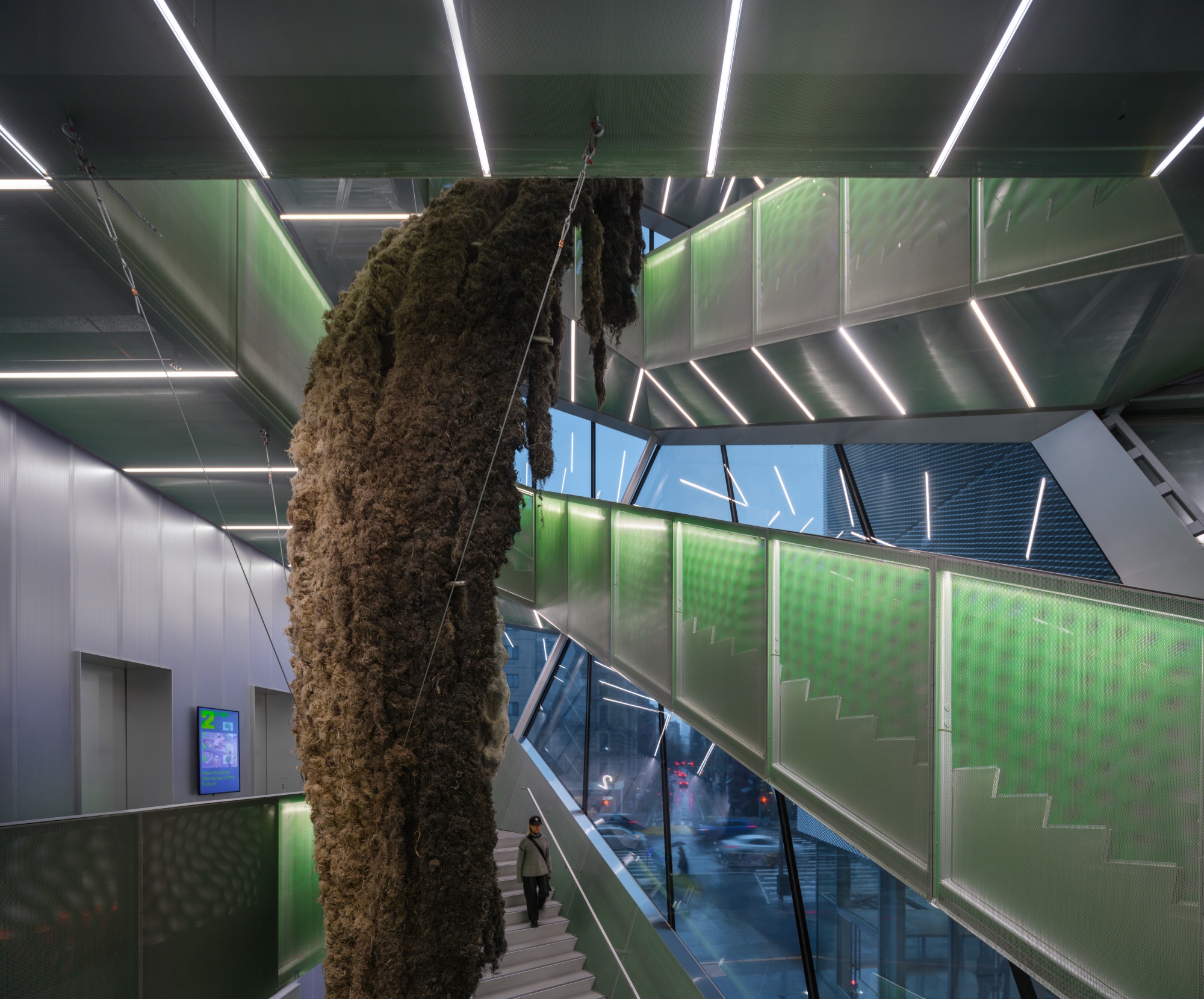 The New Museum commissioned a woven sculpture by Klára Hosnedlová for the atrium stair in its new building. Photographer: Jason O'Rear Things could be worse: Faced with the challenge of adapting an existing building to fit a vision for expansion, other architects have opted for more radical solutions. In 2011, when the Museum of Modern Art acquired the American Folk Art Museum for its expansion, the plan was to preserve this still-new project by Tod Williams Billie Tsien Architects. MoMA wound up demolishing it instead. The new New Museum might be the last expansion by any New York museum — or gallery — for a while. The global market for contemporary art is suffering a downturn, possibly a crisis. Over the last two years influential galleries have shut their doors in New York, Los Angeles and other major cities. Global art sales fell 12% in 2024, according to a report by Art Basel and its sponsor UBS, and remain well below pre-pandemic levels. But the problem is more profound than a financial slump. It's constitutional. Julia Halperin wrote in February about how the art world's hit a saturation point: With so many collectors buying from the same mega-galleries at the same art fairs, contemporary art collections are starting to look the same. If the mega-gallery era is over, then there's a chance to try something different. Maybe a new new New Museum can lead the way. Design stories we're writing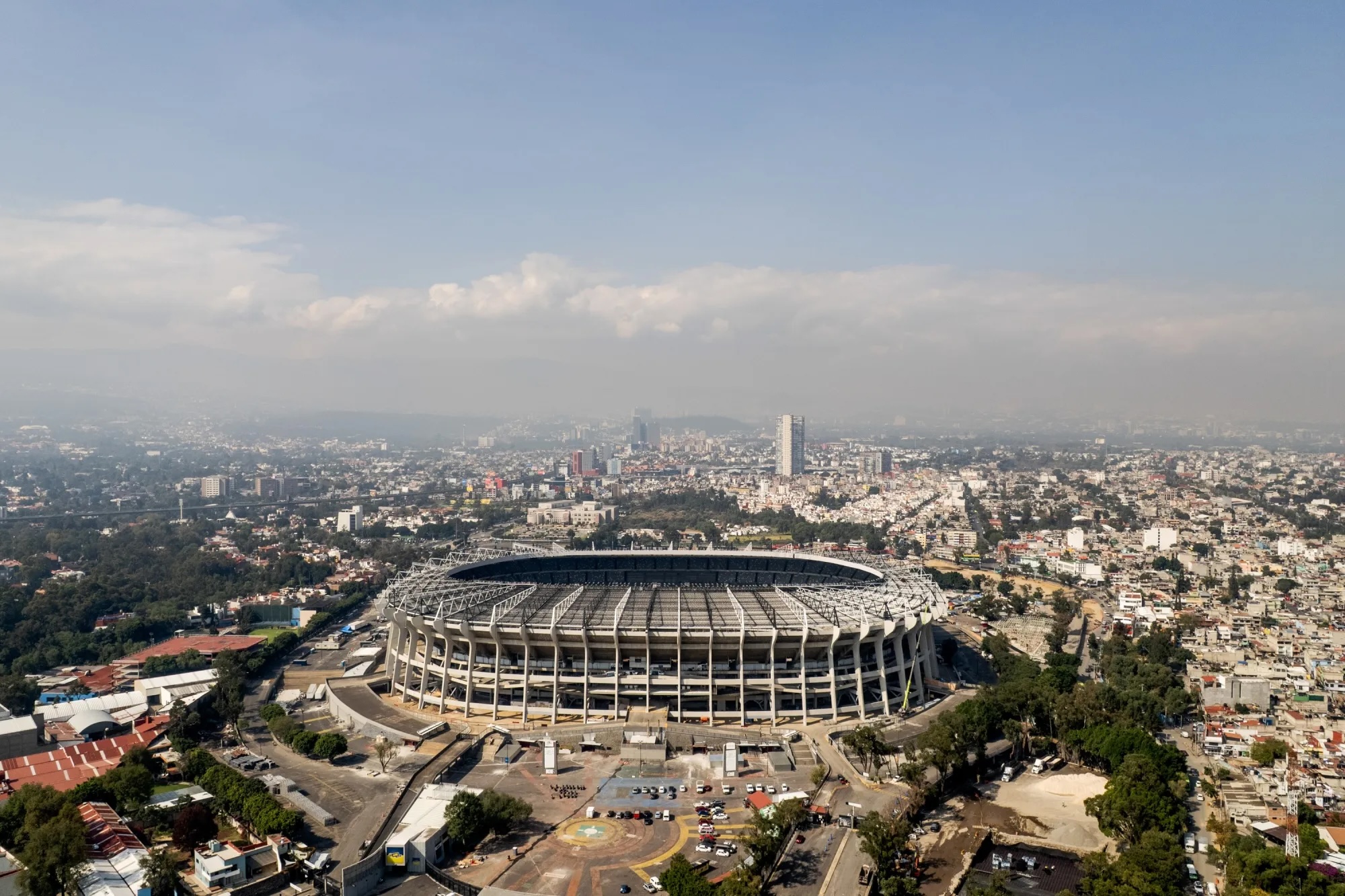 Azteca Stadium is Mexico City's venue for the 2026 World Cup. Photographer: Fred Ramos/Bloomberg Evictions of entire apartment buildings to accommodate more affluent renters are becoming common in Mexico City, and the phenomenon is poised to get worse as the World Cup approaches. In gentrifying neighborhoods, building owners have turned out tenants with little to no notice in order to renovate units as higher-price apartments or short-term rentals, as Alex Vasquez and Amy Stillman report. Vendors displaced by authorities near Azteca Stadium, the venue for this summer's matches, joined protests against what organizers describe as the "World Cup of Displacement." Design stories we're readingScarlet Flax, sagebrush, bluebell, poppy: Introducing the color families of the "superbloom" 2028 Summer Olympics in Los Angeles. (Torched) Christopher Hawthorne's takeaway from the New Museum expansion boils down to a single question, one that I share: "Is this a midlife crisis in architectural form?" (Punch List) Michael J. Lewis was more taken with the New Museum's technical solution: "The two buildings seem barely to touch shoulders, and yet behind this show of aloofness their interior spaces flow freely together at every level." (The Wall Street Journal) Read Julian Rose on Frank Gehry's relationship with art and the role that art played in his work: "If very little of the art Gehry liked looked anything like his buildings, that is because he thought of art as a way of working rather than as a visual language." (Artforum) Architecture students at the University of Texas at Arlington developed a master plan that would give downtown Dallas a new arena for the Mavericks while still preserving IM Pei's City Hall building. (The Dallas Morning News) Now that Banksy's identity has been exposed, that's the last we need to hear about him, writes JJ Charlesworth. (ArtReview) John Robertson Architects will renovate London's Postmodernist icon, No. 1 Poultry, over the objections of the family of its renowned designer, James Stirling. (Architects' Journal) Have something to share? Email us. And if you haven't yet signed up for this newsletter, please do so here. More from Bloomberg
Explore all Bloomberg newsletters at Bloomberg.com We're improving your newsletter experience and we'd love your feedback. If something looks off, help us fine-tune your experience by reporting it here. Follow us
You received this message because you are subscribed to Bloomberg's CityLab Design Edition newsletter. If a friend forwarded you this message, sign up here to get it in your inbox.
|




Swiss back tougher social media rules for minors, survey finds
The vast majority of Swiss want stronger protection for children and teenagers on social media, according to a survey published on Sunday, as governments and courts worldwide intensify scrutiny of Big Tech over its impact on young users. Get full access to Reuters.com for just $1/week. Subscribe now. Technology Roundup Technology Roundup Swiss back tougher social media rules for minors, survey finds WTO talks near deal on reform roadmap amid US-India e-commerce deadlock UK joins global push to rein in children's screen use with national guidance SpaceX's listing stirs up social media frenzy, ticker bets Sony to hike PlayStation 5 prices again as memory chip costs surge ...