| Read in browser | ||||||||||||||
 Airline passengers' dread of security lines has reached a whole new level in recent weeks, with the Department of Homeland Security's screeners going unpaid. Bloomberg News congressional reporter Steven T. Dennis writes about how we got here and when we might have a deal. Plus: The strange story of the professors who got tangled up in a charismatic tech CEO's alleged Ponzi scheme, and how Mexico's budget is starving its cultural treasures (free link). If this newsletter was forwarded to you, click here to sign up. It's pretty rare for a single American life to prompt a five-week government shutdown, but that's what happened when federal agents riddled Alex Pretti's body with bullets in Minneapolis in January. Ever since, appalled Senate Democrats have demanded major reforms to immigration enforcement operations before allowing full funding for the Department of Homeland Security to pass. The department's funding lapsed on Feb. 14, but the partial shutdown really started to bite this week, when an increasing number of unpaid Transportation Security Administration workers refused to show up to work, snarling security lines at major airports in Atlanta, Houston, New York and elsewhere.  Federal officers patrol Hartsfield-Jackson Atlanta International Airport on Monday. Photographer: Elijah Nouvelage/Bloomberg Senators in both parties said the airport mess had created a sense of urgency to reach a compromise, and they hope to do so in time to leave Washington at the end of this week for a long-scheduled two-week break. First they have to get through a lot of what we'll call failure theater in a dysfunctional Congress—performative votes that won't pass and dueling blame-game press conferences that have increasingly become the norm. Democrats have repeatedly proposed to pay TSA workers, or even fund all of Homeland Security with the exception of the Border Patrol and Immigration and Customs Enforcement, while negotiations continue, but Republicans have said no. In turn, Republicans have repeatedly offered to open the entire department for a couple of weeks while they keep talking, and Democrats have said no. Last weekend, President Donald Trump threw a wrench into the cycle by insisting that his Republican Party tie funding to passing the SAVE America Act, a voter ID bill that is anathema to Democrats. After top Republicans met with Trump on Monday evening in the Oval Office, there was a bipartisan flurry of optimism that a deal would soon be at hand. They proposed to fund 94% of the department—everything except $5.5 billion for ICE's enforcement and removal operations—without including the voting bill. Republicans said they would try to backfill the ICE funding and some voting provisions in a partisan budget bill that would follow. Democrats who'd been negotiating with Republicans told reporters they would need at least some reforms in order to fund the Border Patrol, like the wearing of body cameras, clear identification on agents' uniforms and guardrails to keep funding for Border Patrol or other agencies from being diverted to enforcement in the interior of the country. (Pretti, notably, was shot by Border Patrol agents, not ICE.) Senate Majority Leader John Thune, however, refused, arguing that if Democrats weren't going to fund ICE, they shouldn't get changes added into the law on how they operate. Cue another round of exchanged and rejected offers. The core sticking points are simple: Democrats insist on two changes Republicans flatly refuse: a ban on masked agents roaming American streets and a requirement that judges sign warrants before officers enter homes. Democrats say the policies they want are simply what other police departments have to follow, and in the case of warrants, a requirement of the Fourth Amendment to the Constitution. Republicans say that the masks are needed to protect agents from retaliation and that judicial warrants would hamper the deportation agenda they've promised voters. Late Wednesday, both sides said they are likely to stare at each other for a while before convening again to try to hammer out a deal. Meanwhile, officials at nearby Baltimore-Washington International Thurgood Marshall Airport urged travelers to arrive three hours before their flight because wait times were longer than usual, with one TSA checkpoint shut down. Those airport delays and jet fumes—Congress-speak for members' desire to head to the airport themselves—could still yield a deal. Agreements are always more likely to come together late in the week. Former Senate Majority Leader Harry Reid even had a favorite saying about budget impasses: "Magic occurs on Thursday night." Latest on the Iran War In Brief
Today's Long ReadBlockbuster Bonuses$49.2 billion That's was the record value of Wall Street's bonus pool last year, with payouts rising as profits and revenue soared. The average annual bonus rose 6%, to $246,900. The total pool is the largest in records going back to 1987, reflecting a rebound in mergers and acquisitions helped by relaxed regulations under President Trump. Ancient Pyramids, Modern Problems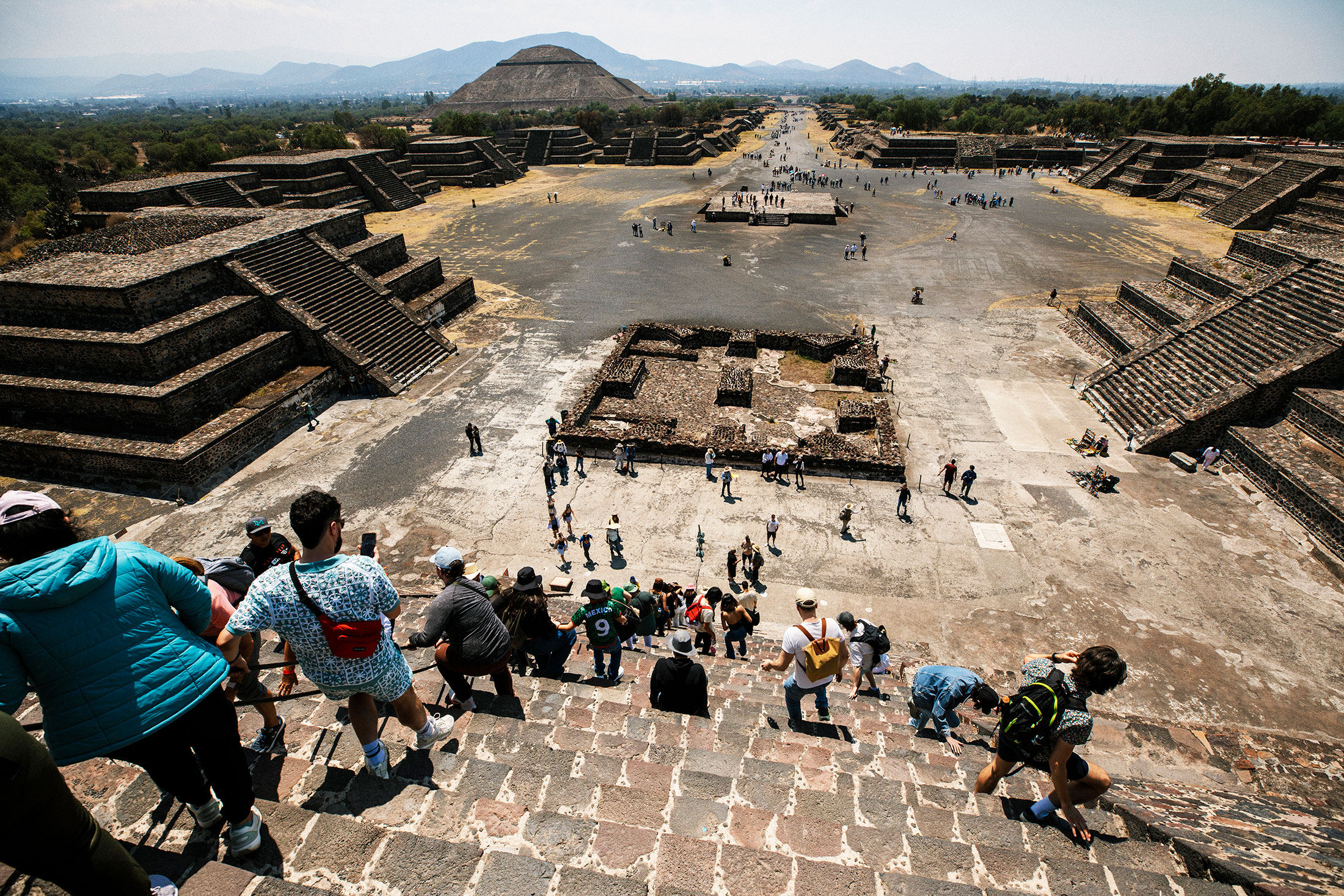 The Pyramid of the Moon at Teotihuacán. Photographer: Ruben E. Reyes for Bloomberg Businessweek President Claudia Sheinbaum heralded in January what she declared to be Mexico's most significant archaeological discovery in a decade: a 1,400-year-old Zapotec tomb uncovered in southern Oaxaca state. A slick government video celebrating the find reveals a striking stone mask hanging over a relief sculpture of a human face carved above the tomb's entrance, traces of ancient paint still visible. What the president didn't say is that the discovery was actually made months earlier by looters who took all the objects from the tomb's floor, leaving only some scattered bones, according to employees at the country's antiquities institute who weren't authorized to speak publicly. The National Institute of Anthropology and History (INAH) sent researchers to the sacked burial site only after a neighbor complained to the authorities. Although Mexico is what Sheinbaum frequently calls a "cultural powerhouse"—with Spanish colonial architecture on display alongside towering ancient pyramids built by stargazing civilizations filled with poets, painters, potters and priests—critics warn far too little is spent on maintaining the country's oldest and most fragile sites. With rare exceptions, today's top tourist destinations are underfunded, with sharp budget cuts over the past several years compounding the crunch and putting the long-term viability of Mexico's more than $30 billion international tourism industry at risk. "We have, like, eight Machu Picchus," Alejandro Zozaya, a Mexican hotel impresario, told David Alire Garcia. Are they being maintained?: Tourism Is Huge in Mexico. Spending on Cultural Sites Isn't Urban Beekeeping"Honeybees are not inherently bad, but they're also not a conservation activity. It's akin to keeping chickens." Jessica Helgen Program director of the University of Minnesota Bee Squad Raising honeybees in the city has emerged as a popular sustainability practice—and a big business. But the hives can leave native pollinators in a sticky fix. Play Alphadots!Our daily word puzzle with a plot twist.  Today's clue: Groundskeeper? More From BloombergLike Businessweek Daily? Check out these newsletters:
Explore all Bloomberg newsletters. We're improving your newsletter experience and we'd love your feedback. If something looks off, help us fine-tune your experience by reporting it here. Follow us
You received this message because you are subscribed to Bloomberg's Businessweek Daily newsletter. If a friend forwarded you this message, sign up here to get it in your inbox.
|





Rave files antitrust lawsuit against Apple over removal of video-sharing app
Software developer Rave on Thursday filed an antitrust lawsuit against Apple , alleging that the iPhone maker kicked Rave's app for shared viewing of video content off the Apple App Store after introducing a competing product called SharePlay. ...