A month after U.S. and Israeli strikes on Iran, global markets for the supply of crude oil, refined products and liquefied natural gas are already in the second-worst possible scenario, says ROI's Clyde Russell.
Everything hinges on the Strait of Hormuz. This chokepoint, which normally carries around 20% of global crude, products and LNG, is still effectively closed to most shipping, leaving energy markets dangerously exposed.
Under those conditions, claims by Washington or Israel that they are somehow winning the war against Iran are largely meaningless.
It may well be true that the U.S. and Israeli air campaign has decapitated Iran's leadership and degraded key military capabilities.
But the reality is that most tankers still cannot transit the Strait of Hormuz safely, while Iran has demonstrated a clear ability to strike energy and other critical infrastructure across the Gulf. That leaves Tehran shaping the narrative - and, more importantly, holding the global economy to ransom at the same time.
What would the worst-case scenario look like?
It would be a sharp escalation in which Iran inflicts widespread damage on Gulf energy infrastructure, using missiles and drones to hit pipelines, refineries, processing plants and export terminals across the region. Read on for more.
In response to the growing turmoil across the Middle East, oil companies will have to look further afield for new fossil fuel resources now that the Iran war has dented the investment allure of the energy-rich Middle East. Higher oil prices will give them that chance, argues ROI's Ron Bousso.
Uncertainty over the safety of transit through Hormuz and the higher risk of conflagration is apt to sharply boost the cost of deploying staff, equipment, insurance and capital in the Middle East, making the region a lot less attractive for exploration.
Still, higher long-term oil prices would expand the pool of economically viable reserves worldwide. And, importantly, the spiking risk premium in the Middle East is likely to push more capital toward regions previously deemed more risky or marginal. Read the full column for more.
Finally, now that the Iran conflict is dragging on well past early expectations, energy professionals must now brace for further potential disruptions to energy flows and more market gyrations.
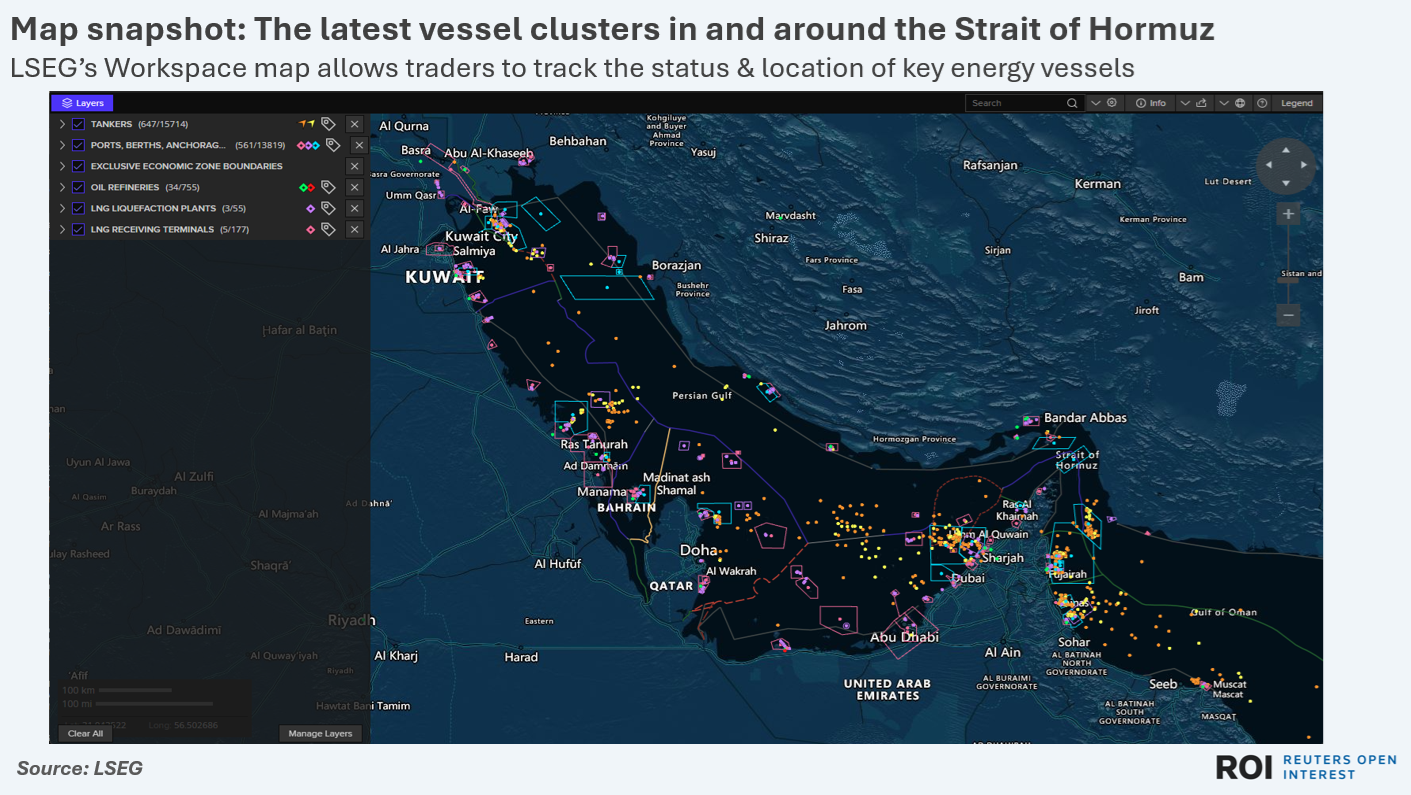
To accurately assess where the impacts are being felt most acutely, energy market trackers must move beyond glancing at the latest social media missives to tracking professional-grade analytical tools that provide real-time clarity on key energy and shipping sectors throughout the world.
Today's column breaks down of some of the key tools and resources being used by energy traders and analysts to manage risk and capture opportunities stemming from the fallout of the conflict.