| Read in browser | ||||||||||||||
 Amid a US economic picture filled with uncertainty, Jerome Powell appears sure of one thing: he isn't going anywhere. At least not yet, anyway. As the central bank announced Wednesday that interest rates would remain unchanged, the Fed Chair made some definitive statements about his near-term future. He has "no intention" of resigning as a member of the Fed's Board of Governors until an investigation by the Department of Justice into a building renovation project is "well and truly over." The criminal probe has been condemned by critics of the administration and others as an example of the weaponization of the Justice Department against Trump's perceived enemies. In this case, the president's very public desire for the Fed to cut rates in the hopes it will boost the economy is seen as the reason behind the investigation. A federal judge recently alluded to the contention, excoriating prosecutors as he refused to let them issue subpoenas. The Federal Open Market Committee meanwhile voted 11-1 to hold the benchmark federal funds rate in a range of 3.5% to 3.75%. Stephen Miran, a recent Trump appointee, dissented, calling for a quarter-point reduction. —David E. Rovella What You Need to Know TodayOil and European natural gas prices surged as Iran carried out an attack on a major LNG site in Qatar, after earlier warnings from Tehran on threats to energy facilities across the Gulf. Brent oil climbed 3.8% to settle at $107.38 a barrel on Wednesday, while Europe's gas benchmark jumped 6%. Qatar's Ras Laffan Industrial City, the complex that houses the world's largest liquefied natural gas export plant, has suffered "extensive damage" after the strike, authorities said. Tehran had warned of imminent retaliation against refining, petrochemical and natural gas assets in the region after its own giant South Pars gas field and associated assets were struck by the US and Israel. Iran's Islamic Revolutionary Guard Corps said energy sites in Saudi Arabia, the United Arab Emirates and Qatar "have become direct and legitimate targets" following the attack. It's not just Russia that's taking advantage of the US-Israel war with Iran: it's also America's larger rival. China's military is said to be studying US tactics for lessons that could prove helpful in any future conflict of its own, scrutinizing US offensive capabilities as it sees the strategic balance shifting in its favor in the Indo-Pacific. 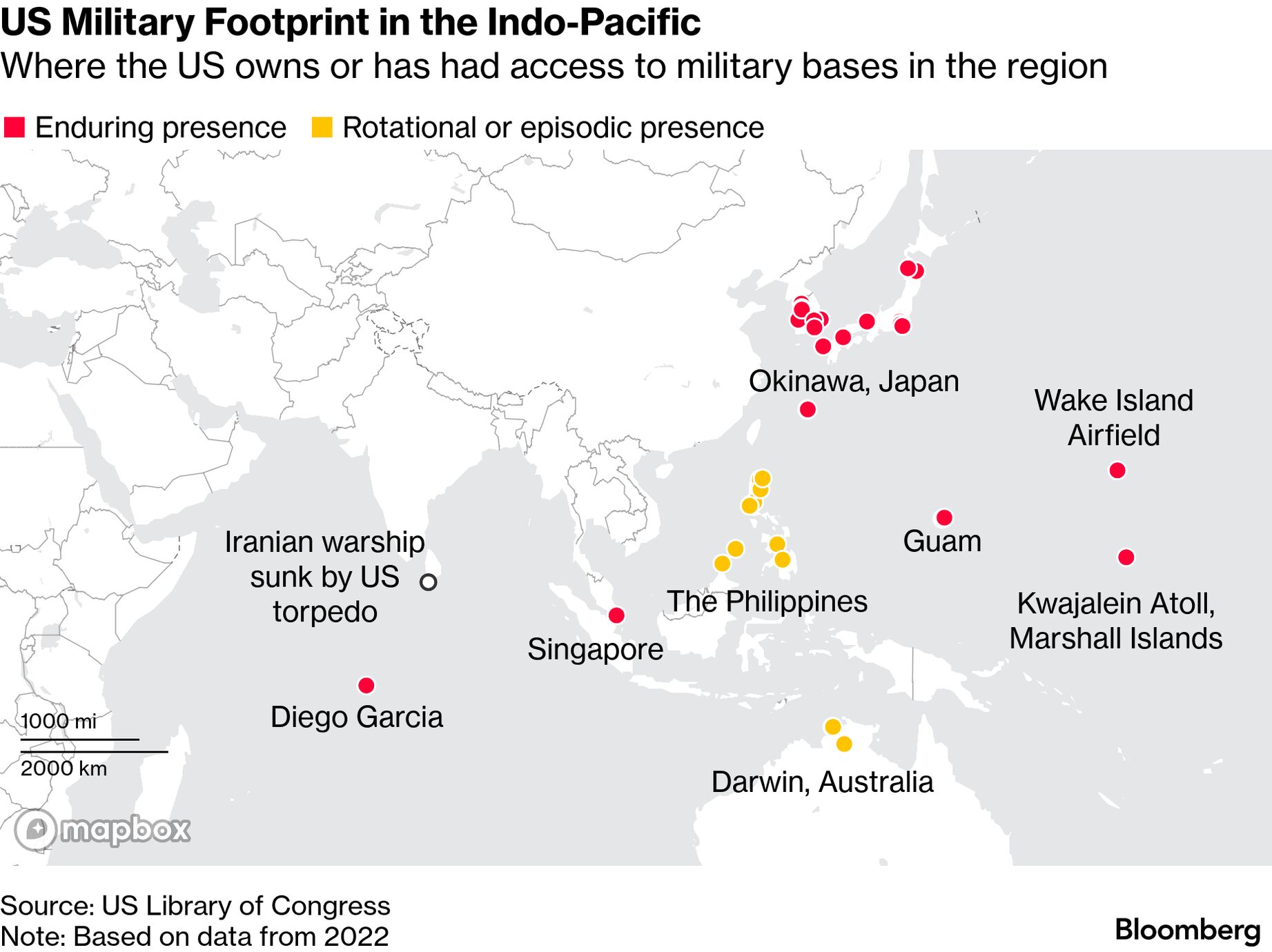 Beijing is likely closely observing America's military performance on display in Iran and gaining highly valuable information that it would almost certainly factor into its plans for any potential conflict over Taiwan. While China is still gaming out the economic and diplomatic consequences of the war, President Xi Jinping would probably welcome the diversion of US attention and resources toward the Middle East and away from the Indo-Pacific, officials told Bloomberg. They cited the Pentagon's redeployment of military assets from Asia to Iran as a tangible reason for China's military to draw positives from the conflict. Trump's vendetta against offshore wind power is characterized chiefly by its oddities, Liam Denning writes in Bloomberg Opinion. These range from his theories about the technology's supposed hazards to his attempts to shut down nearly built projects. Now, he appears to be escalating to the truly bizarre, with a reported offer to pay an offshore wind developer almost $1 billion to simply walk away. This latest threat to offshore wind, Denning writes, confirms a bigger conclusion about the president. Brazil's central bank cut its key interest rate by a quarter-point in the first reduction since 2024 as the economy cools and the Iran war raises inflation concerns. The modest rate cut comes after the war pushed oil above $100 a barrel, prompting economists to envision a less benign outlook for inflation and interest rates. Rising oil prices also risk reverberating through the economy just as President Luiz Inacio Lula da Silva enters a reelection campaign with slowing growth and inflation still above the 3% target. 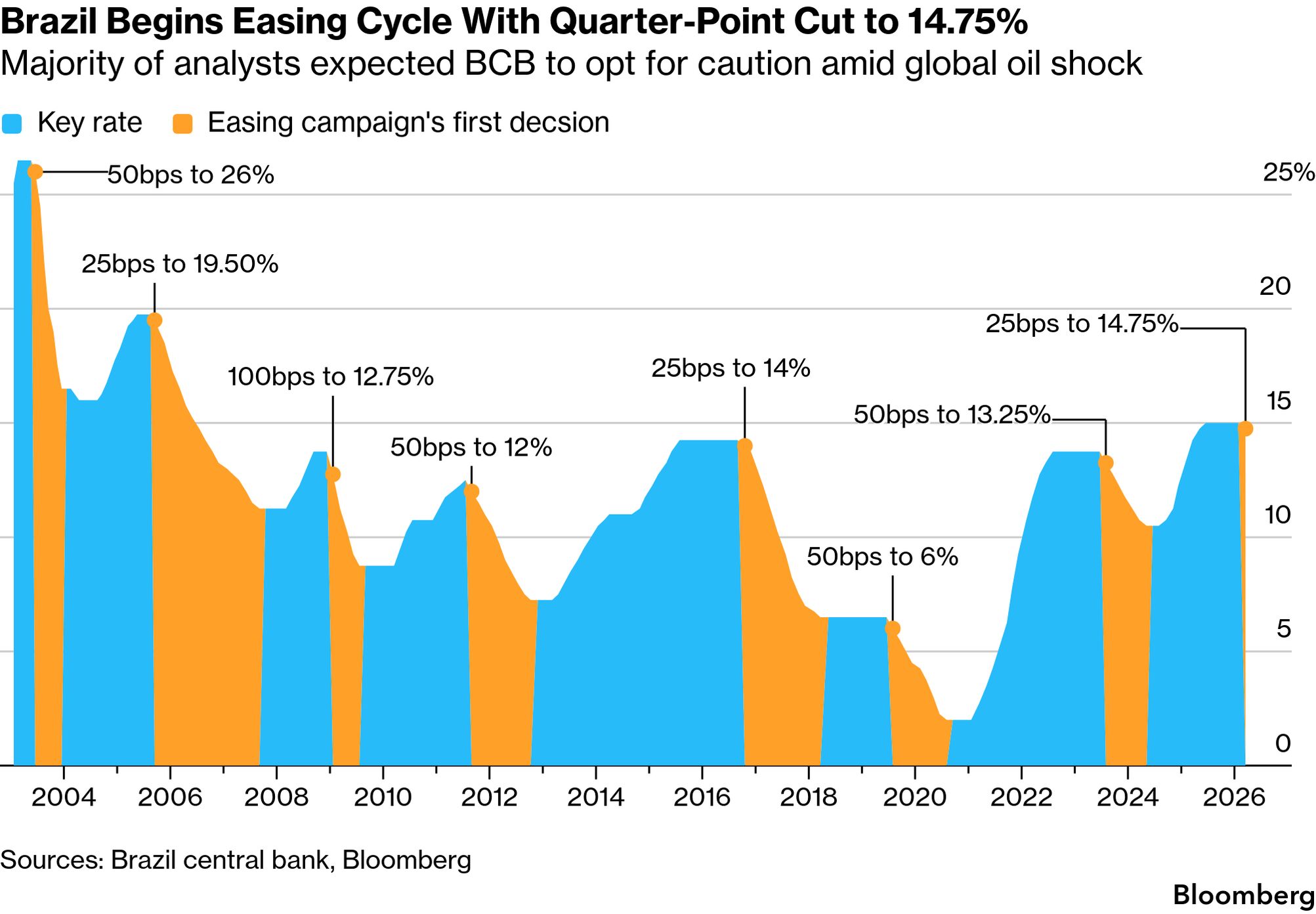 Argentina's unemployment rate rose to 7.5% at the end of last year, the highest fourth-quarter reading since the Covid-19 pandemic, as job losses worsened before Javier Milei's administration passed a labor reform bill last month. The jobless rate in Argentina's formal sector jumped for the first time in three quarters as informal employment held steady at about 43% of the employed population, according to data published Wednesday. 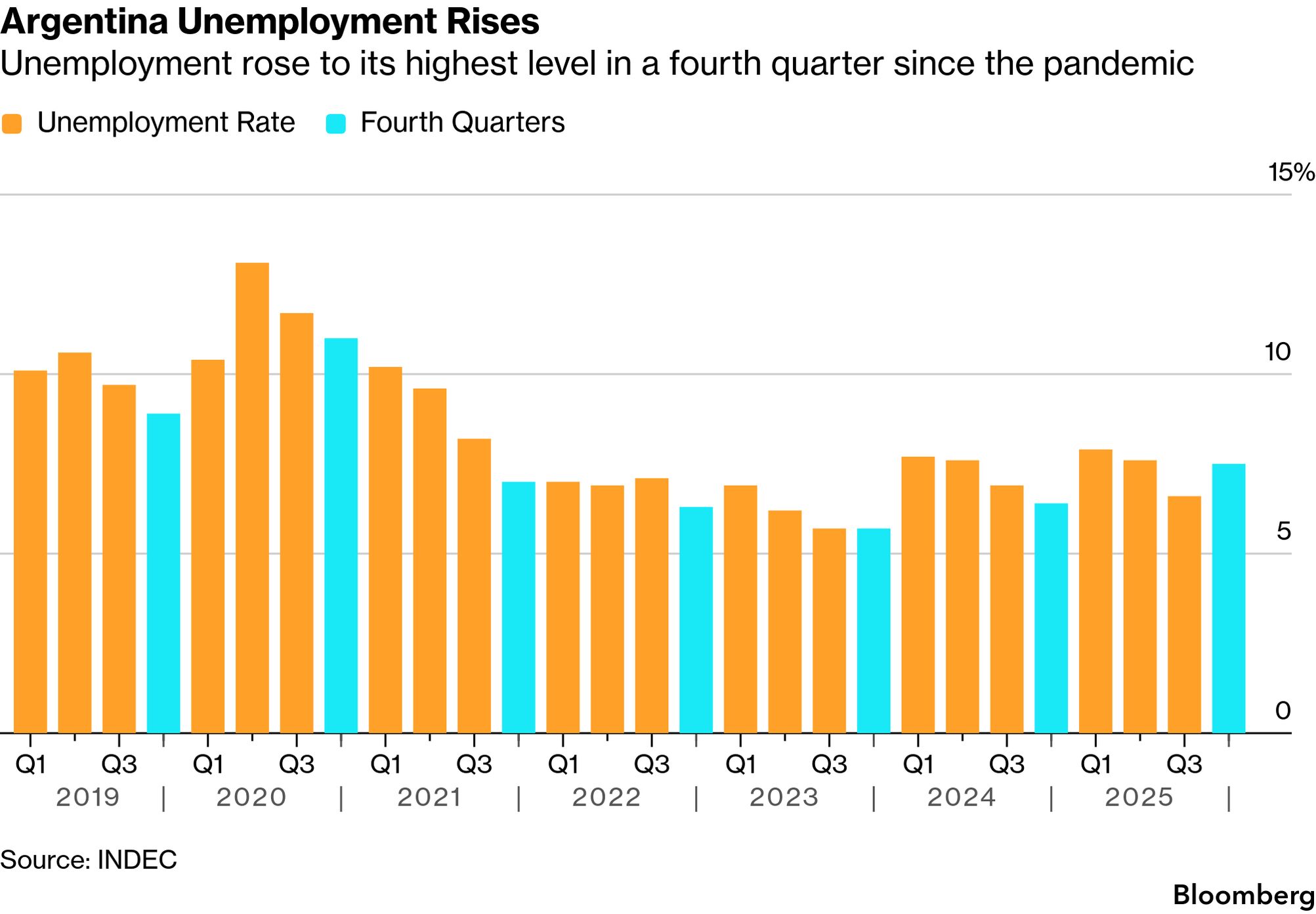 What You'll Need to Know TomorrowFor Your CommuteMore from BloombergEnjoying Evening Briefing Americas? Get more news and analysis with our regional editions for Asia and Europe. Check out these newsletters, too:
Explore all newsletters at Bloomberg.com. We're improving your newsletter experience and we'd love your feedback. If something looks off, help us fine-tune your experience by reporting it here. Follow us
You received this message because you are subscribed to Bloomberg's Evening Briefing Americas newsletter. If a friend forwarded you this message, sign up here to get it in your inbox.
|









Beacon no more
Milei risks becoming one conservative leader among many ...