Hello Power Up readers,
I am writing today from Houston, where the leaders of the world's energy industry are gathering this week for the annual CERAWeek conference. The main topic on the agenda is – you guessed it – the U.S.-Israel war with Iran, which has roiled energy markets and the global economy.
President Donald Trump surprised investors yet again this morning when he published a social media post saying that the U.S. has had "good and productive" conversations with Iran over the "complete resolution of hostilities" in the Middle East. Trump also said he had instructed the military to postpone any strikes against Iranian power plants and energy infrastructure for a five-day period, subject to the success of the talks.
Benchmark Brent crude oil prices dropped by over 10% to around $100 a barrel within seconds of Trump's social media post. The dollar declined and stocks rose on the news.
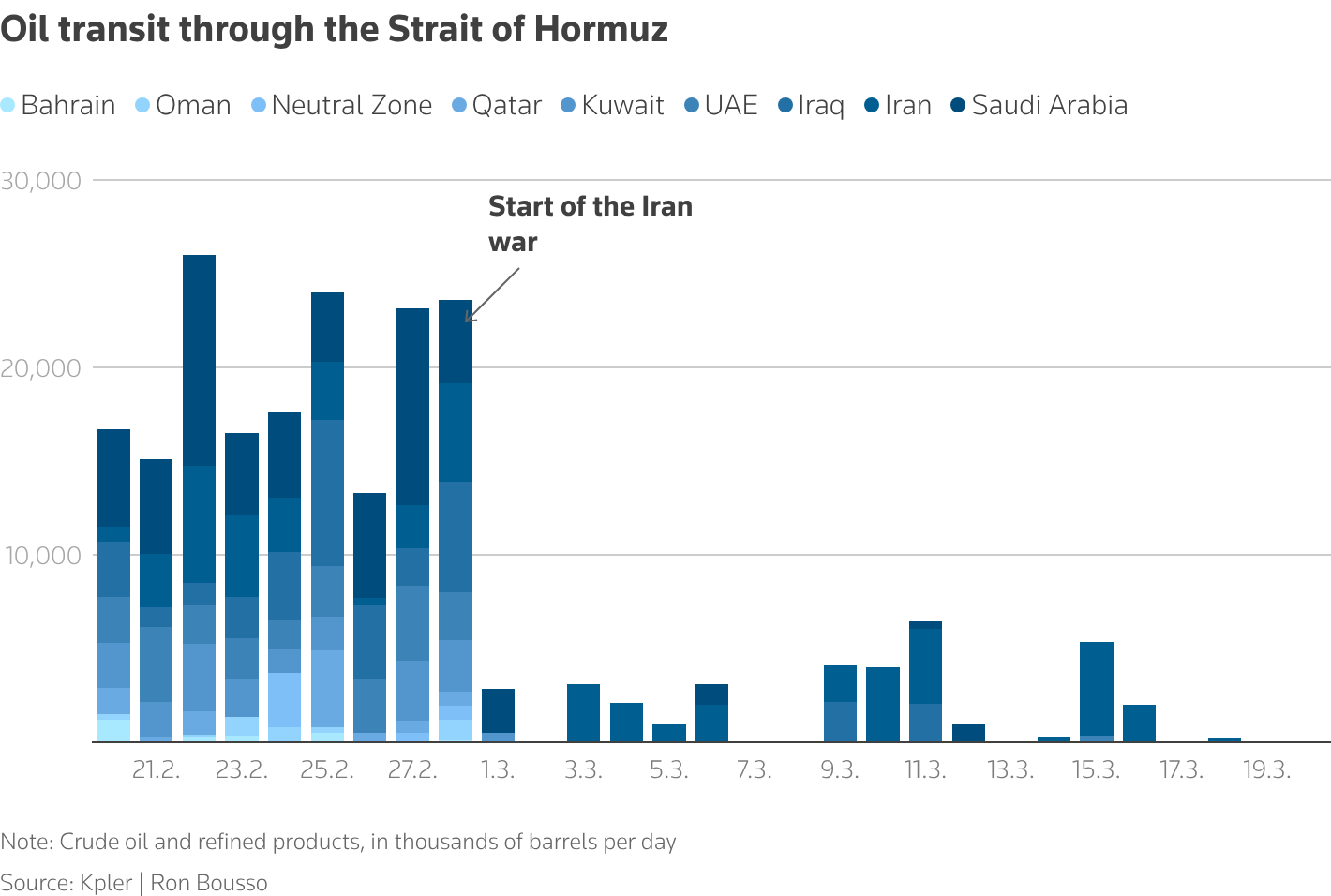
Trump's conciliatory statement marks a sharp reversal from a threat he issued on Saturday to strike Iran's power plants within 48 hours unless Tehran fully opened the Strait of Hormuz – that narrow sea lane that typically carries a fifth of the world's oil supplies.
Iran had responded to the ultimatum with defiance, vowing to keep the strait closed and threatening to strike more energy infrastructure across the region, including U.S. assets.
Following Trump's post on Monday, Iran's government news agency Fars reported that the belligerents had held no direct or indirect talks and that Trump instead retreated in the face of Tehran's threat.
The Mehr news agency, citing the foreign ministry, said there were regional initiatives to reduce tensions, but that they should be directed at Washington as Iran did not initiate the war.
While it is still unclear when and how the war will end, energy markets remain in turmoil due to the continued closure of the critical Strait of Hormuz. Britain, France and other allies are preparing a naval mission to help defend the waterway after a public spat with Trump, but they are unlikely to intervene decisively while fighting continues.
The longer the war drags on, the more upward pressure will build on oil prices globally. President Trump went into the Iran war convinced that America's vast oil wealth would insulate the country from the kind of energy shock now battering much of the world. Four weeks into the conflict, that shield is looking fragile.
More on this below.
Here are some more headlines: