| Read in browser | ||||||||||||||
 Welcome to Balance of Power, bringing you the latest in global politics. If you haven't yet, sign up here. On the eve of D-Day, Dwight D. Eisenhower invoked "our brave Allies and brothers-in-arms" in his rallying cry for the battle ahead. President Donald Trump threatened NATO with a "very bad future" unless fellow Alliance members aid the US in its war against Iran. The response of US allies and rivals alike to Trump's loaded request for help to secure the Strait of Hormuz has been blunt. Berlin was uncharacteristically scathing. The UK, habitually first in line to join past US military operations from Iraq to Afghanistan, made clear that it's sitting this one out. Japan — the closest US ally in Asia — said it had no plans to dispatch ships to escort tankers in the Gulf. 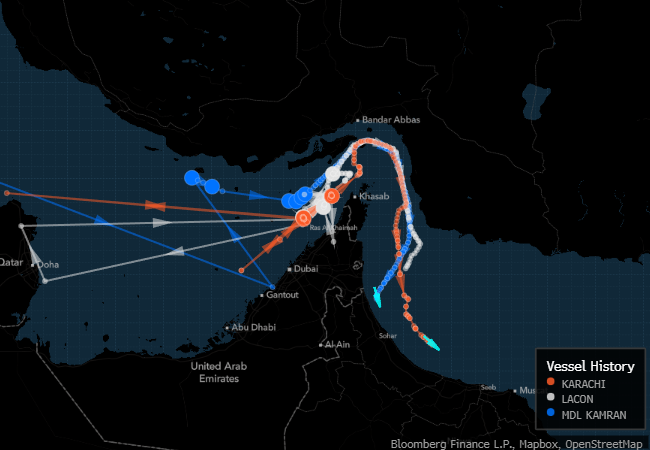 Ships leave Hormuz near Iran's coastline. That's despite Defense Secretary Pete Hegseth and Secretary of State Marco Rubio hitting the phones to Japan and South Korea respectively. They agreed to keep talking. In China, state-run media couldn't contain their scorn for Trump's request that Beijing help. Such a clear rejection hasn't been witnessed since Europe refused to bow to Trump's demands for control of Greenland. He duly backed off. Backing off isn't so straightforward now, when the US is fighting a war jointly with Israel in which massive military superiority is running into Iran's ability to control a naval choke point and upend the world economy. Trump is learning that friends are scarce when he fails to consult or even notify them of his war plans, after mocking their past military contributions. Standing up to Trump can pay electoral dividends, too. A vocal critic of the war, Spain's Pedro Sánchez saw his Socialists post unexpected gains in a regional ballot on Sunday. It remains unclear whether the resistance will translate to other areas, like trade or efforts to regulate US Big Tech. But on Iran, Trump looks increasingly on his own. — Alan Crawford 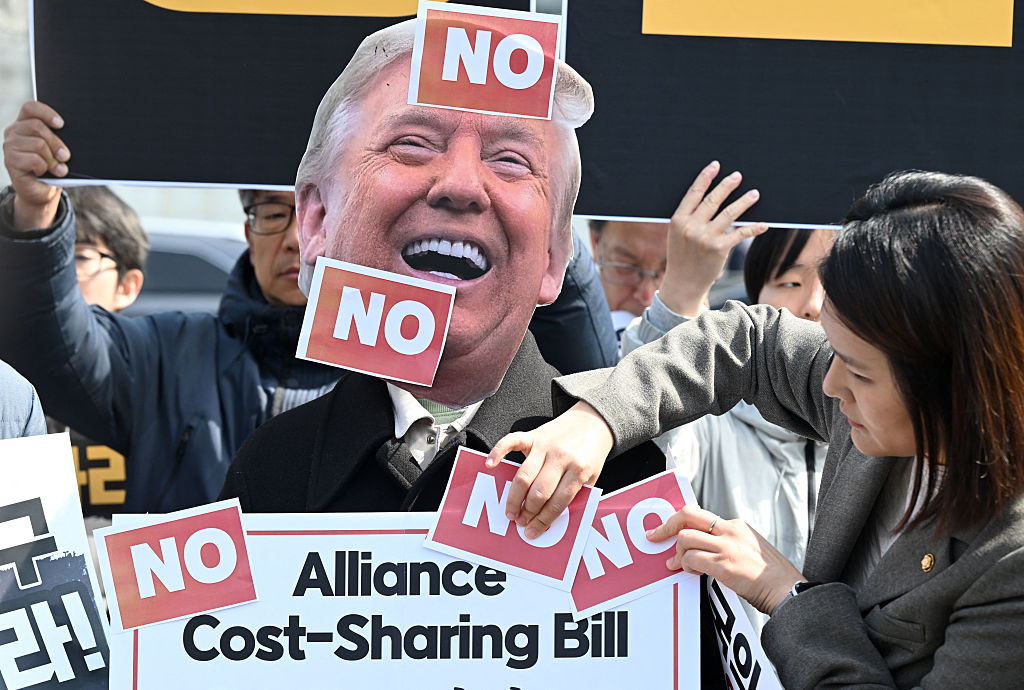 A protest against Trump's request to dispatch warships to the Strait of Hormuz in Seoul yesterday. Photographer: Jung Yeon-Je/AFP/Getty Images Global Must ReadsJust in: Israel said it killed Iran's security chief, Ali Larijani, in an overnight strike. If confirmed, it would be one of the most high-profile deaths since Supreme Leader Ali Khamenei on the first day of the now 18-day long war. Follow our live blog for more detail. Iran intensified its attacks on energy infrastructure around the Persian Gulf and set a massive gas field ablaze, stoking pressure on global energy supplies. Vessel-tracking data we compiled suggest that Tehran's control over the Strait of Hormuz is tightening even as the US seeks to reopen the narrow waterway that is crucial for fuel exports to Asia. 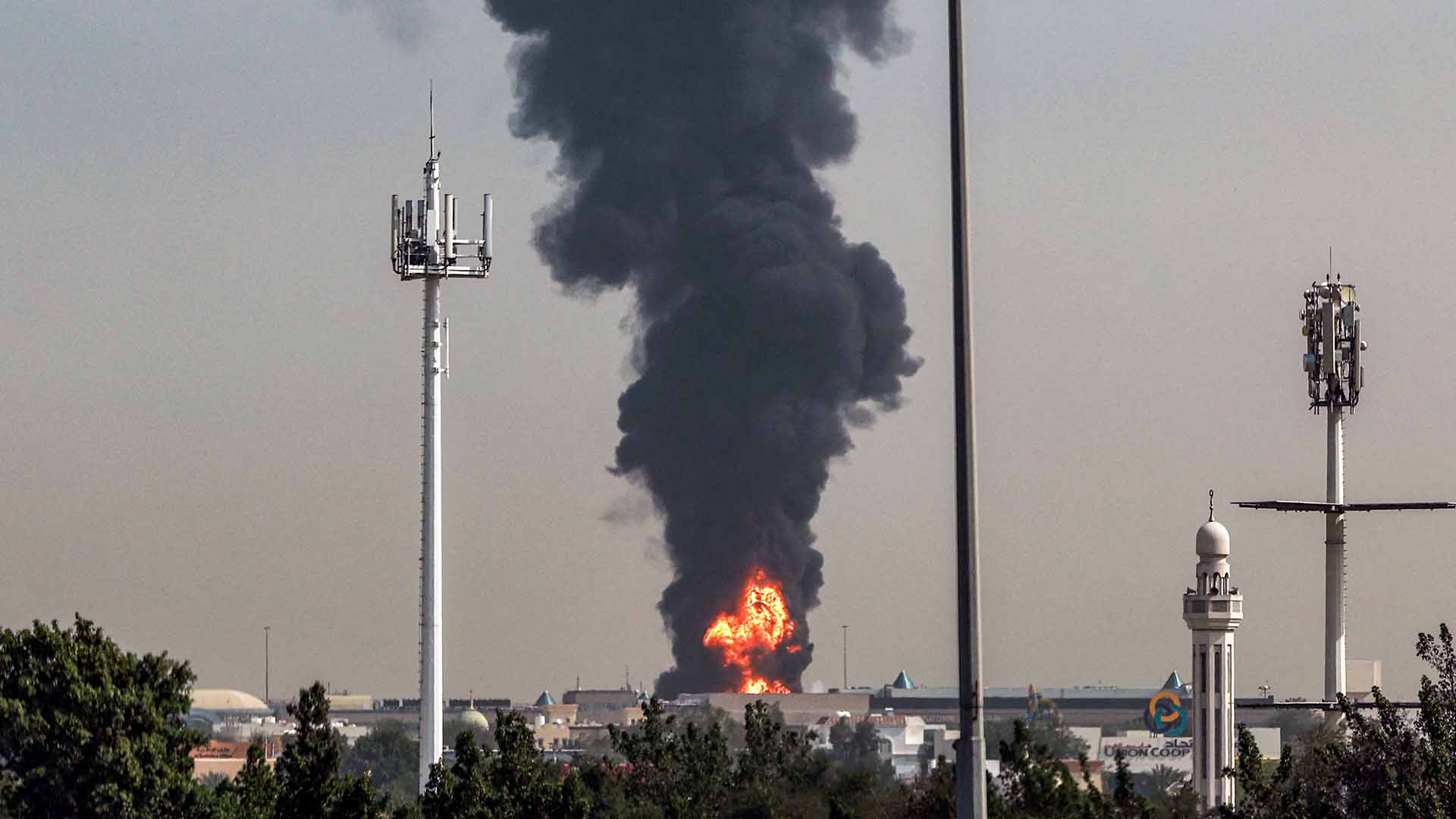 WATCH: Joumanna Bercetche reports on the latest developments in the Middle East on Bloomberg TV. Trump requested a postponement for about a month of his summit with Chinese leader Xi Jinping that was due to begin March 31, saying it was important for him to remain in Washington to oversee the Iran war. The delay — the latest example in a pattern of postponing or calling off high-profile meetings — gives officials in Beijing an opportunity to regroup and assess the full scale of the economic and diplomatic fallout from the conflict. Pakistan launched airstrikes on Afghanistan's capital late yesterday, triggering a fresh exchange of accusations. Afghanistan's Taliban government said the attacks killed at least 400 people at a drug-treatment hospital while Islamabad said it had targeted military infrastructure. Pakistan declared an "open war" with its neighbor last month and has since struck military and other facilities deeper inside the country, including in the capital, Kabul. Irish Premier Micheál Martin will gift Trump the traditional bowl of shamrock when he meets the US president for St. Patrick's Day, part of a charm offensive to safeguard an economic model built on US investment. The meeting at the White House has historically been a soft-power opportunity for Ireland on its national holiday, but is now fraught with danger. Trump has accused European countries of taking advantage of the US, and Dublin has at times been singled out. Newly inaugurated Chilean President José Antonio Kast traveled to the border with Peru and Bolivia yesterday to oversee the start of construction on barriers to keep out migrants, while his administration is promoting laws to cut taxes and slash red tape. Trump ally Kast announced a so-called Border Shield Plan during his campaign, saying Chile faces an "unprecedented migration crisis" and that the porous frontier has become a lawless corridor for illegal migration, crime, drug trafficking and human smuggling. 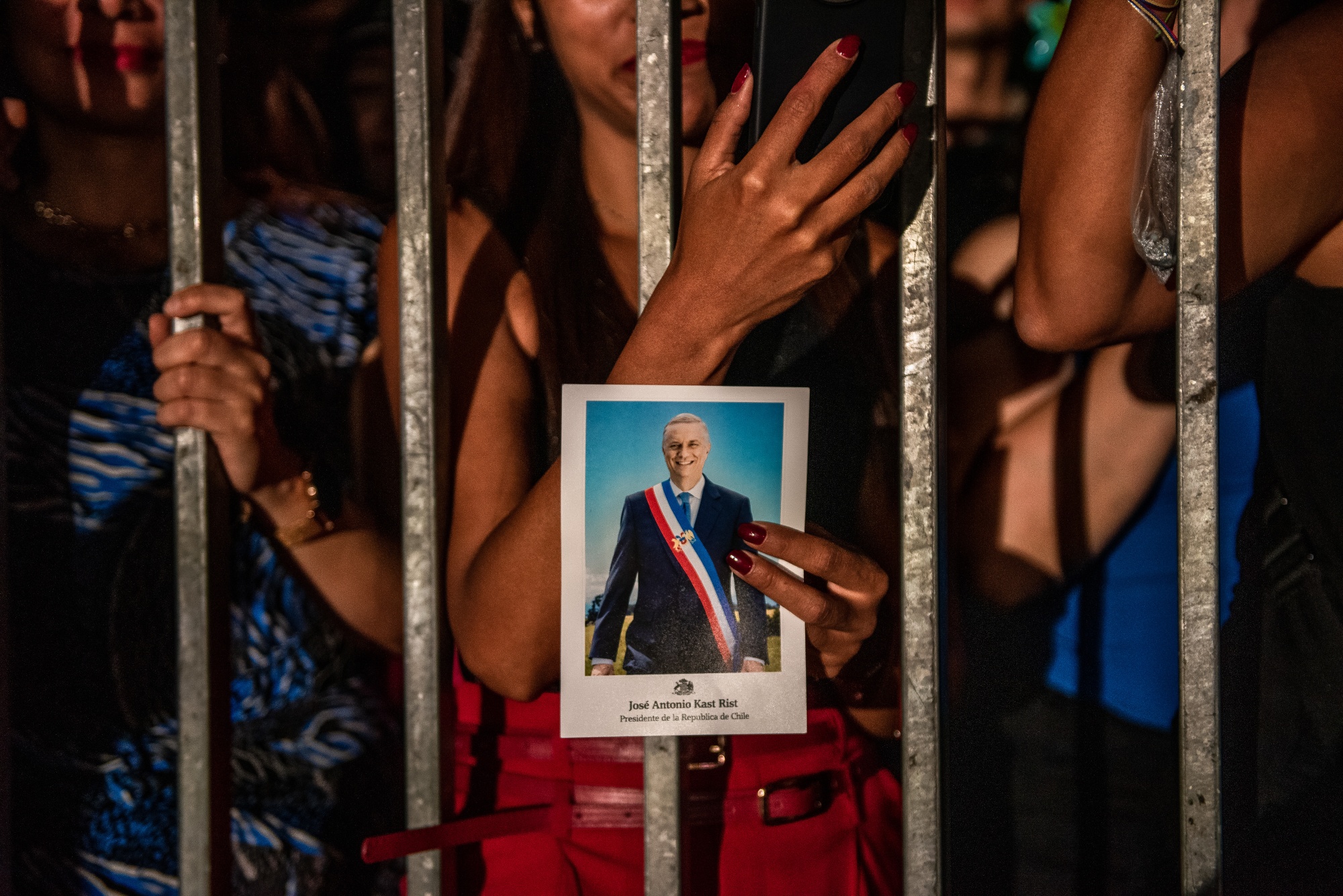 A supporter holds a photo of Kast following his inauguration in Santiago on March 11. Photographer: Cristobal Olivares/Bloomberg The European Union is close to finalizing a trade deal with Australia after years of negotiations, and European Commission President Ursula von der Leyen may travel there as soon as this weekend to sign the pact, sources say. A plan by Switzerland's right-wing People's Party to cap the country's population at 10 million has strong support despite repeated pushback by politicians and business leaders. Thailand will start building fences along a portion of its border with Cambodia next month to boost security after deadly clashes between the countries erupted last year following longstanding tensions. The International Monetary Fund raised concern about Ukraine's ability to continue receiving aid from its $8.1 billion package as lawmakers stall on measures needed to release the financing. Sign up for the Washington Edition newsletter for news from the US capital and watch Balance of Power at 1 and 5 p.m. ET weekdays on Bloomberg Television. Chart of the Day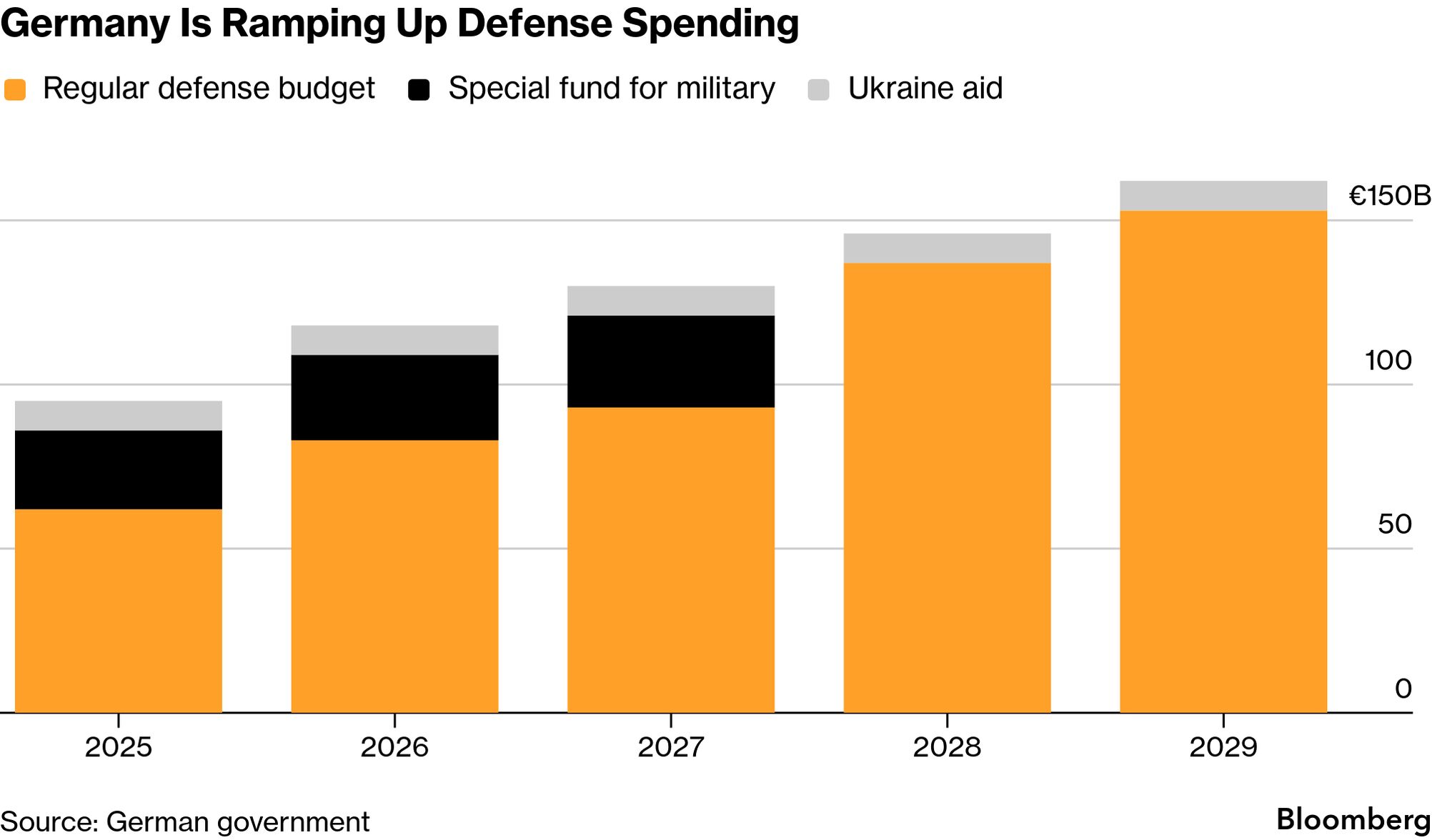 The jolt from Russia's invasion of Ukraine has triggered Germany's biggest military transformation since the Cold War. Chancellor Friedrich Merz earmarked an initial €600 billion ($690 billion) in spending as Trump voiced frustration with guaranteeing Europe's security. What began as geopolitical necessity, however, is becoming meaningful economic stimulus as streamlined procurement helps producers secure record orders for everything from artillery shells to attack drones. And FinallyTrump promised Venezuelans economic prosperity after removing Nicolás Maduro from power, yet life has only gotten harder in the two months since. Oil output fell more than 20% in January and exports plunged, limiting the flow of much-needed dollars that many Venezuelans typically use instead of the depreciated local currency. That's spurred inflation to around 600%, causing more grief for Venezuelans earning paltry stagnant wages. 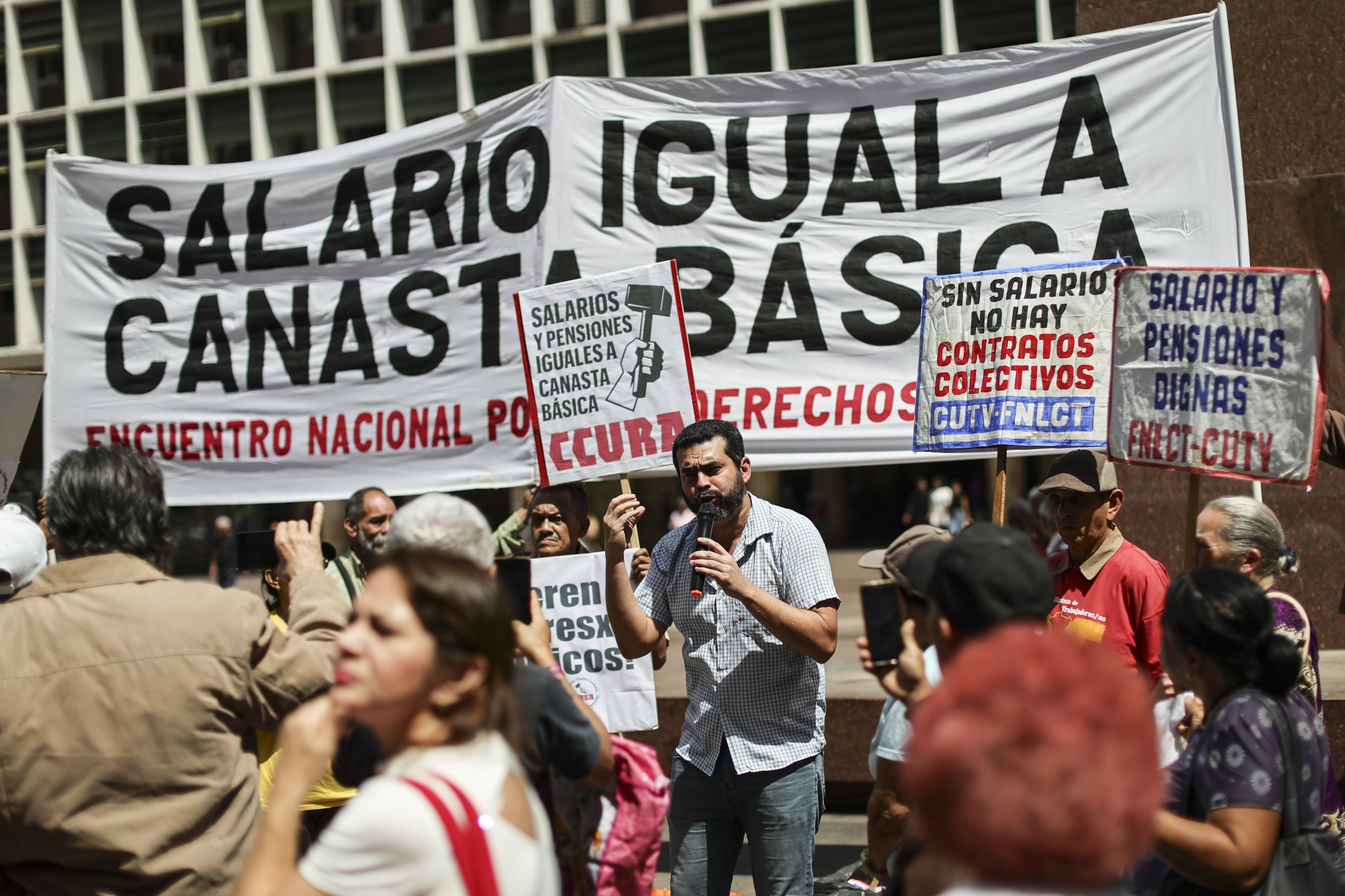 A protest for higher wages outside the Labor Ministry in Caracas on Feb. 26. Photographer: Jesus Vargas/Getty Images More from Bloomberg
We're improving your newsletter experience and we'd love your feedback. If something looks off, help us by reporting it here. Follow us
You received this message because you are subscribed to Bloomberg's Balance of Power newsletter. If a friend forwarded you this message, sign up here to get it in your inbox.
|




Highlights from Bloomberg CityLab 2026 in Madrid
The conference kicked off with remarks from the mayors of Madrid, London and more. ...