| Read in browser | ||||||||||||||
 For more than a half-century, leaders of industrial countries have periodically gathered to discuss and maintain the international order. A meeting this week just outside Paris has echoes of the first such conclave in 1975. Oliver Crook, Bloomberg Television's chief Europe correspondent, explains how that old order appears to be breaking down. Plus: The co-founder of Spotify has pivoted to full-body scans (free link!) and the Arc'teryx brand appeals to woodsy types and urban CEOs alike. If this newsletter was forwarded to you, click here to sign up. Fifty-one years ago, the leaders of six countries—France, Italy, Japan, the UK, the US and West Germany—met at the Château de Rambouillet just outside Paris. The presidents and prime ministers had gathered to address an urgent problem: inflation stemming from efforts by the Organization of the Petroleum Exporting Countries (or OPEC, an acronym the world would soon become intimately familiar with) to keep oil prices high. The participants earned the moniker Group of Six, or G-6, and the conclave yielded the so-called Rambouillet Declaration. That document laid out the global order that governed the next half-century: open trade, multilateral cooperation and economic partnership between developed and developing nations. The system lasted until Donald Trump's return to the White House. This week, foreign ministers of that group, now including Canada and called the G-7, are meeting about 10 miles from Rambouillet, at the Abbaye des Vaux de Cernay, a 10th century monastery that's been turned into a luxury hotel. Topping their agenda: Trump's war in Iran and the ensuing energy shock. When US Secretary of State Marco Rubio showed up this morning, the G-7 members—joined by Brazil, India, Saudi Arabia and South Korea—pressed him for details on the administration's war aims and what Trump expects from his allies. For the Europeans, the priority was to persuade the US to continue supporting Ukraine in the face of Russian aggression even as Washington is increasingly distracted by the conflict in Iran. 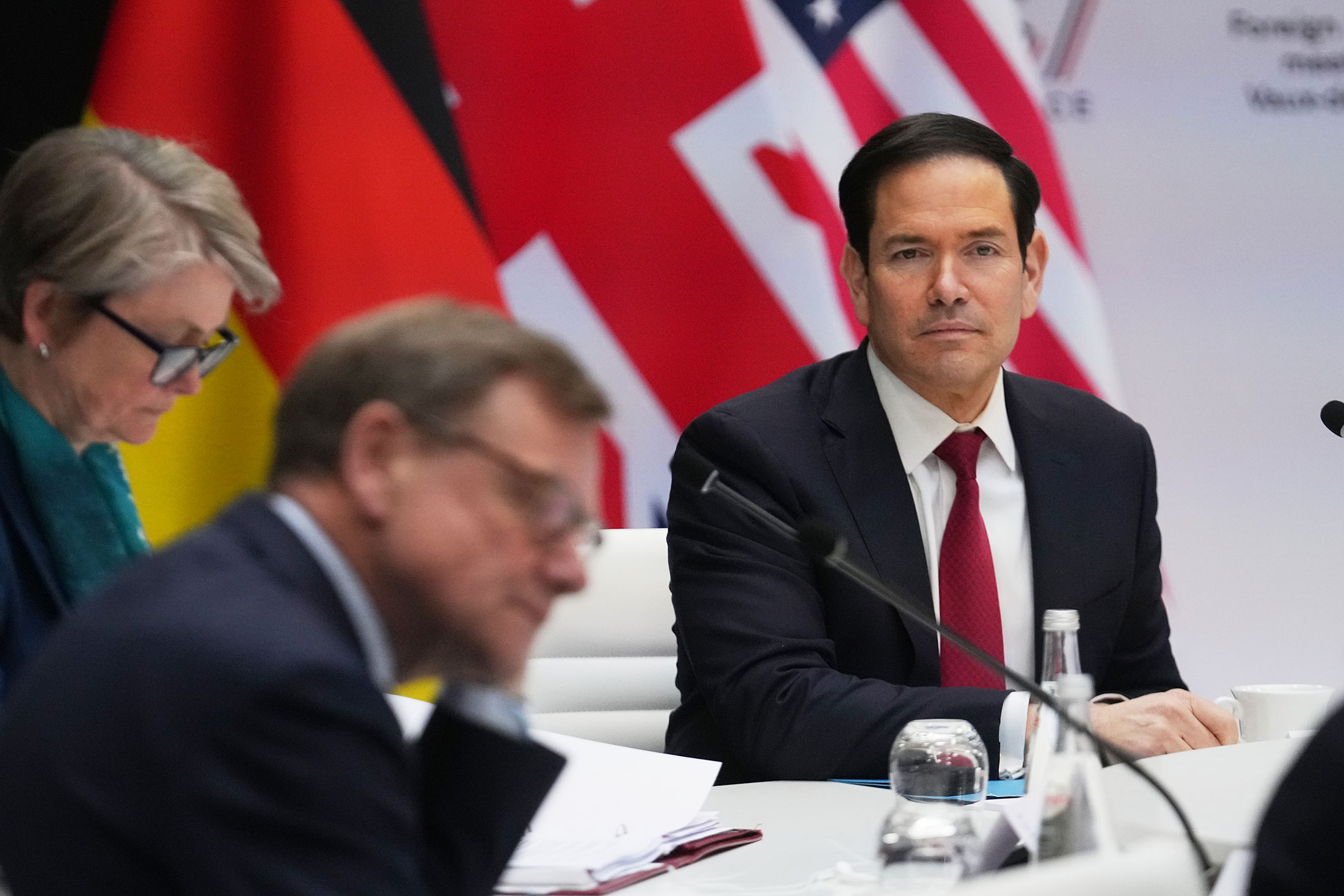 Rubio at the G-7 foreign minister's meeting on Friday in Cernay-la-Ville, France. Photographer: Michel Euler/AP Photo In ordinary times, the G-7 would be the best forum for easing the impact of wars and energy crises. But these aren't ordinary times. After decades of sitting at the head of the table, the US under Trump has disavowed the multilateralism represented by the G-7. In the past year, the administration has withdrawn from groups such as the World Health Organization and skipped various global conclaves attended by longtime allies. Even as the world faces another energy shock and a disintegrating global order, the US seems to be advocating remedies that are 180 degrees removed from what the G-6 first proposed at Rambouillet. More than a year into Trump's second term, the G-7 is still coming to terms with that shift, and the war in Iran puts US allies in an awkward position. Rubio is in France to rally support for a fight most Europeans see as belonging solely to Trump and Israeli Premier Benjamin Netanyahu. Most people I've spoken with say they might be willing to lend a hand in reopening global shipping, but only after the war ends. As Rubio headed back to his jet, the other attendees were left wondering about the future of the G-7. Just miles from the birthplace of the order that governed the last half-century, can its utility be revived? Or is it time to quietly bury it? Latest on the Iran War   Watch: The Mishal Husain Show on who will stop the war In Brief
On the PodcastAmerica's favorite pastime is back, and so is 2008? This week on the Everybody's Business podcast from Bloomberg Businessweek, hosts Max Chafkin and Stacey Vanek Smith cover the bases on the simultaneous cultural renaissance of baseball and the rise of the trillion-dollar private credit industry. Plus, the debut of a new segment! Listen and subscribe to Everybody's Business on Apple, Spotify, iHeart and the Bloomberg Terminal.  How Much for Oil?$200 That's how high the price of a barrel of oil could rise if the Iran war drags on until June, with the Strait of Hormuz staying shut, analysts at Macquarie Group said. Brent crude is on pace for a record monthly gain in March. Health Scans' Promise—and Drawbacks Inside Neko's location in Marylebone, London. Source: Neko Health It's been 15 years since Spotify co-founder Daniel Ek brought the streaming platform to the US, changing the way Americans discover and consume music. His next project—a startup that offers full-body health scans—will soon arrive stateside with its own ambitious plans to reshape an industry. Neko Health, founded in 2018 as Ek began planning for life after Spotify Technology SA's initial public offering, operates in Sweden and the UK. If Neko receives regulatory approval in the US, something it's working through now, the company's first American location will open in New York as soon as this spring, with more US clinics planned in the following months, says Chief Executive Officer Hjalmar Nilsonne. In the UK, the company's full-body health scans—which use a combination of imaging and other tests, including a blood test, to check for conditions such as skin cancer, heart disease and diabetes risk—cost £299 (about $400); Nilsonne says the price in the US will likely be higher due to greater costs for medical staffing and real estate. The idea of full body scans has some splashy celebrity endorsements, Sabela Ojea writes. But what do doctors think?: The Startup Selling Full-Body Scans as the Future of Health Care (🎁) Into the Woods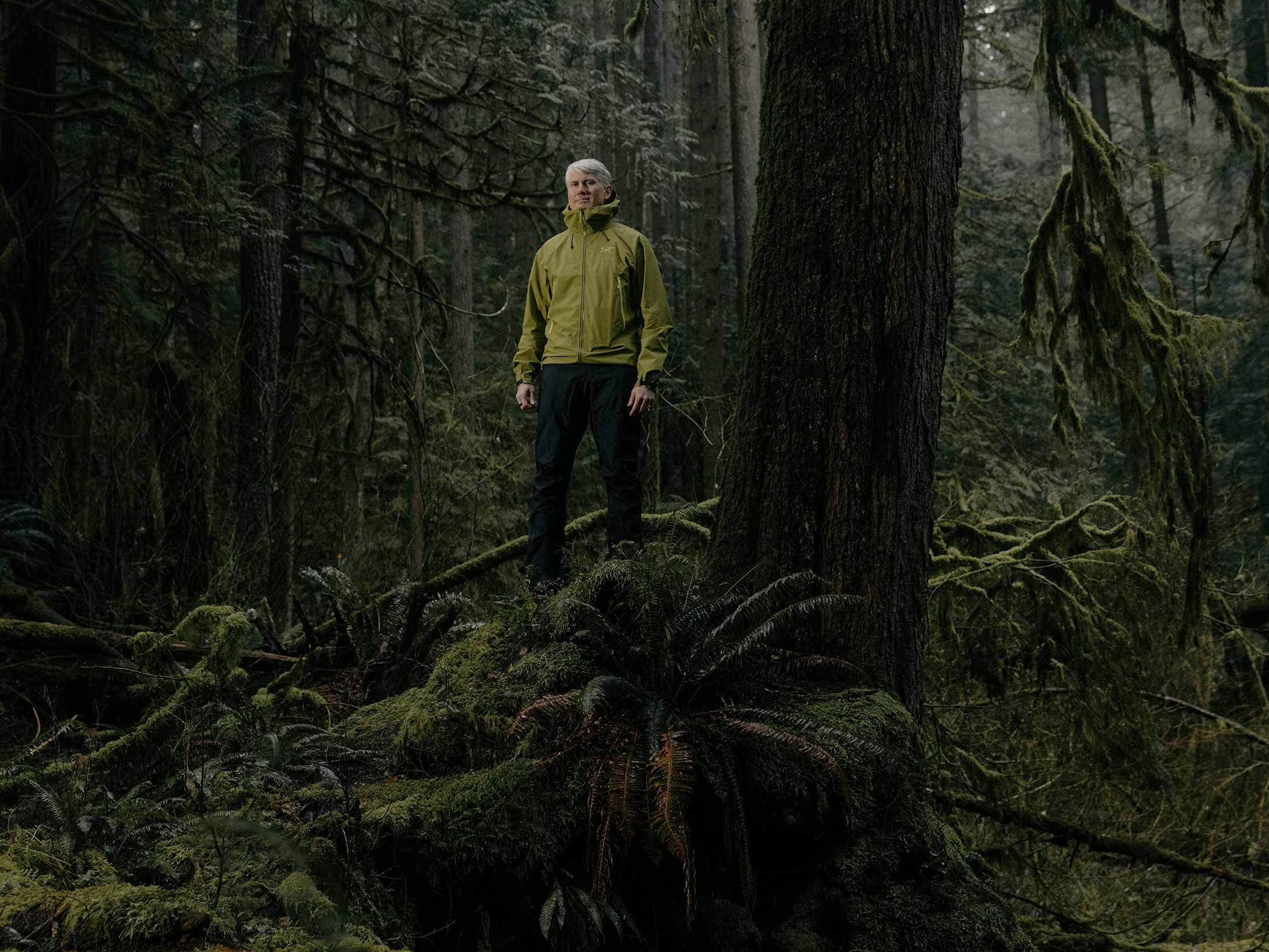 Stuart Haselden on a hiking trail near Arc'teryx company headquarters in Vancouver. Photographer: Grant Harder for Bloomberg Businessweek Stuart Haselden had hoped to spend his winter weekends backcountry skiing—schlepping up ungroomed inclines before barreling down silent slopes—but Vancouver's snowless season squashed those plans. British Columbia has been dogged by rain, and lots of it. At least the chief executive officer of Arc'teryx knows how to dress for it. Beneath a canopy of old-growth cedar, taking in the endless green of the Coast Mountains—the company's birthplace and a regular product testing ground—Haselden is sheathed in Arc'teryx's $400 Beta rain jacket, $300 Beta pants and $200 Norvan LD 4 GTX trail-running shoes. Raindrops pelt his hood; his Gore-Tex crinkles with each step. He stays dry. Exceedingly popular among both woodsy backpackers and C-suite executives, Arc'teryx has expanded noticeably since the retailer's Finnish owner, Amer Sports, was acquired by China's Anta Sports Products Ltd. in 2019. Amer also owns Salomon, Wilson and other major brands, yet Arc'teryx remains its "highest margin" asset, the company said in a recent earnings report. Brent Crane, for our series A Walk With, joins Haselden for a hike: How Arc'teryx's CEO Won Over Chalamet and Chinese Shoppers 1,800% Interest"There was no way I was getting funding from anyone other than these people. They know you can't get approved anywhere else." Laura Pelletier Ottawa resident Canada has seen a surge in unlicensed lenders targeting vulnerable borrowers since capping interest rates. Trump has proposed a similar move in the US. Play Alphadots!Our daily word puzzle with a plot twist.  Today's clue: Onboarding session? More From BloombergLike Businessweek Daily? Check out these newsletters:
Explore all Bloomberg newsletters. We're improving your newsletter experience and we'd love your feedback. If something looks off, help us fine-tune your experience by reporting it here. Follow us
You received this message because you are subscribed to Bloomberg's Businessweek Daily newsletter. If a friend forwarded you this message, sign up here to get it in your inbox.
|




Washington Edition: The next big thing
Supplemental funding for war on agenda Read in browser This is Washington Edition, the newsletter about money, power and politics in the nation's capital. Every Friday, Bloomberg Intelligence senior analyst Nathan Dean gives his insights into what's been happening and what's coming up in the nooks and crannies of government and markets. Sign up here . Email our editors here . No Easy Answers Happy Friday! This morning the Senate agreed to fund most of the Department of Homeland Security, but the House is throwing a wrench into the works, as detailed here . I know you care about one thing, though: When are the security lines at airports going to get back to normal? The answer is, soon, probably. President Donald Trump this afternoon directed the DHS to shift around money t...