| Read in browser | ||||||||||||||
 Hello and welcome to Bloomberg's weekly design digest. I'm Kriston Capps, staff writer and editor for Bloomberg CityLab and your guide to the world of architecture and the people who build things. This week Reuters reporters found Banksy. Sign up to keep up: Subscribe to get the Design Edition newsletter every Sunday. 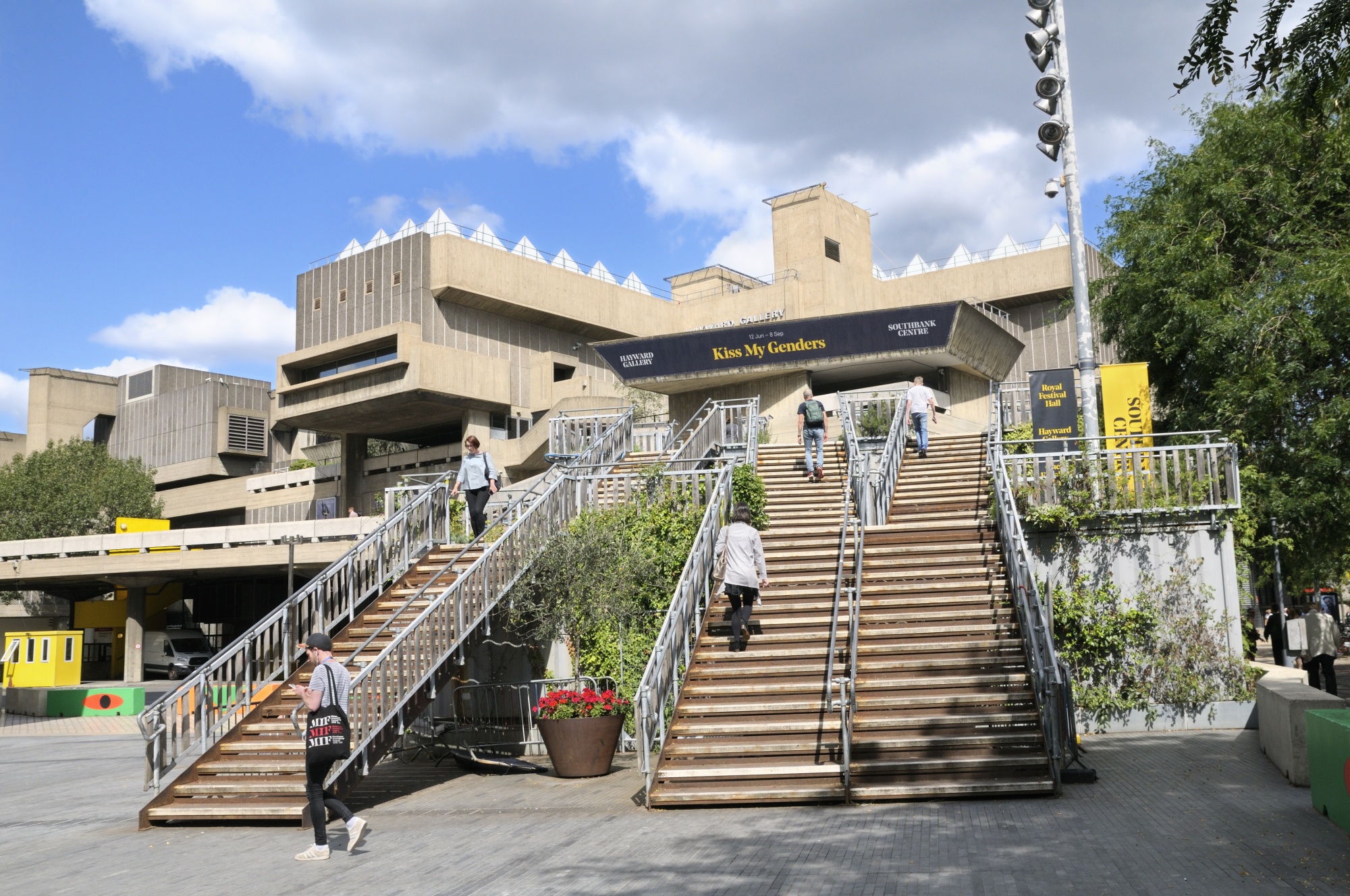 Londoners have changed their minds about the Southbank Centre. Photographer: Chris Harris/Universal Images Group/Getty Images Britain once despised Brutalism. British people didn't even need to see London's most prominent Brutalist project, the Southbank Centre, before they decided they hated it, voting it Britain's worst building in 1967. That was fully nine years before it was completed. Designed by a London County Council team led by architect Norman Engleback, the Southbank Centre includes three concert halls plus a museum-quality exhibition gallery. It's part of a sprawling complex that also includes the UK's National Theatre and BFI Southbank, which is an awful lot of concrete to park along the Thames. The Southbank Centre is more than the sum of its parts. The project was the first phase in an urban regeneration scheme that sought to reconfigure London through a series of overlapping tunnels, pedways and interconnected plazas, making it a multi-level city. This revitalization scheme, which never panned out, contributed to the public's poor opinion of Brutalism: In the 1980s the area earned the nickname "Cardboard City" for the homeless people who slept in the tunnels linking Southbank to Waterloo Station. Fifty years on, Britain's changed its tune: In February, the Southbank Centre was officially recognized as a historical monument, saving it from the wrecking ball that Londoners might have gladly swung in its direction in years prior. 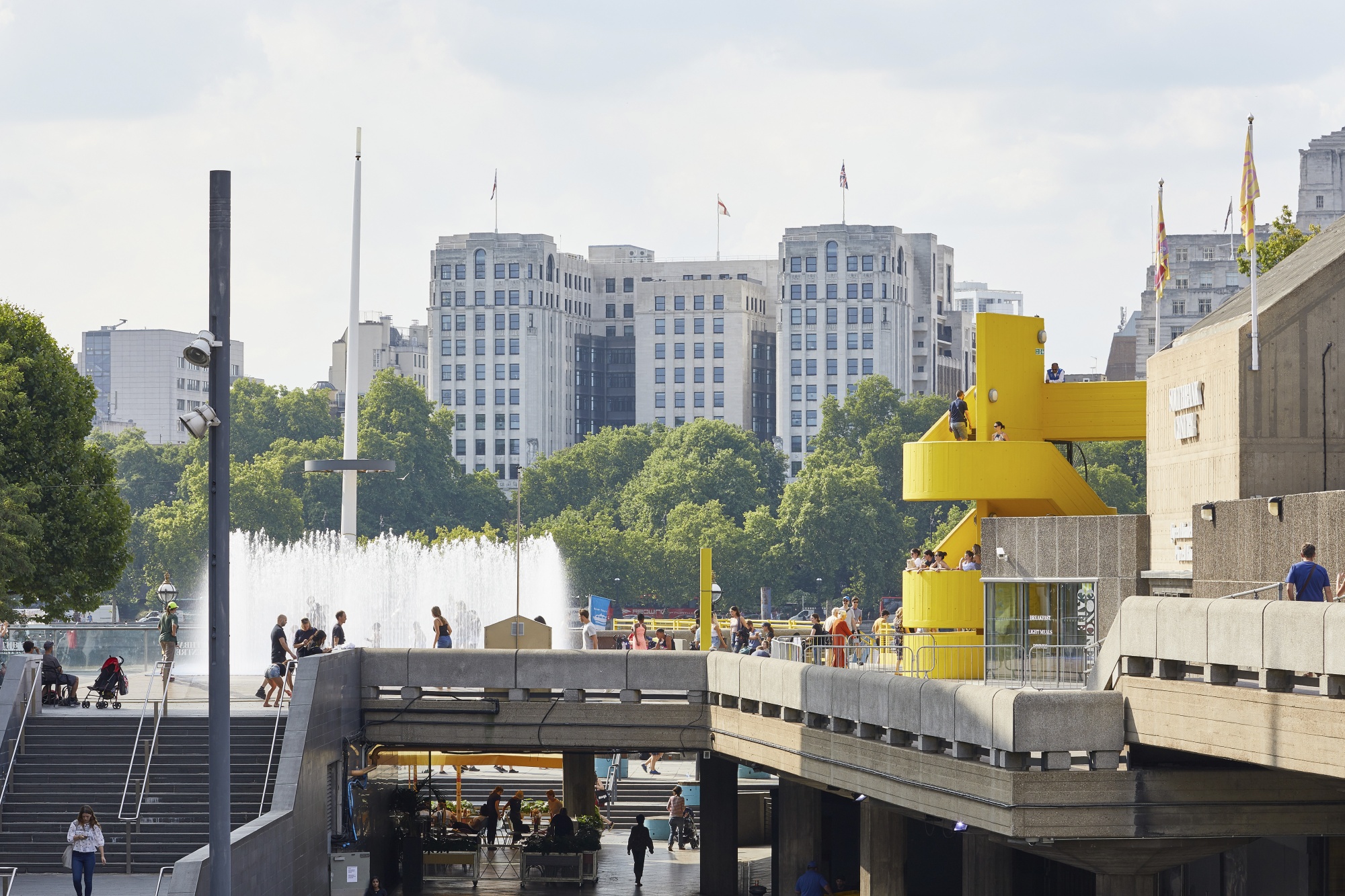 Southbank Centre's raised walkways look out over the Thames River. Photographer: Andy Stagg/View Pictures/Universal Images Group/Getty Images So what changed between the construction of the complex and its listing as a landmark? Not the buildings but the spaces between them: the unforgiving Brutalist plazas, tunnels and pedways. Happily, skateboarders claimed the most forbidding of these overlooked spaces, turning a vaulted undercroft into an unofficial venue; other incremental changes added kiosks and retail bays, opening the way for new businesses and customers. "While the buildings still retain their original stark appearance, a series of minor improvements and renovations of the Centre's bare concrete plazas over the years has left them feeling as comfortable and well-used as an old slipper," writes Feargus O'Sullivan in a feature about how Britain came to love Southbank Centre. Compromises that made the plaza more inviting to the public helped to make the case for preserving the complex itself. Southbank's designers included architects Warren Chalk, Ron Herron and Dennis Crompton, all members of Archigram, which makes the Centre a rare built project by the provocative theoretical group. And the Centre's proximity to Denys Lasdun's National Theater gives the city a Brutalist cultural district — one that Londoners enjoy. It's a lesson that other places should take to heart. Brutalist plazas are common in urban renewal schemes across North America. While there are plenty of examples of healthy modernist urban landscapes, like Fountain Place in Dallas (designed by Dan Kiley) or Peavey Plaza in Minneapolis (by M. Paul Friedberg), the most prominent Brutalist plazas have united whole cities against them. 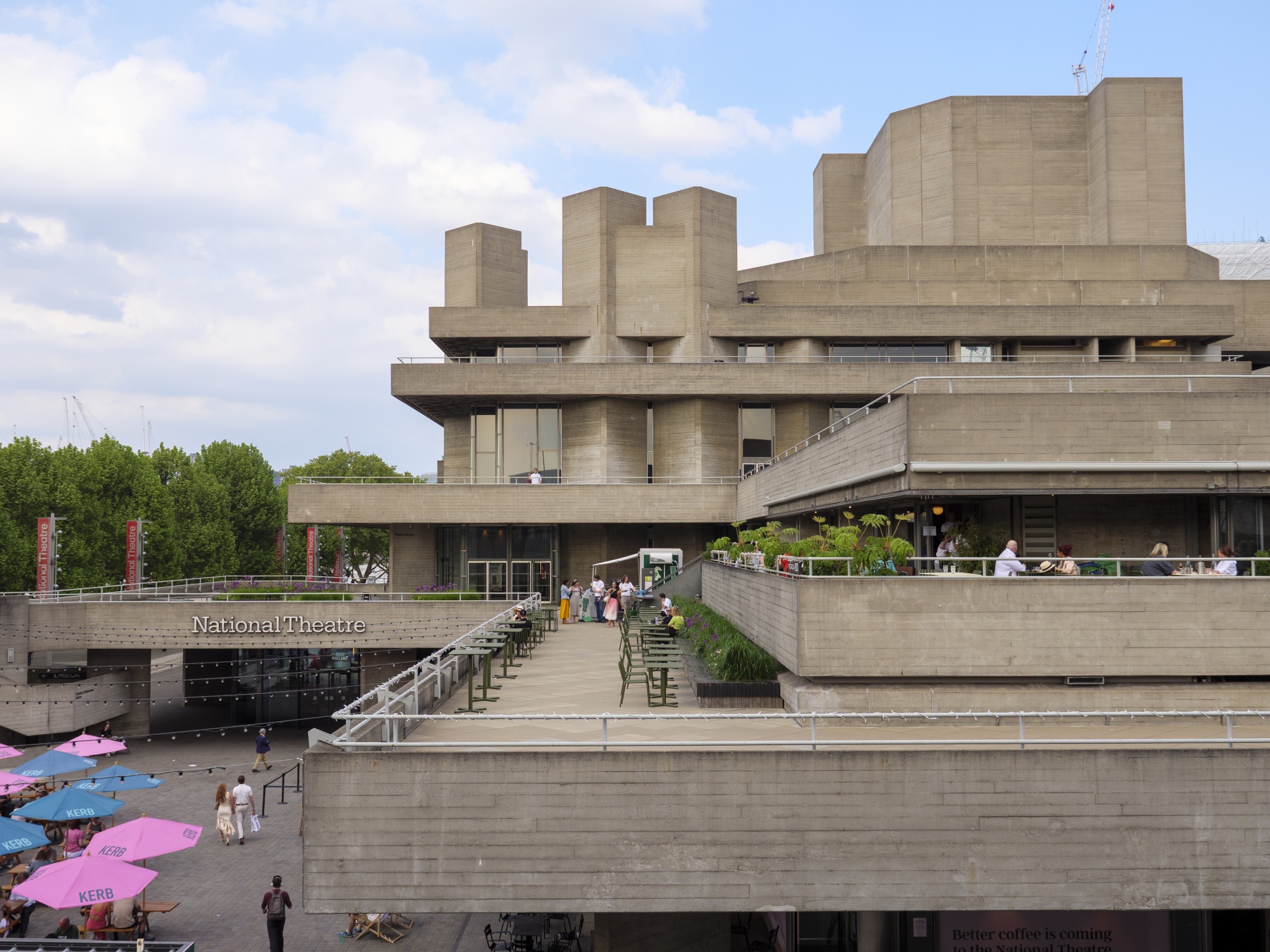 The National Theatre is another Brutalist project adjacent to Southbank Centre. Photographer: Alex Segre/UCG/Universal Images Group via Getty Images/Universal Images Group Editorial Consider the work by Sasaki Associates to improve Boston City Hall Plaza, surely one of the most polarizing places in the US. (Even though Ada Louise Huxtable as "one of the best urban spaces of the 20th century" in 1972!) Sasaki's improvements involved planting hundreds of trees and thousands of plants while expanding amenities and other comforts — not unlike the changes that have taken place more gradually at London's Southbank Centre. "Ordinary people can in fact appreciate uncompromising buildings as long as the spaces around them are appealingly configured," O'Sullivan writes. "It's hard to love buildings left marooned behind bleak wastes of paving or lines of traffic. Surround that same building with trees and broader sidewalks, however, and add cafes, stores or homes, and it will come to life." Design stories we're writing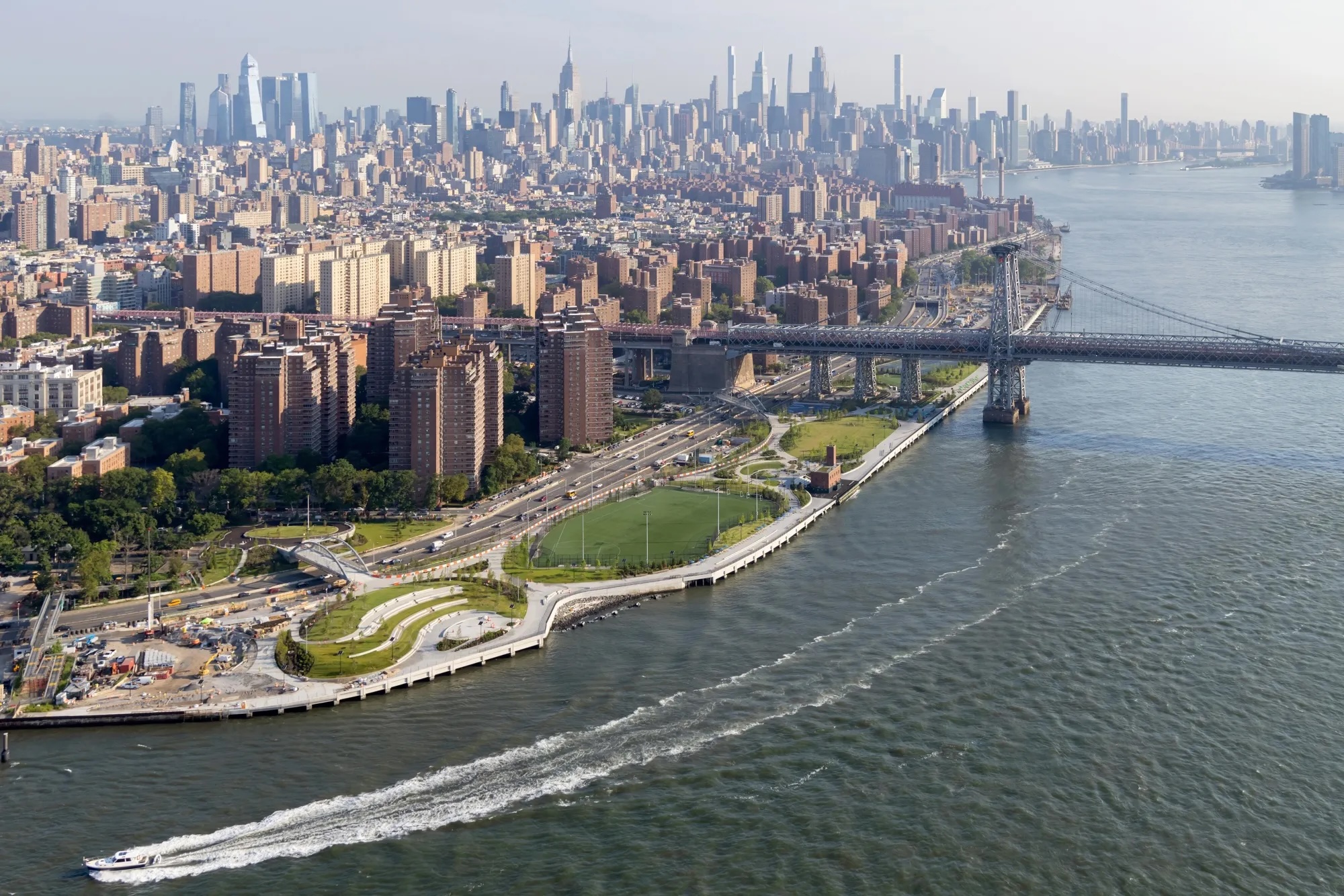 Dutch firm One Architecture & Urbanism worked for a decade on East River Park, which began opening in stages in 2025. Photographer: Iwan Baan When Superstorm Sandy produced 10-foot waves that pounded New York's coast line, the city launched an emergency campaign to boost its resilience against climate disasters. That effort — a series of shoreline fortifications extending 10 miles along Manhattan — is now bearing fruit. James S. Russell writes about the long campaign to rebuild East River Park, improving its performance as a coastal barrier along the Lower East Side while still preserving its status as a cherished community amenity. 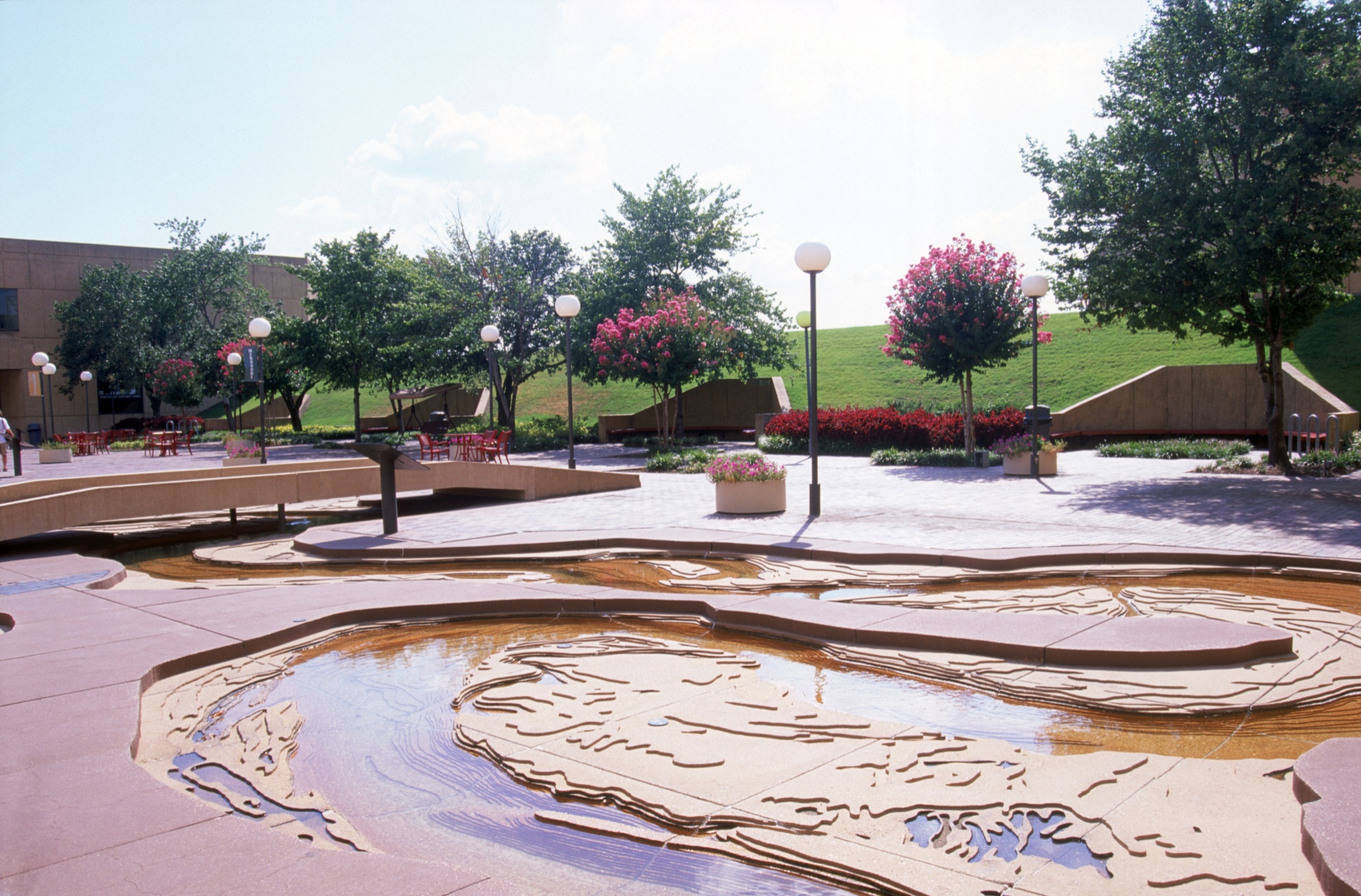 Mud Island Park boasts a 2,000-foot-long topographical model of the Mississippi River based on US Corps of Engineers maps. Photographer: Barry Winiker/The Image Bank RF Memphis had big dreams for Mud Island Park, a Mississippi River destination with a 5,000-seat amphitheater, a 33,000-square-foot museum and other amenities — even its own monorail. But 40 years later, most of the features of the Brutalist complex had closed. Now, after the successful reopening of nearby Tom Lee Park, Memphians are taking a second look at Mud Island. Mark Byrnes writes about the case for restoring Mud Island Park and why it could happen in the near future. Design stories we're readingA project to remove sidewalk canopies and slipcovers from the facades of buildings along the main drag in Kingston, New York, revealed hidden transoms, ornamental detailing and other long-forgotten features, including Luxfer glass tiles designed by Frank Lloyd Wright. If for no other reason, read this one because Alexandra Marvar managed to get the word "catawampus" into print. (The New York Times) Mark Lamster visits Marfa to see the Texas architecture studio of sculptor Donald Judd after a lengthy renovation by Schaum Architects. (The Dallas Morning News) Next month I'm heading to Spain, so please send me new projects to see, like this sleek police station near Barcelona by Josep Ferrando Architecture. (Architectural Record) In light of the explosive New York Times report on Cesar Chavez's long history of sexual abuse, leaders across California are calling to rename some of the dozens of schools, streets and parks named after the disgraced labor leader. (KQED) More from Bloomberg
Explore all Bloomberg newsletters at Bloomberg.com We're improving your newsletter experience and we'd love your feedback. If something looks off, help us fine-tune your experience by reporting it here. Follow us
You received this message because you are subscribed to Bloomberg's CityLab Design Edition newsletter. If a friend forwarded you this message, sign up here to get it in your inbox.
|




Strait stalemate heats up
The Iran war may be reigniting. ...