| Read in browser | ||||||||||||||
 Each week we bring you insights into one of Asia's most dynamic economies. If you haven't yet, please sign up here. This week, John Boudreau gets the details on obstacles confronting travelers because of the war in Iran, Manila Bureau Chief Manolo Serapio Jr. explains the significance of our interview with Philippine President Ferdinand Marcos Jr. and Nurin Sofia discovers The Velvet Cut for steak lovers. Grounded by WarStranded passengers, sudden flight cancellations and soaring fares are making air travel frustrating, particularly for those flying between Asia and Europe. The travel chaos triggered by the Iran war is of particular concern for Singaporeans, who really can't go anywhere except Malaysia and a few islands nearby without boarding a plane. With thousands already dead from the conflict, airlines are navigating dangerous skies while trying to fulfill passenger needs. Some Gulf carriers known for their gold standard in customer service have left passengers high and dry, K. Oanh Ha, our senior global business reporter, told me after talking with abandoned and angry travelers the past week. The carriers cancel flights suddenly, provide no communication and even kick those with tickets off overbooked planes without providing alternatives. One disgruntled US traveler told Oanh he was bumped off his return flight to Oslo, Norway, from Bangkok. Friends and family around the globe helped him find his way back via six separate flights — including transiting through Portland, Oregon — over four days. 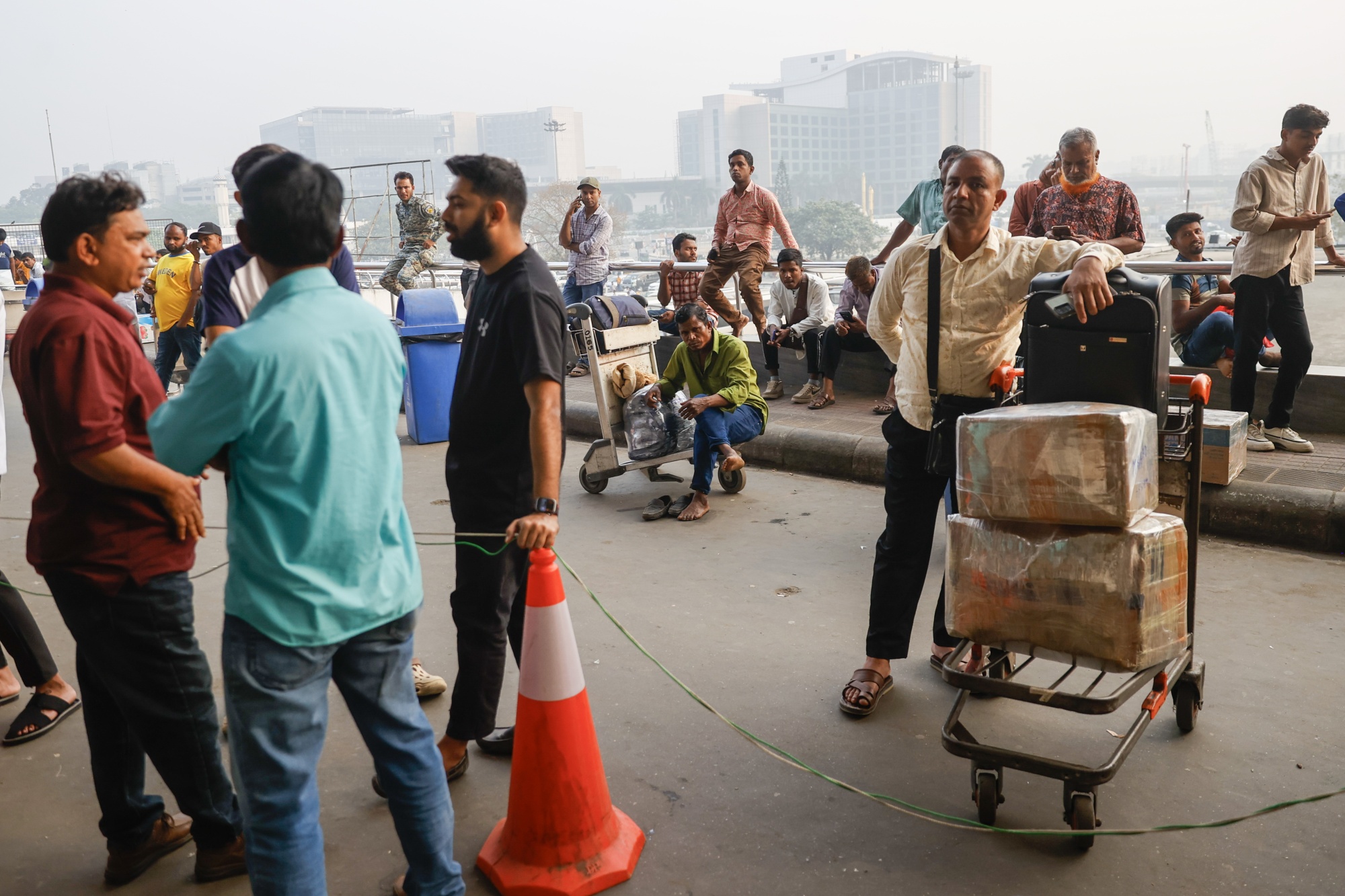 Passengers and their relatives wait outside a terminal after several flights to Middle Eastern destinations are canceled, in Dhaka, Bangladesh, earlier in March. Syed Mahamudur Rahman/NurPhoto/Getty Images Oanh said she'll avoid airports in the Middle East, where numerous flights have been canceled because of the war. She's also telling friends and family to be ready to pay even more for direct flights to Europe from Asia to avoid disruptions in transit. Don't count on travel insurance, which isn't likely to cover losses caused by war. Jet fuel accounts for about 30% of airlines' expenses, so price hikes show up quickly in fares, Zhu said. 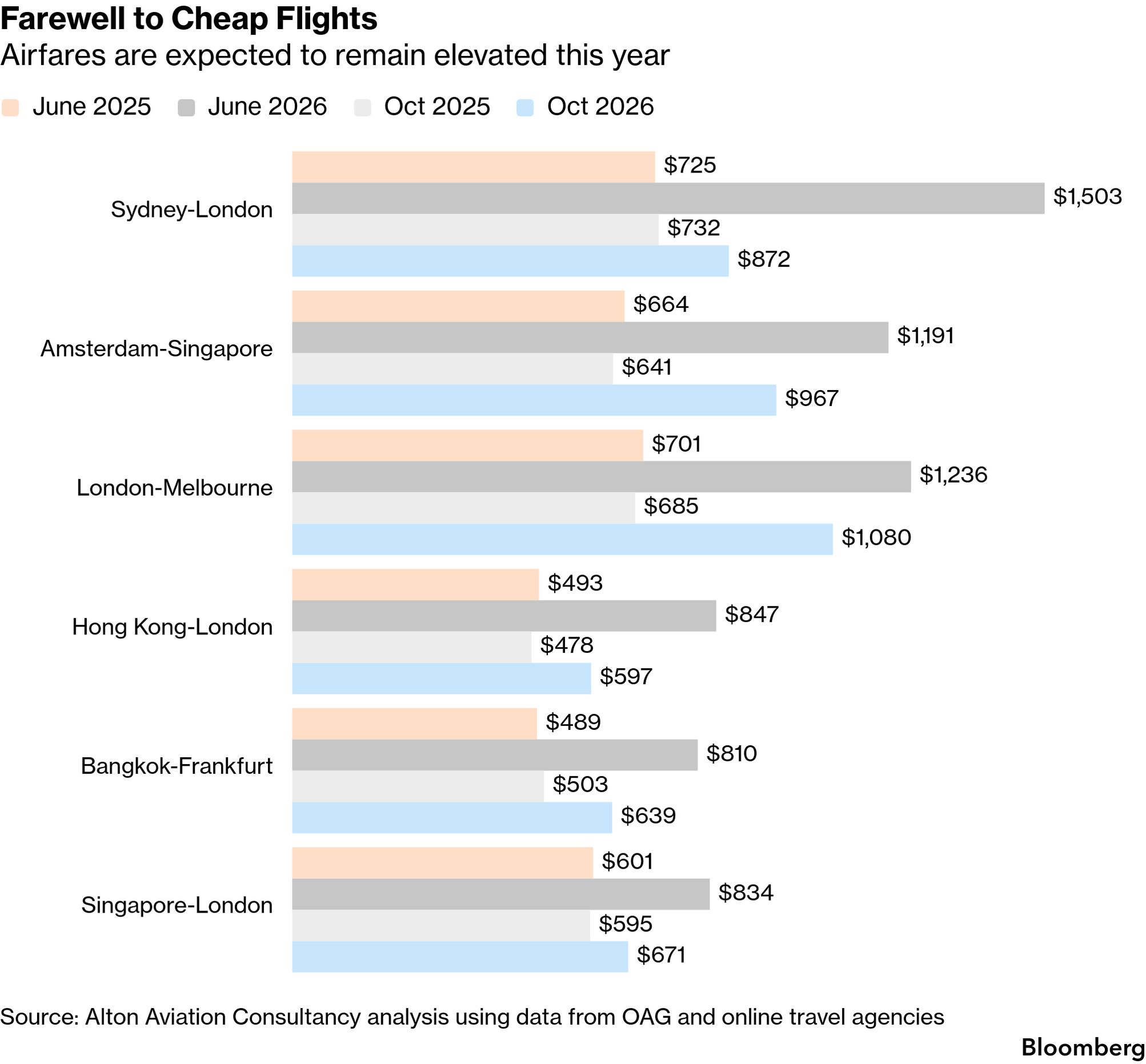 At this week's Aviation Festival Asia in Singapore, which normally draws a couple of thousand delegates, attendance was decidedly thinner than at past events. With some companies banning non-essential travel, even industry experts are staying home, our aviation reporter Danny Lee told me. Airline and airport executives told him the optimism of prior years has faded. The industry has now shifted to survival mode. "Everyone is putting on a brave face at this point as there is no clarity beyond the short term," he said.—John Boudreau, with K. Oanh Ha and Danny Lee Follow Bloomberg's coverage of the war with Iran here. Weekend Catch-UpA selection of the best of Bloomberg storytelling, from podcasts and video to explainers and feature stories. Read
Watch   Philippine President Ferdinand Marcos Jr. talks about China relations, Iran and the economy with Bloomberg Television's Haslinda Amin in Manila.
Listen
 LISTEN: BTS drives Netflix push for Asia growth. Host K. Oanh Ha joins Bloomberg's Sohee Kim and Lucas Shaw to discuss Netflix's power move and how global streamers are fighting for dominance in the competitive Asian market. Toughest ChallengesBeyond travel disruptions, the Iran war is causing real economic pain and worry among Asian leaders. The conflict cast a shadow over discussions at China's Boao Forum for Asia in Hainan, where Singapore Prime Minister Lawrence Wong spoke about China's importance to the global economy at a time of conflict and fragmentation. In neighboring Philippines, President Ferdinand Marcos Jr. is facing some of his toughest challenges yet as the Iran war roils his nation. With just over two years left in his six-year term, my colleagues and I met with Marcos in the Malacañang presidential palace for an interview for an upcoming episode of Bloomberg Television's "Latitude with Haslinda Amin." He spent most of his youth in the majestic estate during the 20-year rule of his father, the late dictator Ferdinand Marcos. The younger Marcos, like most other former presidents, has opted not to live in the palace, but nearby in Manila's San Miguel district. "I don't have to worry about the traffic," he joked before the cameras started rolling. Behind the lighthearted quip, the concerns were clear. Later in the day, Marcos declared a national energy emergency — the first since the Covid pandemic — to secure the nation's fuel supply and provide subsidies and cash aid. 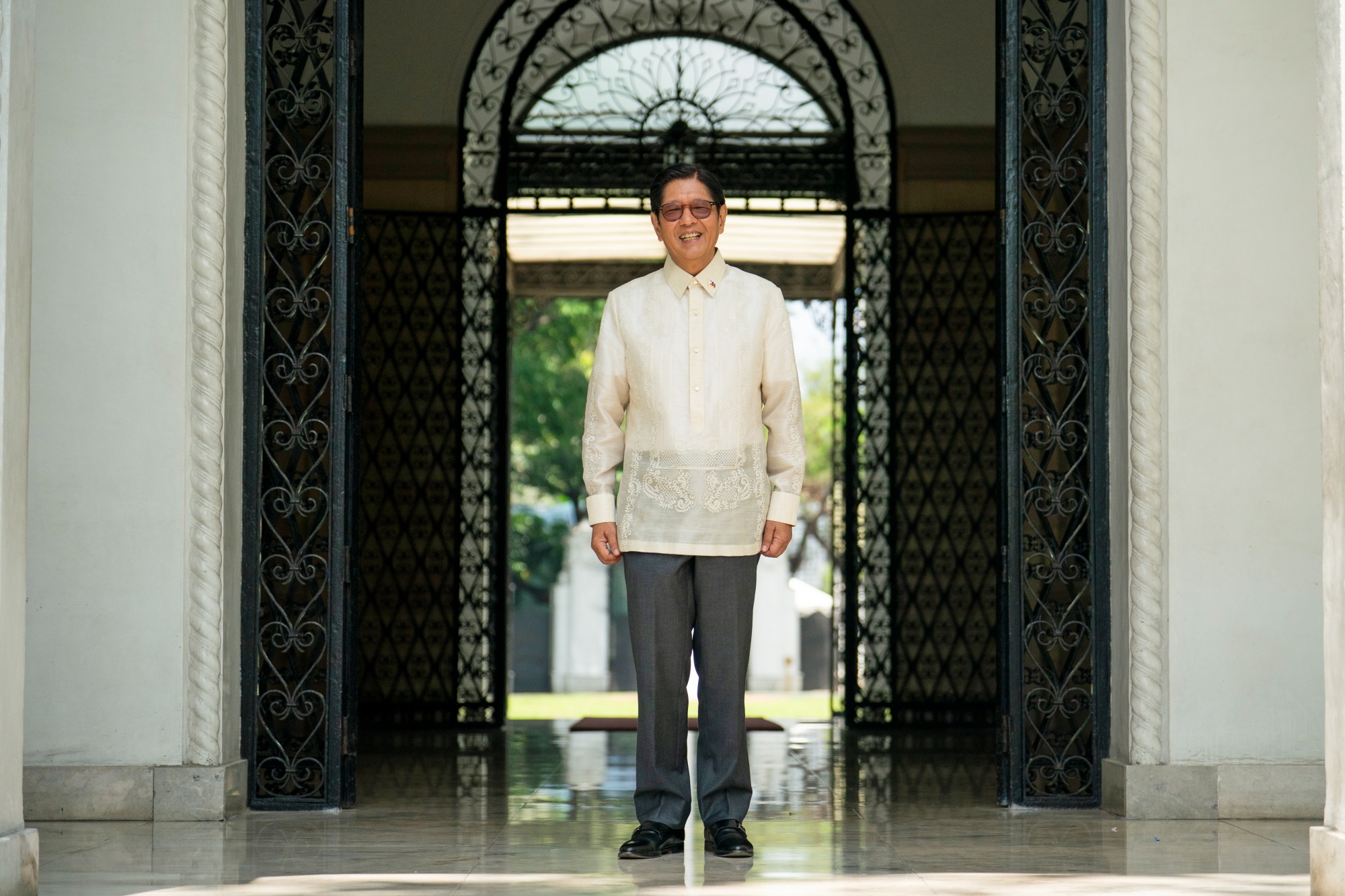 Ferdinand Marcos Jr., Philippines' president, at Malacañang Palace in Manila. Photographer: Lisa Marie David/Bloomberg The 68-year-old leader expressed concern about hitting economic growth of 8% during his term — which he envisioned two years ago — but signaled some comfort with longer-term prospects. He said it would be "futile" to exhaust the nation's foreign reserves to defend the peso, which hit a record low against the dollar as market forces drive up the greenback. The president's remark about the "distinct possibility" Philippine commercial jets could be grounded due to a shortage of jet fuel drew the most attention online, but it was his comment about being open to resuming talks with Beijing on a joint oil and gas project in a contested area of the South China Sea that raised more than a few eyebrows. Social media was abuzz with speculation that Marcos might be suggesting warming ties between the two nations, whose ships have repeatedly clashed in the South China Sea over competing territorial claims. Marcos, with an eye on the clock as his mandated term inches closer to its end, mused about his legacy and whether what he has accomplished will be undone by the next occupant of the president's office. Fuel, though, is the most pressing crisis he must grapple with now. It's "cold comfort" that the Philippines isn't alone in the topsy-turvy energy market turmoil, Marcos said. He called it consuelo de bobo, a Spanish phrase that literally means "fool's consolation." —Manolo Serapio Jr. The Review: The Velvet CutFrom the best spots for a business lunch to drinks with the boss, we sample the city's eateries, bars and new experiences. The Joo Chiat-Geylang area, popular for humble local dishes from laksa to bak kut teh, has become a hotspot amid a rental boom. The Velvet Cut, a halal steakhouse offering oakwood-fired cuts, adds to the neigborhood's new wave of restaurants. It opened late last year and specializes in dry-aged beef. The vibe. The first thing you notice is a display of premium steak cuts in a refrigerator spanning almost an entire wall. Past the meat wall, a harmonious palette of burgundy velvet booths, dark oak finishings and walls with a burnt orange hue greet visitors. 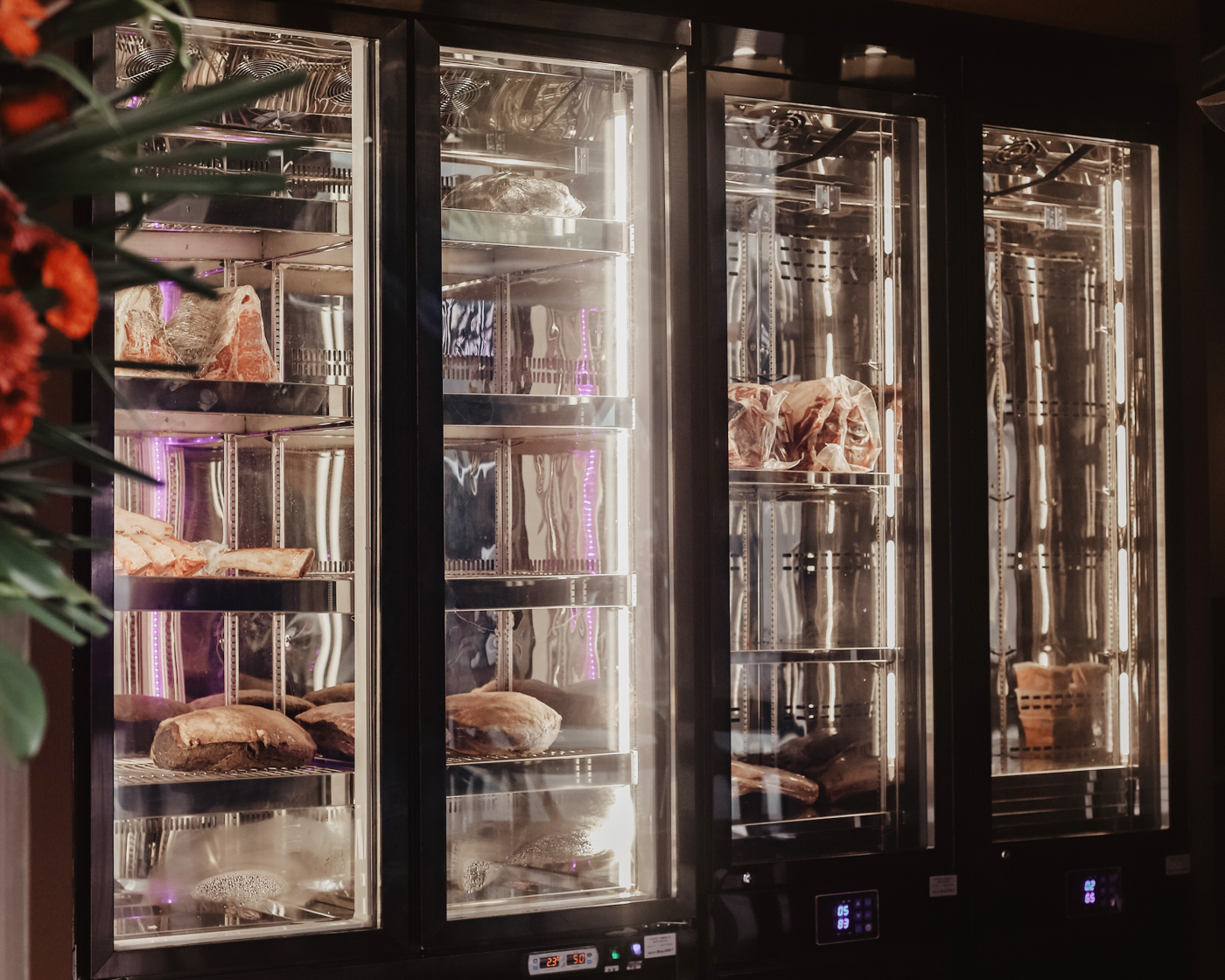 Premium steaks at The Velvet Cut in Singapore. Source: The Velvet Cut Can you hold a meeting here? It's a distance from the central business district, so probably not a practical choice for a quick weekday lunch. That said, if you're hosting out-of-town visitors and want somewhere that feels considered, this fits the bill. What about a date night? Definitely. On the evening we visited, every other table appeared to be occupied by a couple. What we'd order again. The truffle mac and cheese is a solid starter. For mains, the dry-aged burger topped with horseradish sauce and caramelized onions, served with thick cut chips is a standout. The ribeye is a strong option for anyone who came specifically for steak. Round off the meal with the Milo tiramisu or indulge in a rich chocolate cake. 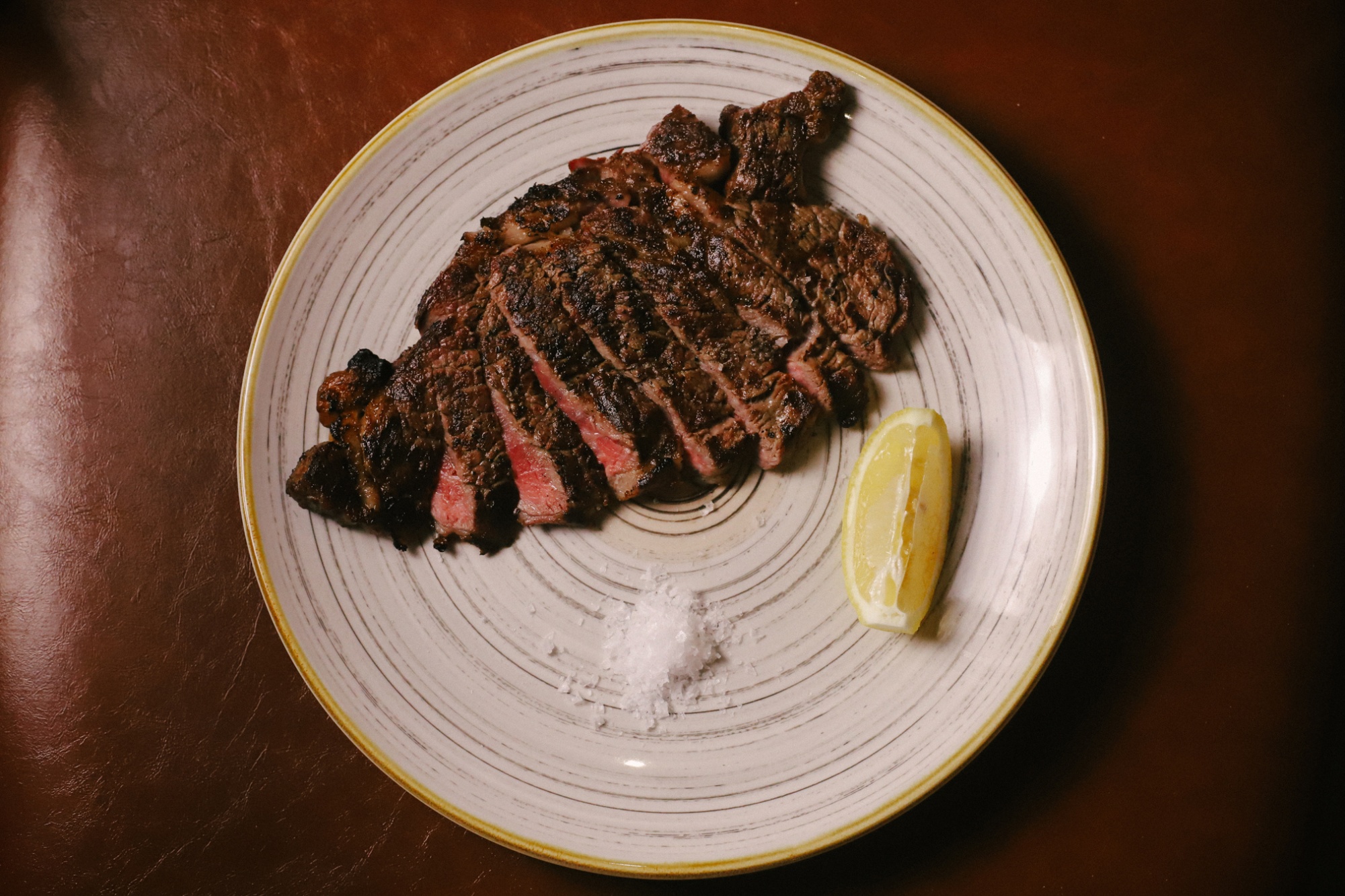 The Velvet Cut in Singapore. Source: The Velvet Cut Need to know. The Velvet Cut at 51 Joo Chiat Road is open daily from 11 a.m. to 11 p.m. Expect to spend around S$100 per person. Reservations are strongly recommended for dinner.—Nurin Sofia Have a place you'd like us to review or feedback to share? Get in touch at [email protected]. Thanks for reading our newsletter! Subscribe here if you haven't already. More from Bloomberg
We're improving your newsletter experience and we'd love your feedback. If something looks off, help us fine-tune your experience by reporting it here. Follow us
You received this message because you are subscribed to Bloomberg's Singapore Edition newsletter. If a friend forwarded you this message, sign up here to get it in your inbox.
|



