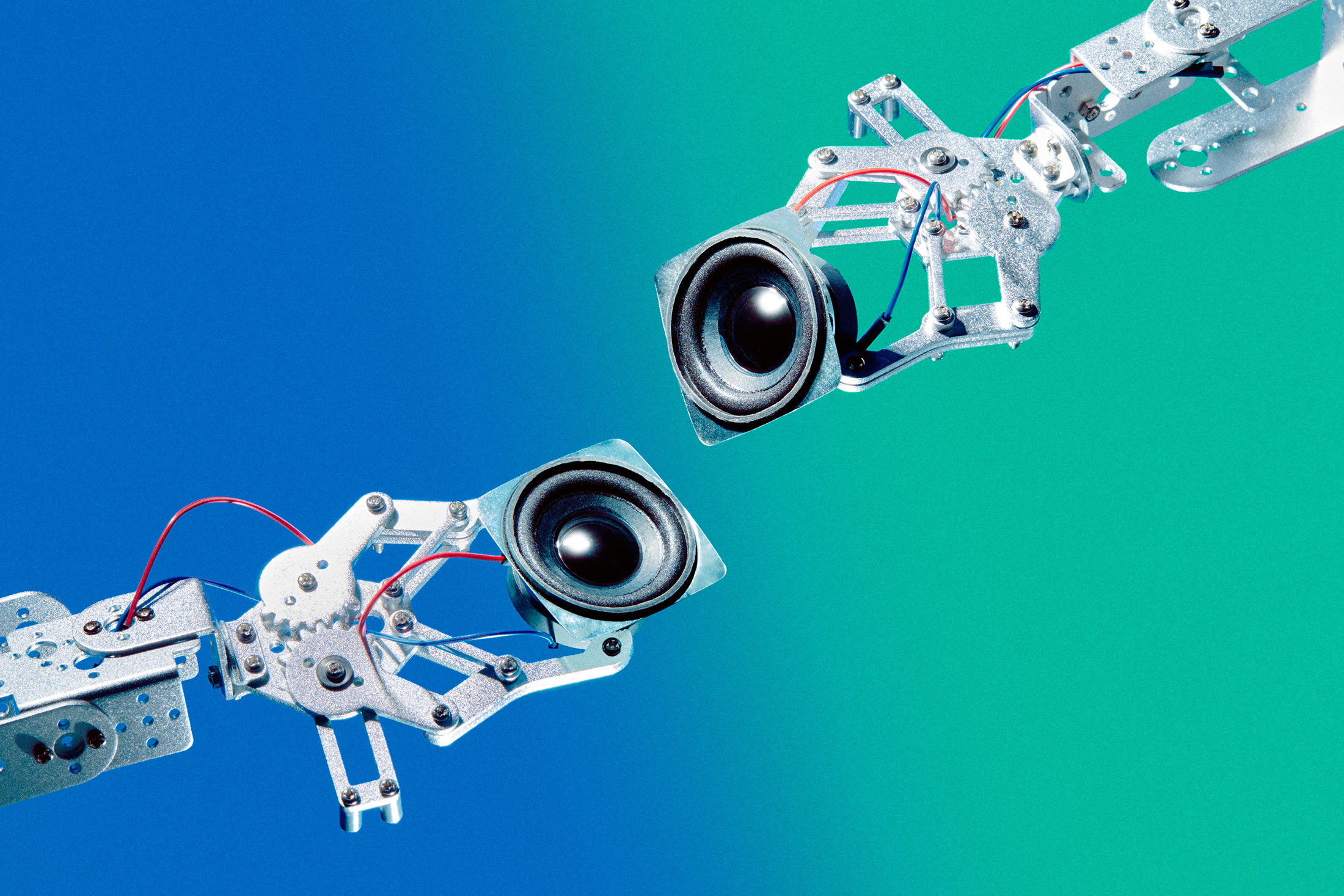
 Today, Businessweek Daily offers a special edition featuring stories from the April issue of the magazine, available online now. Bloomberg Businessweek Editor Brad Stone is here with a preview. If you like what you see, tell your friends to sign up for the newsletter here. Or tell us what you like. You can also subscribe to get the print edition. Over the weekend, a significant piece of inside baseball emerged from the Pentagon: It was formalizing Maven Smart System, the military's artificial-intelligence-infused command-and-control platform, and will turn it into a so-called program of record inside the Department of Defense. That dryly technical designation means that the Palantir-made AI mission control platform will receive the "funding and resourcing necessary" for development and integration and for commanders to fight and win wars, Deputy Defense Secretary Steve Feinberg wrote in a memo, according to my Bloomberg News colleague Katrina Manson. More simply: The age of AI warfare is undeniably here. The system, which is designed to ingest battlefield data like drone and satellite surveillance footage with the help of computer vision and to aid commanders with everything from planning logistics to selecting bombing targets, will soon be coming to every corner of the US military apparatus. That quickly materializing future of AI war-making is on the cover of April's issue of Bloomberg Businessweek. The story is adapted from Manson's extraordinarily timely book, Project Maven: A Marine Colonel, His Team, and the Dawn of AI Warfare, which also publishes today. The article and the book trace the history of a controversial military undertaking, designed with the help of Silicon Valley, to analyze massive amounts of data and, in the unnerving parlance of the military, to "speed up the kill chain." You can read the story here (free!) or listen to it here.  Illustration: enigmatriz for Bloomberg Businessweek That's a lot of responsibility for a nascent field whose technology still seems to periodically hallucinate incorrect random facts. Katrina's work shows the development has been anything but smooth, and that's playing out now in the skies over Iran and the waters below. The US hasn't said whether AI may have played a role in its errant and tragic bombing of an Iranian elementary school. But one thing seems clearer: AI that can help hit thousands of targets quickly may also have given the US and Israeli generals overconfidence in planning what is shaping up to be another protracted and costly Middle East war. Elsewhere in the April issue, we look at the new rules of retirement (the biggest flex may be never retiring at all) and bring together five accomplished Black business leaders for a frank discussion about the rollback in DEI initiatives across the country. Our 45-minute video special on the discussion, led by Bloomberg Television anchor Romaine Bostick, is not to be missed. Keep reading: 'God, It's Terrifying': How the Pentagon Got Hooked on AI War Machines (🎁) In This Issue  Best of the RestIn ContextIn ViewB-SchoolsRetirementPursuitsFrom the ArchivePast covers on investments that might be part of your retirement plans  November 2023 | The US Housing Market Has Become an Impossible Mess Play Alphadots!Our daily word puzzle with a plot twist.  Today's clue: Field goal? More From BloombergLike Businessweek Daily? Check out these newsletters:
Explore all Bloomberg newsletters. We're improving your newsletter experience and we'd love your feedback. If something looks off, help us fine-tune your experience by reporting it here. Follow us
You received this message because you are subscribed to Bloomberg's Businessweek Daily newsletter. If a friend forwarded you this message, sign up here to get it in your inbox.
|



















Tech optimism overrides Iran angst
Bloomberg Morning Briefing Americas ...