| Read in browser | ||||||||||||||
 The US and Iran have exchanged some conditions for a ceasefire, but even if hostilities end soon, Bloomberg News economics reporter Matthew Boesler writes that the costs to Americans will be ongoing. Plus: Oil theft is a problem in Texas, Tricolor car buyers want their loan payments stopped (free link), and how the satellite startup Theia dissolved in a wave of lawsuits. If this newsletter was forwarded to you, click here to sign up. Just a few weeks of war with Iran is already reshaping the global economy in ways American households and businesses will likely be paying off for the foreseeable future. That's the growing consensus among Wall Street firms downgrading the outlook for the US in 2026, even as investors latch on to optimism that the White House is working toward a deal to end the fighting. Forecasters see the prospect of oil prices returning to prewar levels as unlikely, between the damage to Middle East production infrastructure that will take time to repair and the stockpiling by the rest of the world to protect against future conflict. The national average price for a gallon of gasoline has shot up to about $4, compared with almost $3 a month ago, according to AAA. Meanwhile, there are prices besides energy to consider. The other big one for US consumers, which will take more time to reveal itself, is food. About a third of the global fertilizer trade passes through the Strait of Hormuz, and the war has set off a worldwide scramble to secure supplies. 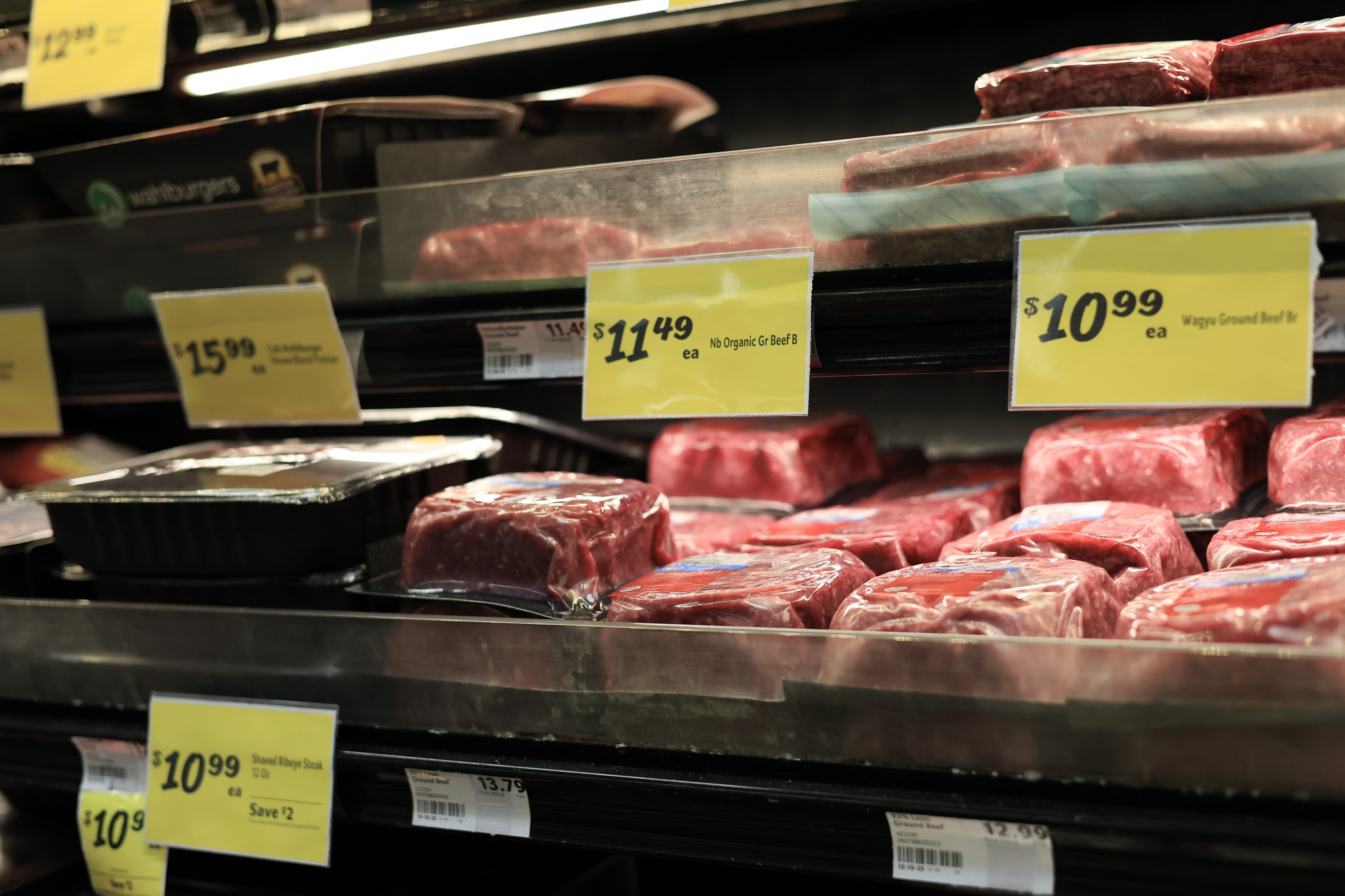 Beef prices in the US were rising before the war. Photographer: Joe Raedle/Getty Images Goldman Sachs says the crunch will raise US food prices about 1.5% this year. But the increases won't start to show up in the data until midsummer, "because farmers have already applied most of the fertilizer needed ahead of the spring planting season and will thus have limited exposure to higher global prices until they buy fertilizer for fall," Goldman economist Jessica Rindels said in a March 23 report. Food inflation was already elevated prior to the war thanks in part to a mix of tariffs and climate-related disruptions around the world. Then there's the complications the war is creating for the artificial intelligence boom. The AI buildout was a key driver of economic expansion in 2025 and will likely have to carry the economy again this year as the hit from higher energy and food prices keeps consumer spending in check. The good news for the US is an abundance of cheap natural gas keeps its notoriously energy-intensive data centers relatively insulated from a global energy shock. But even before the war, the massive sums of money flowing into the data center buildout were straining global supply chains, leading to a surge in prices for key components. The Gulf region's role as a major exporter of critical inputs for such components, namely helium and sulfur, stands to create additional headaches. The mounting costs underscore the extent to which even a short war can have lasting economic ramifications for the US, even though all the fighting is happening halfway around the world. The conflict has exposed how much of the modern global economy still runs through the Gulf and the costs associated with that arrangement. People are taking notice in a way that may benefit China in the years ahead, to the extent that the war could accelerate a global transition toward renewable energy. China's leading manufacturer of electric vehicles, BYD, is seeing bustling showrooms across Asia, as customers flock in to replace internal combustion engine vehicles amid rising oil prices. Iran War News In Brief  Watch: SpaceX Could Launch Largest IPO Ever
Theft in the Oil Field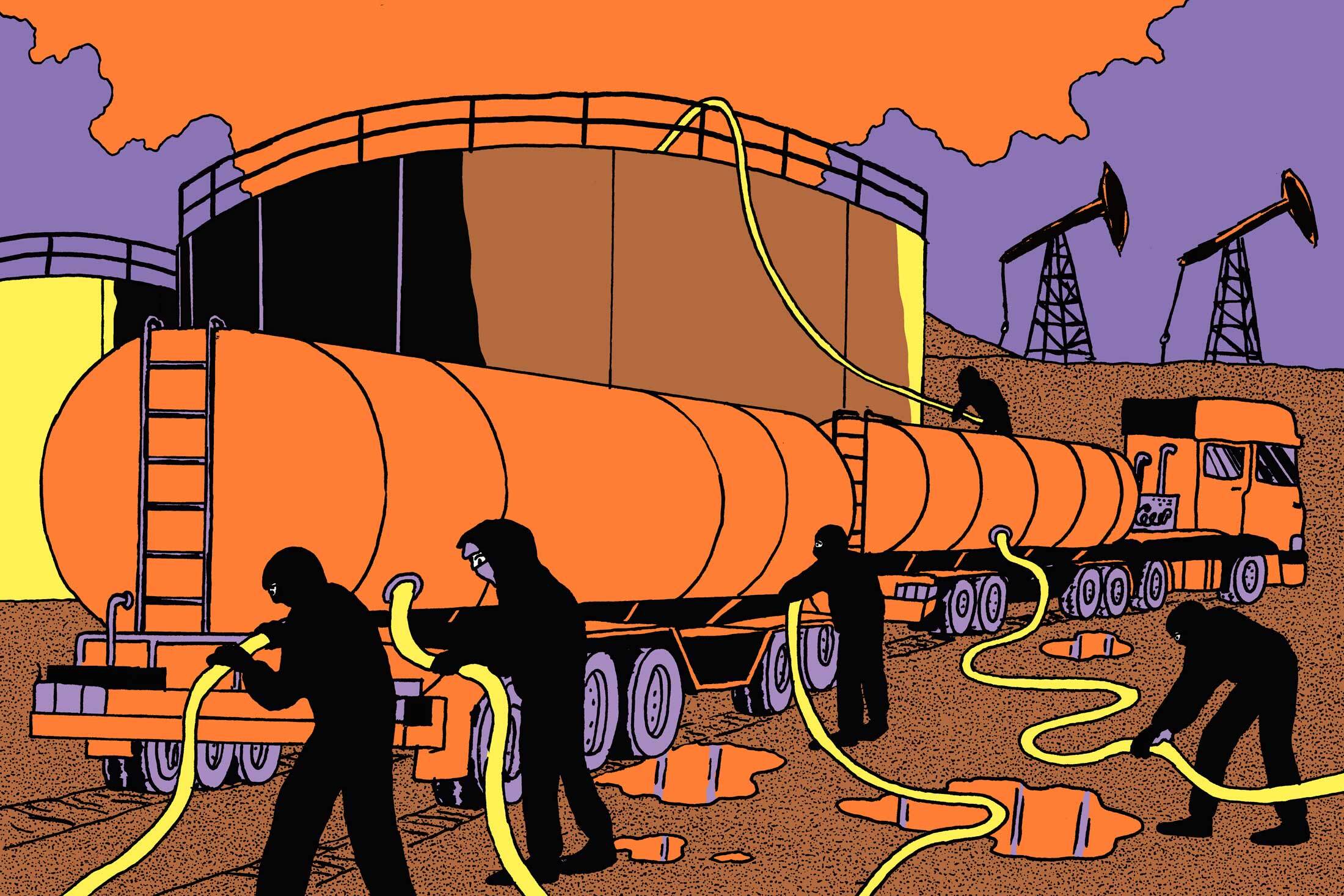 Illustration: Anna Haifisch for Bloomberg Businessweek The Martin County Sheriff's Office sits along Interstate 20 in West Texas, a stretch of dusty plains and sunbaked highways that could almost be the setting for a Mad Max movie. It's sparse—oil wells outnumber people—but that doesn't mean it's quiet for Sheriff Randy Cozart. At least once a week, someone calls to say their oil field has been robbed: trailers missing, copper wire yanked and, most of all, crude stolen. In total, some 500 barrels' worth of oil go missing in Martin County every week, Cozart estimates. At last year's average of $65 a barrel, that's an annual loss of roughly $1.7 million. At today's war-heightened prices, it would be far more. A similar scene is playing out in dozens of other counties across the Permian Basin of West Texas and New Mexico, the world's most prolific shale oil patch. Law enforcement officials, legislators, trade groups and energy producers say people are stealing more crude than ever, often laundering it into local supply chains or driving it to Mexico to offload it. "Where there's money, there's crime," says Cozart, who, like many in the region, once worked in the oil industry himself. "And there's lots of money in oil right now." As Ella Feldman writes, authorities are bracing for more pain with crude prices so high: Oil Theft Is Burning a Billion-Dollar Hole in the West Texas Economy Home Loan Rates6.43% That's the rate for US mortgages, which climbed for a third straight week, pushing home-financing costs to the highest since October and dealing a blow to both purchasing and refinancing activity. The market illustrates a widening economic toll from the war in the Middle East. Car Troubles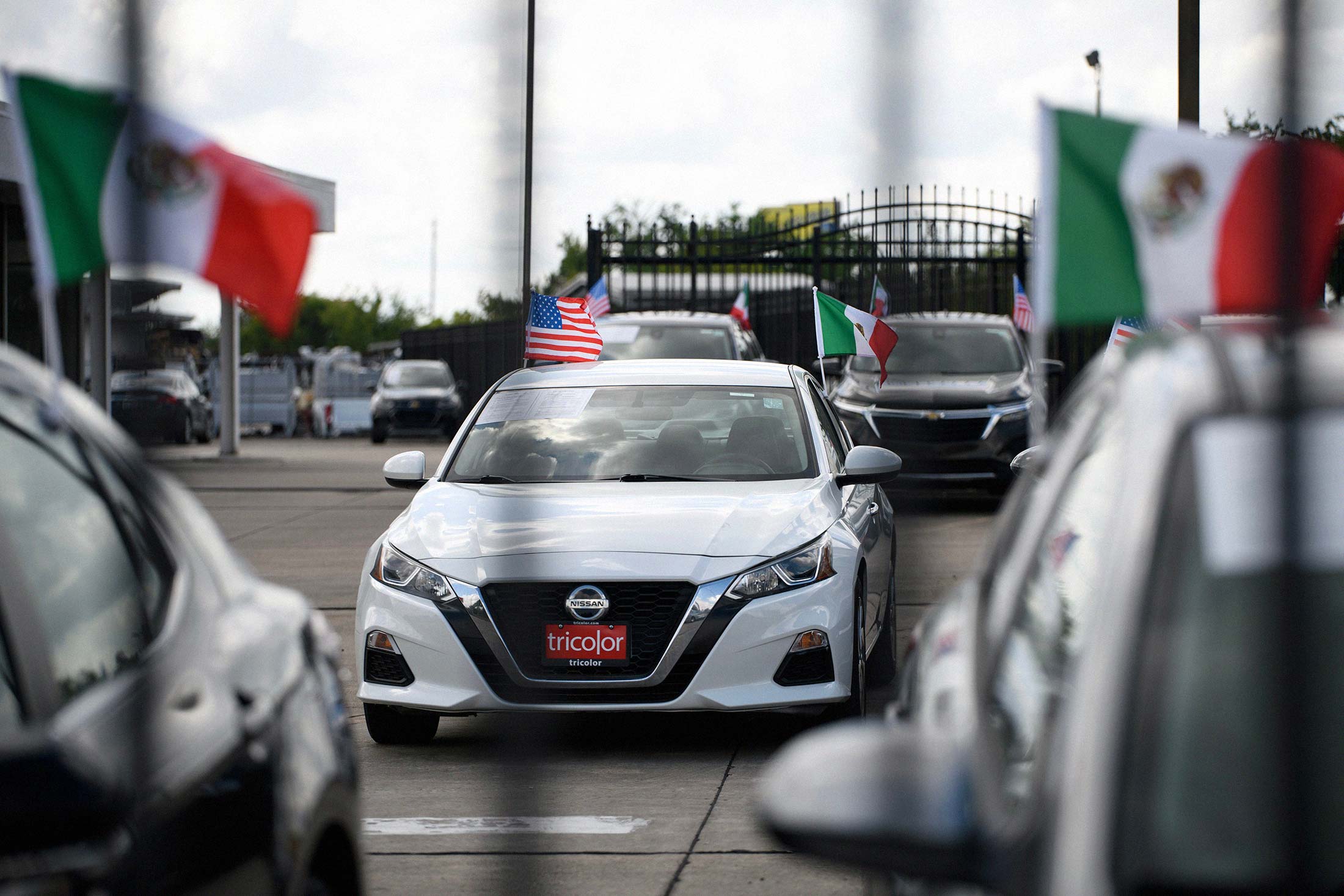 A Tricolor dealership in Houston. Photographer: Mark Felix/Bloomberg Three years ago, Yosvanys Garcia Diaz paid $47,000 for a used Ford F-150 from Tricolor Holdings. What the now-shuttered auto dealership neglected to tell him was that the pickup had been in at least one wreck and had already changed hands three times. Oh, and it sold new for $33,700 in 2021. After a warranty dispute over a bad transmission and about $30,000 in payments, Diaz still owes $29,500. That's only partly because of the 11% interest rate on his auto loan, says the 36-year-old, who immigrated to the US from Cuba in 2008 and has a green card. The bigger problem was shoddy recordkeeping at Tricolor. He'd love to see his ballooning payments halted. Tricolor, after all, filed for Chapter 7 bankruptcy in September in a spectacularly public implosion, leaving behind dozens of empty dealerships across the Southwest. But as top Wall Street banks and private lenders jostle to get their money back—they loaned the company at least $1 billion—buyers can't seem to catch a break on their debt. Steven Church and Angelica Serrano-Roman write that getting relief won't be easy: Tricolor Implosion Pits Wall Street Against Immigrant Car Buyers (🎁) Scam Worries"I find it incredibly troubling, and I think it's a trend line. It's a trend line that may have more sort of exponential growth in it. There's going to be a point at which these artificial intelligence capabilities actually don't need the industrial-scale fraud factory in Cambodia or Thailand or Myanmar." Michael Kuiken Vice chair, U.S.-China Economic and Security Review Commission The US is concerned about "foreigner butchering" scams allegedly run from China, which may be a growing problem. Read the full story here. A Satellite Startup's Fall Illustration: Isabel Seliger for Bloomberg Businessweek In November 2020, Albuquerque Mayor Tim Keller announced that his city had entered into a "game-changing partnership" with a little-known aerospace startup called Theia Group Inc. Theia, based in Washington, DC, was planning to build a multibillion-dollar, 80-acre facility in Albuquerque to manufacture observation satellites it would then deploy and manage. The startup envisioned total extraterrestrial surveillance—a sprawling constellation of satellites capturing detailed shots of the entire Earth at a half-meter resolution on a near-continuous basis. Plenty of companies already sold satellite imaging services, but this promise of functionally real-time digital images set Theia apart. A promotional video made this promise: "Every tree on Earth: digital. Every truck: digital. Every whale: digital." Theia, named for the Greek goddess of light, was founded in 2015 by a former NASA engineer and successful chipmaker named Erlend Olson. Its headquarters was in the same building as the stately Willard InterContinental hotel, across from the White House. By the time of the New Mexico announcement, it had pulled together more than $250 million in funding and a well-credentialed team, and the Federal Communications Commission had licensed it to deploy 112 satellites in low-Earth orbit. It seemed on its way to world domination. Mayor Keller was thrilled that the company wanted to set up shop in Albuquerque, where Olson was born and raised. "This development could be a massive job creator for our city, providing a boost to our economy and securing our role in the booming space industry," Keller said at the late 2020 press conference. Pat Davis, a city councillor who represented the district selected for this Orion Center megaproject, was more skeptical. For starters, Theia hadn't pushed for the usual tax credits or other financial incentives. No building plan had been submitted. "It had an odd feeling to it," Davis recalls. Brent Crane writes that he was right to be suspicious: The Death Spiral of a $250 Million Satellite Startup Play Alphadots!Our daily word puzzle with a plot twist.  Today's clue: One whose earnings are subject to inflation? More From BloombergLike Businessweek Daily? Check out these newsletters:
Explore all Bloomberg newsletters. We're improving your newsletter experience and we'd love your feedback. If something looks off, help us fine-tune your experience by reporting it here. Follow us
You received this message because you are subscribed to Bloomberg's Businessweek Daily newsletter. If a friend forwarded you this message, sign up here to get it in your inbox.
|




AI isn’t ready for trading
Testing showed models lost money. ...