| Read in browser | ||||||||||||||
 Iran's chokehold on the Strait of Hormuz and strikes on oil facilities have had an array of impacts on fossil fuel producers. One of them? Excess natural gas with nowhere to go, leading facilities to burn it off and spew plumes of methane and carbon dioxide into the atmosphere. Today's newsletter has exclusive satellite data analysis showing how much greenhouse gas pollution is coming from impacted Middle East oil and gas infrastructure. It's also the start of CERAWeek, a major annual energy confab. We've got your rundown so far, including big US offshore wind news. Subscribe to Bloomberg News to get all the latest from our reporters on the ground in Houston. War's hidden climate tollBy Akshat Rathi, Laura Millan, and Aaron Clark The conflict in the Middle East appears to have forced some oil and gas companies to directly burn off more natural gas than usual as their facilities have come under attack or exports have been blocked, releasing planet-warming pollution. An increase in emissions is a relatively minor issue against the loss of life and economic chaos wrought by the war, yet it shows one of many unanticipated consequences from the fighting. Before the war, efforts to cut down on excess flaring had become a focus for investors keen to rein in waste and greenhouse gases. 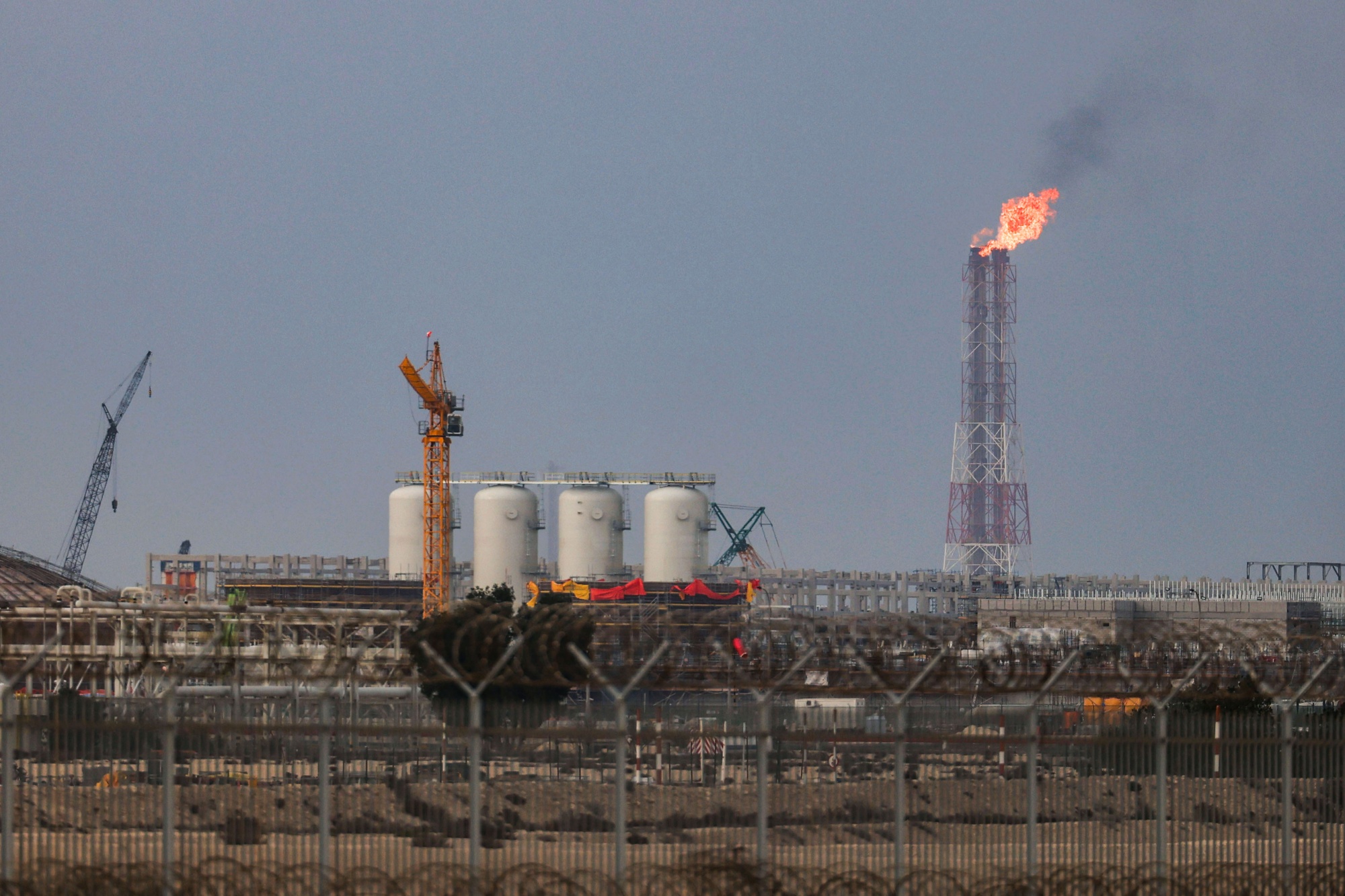 An LNG facility in Qatar's Ras Laffan Industrial City on March 3. Photographer: picture-alliance/AP Photo/dpa From Feb. 28 to March 22, the United Arab Emirates' Das Island liquefied natural gas plant flared enough to add the equivalent of about 74,100 metric tons of carbon dioxide to the atmosphere, according to analysis by investigative consultancy Data Desk and Bloomberg calculations. Meanwhile, Qatar's Ras Laffan facility, the world's largest LNG export hub, added roughly 101,300 tons of CO2 equivalent, on par with the annual emissions from more than 20,000 cars. Higher flaring volumes are "likely linked to facility shutdowns, whether following direct strikes, as a preventive measure, or because of limited storage capacity elsewhere," said BloombergNEF analyst Maria-Olivia Torcea. That "may have required a controlled release of gas from pipes, vessels and other equipment through venting and flaring," she said. The emissions open a new window into the conflict's growing carbon footprint, revealing how greenhouse gases can spike when fossil fuel infrastructure is targeted. When LNG can't be exported or used, operators either burn it off or vent it into the atmosphere, releasing CO2 or even more potent methane, at levels detectable by satellites. "There is also consistently high flaring at Iran's Kharg Island, further indicating a slowing of exports of cargoes," said Mark Davis, data company Capterio's chief executive officer. The war's broader impact on emissions is likely to be many times greater and hard to calculate precisely. The Israel-Gaza conflict may have resulted in 33 million tons of CO2 equivalent emissions in its first 15 months, according to a peer-reviewed study in the journal One Earth published Thursday. That would match the annual CO2 emissions of Ireland. Another study published from the Climate & Community Institute put the Iran War's emissions until March 14 at about 5 million tons of CO2 equivalent. This included estimates from damaged buildings, alongside emissions related to equipment and weapons. The conflict can have longer-term consequences for producers' priorities and commitments to curb flaring and methane emissions. "Energy production, energy security and revenue generation drivers are going to be far more important to almost any player around the world," Davis said. "I imagine this is going to slow down or deprioritize the focus on emissions reduction." Read the full story, including a look at historical flaring data. More flaring woes13 billion The number of cubic feet of natural gas flared or vented annually in Venezuela, another country that's seen US military intervention in recent months. In addition to damaging the climate, it wastes about $1.4 billion of potential revenue. Prime targets"We always see oil facilities being attacked in conflicts." Doug Weir Chief executive officer, Conflict and Environment Observatory Beyond fossil fuel infrastructure, the observatory has chronicled hundreds of other incidents entailing some environmental risk as a result of the ongoing hostilities. Live from CERAWeek Attendees at the CERAWeek. Photographer: F. Carter Smith/Bloomberg/Bloomberg Photos The big news out of CERAWeek so far is the Trump administration announced it would pay TotalEnergies SE and its partners $1 billion to cancel plans to build offshore wind farms. Under the agreement, the French energy company is no longer committed to developing wind farms off the coasts of New York, New Jersey and North Carolina, Interior Secretary Doug Burgum said on Monday at the conference. TotalEnergies Chief Executive Officer Patrick Pouyanne said the company will "accelerate" investments in US liquefied natural gas. The US deal doesn't affect the company's commitment to wind power in other nations, he said at a media briefing in Houston. The move is the latest in the Trump administration's war on offshore wind. Other developers have fought back. CERAWeek emcee Dan Yergin said "we're in act two of the return of energy security" as the Iran War grinds on. Act one? That would be Russia's invasion of Ukraine. Aramco CEO Amin Nasser withdrew as a keynote speaker to focus on the impact of the Iran War on Saudi Arabia's oil and gas infrastructure. The CEO of Adnoc, Abu Dhabi's state-owned oil company, also canceled plans to attend. "Prices have not risen high enough yet to drive meaningful demand destruction," Energy Secretary Chris Wright said of oil as the commodity continues its wild ride. "One month ago, we would have said there is going to be a fairly significant data center buildout in the Middle East," Constellation CEO Joseph Dominguez said during a panel discussion. "We wake up and there's a question mark as to whether more critical infrastructure is going to be built in that region of the world." More from GreenThe heat wave that's gripped the West Coast isn't abating anytime soon. Records fell over the weekend, and both Las Vegas and Phoenix will likely break or tie records for the rest of the week, said Ashton Robinson Cook, a forecaster with the US Weather Prediction Center. Downtown Los Angeles may also set new daily records. "The pattern is still going to persist for the foreseeable future with record heat persisting all the way through the end of March," Robinson Cook said. The warmth across the West threatens much-needed snowpack in the mountains, which can affect water supplies for people and agriculture later in the year, said Jennifer Francis, a senior scientist at the Woodwell Climate Research Center. Read the full story. There's an 80% chance El Niño will rise from the equatorial Pacific this year, but betting on the weather-driving phenomenon in March and April comes with risks. Meet the spring prediction barrier. The US has a warning for the EU. "If Europe wants to have affordable energy, it's going to need to reduce the regulatory requirements and restrictions that it has in place," Andrew Puzder, US ambassador to the EU, told Bloomberg TV. More from Bloomberg
Explore all Bloomberg newsletters. We're improving your newsletter experience and we'd love your feedback. If something looks off, help us fine-tune your experience by reporting it here. Follow us
You received this message because you are subscribed to Bloomberg's Green Daily newsletter. If a friend forwarded you this message, sign up here to get it in your inbox.
|




Tech optimism overrides Iran angst
Bloomberg Morning Briefing Americas ...