| Read in browser | ||||||||||||||
 City beekeepers are flying high these days. Colonies are springing up on New York skyscrapers, in San Francisco office parks and even at Bloomberg's Washington, DC, office. It's all part of an effort to give the pollinators a fighting chance — though it's unclear just how beneficial that effort can be. Today's newsletter looks at raising bees in the city and what it takes to ensure native bees don't feel the sting of out-of-towners. Plus, this week's listen with UK Green Party leader Zack Polanski and watch about whether the Iran War is supercharging China's global clout. Feeling buzzedPick any commercial office building in DC this summer and there's a decent chance that at least 50,000 winged insects call the rooftop their home. That's the typical size of a single honeybee hive. Some are self-managed; others are maintained by companies that specialize in urban apiculture. One such business, Montreal-based Alvéole, is responsible for about 60 hives in the district alone (including the "Bloom Bees" atop the building that houses Bloomberg News' Washington, DC, bureau). Worldwide, the firm oversees some 2,000 hives across 73 cities. And it has lots of company: Other brands in the blossoming urban beekeeping sector include Best Bees, Bee Downtown and Bee2Bee Honey Collective. 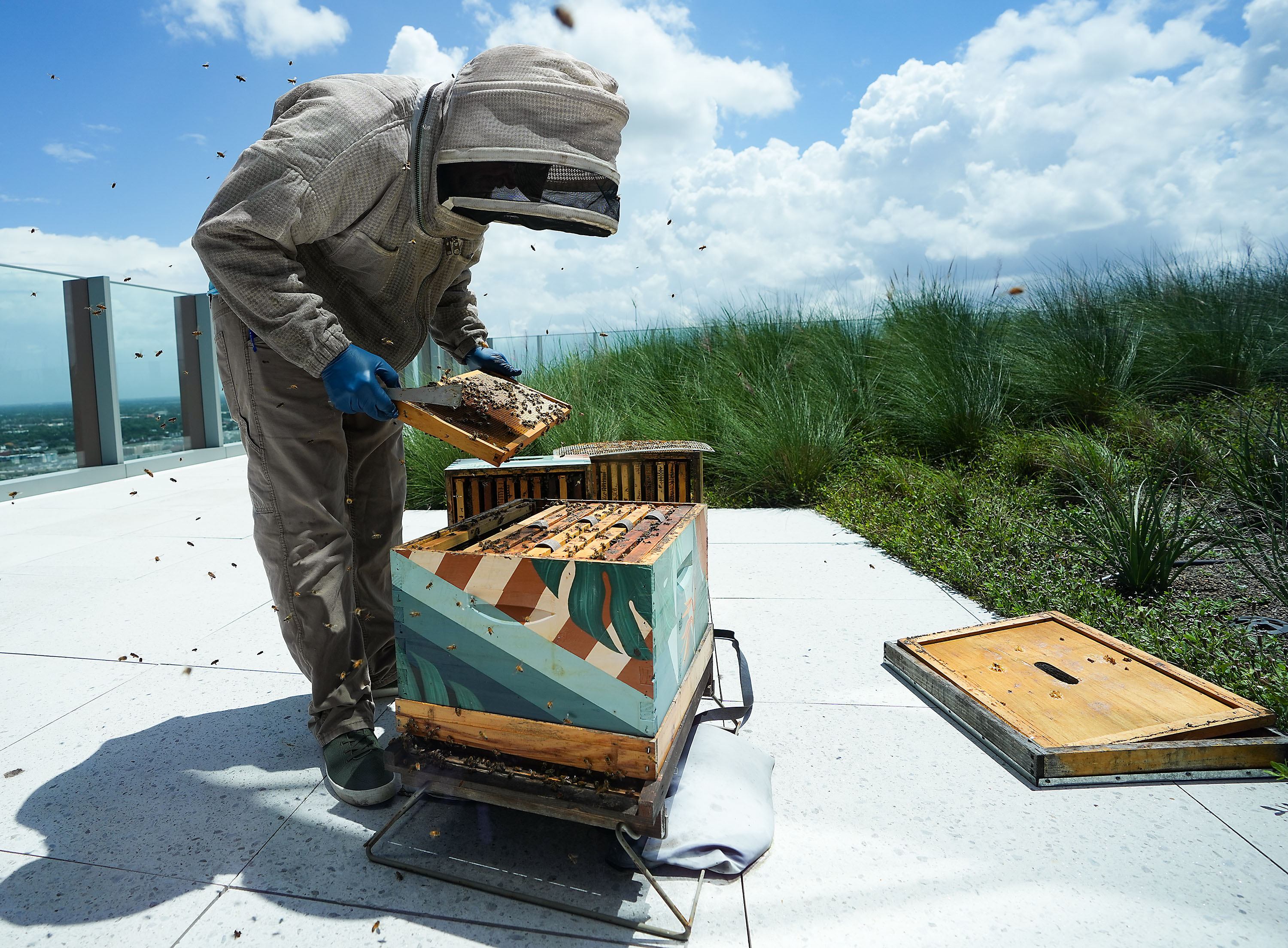 A beekeeper on the roof of the Norton Rose Fulbright Tower in Sugar Land, Texas. Photographer: Houston Chronicle/Hearst Newspap/Hearst Newspapers Urban honeybees are having a moment in US cities like Atlanta, Chicago and Raleigh. Since New York City ended its prohibition on urban hives in 2010, honeybees have proliferated across the five boroughs: The industrious insects buzz on the green roof of the Javits Center and on the Art Deco setbacks of the Empire State Building. There were 68 registered hives in NYC in 2010; today there are more than 400. Getting a handle on just how many bees are busy in the city is a little difficult. As of 2022 there were 3.8 million honeybee colonies in the US, according to the US Department of Agriculture. Many are overseen by commercial operations that truck hives from farm to farm — in addition to their honeymaking duties, honeybees help fertilize the vast majority of US-grown crops. But others are set up in yards, parks and rooftops. The National Honey Board says that the majority of the roughly 115,000 beekeepers in the country are hobbyists with fewer than 25 hives. In part, the burgeoning popularity of urban beekeeping reflects a well-meaning sentiment: Honeybees have struggled with the combined effects of climate change, pesticide use and habitat loss. Two decades ago, the emergence of a phenomenon known as colony collapse disorder gave rise to a new national consciousness around saving bees. But raising honeybees in a city has raised environmental concerns, too. Apis mellifera, the European honeybees that are so important for commercial agriculture in North America, are not native to the continent, and they can outcompete and spread disease to native, wild bee species. "There's an element of greenwashing to it," says Jessica Helgen, program director of the University of Minnesota Bee Squad. "Honeybees are not inherently bad, but they're also not a conservation activity. It's akin to keeping chickens." Tina Harrison, a researcher and expert on wild bees, points out that the "interactions between wild bees and honeybees are largely unknown." There is some data indicating that as honeybee density increases in an urban area, wild bees are affected. Honeybees are particularly well-suited to dominate an urban environment. Some of this comes down to the differences between honeybees and wild bees. Honeybees can fly several miles to forage for pollen; wild bees' range generally tops out at half a mile. Honeybees are great communicators, and can alert their brethren as to where the buffet is. In cities without much native plant life or not enough greenery, wild bees can find themselves crowded out. But beekeeping businesses resist the idea that their hives are pushing out the locals. "Effective pollination by honeybees leads to more successful seed production, which then creates larger and more diverse floral systems. And then that will lead to supporting more pollinator groups," says Kristen Rydberg, a Cornell-certified Master Beekeeper who oversees urban beekeeping programs for Alvéole in the Northeast. "The biggest competition for any native bee is us and our impact," says Rydberg. "If New York City, for example, was just a wild jungle of biodiversity, you wouldn't even have to ask this question. But we've taken up so much space." Read the full story. For more on how the world feeds itself in a changing economy and climate, subscribe to the weekly Business of Food newsletter. Need for bees75% The percentage of crops that require pollinators. While other species of bees and insects can play a role, they can't replace honeybees. Making the case"Biodiversity shouldn't be a sustainability box-ticking exercise. Fundamentally, if your soil biodiversity dies, then your crop yields die." Dimple Patel Chief executive officer, NatureMetrics Protecting nature isn't just a business decision, it's also a continued habitability of the Earth one. Your weekly listen Zack Polanski is challenging the notion that you can't be Green and be a popular politician. Since he became the leader of the UK's Green Party in September 2025, he has run a campaign that's pushed his party ahead of the incumbent Labour and opposition Conservative parties in some polls. It's a remarkable rise in a short span of time. How did he pull it off — and what will he do if the Green Party gets into power? Listen now, and subscribe on Apple or Spotify to get new episodes of Zero every Thursday. Your weekly watch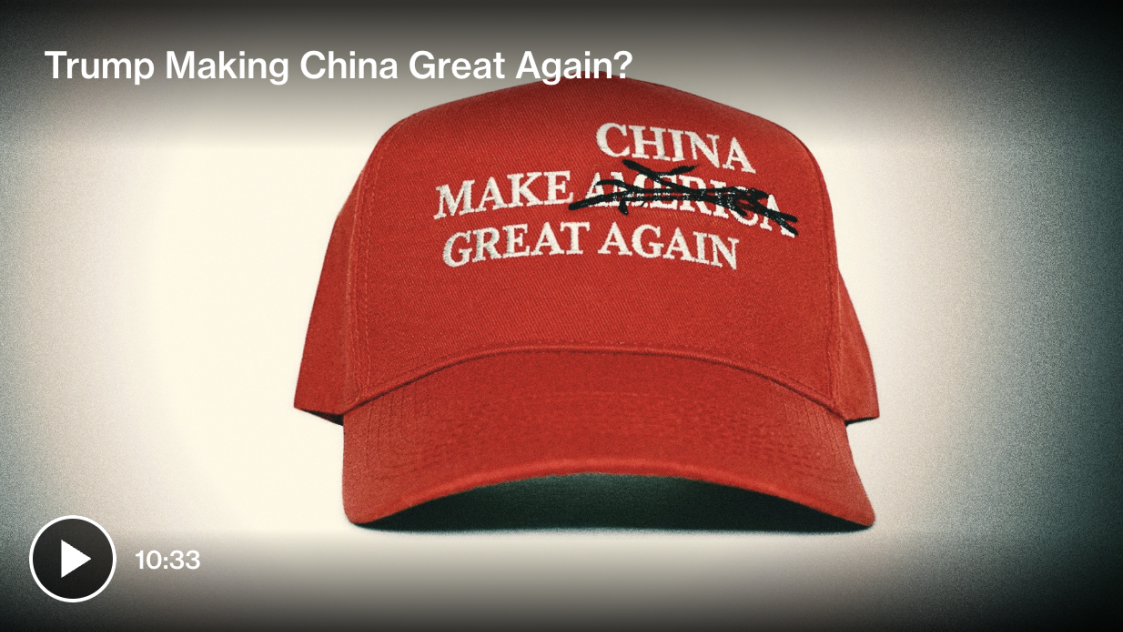 Bloomberg Originals poses a big question: Is Donald Trump making China great again? Traditional allies see the US under Trump as an unreliable partner. Now they're looking to hedge their bets by way of China, just as Xi Jinping positions his nation as the "adult in the room." Watch the weekly documentary to see how Middle East oil and China's dominant rare earth supply chain are affecting the balance of power. A view from WashingtonBy Zahra Hirji Weeks before the Iran War started, Energy Secretary Chris Wright said the US would quit the International Energy Agency if it didn't scale back its climate work, including abandoning net-zero modeling. But other energy leaders have pushed back. "I was in Paris with Secretary Wright," Teresa Ribera, European Commission executive vice-president for Clean, Just and Competitive Transition, said during a visit to Bloomberg's Washington, DC, bureau. When he brought up the possibility of dropping net zero, she said, others in the room argued in favor of continuing, citing security concerns.  Teresa Ribera during an interview in Washington, DC. Photographer: Valerie Plesch/Bloomberg Those concerns now appear prescient as the war in Iran has sent oil prices skyrocketing."The very economic and security rationale behind the decarbonization of the economy – it's even more obvious after this great crisis," Ribera said. The IEA has touted immediate solutions to deal with rising energy prices that also happen to be low-carbon, such as taking public transit and working from home when possible. But Ribera anticipates even bigger, structural changes, saying the disruption of the global fossil fuel market will be "a very relevant driver of the green economy." There are already signs the war is turning a growing number of people worldwide onto electric vehicles, solar panels, induction stoves and more carbon-cutting technologies. More from Bloomberg
Explore all Bloomberg newsletters. We're improving your newsletter experience and we'd love your feedback. If something looks off, help us fine-tune your experience by reporting it here. Follow us
You received this message because you are subscribed to Bloomberg's Green Daily newsletter. If a friend forwarded you this message, sign up here to get it in your inbox.
|



