| Read in browser | ||||||||||||||
 This is Washington Edition, the newsletter about money, power and politics in the nation's capital. Nancy Cook is off this week. Today, senior domestic policy reporter Ted Mann looks at the president's messaging on the war with Iran. Sign up here. Email our editors here. Carrots and SticksIn his approach to the war with Iran, President Donald Trump is trying to have it both ways, which is confounding voters and markets. This morning, before financial markets opened in the US, he announced on Truth Social that the US was negotiating with "A NEW, AND MORE REASONABLE, REGIME" to bring an end to the conflict followed quickly by the threat to destroy Iran's power infrastructure, oil wells and desalination plants if a deal can't be worked out quickly. It's been going on like this for much of the five weeks that the US and Israel have been bombarding Iran: Either a deal or an escalated military campaign is imminent. That's left other heads of state, US voters and market investors wondering where things are really heading. White House press secretary Karoline Leavitt said today that there are "two tracks" being pursued. While diplomacy is "his No. 1 option," the president isn't deterred from using military force to achieve his objectives. 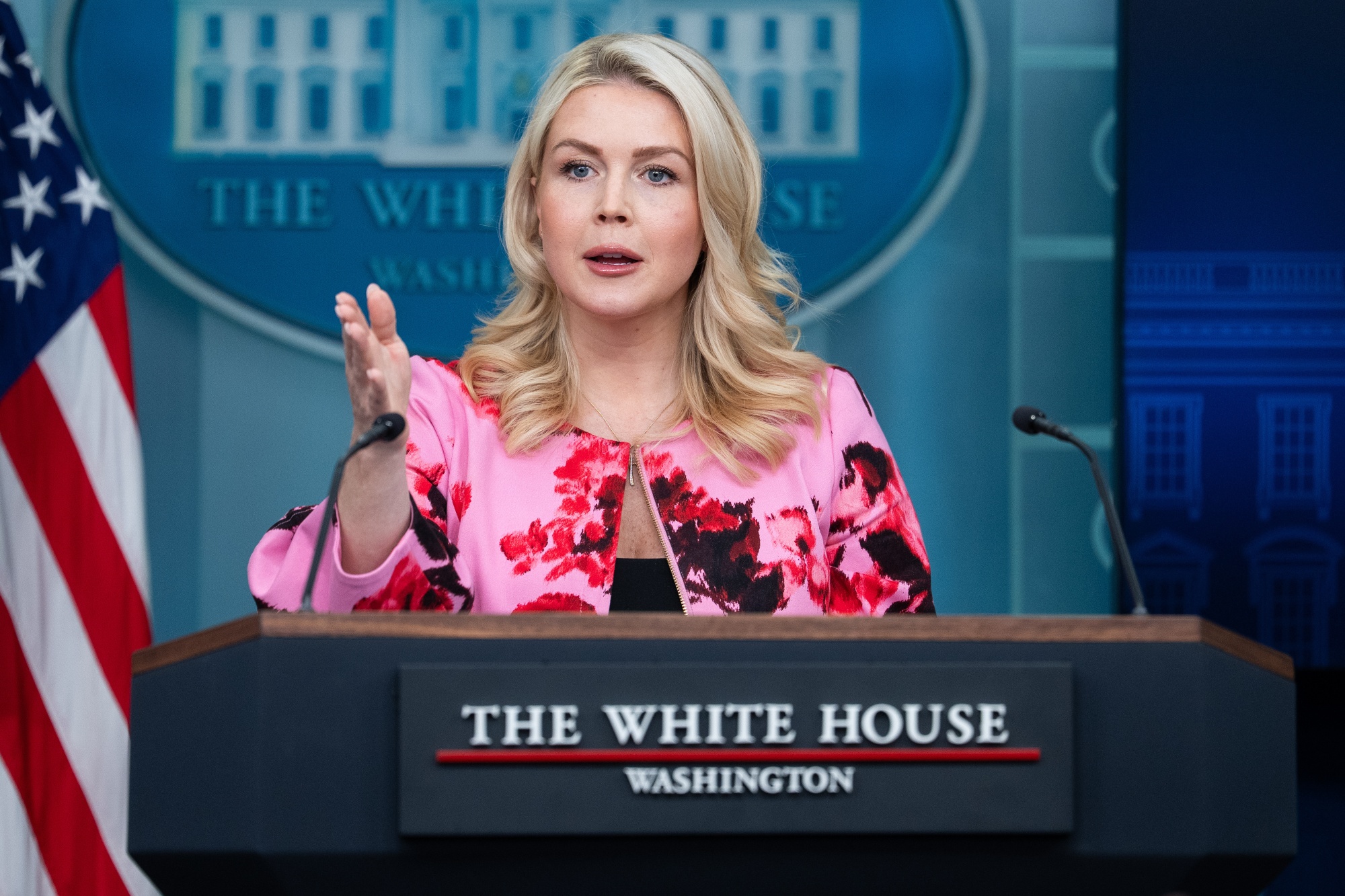 Karoline Leavitt, White House press secretary. Photographer: Aaron Schwartz/Bloomberg But the mixed signals have markets whipsawing. Brent futures, the global benchmark for oil, eased on Trump's social media post this morning – prospects of peace, and a reopened Strait of Hormuz, could mean a return of supply – only to snap back on his threats of a wider, more damaging war. Brent jumped to over $115 a barrel before settling above $112. It's surged around 60% this month. After an initial boost early in the day, stocks edged down. The S&P 500 has dropped nearly 9% from its high on Jan. 27 and is on track for its worst month since 2022. Read More:
As my colleagues Josh Wingrove and Carter Johnson reported on Friday, traders have been adapting to off-hours and weekend pronouncements by the president. The seemingly scatter-shot announcements emerging from the White House have driven wild moves when markets open on Mondays – and futures bets that have raised questions about trades made on inside information. Trump, in his commentary on how well the war is going, has assigned himself the task of explaining how he will win a war that is "already won," while downplaying the economic pain that experts almost universally say hasn't even begun to be felt yet. As usual, it is falling to those who work for Trump to explain how the country will address the ramifications. "Over time, the US is going to retake control of the straits, and there will be freedom of navigation — whether it is through US escorts or a multinational escort," Treasury Secretary Scott Bessent said Monday on Fox News. This had the benefit of describing a problem that all who are watching can agree is real. How that problem will actually be resolved is another matter. — Ted Mann Today's Top NewsFederal Reserve Chair Jerome Powell said longer-term inflation expectations appear to be in check but that the central bank is carefully monitoring them as it assesses the effect from the US and Israel's war with Iran. Airport wait times in Houston and Atlanta have eased after Transportation Security Administration officers received most of their missed pay, though the standoff over Department of Homeland Security funding continues.  Empty security lines outside George Bush Intercontinental Airport in Houston on March 28. Photographer: Danielle Villasana/Getty Images/Getty Images North America A new Trump administration proposal could make it easier for 401(k) plans to include alternative investment choices like private credit, private equity, crypto and real estate. Americans are increasingly turning against artificial intelligence, with growing majorities saying they fear the fast-moving technology will take away their jobs and hurt education, according to a new Quinnipiac poll. Russia's delivery of crude to fuel-starved Cuba temporarily staves off a full-blown humanitarian crisis, with other countries trying to parse Trump's decision to allow the shipment to reach the island. Senator Richard Blumenthal wants Securities and Exchange Commission Chairman Paul Atkins to explain whether the sudden departure of its enforcement director was related to cryptocurrency cases, including one touching on the Trump family's ventures. The administration will resume processing some asylum claims after a near-blanket halt of immigration paperwork for hundreds of thousands of people seeking refuge in the US. The US Embassy in Venezuela is formally resuming operations, the latest step in the Trump administration's plan to spur the nation's economic recovery and eventual democratic transition. Must Reads From Bloomberg GovernmentSenate Republicans plan to fund the Department of Homeland Security for three years using a party-line budget process in an effort to sidestep Democratic opposition as the shutdown drags on, a key GOP senator said. A bipartisan group of four senators is pushing the Trump administration to crack down on a practice known as upcoding in Medicare Advantage plans, according to a letter obtained by Bloomberg Government. Watch & ListenToday on Bloomberg Television's Balance of Power early edition at 1 p.m., hosts Joe Mathieu and Kailey Leinz interviewed Michael Allen, managing director of Beacon Global Strategies and a former White House adviser in the Bush administration, about the president's threats of escalation in the war with Iran and the situation in Cuba. 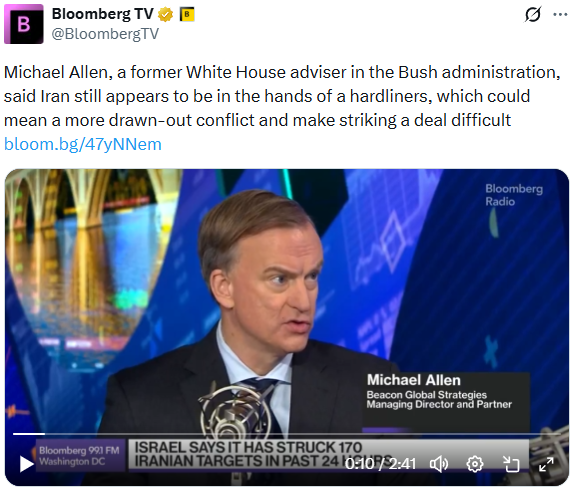 On the program at 5 p.m., they talk with Democratic Senator Chris Coons about the ongoing standoff over Homeland Security funding, the war and the president's coming budget request. On the Odd Lots podcast, Bloomberg's Tracy Alloway and Joe Weisenthal talk with Marco Argenti, chief information officer at Goldman Sachs, about what AI deployment at the bank looks like at the moment and the data challenges and regulatory concerns that come with integrating this technology at scale. Listen on iHeart, Apple Podcasts and Spotify.  Chart of the Day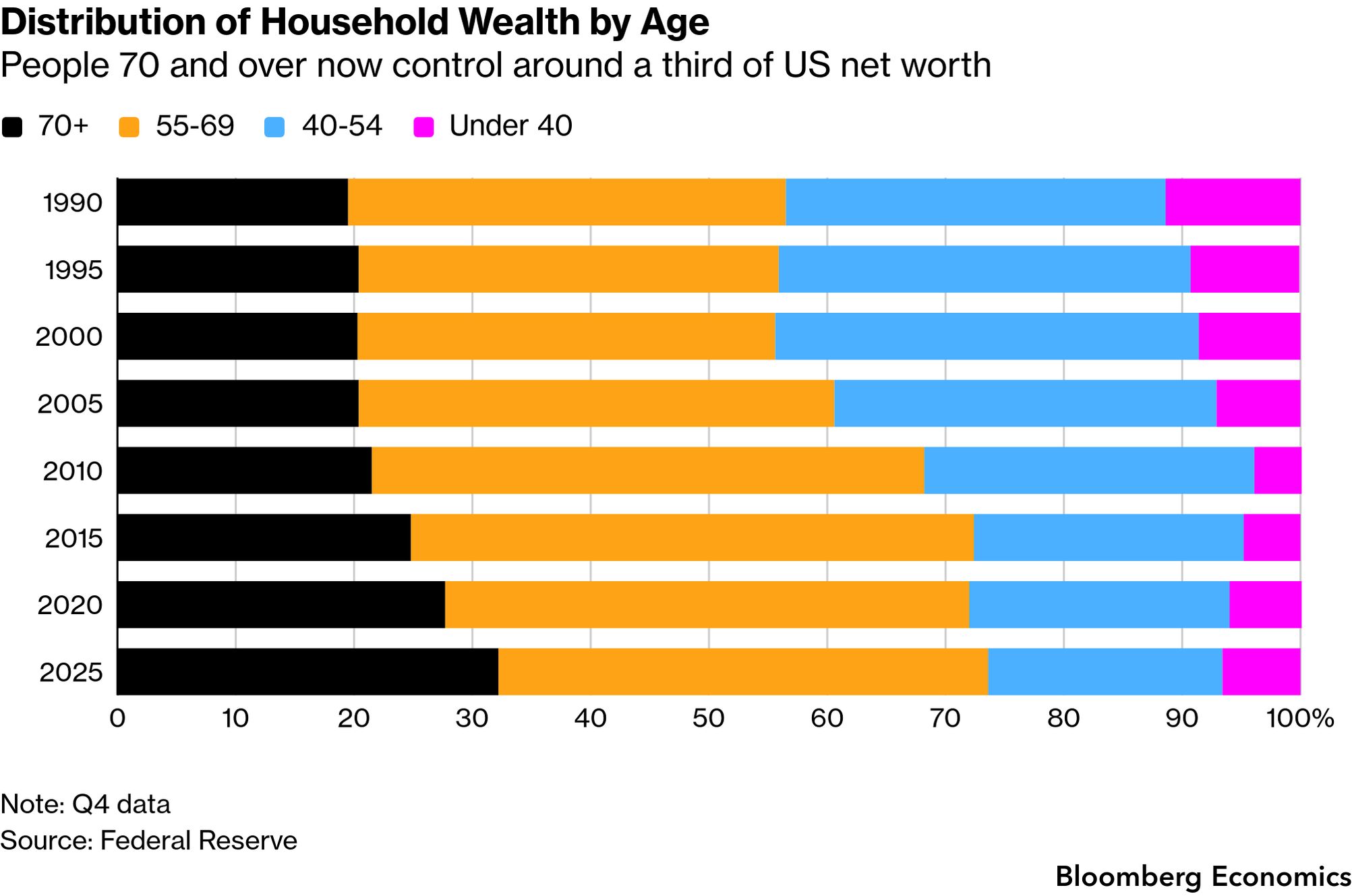 As the massive baby boomer generation ages, older Americans control of a huge and growing swath of America's household wealth. The 70-and-over crowd now holds around a third of total net worth, and people 55 and older control almost three-quarters of it, according to Federal Reserve data. Meanwhile, since 1990, the share of household wealth held by people under age 55 has fallen by about 40%. The overall wealth shift toward older Americans will change lots of things in the economy. Many older Americans have sizable financial market assets (near 80% of corporate equities and mutual fund shares are held by people age 55+), and this massive pooling of wealth likely will mean that companies shift their offerings and marketing to grab a piece of that wealth. — Alex Tanzi What's NextThe House and Senate began a scheduled two-week recess today. The Conference Board's measure of consumer sentiment and expectations in March will be released tomorrow. Job openings and layoffs in February also will be reported tomorrow. The Supreme Court is set release opinions tomorrow. Retail sales in February will be released on Wednesday. ADP data on private-sector payrolls will be reported on Wednesday. The nation's trade deficit in February will be reported Thursday. The jobs report for March will be released Friday. The White House is set to release its budget request for fiscal 2027 on Friday. US stock and bond markets will be closed for Good Friday. More From BloombergLike Washington Edition? Check out these newsletters:
Explore all newsletters at Bloomberg.com. We're improving your newsletter experience and we'd love your feedback. If something looks off, help us fine-tune your experience by reporting it here. Follow us
You received this message because you are subscribed to Bloomberg's Washington Edition newsletter. If a friend forwarded you this message, sign up here to get it in your inbox.
|




Trump’s mixed messaging
Threats and olive branches. Read in browser Donald Trump's reversals accelerated on Monday amid the widening war begun by the US and Israel a month ago. The 79-year-old president oscillated between threats of further destruction of Iran's civilian infrastructure and unconfirmed claims of peace negotiations . All the while, the two attacking countries continued to bomb Iran and Lebanon, with thousands already killed and tens of thousands wounded, according to local authorities and United Nations-afiliated groups. The Houthis in Yemen joined Hezbollah in attacking Israel over the weekend , further expanding a conflict that increasingly centers on the Strait of Hormuz and limited tanker traffic there, thanks to Iran's stranglehold on the waterway . Meanwhile, Brent crude hover...