| Read in browser | ||||||||||||||
  This is Washington Edition, the newsletter about money, power and politics in the nation's capital. Every Friday, White House correspondent Hadriana Lowenkron delivers a roundup of the key news and events in politics, policy and economics that you need to know. Sign up here. Email our editors here. Setting Up a SummitAs the war in Iran continues to escalate, the Trump administration has another country on its agenda: China. Ahead of a key summit between President Donald Trump and China's Xi Jinping, Trade Representative Jamieson Greer and Treasury Secretary Scott Bessent are heading to Paris this weekend for talks with China's Vice Premier He Lifeng. It will be the first time the two parties are meeting since the Supreme Court ruled Trump's global tariffs, a cornerstone of his economic agenda, are unconstitutional. 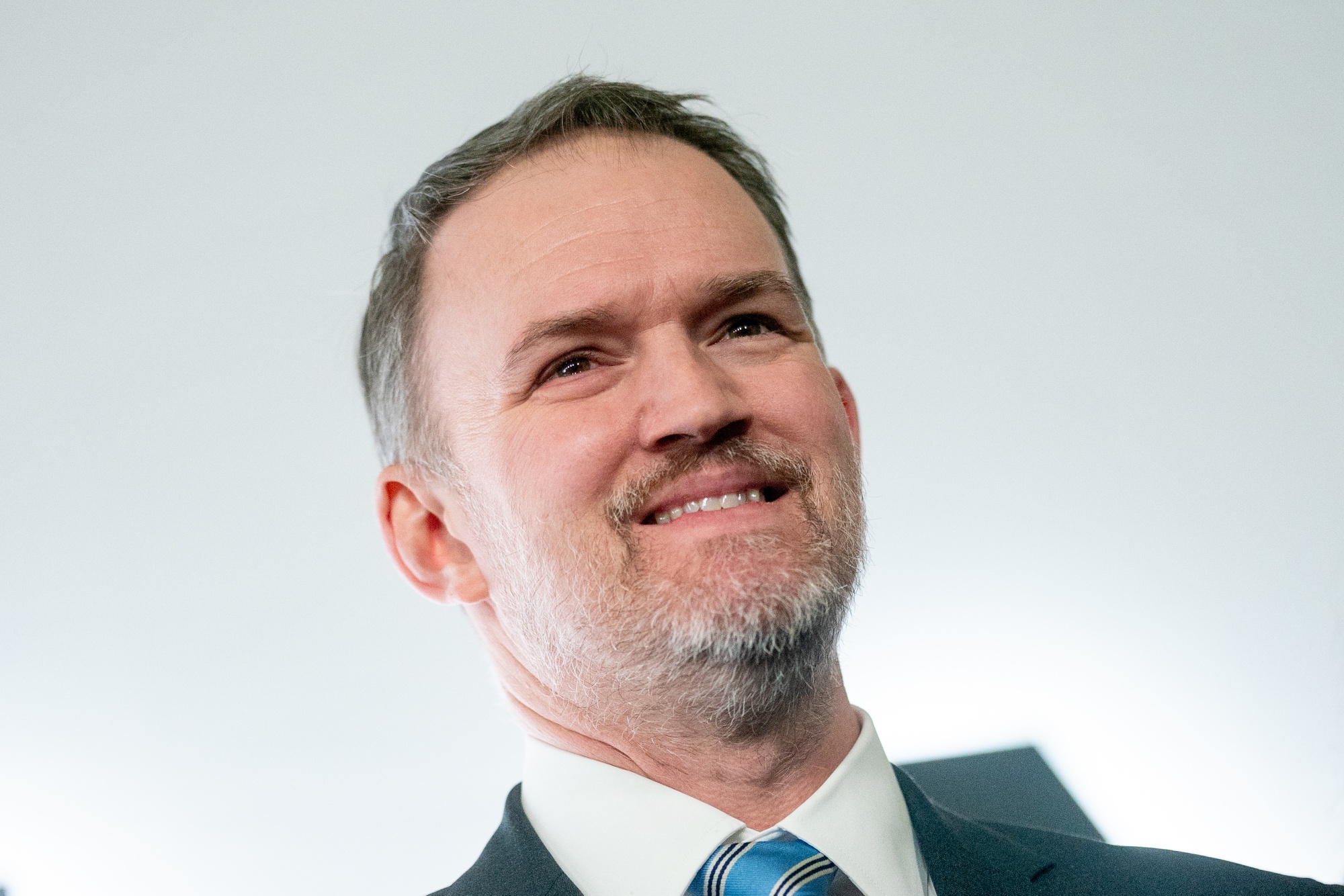 Jamieson Greer, US trade representative. Photographer: Stefani Reynolds/Bloomberg The US and China had been observing a somewhat uneasy truce on trade since last year. Greer this week kicked off what amounts to the administration's Plan B to impose import levies on China and other nations. He announced his office would begin an investigation under Section 301 of the Trade Act of forced-labor practices of several countries, including China, a decision that was slammed by Beijing. Besides trade, there are a number of other difficult issues between the world's two largest economies, including agricultural purchases, fentanyl trafficking and Taiwan, that are expected to be discussed this weekend. Greer told CNBC this morning that the relationship between the two countries has been much more balanced than it was a year ago, and that the US looks to ensure "continued stability" with China throughout this negotiating period. China has echoed that sentiment, with a spokesman for the National People's Congress telling reporters that both China and the US "stand to gain from cooperation and lose from confrontation." The US-Israel war with Iran, which has roiled markets and sparked a spike in oil prices, also could be a wild card in the negotiation. China has condemned the US' killing of Iran's supreme leader, one of China's allies. That followed the US' capture of Venezuela's Nicolas Maduro, another ally. The conflict also has disrupted China's supply of oil and some other raw materials. The summit is set to take place from March 31 to April 2 in Beijing. War With IranThe US said it had stepped up strikes on Iran to unprecedented levels as both sides in the war threatened to escalate a conflict hitting its two-week mark and upending energy flows and global financial markets. The US Army has sent 10,000 interceptor drones developed in Ukraine to the Middle East as it looks to repel Iranian attacks without using up high-cost missile defenses. Trump said the US has Iranians who are residing in the country "under watch" amid new concerns about the potential for domestic terrorism during the war with Iran. All six crewmembers aboard a KC-135 refueling aircraft that crashed over western Iraq while operating as part of the military campaign against Iran are confirmed dead, US Central Command said. The US issued a second authorization letting countries buy more Russian oil that's stuck on tankers due to sanctions, part of the White House's push to prevent prices from surging. Don't MissA federal judge blocked Justice Department subpoenas issued to the Federal Reserve Board seeking records relating to its headquarters renovations and Chair Jerome Powell's comments to Congress about the project. Consumer spending in the US barely rose in January after economic growth was weaker than previously reported at the end of last year, suggesting the economy lost some momentum before the war with Iran. 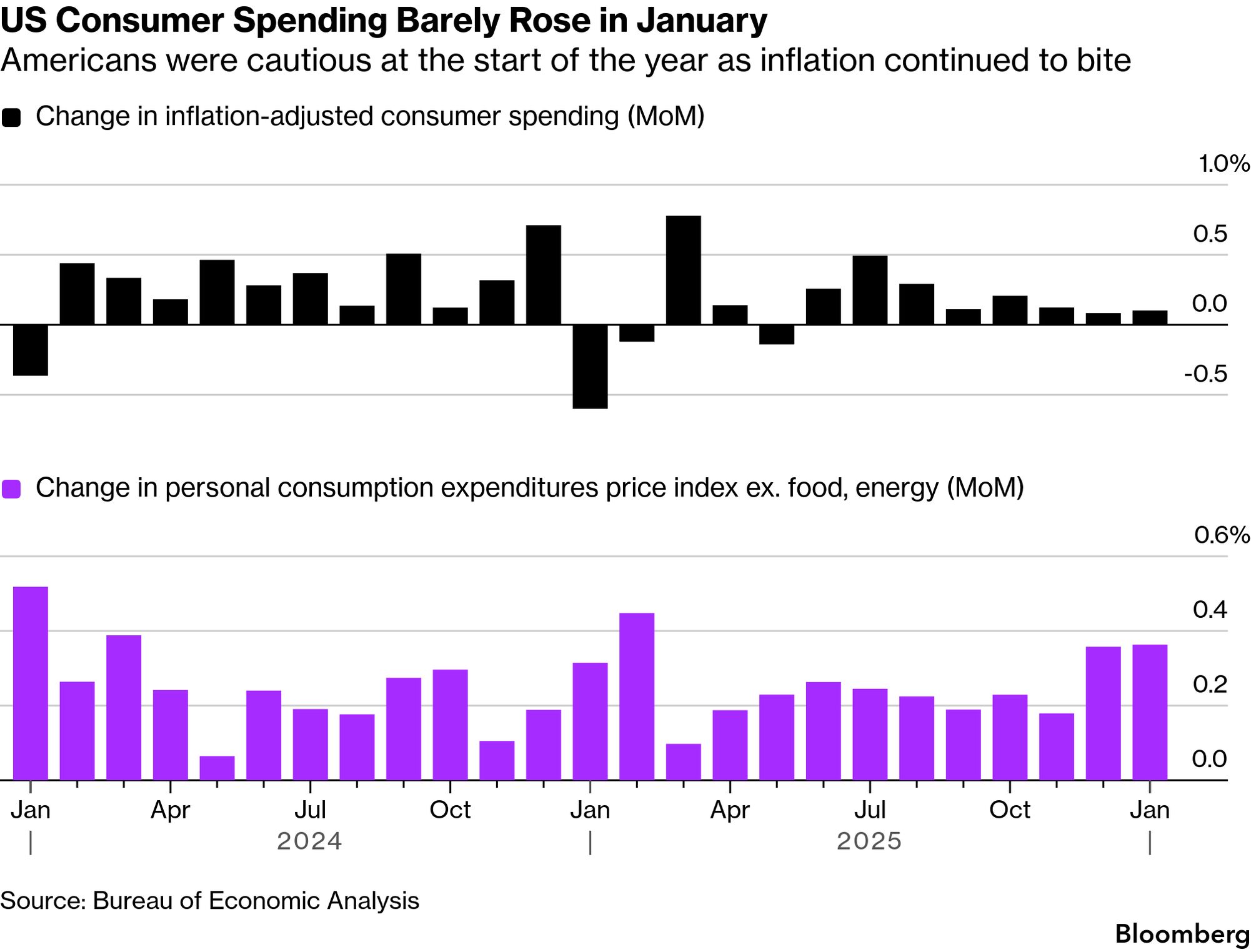 US job openings rose in January and layoffs fell, signaling that demand for workers was improving before the labor market showed fresh signs of weakness. Consumer sentiment in the US declined to a three-month low as fears mounted in recent weeks about the impact on gasoline prices from the war with Iran, according to the University of Michigan's index. Greer called on companies seeking refunds for the almost $170 billion in tariffs overturned by the Supreme Court to give any money they receive back to their workers. Trump's plan for Cuba is using American economic pressure to make the island nation financially dependent on Washington, as officials in Havana confirmed talks with the US.  A blackout in Havana on March 4. Photographer: Adalberto Roque/AFP/Getty Images A fund that counts Trump's eldest sons as partners invested in a pair of small companies last year that recently made abrupt pivots into drones — a technology playing a key role in the US and Israel's war in Iran. Former CIA officers are taking their field experience to the C-suite as founders of startups positioned to capitalize on a market for security-focused tech firms that is expected to reach $338 billion by 2033. For Republicans facing a tough election year, holding the Senate is their easiest path to keeping some power in Congress. But Trump is raising their degree of difficulty. The White House shift on immigration messaging is exposing the divides between Republicans worried about blowback from enforcement actions in their communities and hard-liners who want the administration to stay the course. Watch & ListenToday on Bloomberg Television's Balance of Power early edition at 1 p.m., hosts Joe Mathieu and Tyler Kendall interviewed former CIA officer Brian Carbaugh, co-founder of the data analytics startup Andesite, about retired spies putting their field experience to work in the security tech industry. 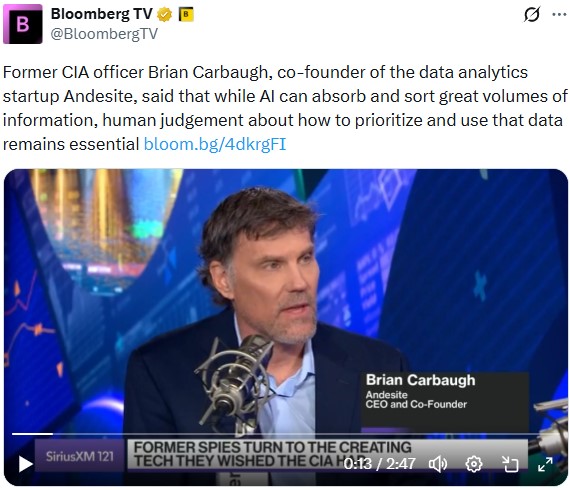 On the program at 5 p.m., they talk with former Defense Secretary Mark Esper about the US offensive against Iran and the Islamic Republic's vow to keep the Strait of Hormuz shut down as well as Interior Secretary Doug Burgum from Tokyo. On the Big Take podcast, host David Gura sits down with Bloomberg national security and tech reporter Katrina Manson and senior editor Mike Shepard to discuss how the US is integrating AI into its warfighting machine and the guardrails in place for the military as it utilizes AI technology to make life-and-death decisions. Listen on iHeart, Apple Podcasts and Spotify.  Chart of the Day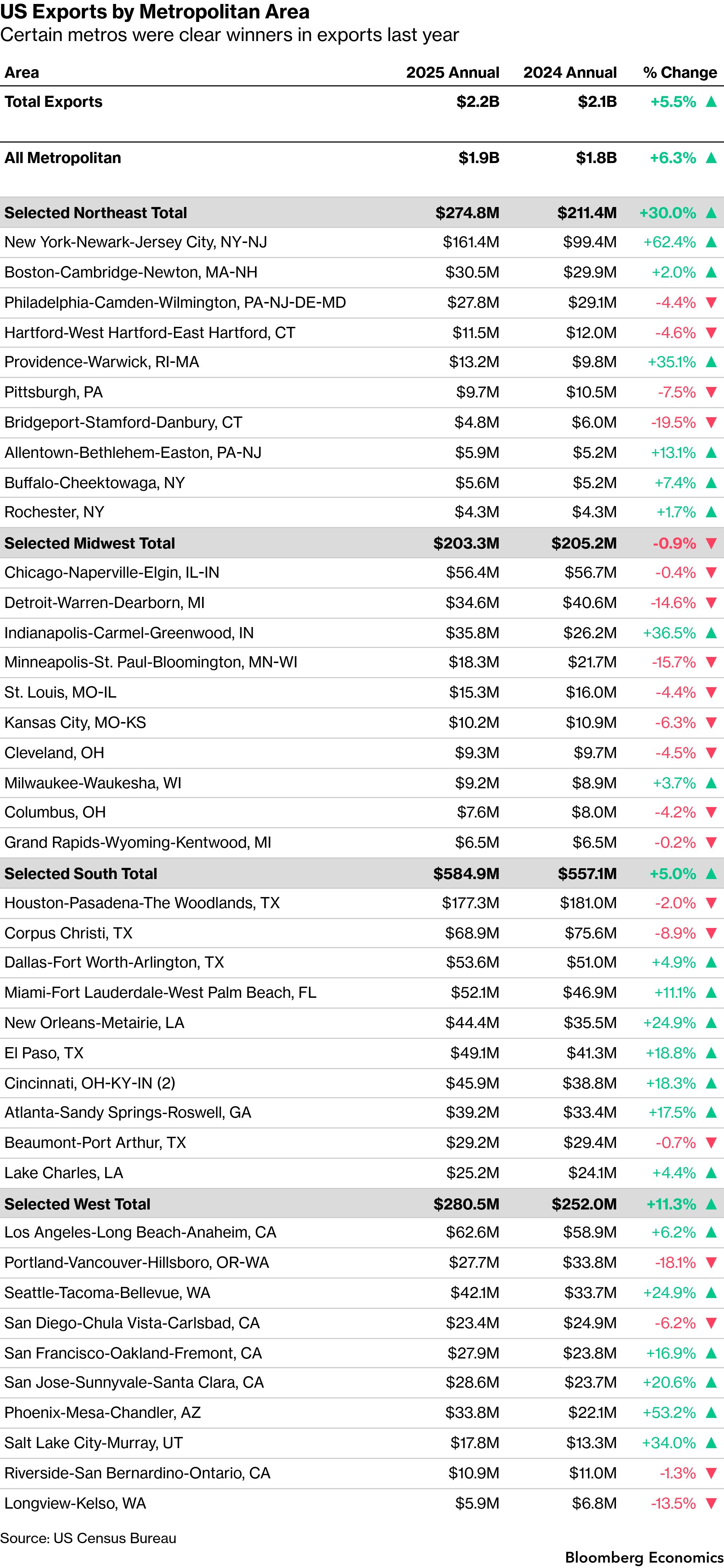 The tariffs Trump introduced last year didn't just upend global trade, they also shuffled exports that pass through major US metropolitan areas. Census Bureau data released this week show some major changes in the value of exports flowing through cities last year. The big winners, and there were only a handful, were New York City (+62.4%), Phoenix (+53.2%), Indianapolis (+36.5%), Providence (+35.1%), Salt Lake City (+34.0%), Seattle (+24.9%), and New Orleans (+24.9%). All are trade gateways and/or logistics hubs with significant infrastructure in place such as major airports and ports. Some, like Indianapolis, are an important part of US distribution networks. This was an important factor last year as companies revamped supply-chain routing because of tariffs. — Alex Tanzi What's NextUS industrial production in February will be reported on Monday. Pending home sales in February will be reported on Tuesday. The producer price index for February will be reported Wednesday. Factory orders in January also will be reported Wednesday. The Federal Reserve releases its decision on its benchmark interest rate at 2 p.m. on Wednesday. New home sales in January will be released Thursday. Japan's Prime Minister Sanae Takaichi is scheduled to meet with Trump in Washington on Thursday. Seen Elsewhere
More From BloombergLike Washington Edition? Check out these newsletters:
Explore all newsletters at Bloomberg.com. We're improving your newsletter experience and we'd love your feedback. If something looks off, help us fine-tune your experience by reporting it here. Follow us
You received this message because you are subscribed to Bloomberg's Washington Edition newsletter. If a friend forwarded you this message, sign up here to get it in your inbox.
|




Beacon no more
Milei risks becoming one conservative leader among many ...