| Read in browser | ||||||||||||||
  I'm Nancy Cook, Bloomberg's senior national political correspondent, and each weekday I'll be coming to you with inside-the-room reporting and insights that reveal what's really happening in Washington—and how it impacts you. Email me with feedback and comments here. If this newsletter was forwarded to you sign up here. Building PressurePresident Donald Trump seems torn between two familiar — and sometimes conflicting — impulses on Iran: taking bold action to remake the global order and keeping the US economy and financial markets humming. He's had a rough go on both. The regime in Iran hasn't crumbled and forecasters on Wall Street have raised the odds of a recession this year because of the war. It's not clear where the conflict goes from here or how long it will last. While the US has offered a 15-point ceasefire proposal — rejected by Iran — Trump also has ordered the deployment of about 7,000 ground troops to the region. Economic flash points do speak to Trump. He backed off of imposing steep global tariffs last year after the bond market went haywire. More recently, he stepped away from his threat to target Iran's energy infrastructure after oil prices jumped and stocks dropped. The political costs for Trump will keep adding up ahead of the midterm elections, with Republican control of Congress already in peril. Trump campaigned for office on his ability to juice the economy, which is the top issue for voters worried about the cost of living and availability of jobs. 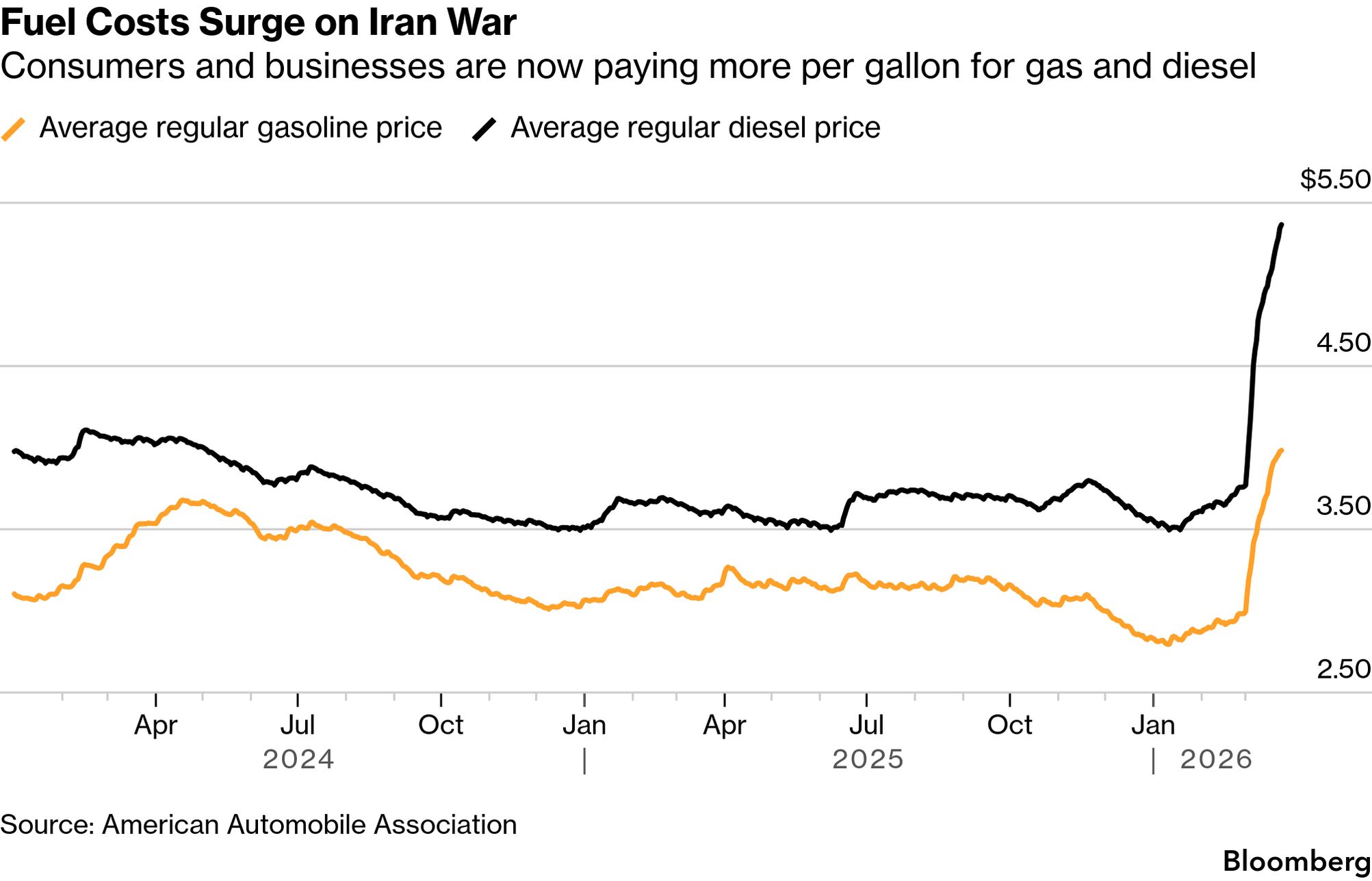 Now, as a result of surging oil prices caused by the war, Goldman Sachs puts the risk of an economic downturn over the next year at 30% and predicts the jobless rate will climb to 4.6% by the end of 2026 from 4.4% in February, as my colleagues Julia Fanzeres and Augusta Saraiva report. "Lots of elements of the economy are going to be weaker because of this war," Nancy Vanden Houten, lead US economist at Oxford Economics, told them. Meanwhile, 54% of voters in a Quinnipiac University poll out today said they oppose the US military action in Iran. There is a sharp partisan divide with Republicans overwhelmingly supporting it and Democrats and independents opposed by wide margins. "The United States has been engaged over the last three days in productive conversations," White House Press Secretary Karoline Leavitt said at a briefing today. "You're beginning to see the regime look for an exit ramp." Trump previously has said the conflict would be a matter of weeks rather than months. As the economic warning signals become even louder, Trump may be looking to return to domestic issues — that is, until he focuses on remaking Cuba. Read More:
Today's Top NewsTrump and Chinese leader Xi Jinping will hold their highly anticipated summit in Beijing on May 14-15, following a delay that brought fresh uncertainty to relations between the world's largest economies. Senate Republicans rejected Democrats' latest bid to end a lengthy shutdown at the Department of Homeland Security, prolonging a stalemate that has wreaked havoc on air travel and threatens to ripple through the economy. The Transportation Security Administration warned that airport security is under severe strain as the weeks-long DHS funding shutdown drives staffing shortages, long wait times and mounting disruptions across the US. The Supreme Court threw out a copyright-infringement verdict against Cox Communications, dealing a major blow to music industry efforts to hold internet providers responsible for piracy by their customers. The cost of imports into the US jumped in February by the most in nearly four years, reflecting a broad pickup in prices even before war in the Middle East. Export prices also surged. 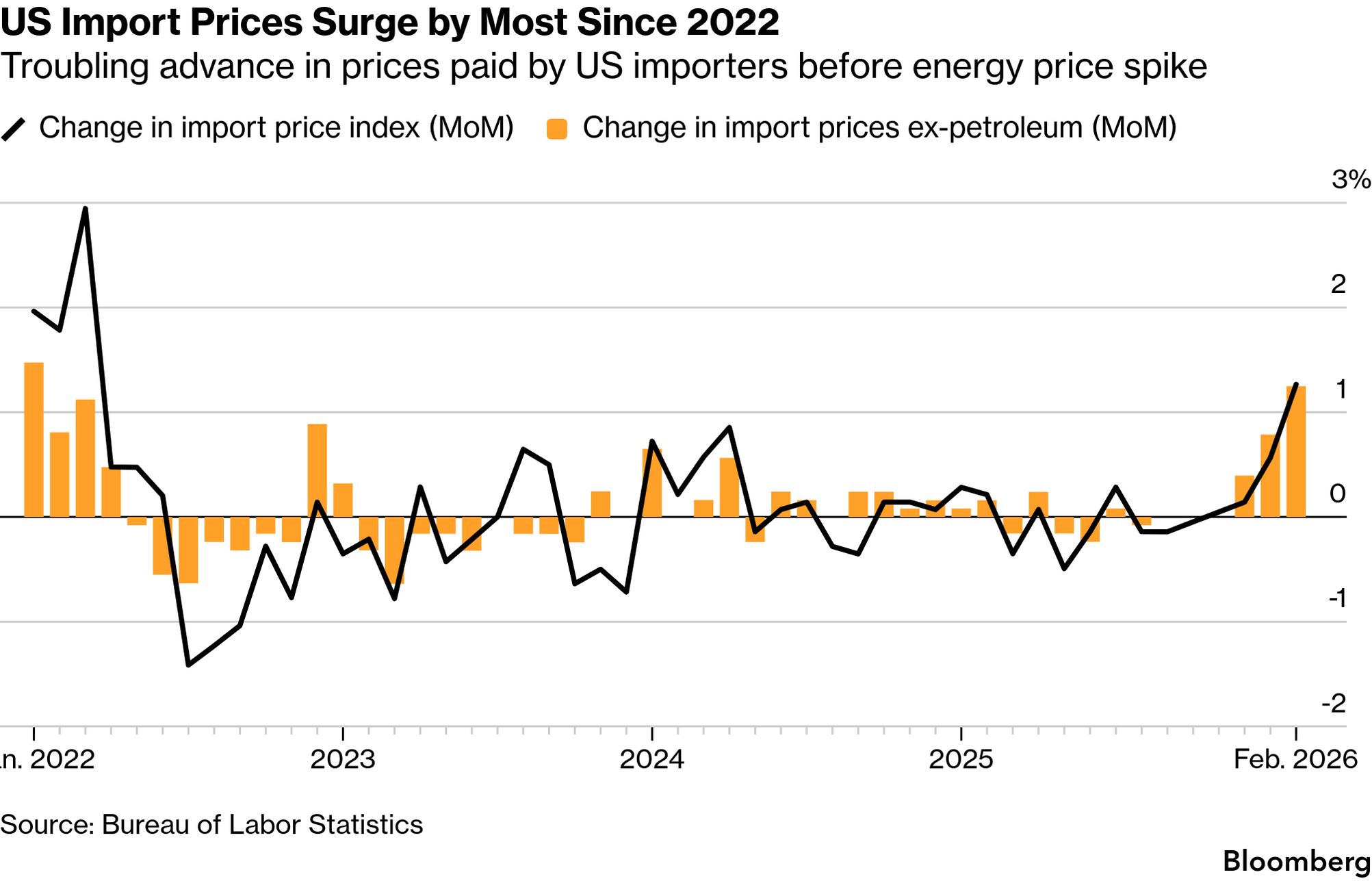 The Pentagon wants to shift roughly $1.5 billion in previously approved funding to buy missile interceptors from Lockheed Martin and RTX that are in short supply as the war in Iran consumes vast amounts of the munitions. The Trump administration will waive higher-ethanol E15 gasoline from US volatility requirements this summer, expanding sales and delivering a win for corn farmers and biofuels producers. Trump appointed tech industry titans including Mark Zuckerberg of Meta, Oracle's Larry Ellison and Nvidia's Jensen Huang to a new technology council that will focus on artificial intelligence policy and other science-related issues. Armando Labrador owns and operates a plastic-surgery clinic in a Miami strip mall that advertises low-cost breast implants and liposuction. He dreams of being Cuba's next president. Must Reads From Bloomberg GovernmentA wave of Democratic successes in elections during Trump's second term has crashed into the president's backyard, the latest warning sign for Republicans that their thin congressional majorities are in peril. Conservative grassroots activists are gathering for their national convention, seeking to reset their election messaging as tensions grow over Trump's intervention in Iran, the cost of living, and a potential softening on immigration. For all its bluster about canceling a record number of regulations across the federal government, the Trump administration has only erased a handful of big-ticket rules more than a year into his second term. Watch & ListenToday on Bloomberg Television's Balance of Power early edition at 1 p.m., hosts Joe Mathieu and Kailey Leinz interviewed Republican Representative Marlin Stutzman about the war with Iran and the standoff over funding for the Department of Homeland Security. 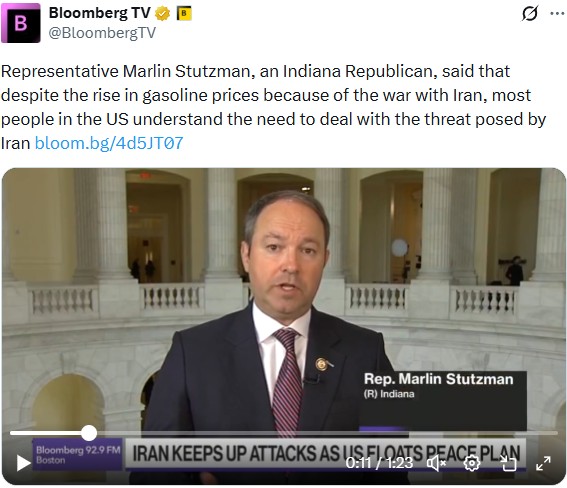 On the program at 5 p.m., they talk with Representatives Madeleine Dean, a Democrat, and Nick LaLota, a Republican, about the DHS shutdown and the war with Iran. On the Big Take podcast, host Sarah Holder talks to Bloomberg reporters Eric Martin and Jim Wyss about the increasingly dire situation in Cuba, ongoing talks between the country's leadership and the US and what could come next.. Listen on iHeart, Apple Podcasts and Spotify.  Chart of the Day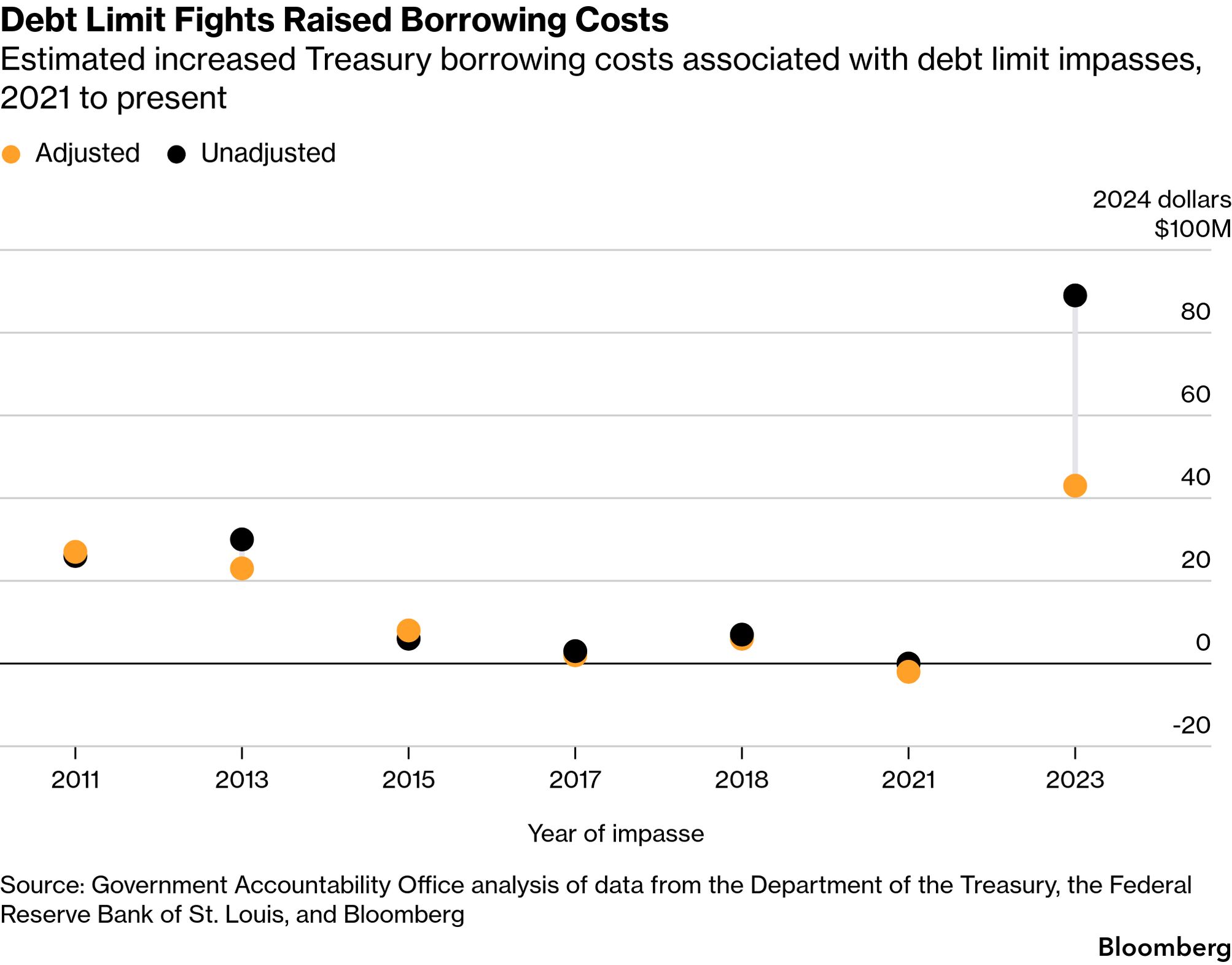 The debt limit standoffs that convulse Congress from time to time have imposed modest but measurable costs on taxpayers — and the tab adds up over time. A new Government Accountability Office analysis finds that borrowing costs increased by a total of $107 million to $161 million across a series of debt limit impasses from 2011 through 2023, depending on how market stress is measured. That's more conservative than other estimates, in part because the GAO only counts the extra interest paid in the first year after the bonds are sold. The 2023 crisis, in which the Treasury Department hit its $31.4 trillion debt limit and came within days of possibly defaulting on its debt before lawmakers acted to raise it, was particularly costly. Market participants interviewed by GAO said they avoided buying US treasuries and sold notes and bonds with coupon payments near the projected default date, driving up yields. The 2025 tax cut bill increased the debt limit to $41.1 trillion. At current rates of borrowing, the US could hit the limit sometime in 2027 — with midterm elections creating additional risk for a new standoff if Democratic wins create divided government in Congress. — Gregory Korte What's NextG-7 foreign ministers meet in Paris for two days starting tomorrow. Initial jobless claims for the week ending March 21 are reported tomorrow. The University of Michigan's index of consumer sentiment in March will be published Friday. The Conference Board's measure of consumer sentiment and expectations in March will be released March 31. Job openings and layoffs in February will be reported March 31. Retail sales in February will be released April 1. The jobs report for March will be released April 3. More From BloombergLike Washington Edition? Check out these newsletters:
Explore all newsletters at Bloomberg.com. We're improving your newsletter experience and we'd love your feedback. If something looks off, help us fine-tune your experience by reporting it here. Follow us
You received this message because you are subscribed to Bloomberg's Washington Edition newsletter. If a friend forwarded you this message, sign up here to get it in your inbox.
|




AI isn’t ready for trading
Testing showed models lost money. ...