| Read in browser | ||||||||||||||
 Carbon markets have had a rough few years. You can now add 2026 to the list: The collapse of a clean cookstove company has thrown the global offsets industry into disarray. Today's newsletter takes you inside the saga of Koko and what it means for the future of carbon offsets — a much-debated climate solution. Plus, a look at how major cities around the world are coping with the global oil crisis. Carbon collapse — againBy Laura Millan and Antony Sguazzin This year was supposed to be a turning point for carbon markets, with the United Nations' long-delayed country-to-country trading system coming into force and airlines preparing to enter a mandatory program to offset their emissions. But the high-profile collapse of a World Bank-backed clean-cooking company has delivered another blow to confidence in the market, which has been battered by credibility issues for years and, more recently, by a climate commitment retreat by governments and companies. Koko Networks Ltd., which sold cooking stoves and clean-burning ethanol to about 1.3 million households in Kenya, folded in January amid concerns it was issuing more carbon credits than its products warranted, a claim the company has denied. The bankruptcy has had a ripple effect across projects selling carbon credits, companies buying them and the marketplaces on which those offsets are traded. Prices on Corsia, the marketplace for airlines where Koko was looking to sell its credits, fell as low as $12.25 from about $15 just before the firm's collapse, according to data compiled by Bloomberg, and now sit at $12.85. 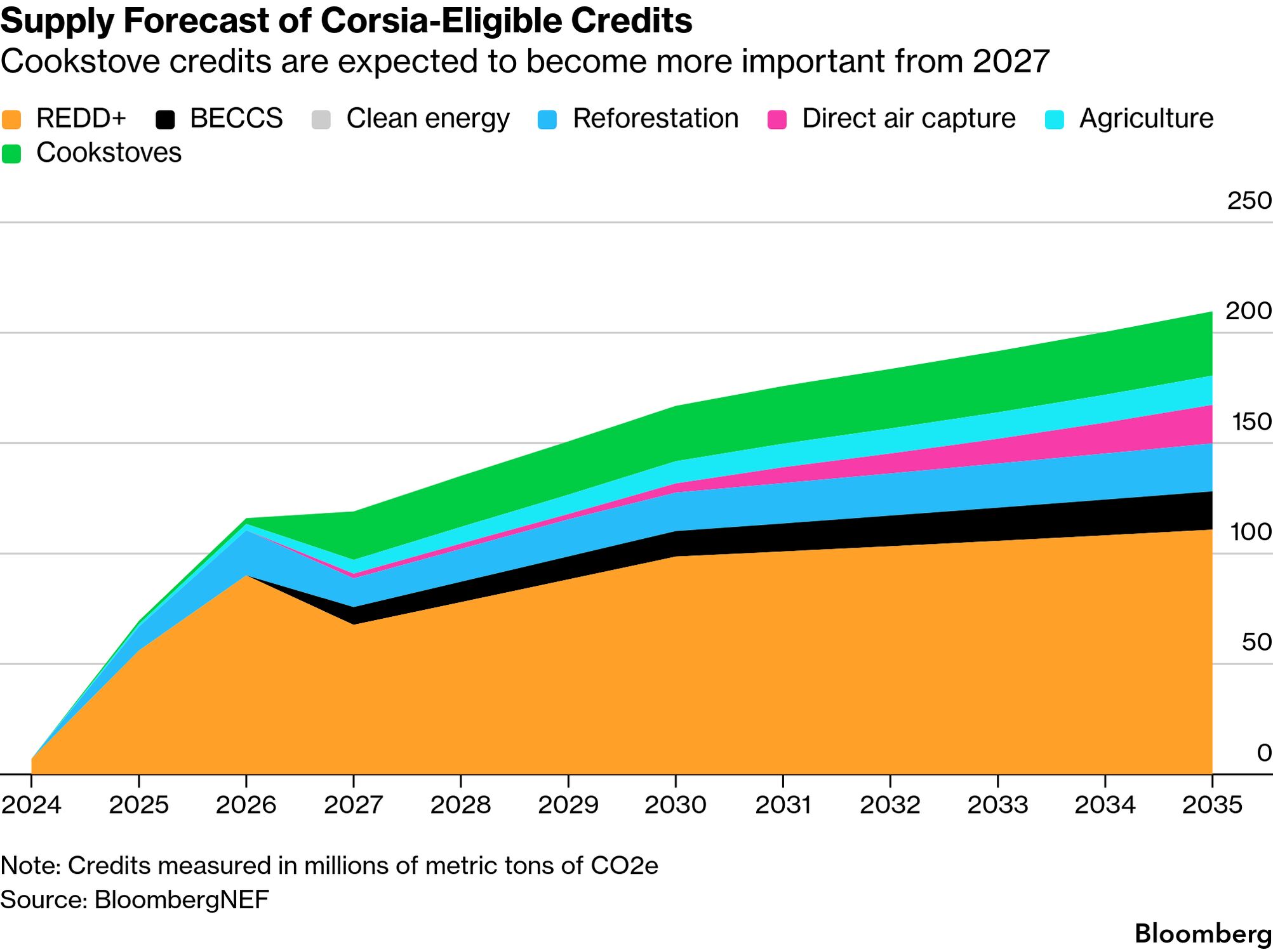 "The events of Koko have definitely created an undermining of confidence," said Douglas Greenwell, commercial director and head of the carbon business at Burn, the world's largest clean-cookstove developer and a seller of carbon credits. Buyers have been unnerved by Koko's failure to deliver credits they had been counting on and are reluctant to commit until there is more certainty, Greenwell said. He expects the softening of prices to be short term. "Corsia buyer demand [that] was emerging last year has not gone away, but it's elongated," he added. "Decision-making cycles have increased." Carbon offsets have long been a Rorschach test among climate experts. Some carbon markets allow companies to offset their greenhouse gas emissions by purchasing credits from businesses whose activities reduce the production of pollutants. Each credit represents a ton of carbon dioxide; Koko generated credits by attempting to quantify the deforestation avoided by shifting its customers away from cooking over wood and charcoal fires. Proponents argue that carbon credits channel crucial funds from companies and rich governments to poorer nations and communities, incentivizing the protection of important natural environments. Others argue that because the vast majority of projects focus on avoided emissions — trees that aren't cut down or fossil fuels that aren't burned — the sector is prone to unreliable carbon math or even fraud. "Any time there are concerns about a prominent project's ability to deliver carbon removal, that hurts the overall reputation of the sector," said Kyle Harrison, head of sustainability research at BloombergNEF. "It's a fairly persistent trend with projects around the world." The UN's International Civil Aviation Organization, which oversees Corsia, declined to comment on whether Koko's collapse had impacted prices. Still, high-quality carbon credits of the sort Corsia requires are hard to come by and Koko's collapse has tightened supply even further. Corsia launched in 2021 on a voluntary basis, but most airlines will be required to comply from 2027. "The real risk right now is there's a lot of pressure on governments to approve things and especially things that are not very expensive, leaving them with having to do the more expensive mitigation themselves," said Jonathan Crook, global carbon markets lead at nonprofit Carbon Market Watch. "There is a need for more caution for governments as to how they're going to approach these markets." Read the story Peak prices$1 trillion The potential size of the carbon market in 2050. A lot would have to change to get there, though. Carbon math"Either you have a rule structure that covers the losses, or you assign the losses to the atmosphere." Danny Cullenward Climate economist, University of Pennsylvania This week's ZeroWill the Iran War finally be the moment where countries move to renewables en masse, or will they rely more heavily on fossil fuels? This week on Zero, Akshat Rathi is joined by Aurore Belfrage, a tech investor, geopolitical risk advisor, and sustainability strategist, to look at how the energy investment landscape is changing with a fresh war in the Middle East, and how climate tech is making countries more resilient. Listen now, and subscribe on Apple, Spotify or YouTube to get new episodes of Zero every Thursday. Pulling all leversBy Linda Poon and Sarah Holder As the great oil shock of 2026 enters its fifth week, cities around the world have met the prospect of an extended period of higher fuel prices with a diverse mix of measures. In Melbourne, for example, fares for trains, buses and trams have been temporarily suspended to "take pressure off the pump and more cars off the road," said Jacinta Allan, premier of the Australian state of Victoria, in a public announcement. Bangkok's ferryboat operators, on the other hand, have raised fares to reflect the skyrocketing price of diesel fuel; so have bus companies in Rawalpindi. Both Pakistan and Thailand rely heavily on oil imported from the Persian Gulf via the Strait of Hormuz, which has been largely closed to shipping since the US-Israeli war with Iran began. 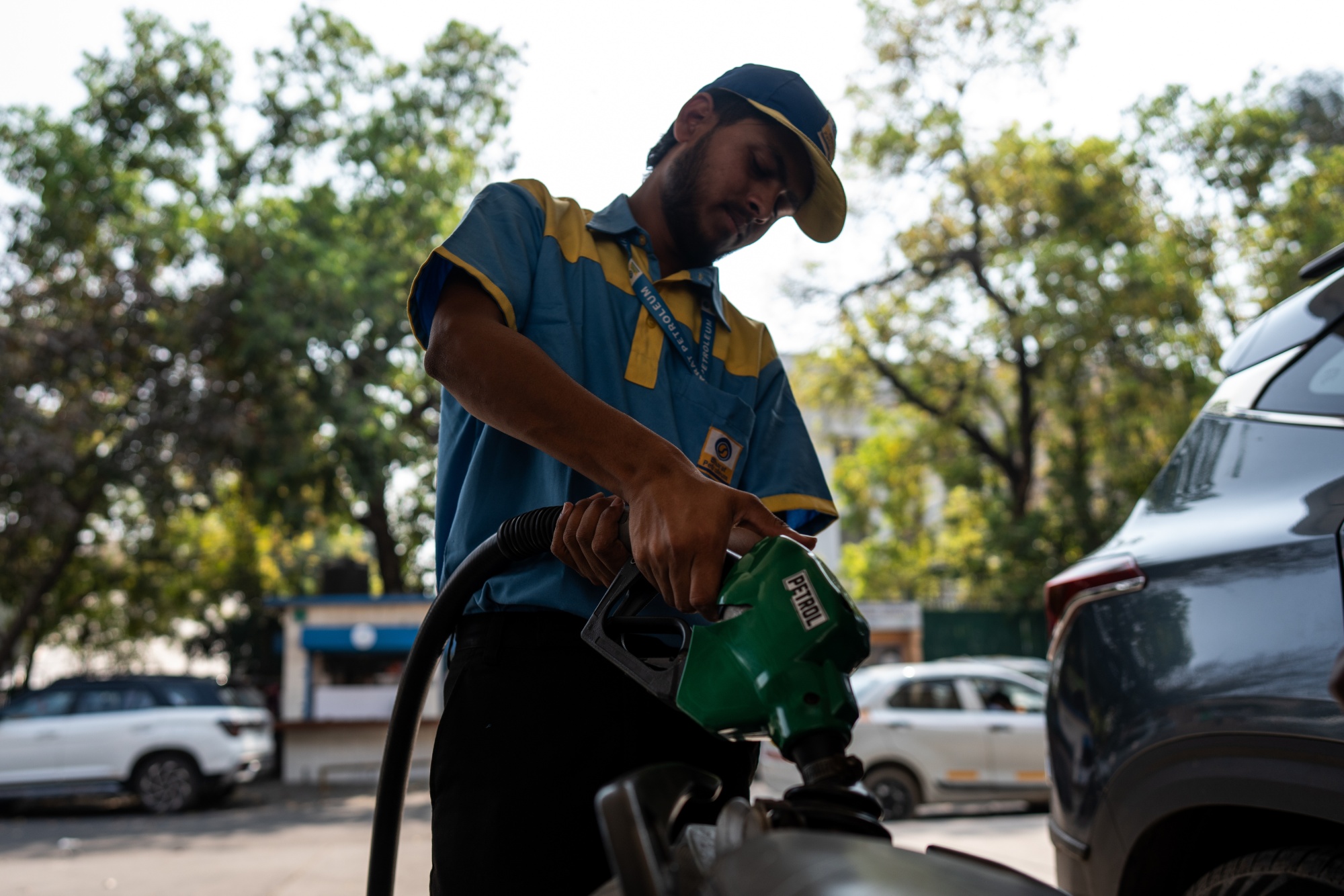 A petrol pump attendant fills fuel in a bike in New Delhi. Photographer: Amarjeet kumar Singh/SOPA Images/LightRocket European Union officials in Brussels are urging residents to work from home and drive less; French lawmakers recently rolled out an aid package that includes fuel subsidies for the transport industry. In the US, the state of Georgia imposed a "gas tax holiday" for 60 days — an idea that several other states are also exploring as the average price of gas tops $4 a gallon for the first time since 2022. US public transit agencies, meanwhile, are eyeing a potential ridership boost. "Metro is always going to be cheaper than driving a car," Randy Clarke, general manager of the Washington Metropolitan Area Transit Authority in the District of Columbia, told NBC Washington. Across the globe, lawmakers are quickly pushing out a range of transportation-related policy changes in response to the energy crunch. Many focus on the basics of fuel conservation: Guidance from the International Energy Agency encourages using public transport, car-sharing and remote working, as well as dropping highway speed limits. A reduction of at least 10 kilometers per hour, or about 6 miles an hour, could reduce individual drivers' fuel consumption by 5% to 10%, according to the report. For those of a certain age, these measures will sound familiar: The 1973-1974 oil embargo prompted the US government to lower speed limits to 55 miles an hour — a policy that would stick around until 1995. In the Netherlands, Dutch authorities closed streets to cars on Sundays, kickstarting a wave of bicycle adoption that eventually reshaped the nation's entire transportation network. 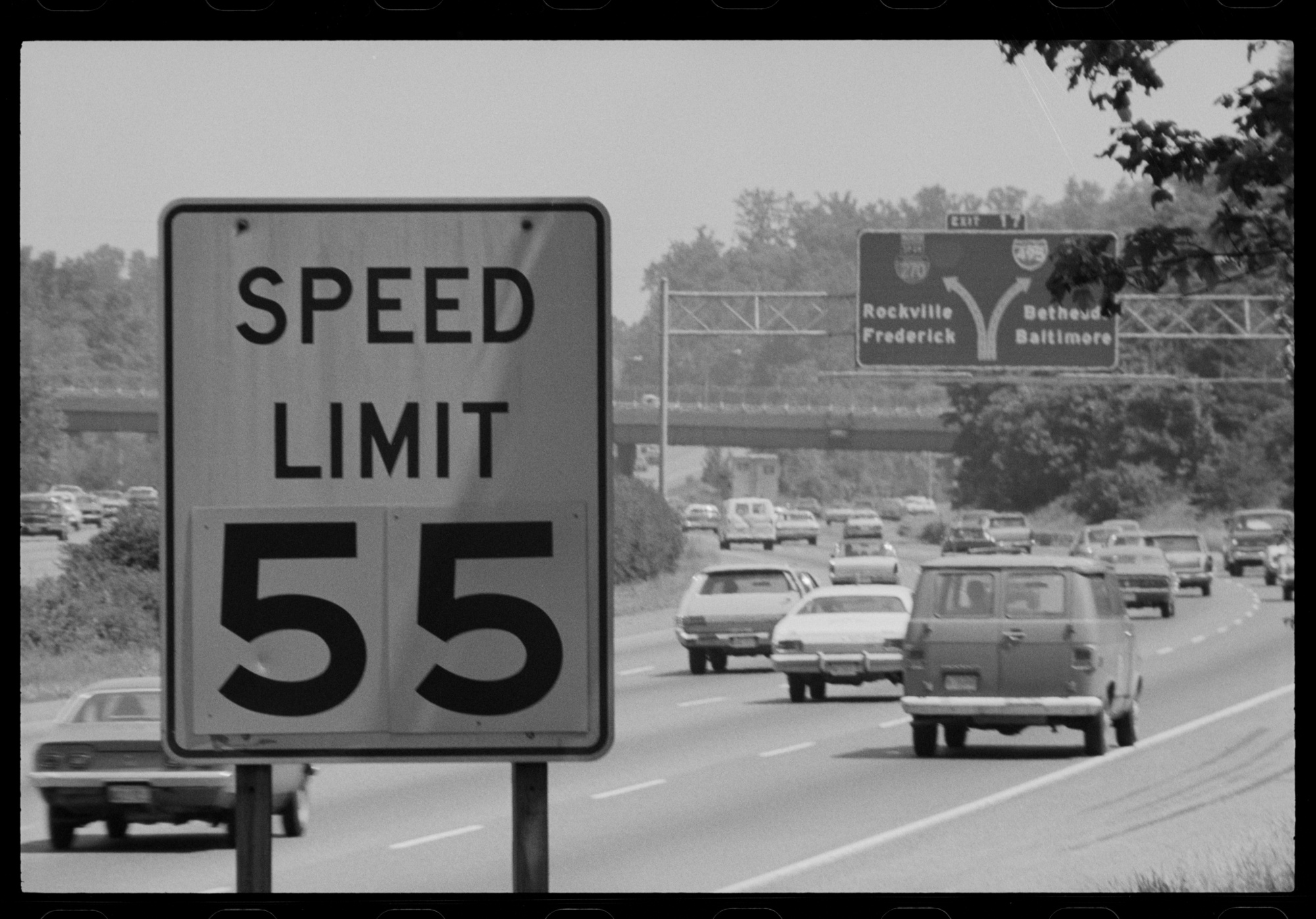 A sign of the times on the Washington Beltway in 1977. Photographer: Warren K Leffler/US News & World Report Collection/PhotoQuest/Getty But not all governments are embracing efficiency this time around. The Trump administration has sought to downplay the pain Americans are feeling at the pump and has shown little interest in rolling back its campaign against non-gasoline-powered transportation. With some energy experts predicting that global oil prices will rise much further, mobility advocates are urging policymakers to not miss yet another opportunity to drive changes that could permanently reduce reliance on fossil fuels and shield communities from the next oil shock. Past oil crises suggest that higher prices at the pump can nudge more people onto public transit. "Prices can push people towards public transport, but that effect is not automatic nor identical," said André Alves, a Ph.D. candidate at at the University of Lisbon's Institute of Geography and Spatial Planning and one of the authors of the report. While Alves's findings show how high fuel prices translate into behavioral shifts, he cautioned that other economic factors in 2022 could have played a role: European interest rates were elevated at the time, too, "so the burden that housing was having on people was actually higher than usual," Alves said. Read more More from Bloomberg
Explore all Bloomberg newsletters. We're improving your newsletter experience and we'd love your feedback. If something looks off, help us fine-tune your experience by reporting it here. Follow us
You received this message because you are subscribed to Bloomberg's Green Daily newsletter. If a friend forwarded you this message, sign up here to get it in your inbox.
|





Samsung Elec likely to report stupendous surge in quarterly profit to record level
Samsung Electronics , benefiting from red-hot chip prices stoked by the AI boom, is expected to book a six-fold jump in operating profit for January-March - a quarterly record and just shy of what it earned for all of the past business year. Get full access to Reuters.com for just $1/week. Subscribe now. Technology Roundup Technology Roundup Samsung Elec likely to report stupendous surge in quarterly profit to record level China moves to regulate digital humans, bans addictive services for children Kremlin's drive for a state-backed messaging app touches a nerve for some Trump administration proposes expanding Chinese tech gear crackdown DeepSeek's V4 model will run on Huawei chips, The Information reports ...