| Read in browser | ||||||||||||||

Another Friday has managed to deliver unpleasant news about the US economy. According to the University of Michigan, consumer sentiment fell in recent weeks to a record low, an historic reading likely fueled by the US-Israel war with Iran and the effect it’s had on already-bubbling inflation. The preliminary April sentiment index plummeted to 47.6 from 53.3 in March. Americans expect prices to rise at an annual rate of 4.8% over the next year. 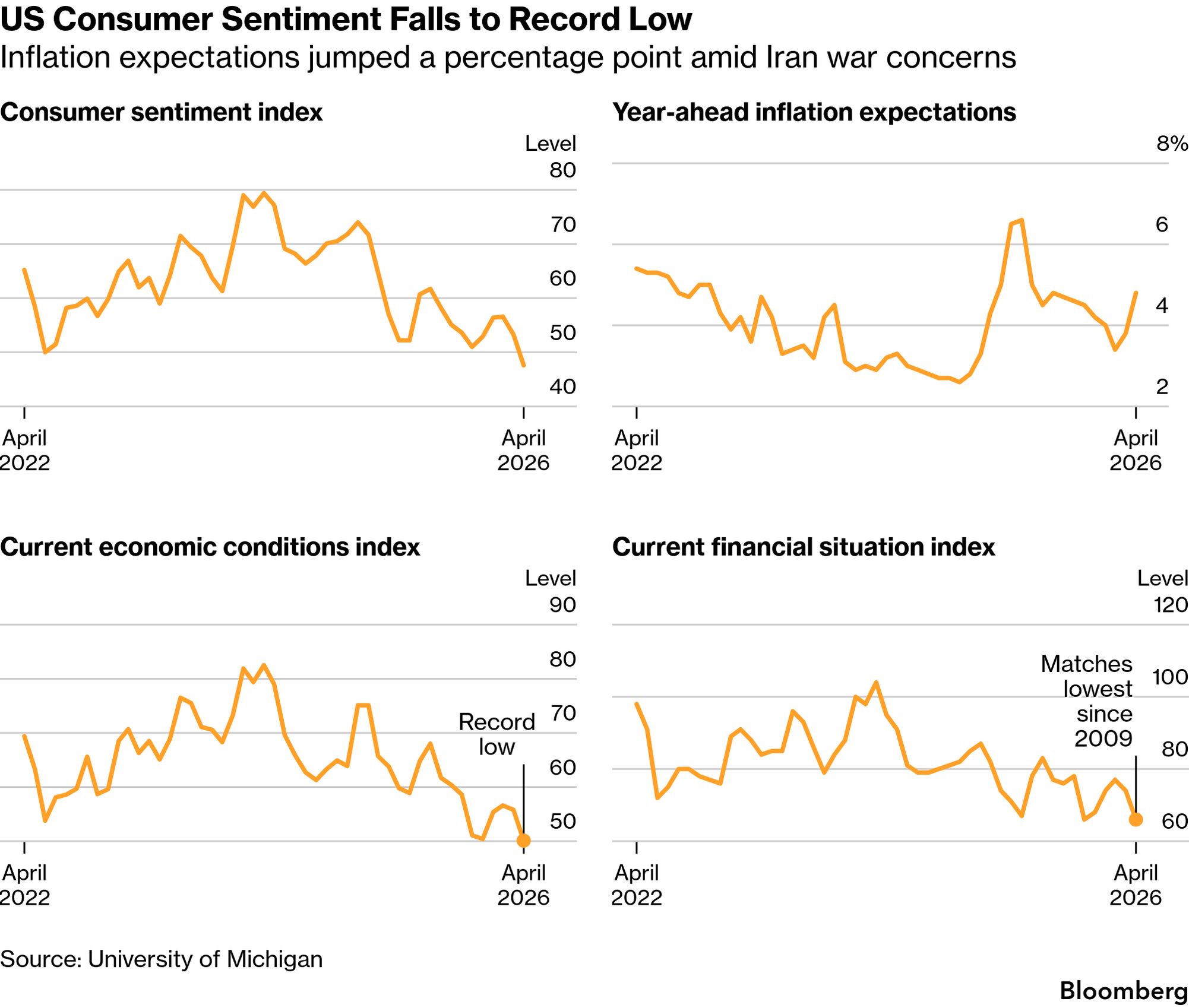
Adding fuel to the consumer gloom were new inflation numbers from the Trump administration Friday. Unsurprisingly, they showed Americans paying close to 40% more for gasoline since the war began as part of the biggest overall inflation jump in four years. So how bad is it getting out there? One possible canary is that more Americans are going to their local pawn shops for loans. Still, even with all the dour news, bond traders are sticking to hopeful bets the Federal Reserve will find space to cut interest rates this year. While all around is foreboding, it seems that on Wall Street hope springs eternal. —David E. Rovella What You Need to Know TodayConfusion reigned Friday over whether a US-Iran ceasefire will hold—and whether it ever really began, given Israel’s continued bombing of Lebanon. Adding to the uncertainty were reports of heated disagreement among Iranian leaders over whether to talk at all. President Donald Trump meanwhile didn’t let up on the vitriol, continuing to issue bellicose threats and erratic tweets on the eve of negotiations. Those discussions are to be led on the US side by Vice President JD Vance, Trump son-in-law Jared Kushner and real estate developer Steve Witkoff. As for the Strait of Hormuz, it’s still largely blocked. All in all, equities markets didn’t react well to the dissonance. But commodities traders appeared more sanguine: West Texas Intermediate fell 1.3% to settle below $97 a barrel. Brent oil ended the day lower at around $95. 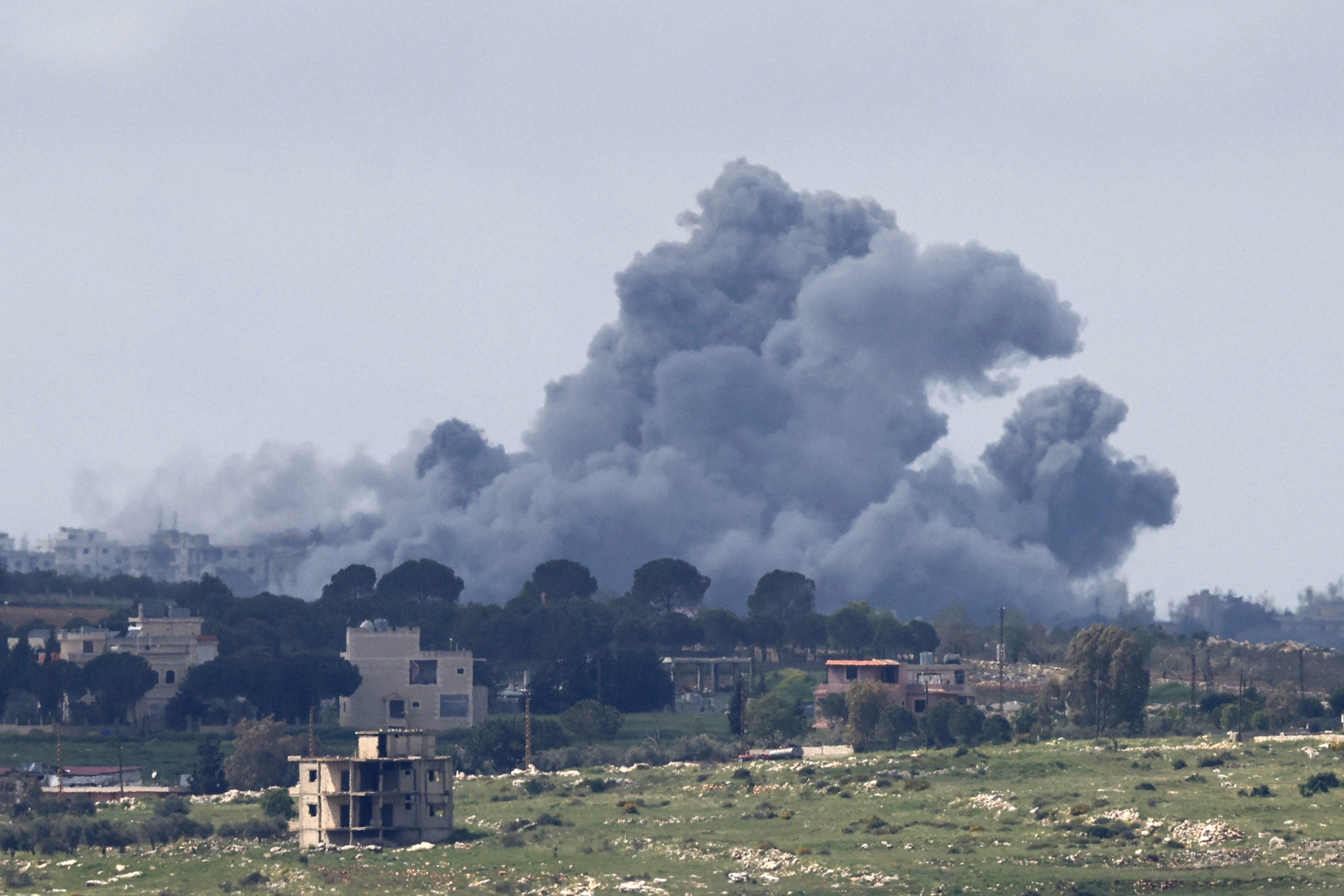
Smoke rises following Israeli attacks on southern Lebanon Friday. More than 1,700 people have been killed in Lebanon during the war.
Photographer: Jalaa Marey/AFP/Getty Images
Europe’s flying public is about to start paying a higher price for the US-Israel war and the trauma it’s inflicted on global energy availability. Nations in the region will face a systemic jet-fuel shortage in three weeks if the strait remains restricted, a regional airport trade association warned. Such a grim development would kneecap the continent’s economy just as airlines approach peak summer travel season. In recent days, seven Italian airports restricted access to jet fuel because of shortages while elsewhere other nations, including China, have taken measures to safeguard local supplies. Wall Street banks are starting to test Anthropic’s Mythos model internally as US officials encourage them to use it to detect vulnerabilities. While JPMorgan was the only bank named as part of an initiative to test it, other major financial institutions are said to have gained access—or expect to in the coming days. Rumblings of a potential ceasefire in another ongoing conflict, Russia’s 12-year-old war on neighboring Ukraine, was potential good news for Ukrainians who have seen thousands of their countrymen killed in Kremlin attacks. In markets, a statement from a senior Ukraine official signaling progress also was good news for construction firm stocks, which rose on hopes of a post-war rebuilding boom. It was bad news, however, for European defense stocks. A Goldman Sachs basket of defense shares slid as much as 5.1% after Kyrylo Budanov, a top aide to Ukrainian President Volodymyr Zelenskiy, said a resolution to the war may not take long to achieve. 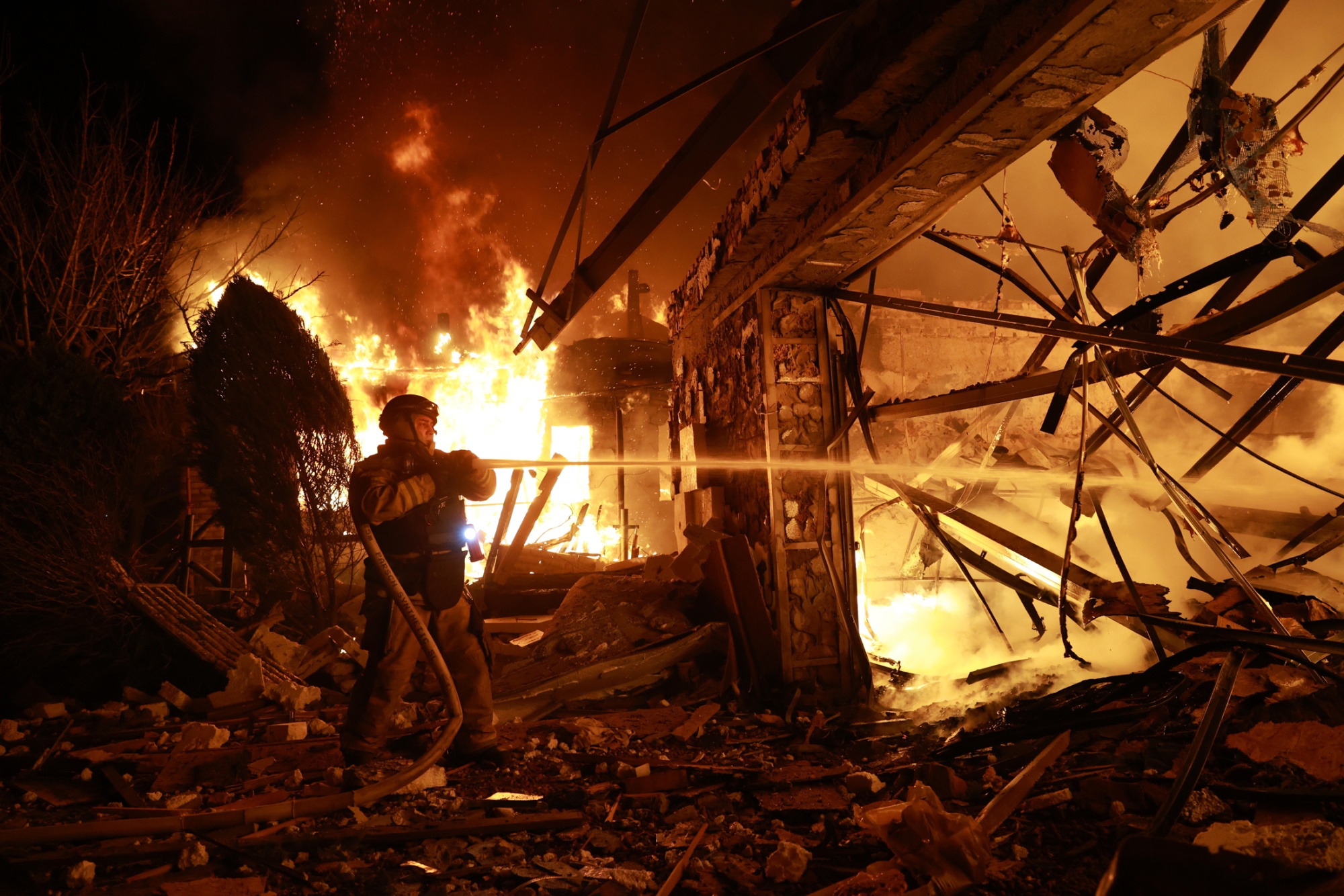
Firefighters tackle a blaze following a Russian drone attack in Zaporizhzhia, Ukraine, last month.
Photographer: Kateryna Klochko/AP Photo
Executives at Canadian minerals explorer Emerita Resources have been accused by Ontario’s securities regulator of diverting the firm’s lithium project rights to a new company they controlled. The Ontario Securities Commission alleges the group established Lithium Ionic Corp. to pursue mining claims from Emerita’s Falcon Project in Brazil, conduct that defrauded Emerita and its investors. Shares of Emerita fell as much as 38% in Toronto to their lowest level in nearly five years on the news, while Lithium Ionic plunged as much as 45%. Global telecom companies operating in South Africa do so through partnerships with local businesses that are partly owned by Black citizens. That’s to comply with equality rules that were instituted after the end of apartheid. SpaceX, however, owned by South Africa-native Elon Musk, has spent the past year trying to get those rules changed. Musk has described the rules—related in part to efforts to redress decades of exclusion, brutality and repression—as “openly racist,” and has taken his complaints to his social media platform. This has made Musk a target of fury among people in his birth country, but it also appears to be working. What You’ll Need to Know TomorrowFor Your CommuteMore from BloombergEnjoying Evening Briefing Americas? Get more news and analysis with our regional editions for Asia and Europe. Check out these newsletters, too:
Explore all newsletters at Bloomberg.com. We’re improving your newsletter experience and we’d love your feedback. If something looks off, help us fine-tune your experience by reporting it here. Follow us
You received this message because you are subscribed to Bloomberg’s Evening Briefing Americas newsletter. If a friend forwarded you this message, sign up here to get it in your inbox.
|











Washington Edition: Weekend in Islamabad
Vance heads to talks with Iranians ...