| Read in browser | ||||||||||||||

Climate change is a verboten topic in the Trump administration. But that hasn’t stopped the US military from continuing to prepare for it. Today’s newsletter looks at a big climate adaptation project happening in plain sight even as the Defense Department rolls back programs to study the risks a warming world poses to national security. Plus your weekend listen about China and India’s pollution plans and why utility bills are the hottest political issue in the US. Someone forward you this email? You can subscribe to the Green Daily for free climate news six days a week. Quiet adaptingWhen Hurricane Michael, a Category 5 storm, tore through Florida’s Tyndall Air Force Base in 2018, it battered F-22 stealth fighter jets, destroyed hundreds of buildings and churned up 700,000 cubic yards of debris. The total cost of the damage approached $5 billion. Now, Tyndall is being rebuilt as a super-resilient “installation of the future.” New buildings sit more than a foot above the ground, to remain dry through 75 years of sea-level rise. Their roofs are designed to withstand winds of up to 165 miles per hour. Manmade oyster reefs will protect coasts by breaking up waves. The massive project will be 70% complete next year, said the officer leading it, Col. Robert Bartlow, chief of the US Air Force Civil Engineer Center Natural Disaster Recovery Division. “This is a first for the Air Force,” he said, with large-scale, cutting-edge construction taking place “on top of an existing base, while there was a continued flying mission.” 
Tyndall is being rebuilt as a super-resilient “installation of the future.”
Photographer: Patrick Focke/US Department of Defense via Digital
Storms like Michael are becoming more powerful and damaging as the world warms, and many military installations are exposed to them and other climate hazards. Still, Secretary of Defense Pete Hegseth vowed last year that the Pentagon wouldn’t do any “climate change crap” on his watch. Biden-era climate action plans were scrapped, and the 2025 National Security Strategy invoked climate change only to label it a “disastrous” ideology. Hegseth canceled nearly 100 research studies related to global warming and security, which experts say will compound the loss of climate knowledge across the federal government under President Donald Trump. “Because ‘climate’ is a dirty word, we’re not investing in that predictive capability,” said Sherri Goodman, secretary general of the non-governmental International Military Council on Climate and Security and, from 1993 to 2001, the US deputy undersecretary of defense for environmental security. But as Tyndall shows, the Defense Department is still engaged on one front of the climate fight: steeling its bases against the effects of a warming atmosphere, such as higher seas, fiercer storms and deadlier fires. A new flood wall is rising at the US Naval Academy in Maryland; a low-lying Air Force runway is being elevated in Virginia; and projects are underway to reduce wildfire risk around various military sites in Hawaii. Work that was previously described as confronting the climate threat is now touted for ensuring “resilience” and “readiness.” The semantics are a nod to necessity: At stake are hundreds of billions of dollars of assets and the ability to launch missions quickly and smoothly. Much of the military’s resilience work began years ago; construction timelines are long. The $900 billion 2026 National Defense Authorization Act, which Trump signed into law in December, includes measures that could be said to come under the umbrella of climate adaptation. The law bolsters the military’s ability to respond to wildfires; raises the cost limit for replacing structures destroyed by disasters; and requires military leaders to identify the biggest risks to water security on bases. Close to $400 billion of federal government assets, most of them belonging to the Defense Department, are at high risk of being hit by a major coastal flood or storm in coming years, according to a Bloomberg Law analysis. The Pentagon explicitly recognized the warming climate as a danger for many years. The 2008 National Defense Strategy flagged climate change as an emerging risk, and two years later it was named a national security threat in the Pentagon’s Quadrennial Defense Review. After that, the Defense Department and the individual armed forces put out a stream of climate and sustainability plans. (Some have now been removed from government websites.) James Mattis, who served as defense secretary during President Donald Trump’s first term, described climate change as a destabilizing force in 2017. His Biden-era successor Lloyd Austin said in 2021, “We face all kinds of threats in our line of work, but few of them truly deserve to be called existential. The climate crisis does.” Trump and Hegseth have made a sharp pivot. In a March 2025 memo to military leaders, Hegseth called climate change a “distraction” from fighting wars, ordered that references to it be removed from mission statements and barred any environmental initiatives from being included in the Future Years Defense Program, a strategic plan. Hegseth also included a caveat big enough to steer an aircraft carrier through. “Nothing in this memorandum,” he wrote, “shall be construed to prevent the department from assessing weather-related impacts on operations, mitigating weather-related risks, conducting environmental assessments, as appropriate, and improving the resilience of military installations.” The overarching goal at Tyndall, Bartlow said, is “preserving lethality in a high-end combat capability. When we talk about resilience, it’s focused on preserving that combat capability.” If another Category 5 hurricane hits, “there’ll be some interruptions, but the idea is you’ll be able to recover this installation quickly,” hesaid. “You can make that direct link back to readiness.”
Read more
Top of the world11th The number assigned to the only Arctic-capable division in the US Army. The 11th Airborne has soldiers trained in cold weather combat and specialized vehicles to handle unforgiving terrain. Go green, save a life?“The American armed forces lost somewhere between 2,000 and 3,000 soldiers just getting fuel through.” Richard Nugee Lieutenant General and author of the UK Ministry of Defence’s climate change report Electrification could help reduce the number of risky missions to supply fuel to frontlines. Readers really liked🚜Caterpillar acquired a once high-flying electric tractor startup Your weekend listenIn the past month, we’ve seen two major plans from two of the world’s biggest polluters. In March, China approved its 15th five-year plan, which gave us a clearer sense of how the government makes progress on its climate goals. A few weeks after that, India published its climate plan for 2035. This week on Zero, Bloomberg Green’s Lili Pike and Akshat Rathi discuss those climate plans, and whether they’re ambitious enough for the current moment. Listen now, and subscribe on Apple, Spotify or YouTube to get new episodes of Zero every Thursday. Your weekend readUS midterms are coming into view, and Democrats are looking to flip the House and Senate in addition to taking over statehouses across the country. While the Epstein files, war in the Middle East and other controversies are all getting plenty of airtime in various races, one issue has rocketed to the top of voters’ minds. Utility bills, normally an afterthought in life let alone politics, are becoming a central campaign issue for Democrats and Republicans. This weekend’s read comes from Josh Saul and Ari Natter, who spoke with voters and politicians to see how how the price of energy is now a hot button issue. Check out an excerpt of their story To get all the latest about the midterms and the affordability crisis, subscribe to Bloomberg News. 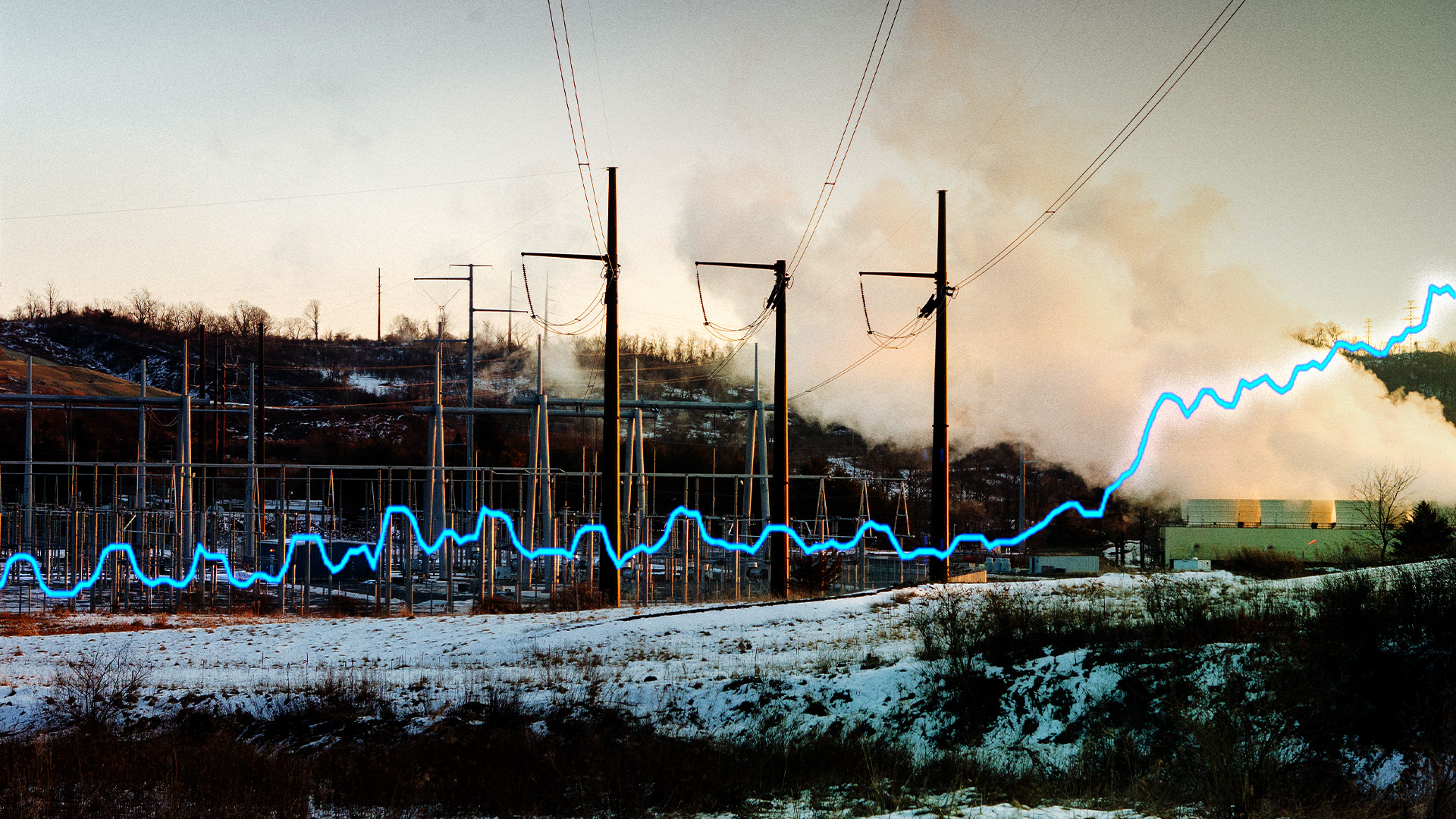 
Why Energy Bills May Swing the US Midterms
Kris Burek thinks about her power bill with almost every move she makes. When she turns on the air conditioning, runs a load of laundry or fires the oven in her Pennsylvania home, she tracks her electricity use in a composition notebook. Each day, she logs into her utility account to record how many kilowatt-hours she has consumed. Her careful accounting helps her gain control over power payments that have almost doubled in recent years. “They continually go up in small increments, almost unnoticeable, until one day you get that shocker of a bill and say, ‘Whoa, how did this happen?’” Burek, a 74-year-old retired social worker, lives on a fixed income in Slatington, a Lehigh Valley town in one of the few remaining US congressional swing districts. For her, electricity isn’t just a pocketbook issue but a political one: She says she’ll vote for any candidate who can help reduce her power bills. Across the country, soaring electricity costs are burdening consumers and stirring voter anger. The rapid build-out of artificial intelligence data centers, along with tariffs and upgrades to an aging grid, has raised power prices at rates unseen in decades. The war in Iran is throwing global energy markets into upheaval, adding a surge in gasoline prices to affordability concerns. Democrats who focused on household energy costs swept key elections in New Jersey, Virginia and Georgia late last year, a grim omen for incumbent Republicans trying to hold on to a razor-thin margin in the US House of Representatives. Trump himself brought up the issue in his February State of the Union speech, unveiling a plan to have tech companies build their own power plants for their AI data centers. It was the first time in the history of the annual address that a president explicitly framed rising electric bills as a consumer concern. “It’s completely unprecedented in modern history for it to be talked about nationally and for it to be a campaign issue,” says Joshua Basseches, a Tulane University professor who studies energy policy. “It’s the thing that’s on voters’ minds.” Pennsylvania’s 7th District, a mix of rolling mountains and former manufacturing strongholds clustered along the Lehigh River, will be a proving ground for the issue’s importance. Republican Representative Ryan Mackenzie is facing a tight race against Democratic challengers including Carol Obando-Derstine, a former utility employee campaigning on cutting power costs. Both agree that power prices should come down. But like so many other affordability debates in American politics, unity on the problem dissolves into division over the solution. Residents such as Burek, a registered Democrat, just want relief. “I was getting these outrageous bills in the wintertime that I just could not afford,” she says, paging through one of her notebooks to show monthly payments have jumped from about $58 in June 2021 to almost $100 in June 2025. “I will support anyone who, regardless of party, can make affordability not only words or a promise but a fact.”
Keep reading
More from Bloomberg
Explore all Bloomberg newsletters. We’re improving your newsletter experience and we’d love your feedback. If something looks off, help us fine-tune your experience by reporting it here. Follow Us
You received this message because you are subscribed to Bloomberg’s Green Daily newsletter. If a friend forwarded you this message, sign up here to get it in your inbox.
|




Strong ASML, TSMC forecasts signal AI spending boom is intact
Strong forecasts from ASML and TSMC this week point to another quarter of hefty spending by American cloud-computing giants as they race to secure advanced chips needed for their artificial intelligence build-outs. ...