| Read in browser | ||||||||||||||


I’m Jonathan Tamari, senior Washington reporter for Bloomberg Government, and each weekday I’ll be coming to you with inside-the-room reporting and insights that reveal what’s really happening in Washington—and how it impacts you. Email me with feedback and comments here. If this newsletter was forwarded to you sign up here. Today, Congress’ dwindling power, blockades to fight blockades, and parents are paying to get their kids jobs. Congress’ Self-Inflicted WoundsWe begin the week with signs that the Iran conflict is expanding again. Donald Trump threatened a naval blockade of the Strait of Hormuz starting at 10 a.m. today after peace talks ended with no deal, Iran threatened its neighboring ports in response. The price of oil surged. Here’s an explainer of how the US blockade could work. It’s the kind of thing you’d think lawmakers would take an interest in as they return from a two-week recess — but this is among the most passive majorities in memory, and it could get worse. That’s because Congress is about to get undermined again — by Congress. There’s a lot of nerdy stuff involved, but here’s the bottom line: if recent trends continue, each party could soon be spending many billions of dollars on their partisan priorities with little say from the other side, little way to hold presidents accountable for how they use the money, and little ability to adjust as the country’s needs change. It all undercuts one of Congress’ foundational powers: steering government spending and, in turn, exerting leverage over presidents. 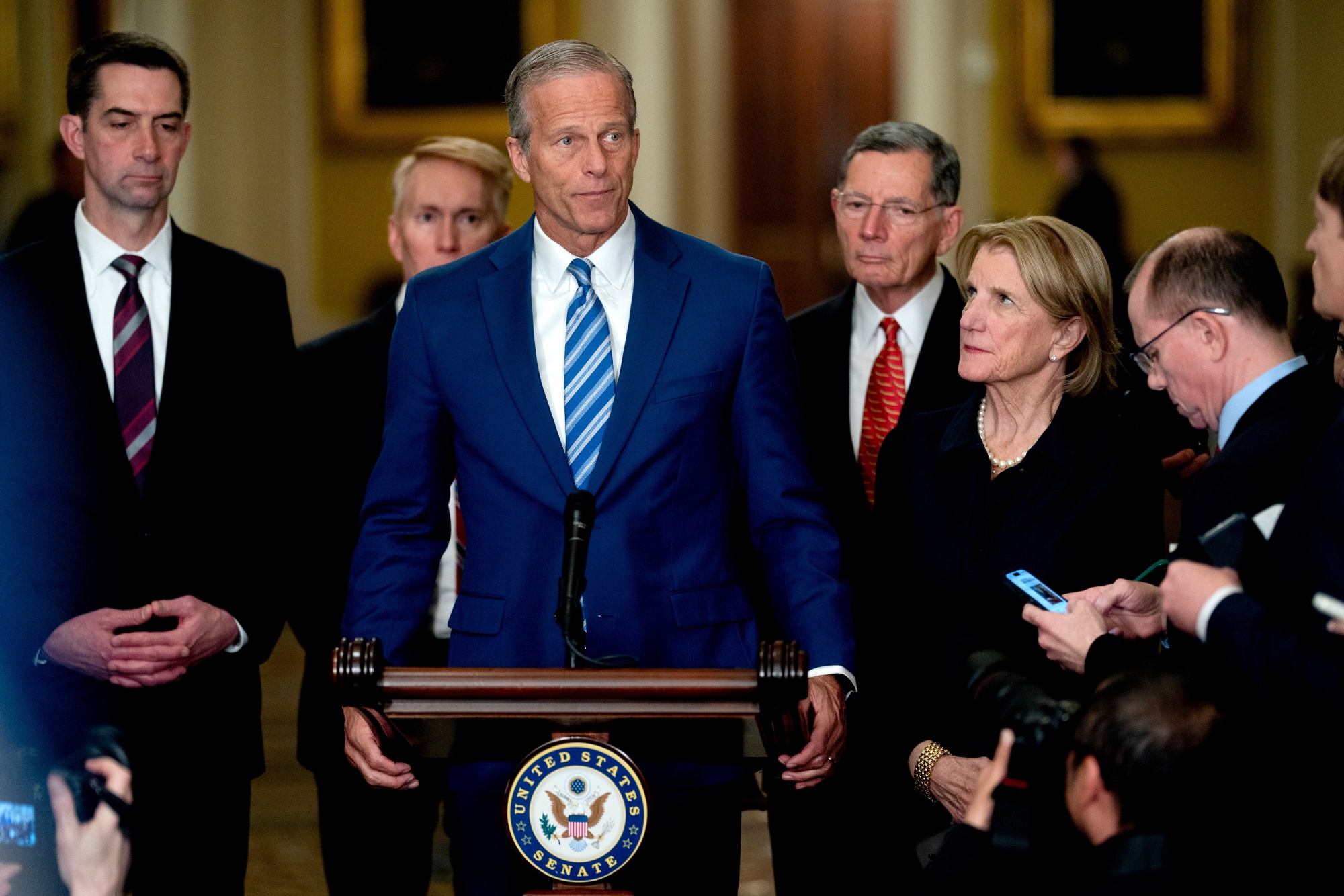
Senate Majority Leader John Thune on March 24
Photographer: Stefani Reynolds/Bloomberg
Lawmakers are poised to hand some of that muscle to the White House, continuing a long-running trend of a fading Congress and emboldened presidency. “The cat is out of the bag,” Dominik Lett, a budget and policy analyst at the Cato Institute told me. “It’s going to be very difficult to kind of rein in this abuse.” The latest step comes as part of a Republican move to end a long standoff over ICE and border patrol. (Warning: nerd stuff coming) With lawmakers back this week, Republicans plan to break the impasse by passing Department of Homeland Security funding through reconciliation, a special procedure that doesn’t require 60 votes in the Senate, thus sidelining the minority party. This is where congressional scholars get worried. Reconciliation wasn’t traditionally used for routine spending. But Democrats under Joe Biden funded some of their top priorities (including IRS enforcement and green energy plans) using the method. Now they’re planning to go even further by funding all of DHS for this year, and potentially multiple years beyond. If it’s several years of money, it could ensure that immigration enforcement won’t be stalled again and is left on cruise control for the rest of Donald Trump’s term. But a lot can change over multiple years. The risk, Congressional scholar Sarah Binder told me, is that lawmakers are left with little power to ensure the money is well spent, to adjust for shifting needs, or to force the White House to even listen to them. 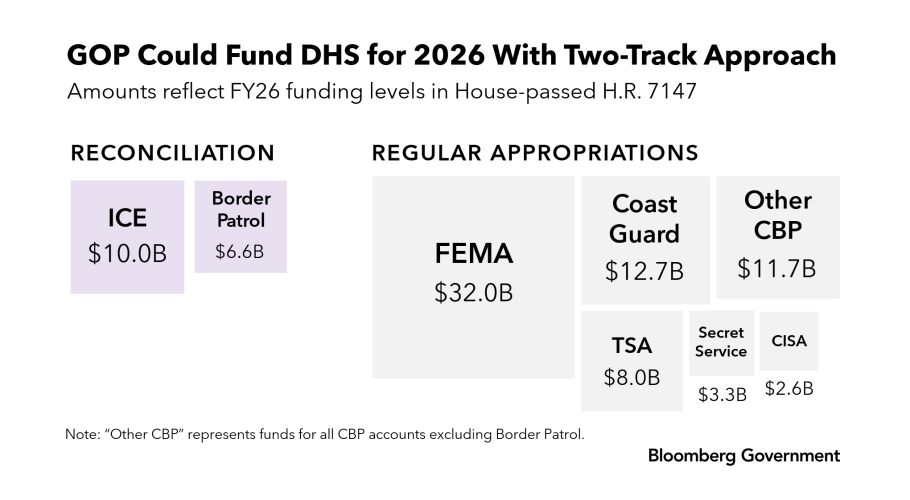
It also opens the door for the other side. What’s to stop Democrats from, say, giving the EPA 10 years of unchecked funding when they have power? Now, some people say it’s overblown. You can only do reconciliation this way if one party controls the House, Senate, and White House, which is relatively rare. And it’s a long, painful process, so it’s not very practical for routine funding. But the congressional analysts I spoke to were dour. Once a line is crossed, Congress rarely goes back. Top NewsSexual assault allegations against Democratic Representative Eric Swalwell forced him to suspend his bid to become governor of California. Even before the recent allegations, the Democratic field was splintered, with eight candidates and no commanding frontrunner (Swallwell was polling in second). Swalwell faced calls from some House members for expulsion, along with three other scandal-marked representatives. Voters in Hungary ended Viktor Orban’s 16-year rule in a landslide election. The authoritarian Orban was an ally of Trump’s and even had Vice President JD Vance appear at campaign rallies. The victory will redefine the country’s ties with the EU, Russia and the US. Meanwhile, voters in Peru put Keiko Fujimori, daughter of former leader Alberto, into a presidential runoff, in a contest that was marred by such disarray that electoral authorities will extend voting until Monday in the capital and two US cities. World Liberty Financial, a Trump family crypto venture, is facing an investor revolt that includes billionaire backer Justin Sun, who accused the project of secretly building controls that let insiders freeze token holders’ funds. Sun, who poured tens of millions of dollars into World Liberty, called the project “a trap masquerading as a door” in a post on X on Sunday. Economic policymakers are gathering in Washington this week to assess the damage the war on Iran has caused to growth in the Middle East and beyond. Global prices will take time to come down to levels seen before the US-Israeli war with Iran even if a ceasefire holds, IMF Head Kristalina Georgieva said Sunday. Lawmakers looking to heed the White House’s call for a federal standard on AI this year face long odds, Oma Saddiq writes. “The chances are quite unrealistic,” said K.J. Bagchi, VP of US policy and government relations at Chamber of Progress. Among the hurdles is the notion of preempting state laws during election season. 
US Supreme Court Justice Sonia Sotomayor
Photographer: Jacquelyn Martin/AP Photo/Bloomberg
Sonia Sotomayor moves a bit slower and no longer roams through an auditorium crowd like she used to, but she’s still one of the Supreme Court’s most publicly outspoken justices, Jordan Fischer and Justin Wise report from her recent stops in Kansas and Alabama. The problem for Sotomayor is she’s usually speaking out as a dissent in a losing cause. Some parents are now paying thousands — in some cases upwards of $50k — to hire coaches who help their kids get jobs after college. One coach called it “part two” of the huge investments some wealthy parents already make to get their kids into college. “Our goal is to get them out.” Watch & Listen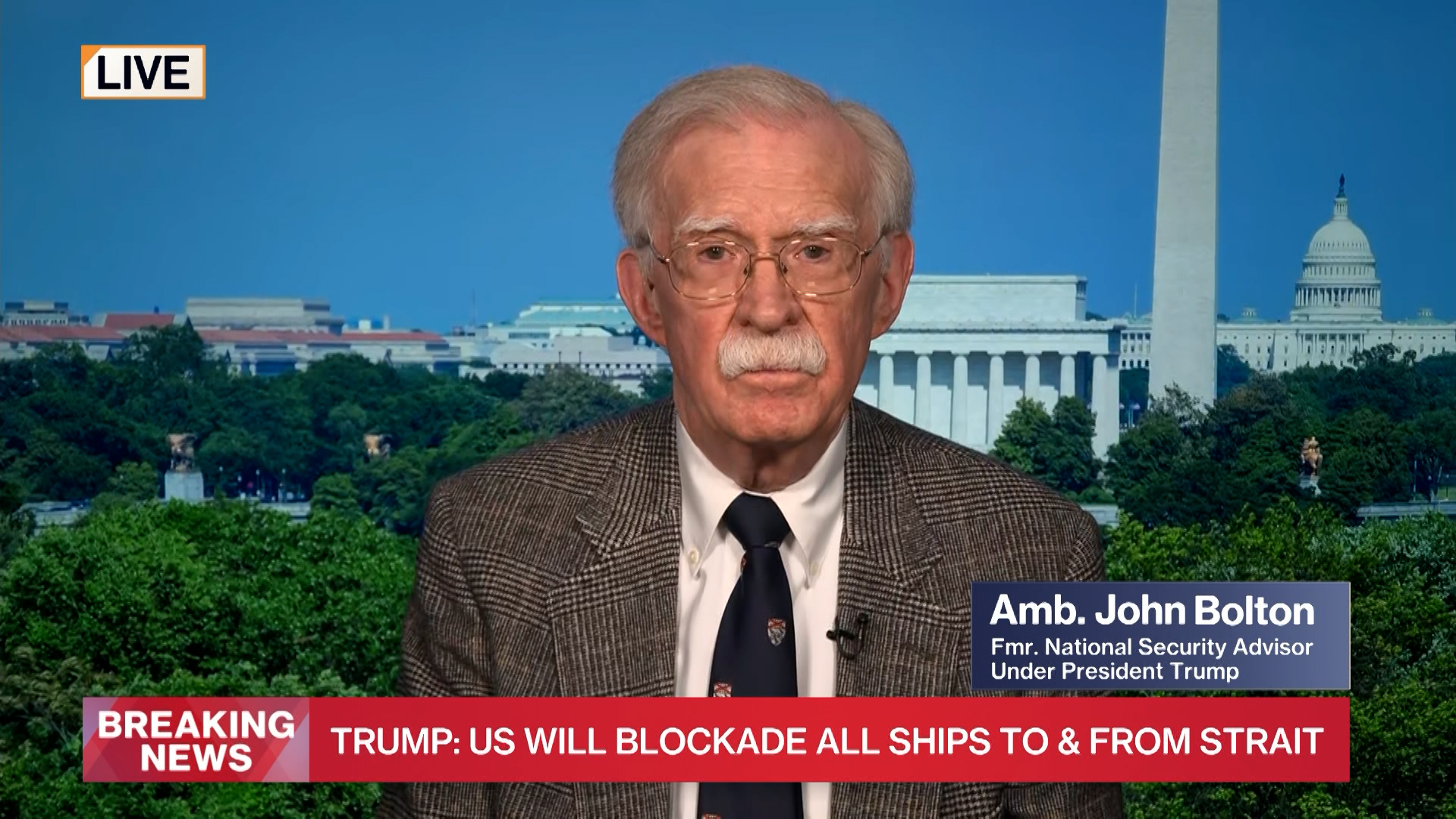 
Closing the Strait of Hormuz “makes sense” for the U.S., Former National Security Adviser John Bolton says on Bloomberg This Weekend.
Go Deeper With BGOVThe federal government’s legal authority to monitor certain private electronic messages without a warrant would be extended for 18 months without any changes under H.R. 8035, Greg Tourial writes in an exclusive bill analysis. The measure would extend Title VII of the Foreign Intelligence Surveillance Act, which governs how US intelligence agencies can collect and search through phone calls, emails, text messages, and other electronic communications to or from foreign agents and suspected terrorists located outside of the country. These authorities were last reauthorized in 2024 and are set to expire on April 20. 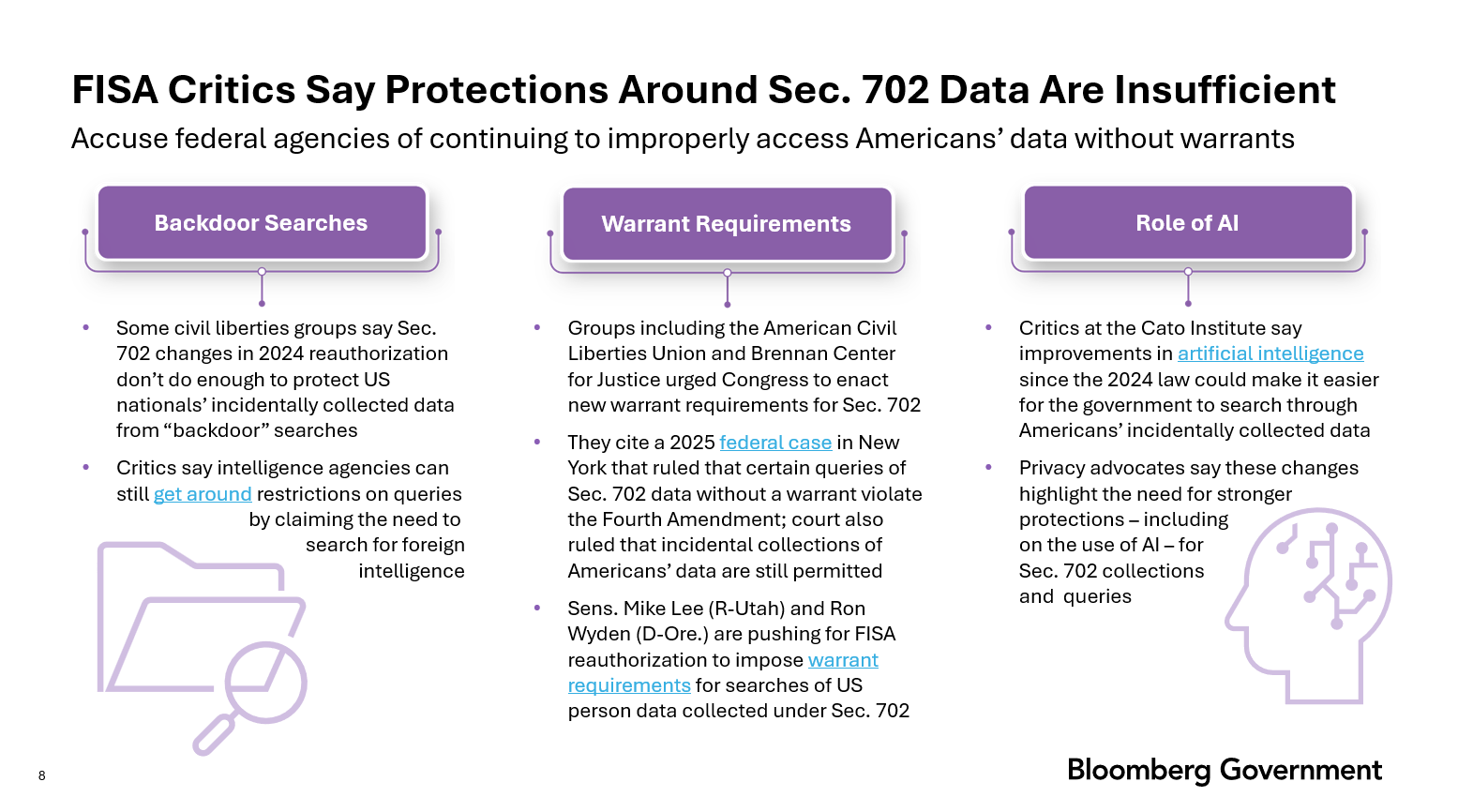
What’s NextExisting home sales in March will be reported The Senate is scheduled to return after a two-week break Secretary of State Rubio hosts Finland’s foreign minister IMF and World Bank spring meetings start More From BloombergLike Washington Edition? Check out these newsletters:
Explore all newsletters at Bloomberg.com. We’re improving your newsletter experience and we’d love your feedback. If something looks off, help us fine-tune your experience by reporting it here. Follow us
You received this message because you are subscribed to Bloomberg’s Washington Edition newsletter. If a friend forwarded you this message, sign up here to get it in your inbox.
|




Blockade in Hormuz
Bloomberg Morning Briefing Americas ...