| Read in browser | ||||||||||||||
 This is Washington Edition, the newsletter about money, power and politics in the nation's capital. Nancy Cook is off this week. Today, senior domestic policy reporter Ted Mann looks at a key issue for voters that's gotten overshadowed by the war with Iran. Sign up here. Email our editors here. Cost CrunchWith President Donald Trump focused on the war with Iran, he risks losing sight of a political threat at home. Despite all the attention on the war, poll after poll show Americans — even some of Trump's die-hard supporters — are more worried about high prices and the economy. And that likely will have a large effect on the Republican Party's fate in the midterm congressional elections in November. Read More: Trump's Exasperation Over Iran Grows, Signaling Hastened Exit At the Conservative Political Action Conference outside Dallas last week, the group's chairman, Matt Schlapp, told our Bloomberg Government colleague Mica Soellner that the economy is a problem as the Republicans drift toward midterm elections. "We still have to win the argument that things are going to get better, and that weighs heavy on the administration's shoulders," Schlapp said. 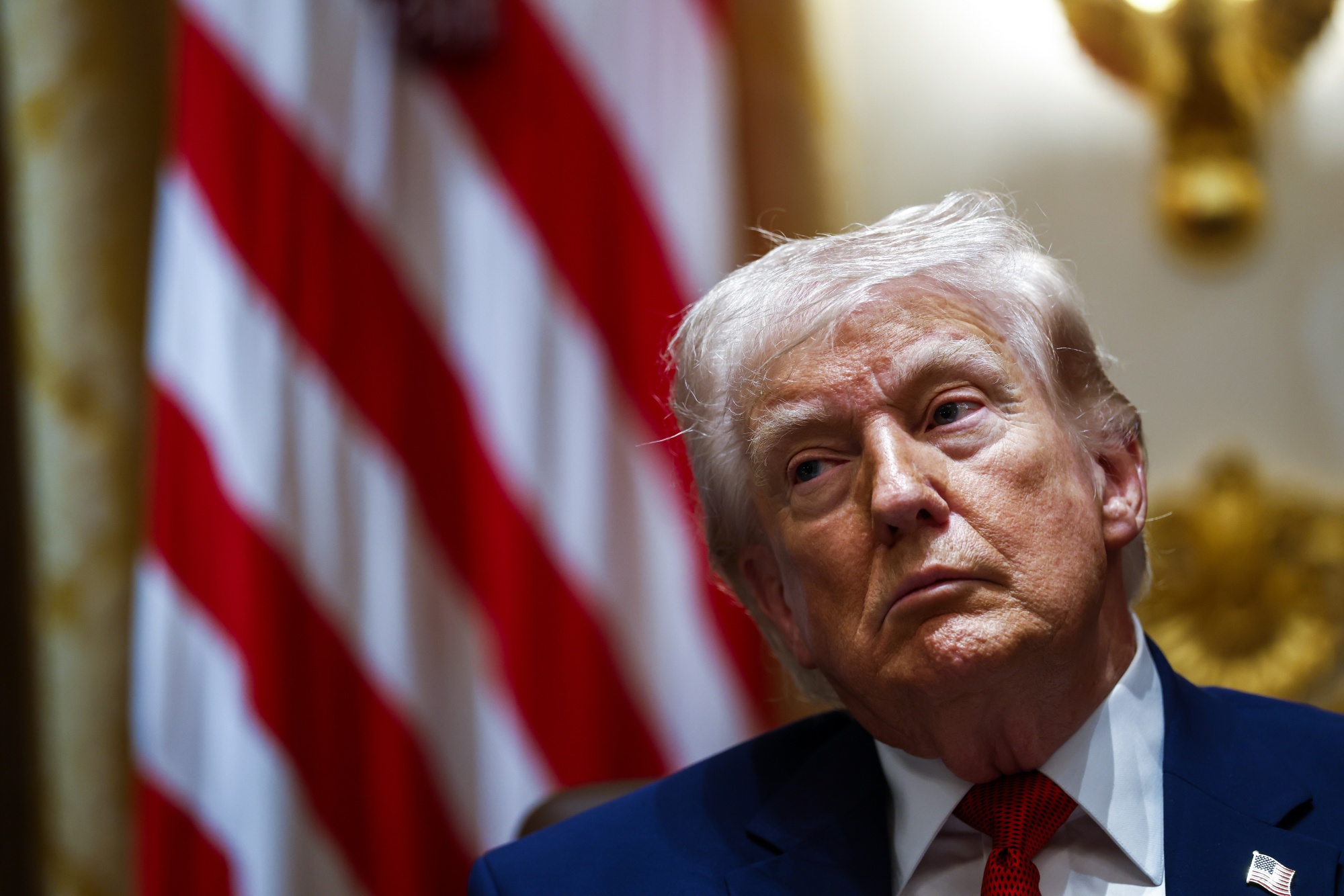 President Donald Trump. Photographer: Will Oliver/EPA/Bloomberg via EPA POOL Affordability has been a moving target with Trump. He's called the concept "a hoax" invented by Democrats. A little more than a week before the Iran war started, he proclaimed that he'd "won affordability," suggesting that it has faded as a public concern. Neither of those things is true. In fact, a rising cost of living and questions about Trump's handling of the economy are two of the loudest alarms emerging from recent polling data. A Reuters/Ipsos poll conducted earlier this month on the Iran war and the economy found that 63% of respondents disapprove of how Trump is handling the cost of living, compared to just 27% who approve. On rising prices, 69% of independent voters said they don't approve of the White House's handling of the issue. If anything, the war has made affordability a more urgent issue. The national average price for gasoline has surged to over $4 a gallon, according to data from the American Automobile Association. That's a visible hit to consumers and it could feed into prices for other goods. The administration got a little good news today: consumer confidence rose in March, when analysts had predicted it would fall. But the good news about higher-than-expected consumer confidence is tempered by data. Respondents are feeling OK about the present, but the outlook for the next six months has dropped. In particular, rising energy prices are driving expectations that inflation will increase later this year. In addition, government data out today showed job openings fell and hiring slowed in February — before the Iran war triggering more economic uncertainty. 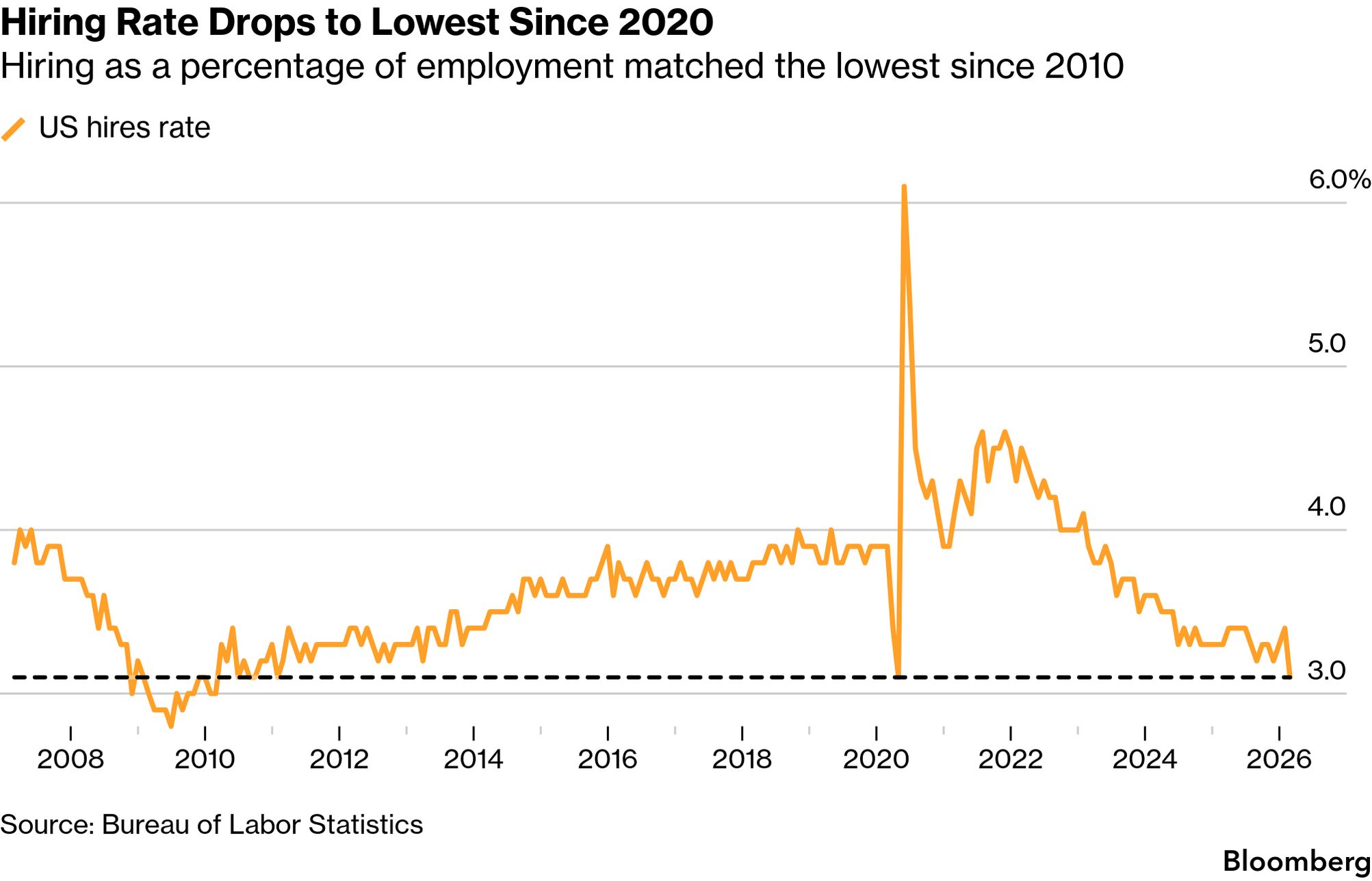 "Neither President Trump nor his Administration has ever lost track of the President's pledge to end Joe Biden's affordability crisis," White House spokesman Kush Desai said in a statement, citing the president's tax cut legislation and action on housing and healthcare costs. The economic picture may help explain why Trump has repeatedly declared that the conflict will end soon, even as the US deploys thousands of troops that could set up a ground invasion of Iran. But as Trump is learning as he seeks an exit from Iran, there isn't always a lever to pull, in this case, to reverse voters' perceptions. For now, it looks like they expect things to get worse. — Ted Mann War With IranTrump called on other nations to wrest control of the Strait of Hormuz as Iran maintained missile fire across the Persian Gulf, expressing his frustration that the monthlong war remains unresolved. US NATO allies are increasing their resistance to getting involved in Trump's war with Iran, risking a deeper rupture in the already strained military alliance as the US president lashes out. European Central Bank President Christine Lagarde used an audience of high-level Group of Seven officials to challenge Treasury Secretary Scott Bessent's optimism that the Iran war's economic fallout will be short-lived. Oil declined after Iran and the US signaled openness toward a resolution in the conflict that's upended global energy shipments, sanding away a long-standing risk premium in prices. The number of vessels transiting Hormuz with their signals on is ticking gently higher, even as the waterway remains effectively closed to most commercial shipping without clearance from Iran. The US and Israeli war against Iran could wipe out nearly $200 billion worth of economic growth across the Middle East, a new United Nations study found. Today's Top NewsThe Supreme Court ruled in favor of a Christian counselor who says she has a constitutional right to engage in talk therapy to try to change a child's sexual orientation or gender identity. 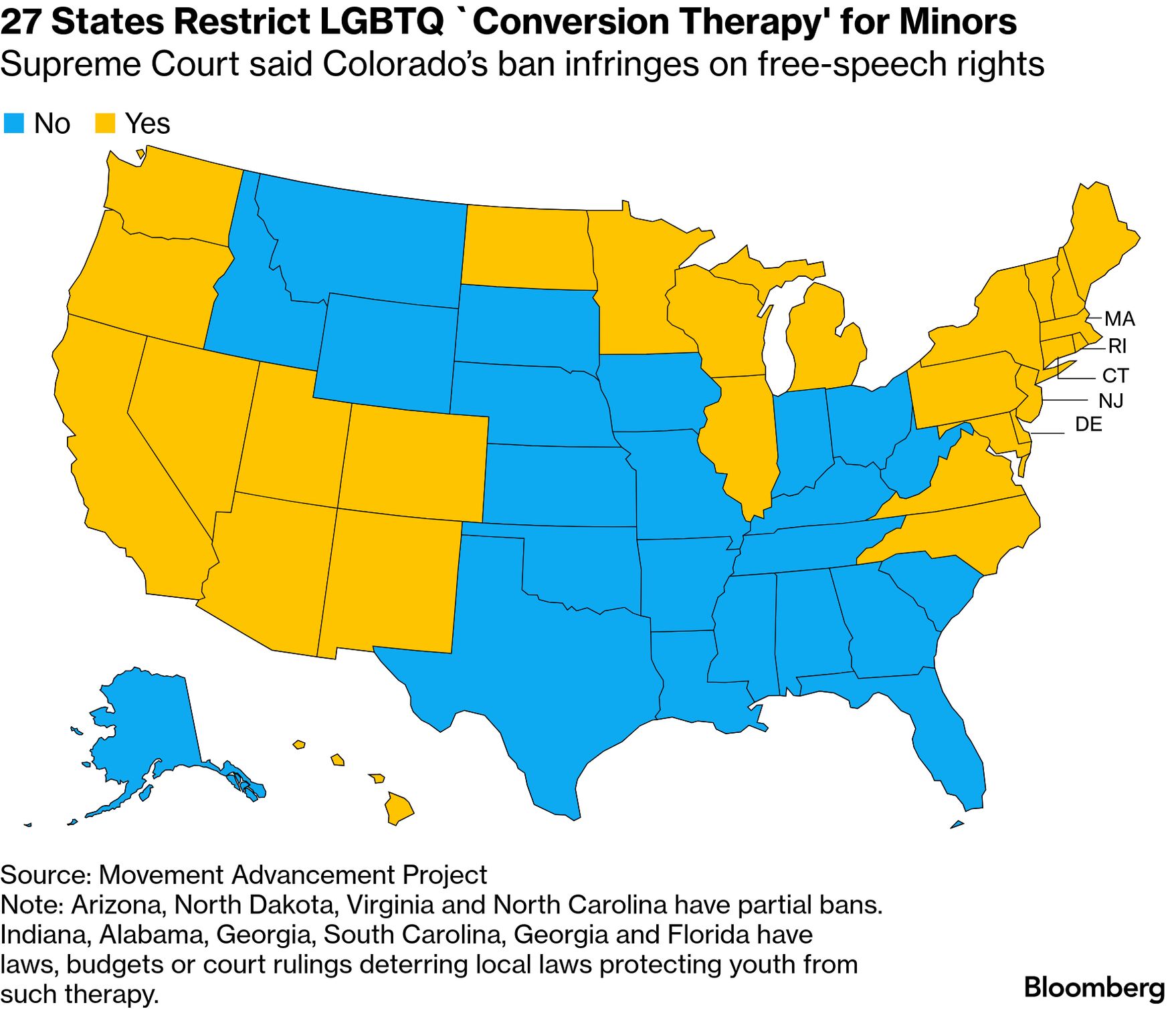 The high court tomorrow hears arguments on a challenge to Trump's assertion that the birthright citizenship provision of the Constitution's 14th Amendment was designed to cover only the children of freed slaves. A federal judge in Washington moved to halt Trump's efforts to build a new 90,000-square-foot ballroom at the White House until he gets approval from Congress. Trump told the New York Post he is considering calling Congress back to Washington from a two-week recess to work on approving funding for the Department of Homeland Security. The US government's largest affordable housing program was supposed to be supercharged by Trump's signature tax law. So far, that jolt hasn't arrived. US Trade Representative Jamieson Greer said preparations for Trump's meeting with Chinese counterpart Xi Jinping are on track after the high-profile summit was postponed to May amid the war in Iran. 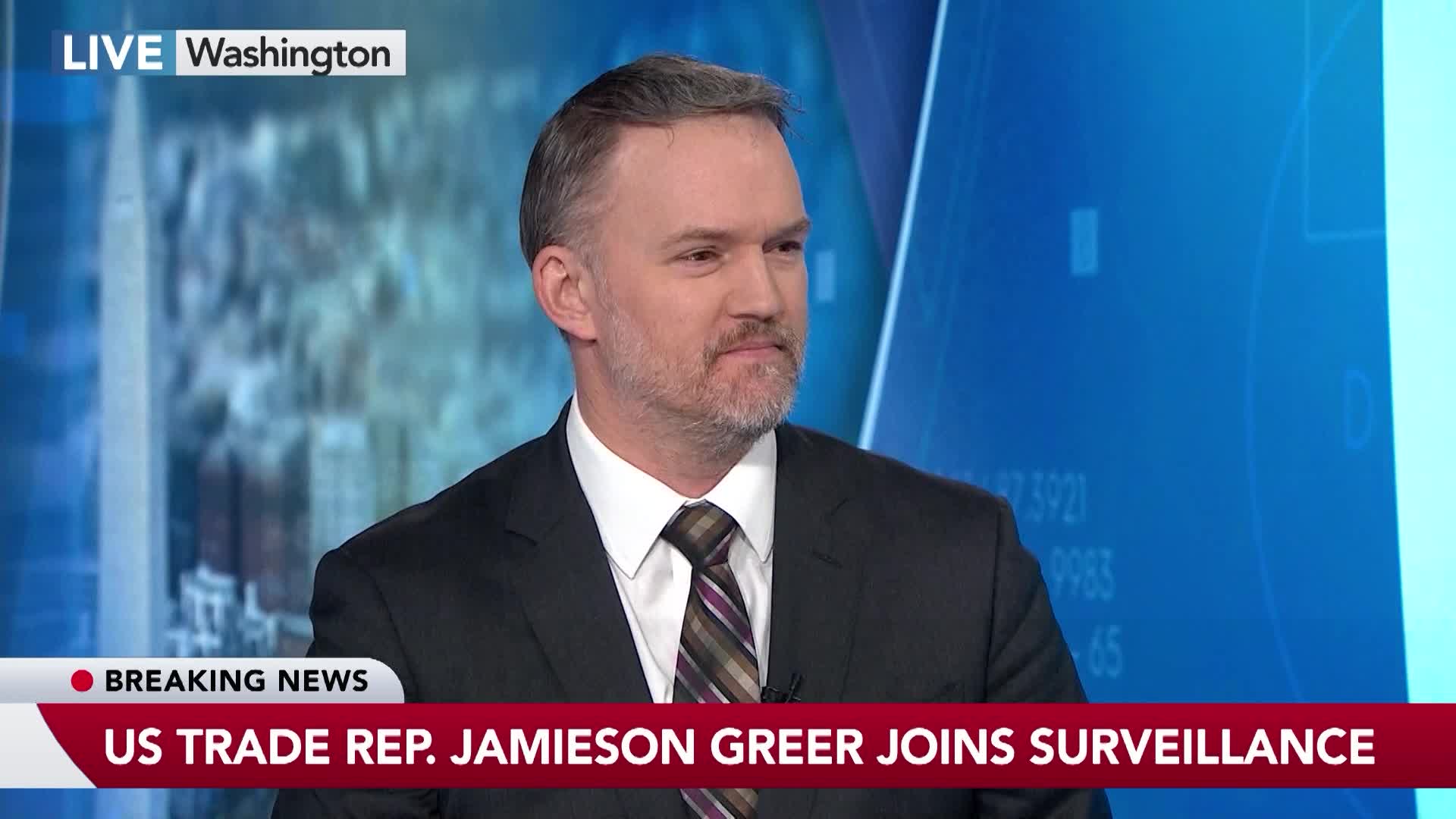  Buckingham Palace announced plans for King Charles III to visit Washington next month, even as Trump stepped up his criticism of the UK over its lack of support for his military campaign against Iran. Three former FBI agents are seeking class-action status for a lawsuit on behalf of all of the bureau's employees fired since January of 2025 "on the basis of perceived political affiliation, without being afforded due process." The US government is using less than a third of its office space, potentially costing the federal government billions in annual real estate expenses, according to a new congressionally mandated accounting. Eric Trump unveiled the first images of his father's proposed presidential library in Miami, showing off a soaring tower that would dwarf everything around it in a waterfront location along Biscayne Bay. Several of Jeffrey Epstein's accusers sued billionaire Leslie Wexner for allegedly enabling the disgraced financier's sex crimes through significant funding. Must Reads From Bloomberg GovernmentNational Public Radio, Public Broadcasting Service, and others demonstrated that Trump's anti-media funding executive order is unlawful, a Washington, DC, federal court said. A deepening water crisis in Corpus Christi, Texas, is raising questions about how to sustain growth in water-stressed regions as new, resource-intensive industries — including data centers — expand. A former top Trump aide is initiating a $100 million campaign to promote the administration's pro-artificial intelligence agenda during this year's midterm elections. Watch & ListenToday on Bloomberg Television's Balance of Power early edition at 1 p.m., hosts Joe Mathieu and Kailey Leinz interviewed California Attorney General Rob Bonta about rising gasoline costs and state challenges to Trump administration policies. 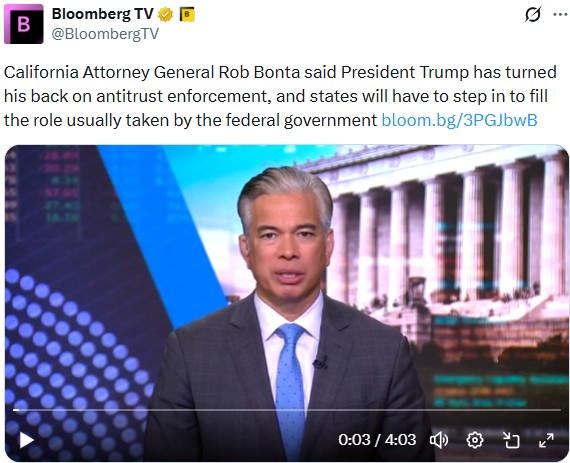 On the program at 5 p.m., they talk with Democratic Representative Gregory Meeks about the war with Iran and Republican efforts to push through a party-line bill to fund the Homeland Security Department and other GOP priorities. On the Odd Lots podcast, Bloomberg's Tracy Alloway and Joe Weisenthal speak with Alexander MacDonald, who served as NASA's first chief economist, about why the space agency had economists, how space exploration is funded, and how NASA measures its own economic impact. Listen on iHeart, Apple Podcasts and Spotify. Chart of the Day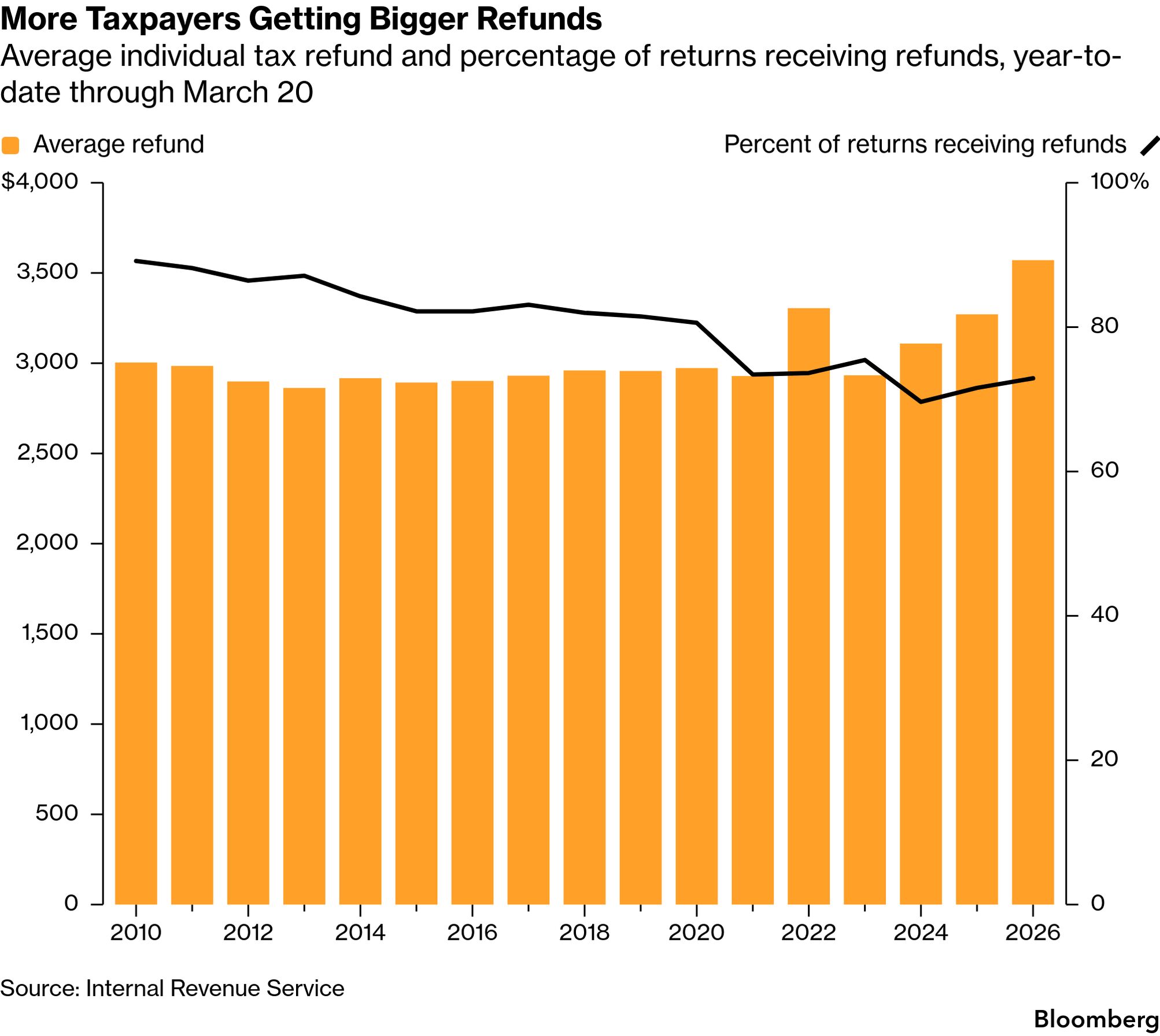 More individual US taxpayers are getting tax refunds this year, and those refunds average about $350 more than those issued by the same time last year, according to IRS data. The reason: Trump's signature tax law. Once known as the One Big Beautiful Bill but later rebranded as the Working Families Tax Cuts, the law allows individual taxpayers to claim new tax breaks on tipped income and overtime. Treasury Secretary Scott Bessent said Monday that almost half of filers so far have benefited from at least one of those tax cuts. Still, the refunds are falling short of the extra $1,000 on average that Trump promised in January. — Gregory Korte What's NextThe Supreme Court is set hear arguments in the birthright citizenship challenge tomorrow. Retail sales in February will be released tomorrow. ADP data on private-sector payrolls also will be reported tomorrow. US vehicle sales will be released tomorrow. The nation's trade deficit in February will be reported Thursday. The jobs report for March will be released Friday. The White House is set to release its budget request for fiscal 2027 on Friday. US stock and bond markets will be closed for Good Friday. More From BloombergLike Washington Edition? Check out these newsletters:
Explore all newsletters at Bloomberg.com. We're improving your newsletter experience and we'd love your feedback. If something looks off, help us fine-tune your experience by reporting it here. Follow us
You received this message because you are subscribed to Bloomberg's Washington Edition newsletter. If a friend forwarded you this message, sign up here to get it in your inbox.
|



