| Read in browser | ||||||||||||||
  This is Washington Edition, the newsletter about money, power and politics in the nation's capital. Every Friday, Bloomberg Intelligence senior analyst Nathan Dean gives his insights into what's been happening and what's coming up in the nooks and crannies of government and markets. Sign up here. Email our editors here. Just a StartSome of you may be thinking. I don't care; Congress never passes a presidential budget. That's true. But the way I view it, something will pass. Whether it's appropriations, continuing resolutions – or Republicans funding parts of the government via the party-line reconciliation process by June 1, as President Donald Trump is instructing them – some dollar amount will be approved and flow down into the coffers of companies and contractors. And the process to determine that starts today. Here's Gregory Korte and Erik Wasson with the details of Trump's $2.2 trillion plan. Bloomberg Government subscribers can also get a rundown here. 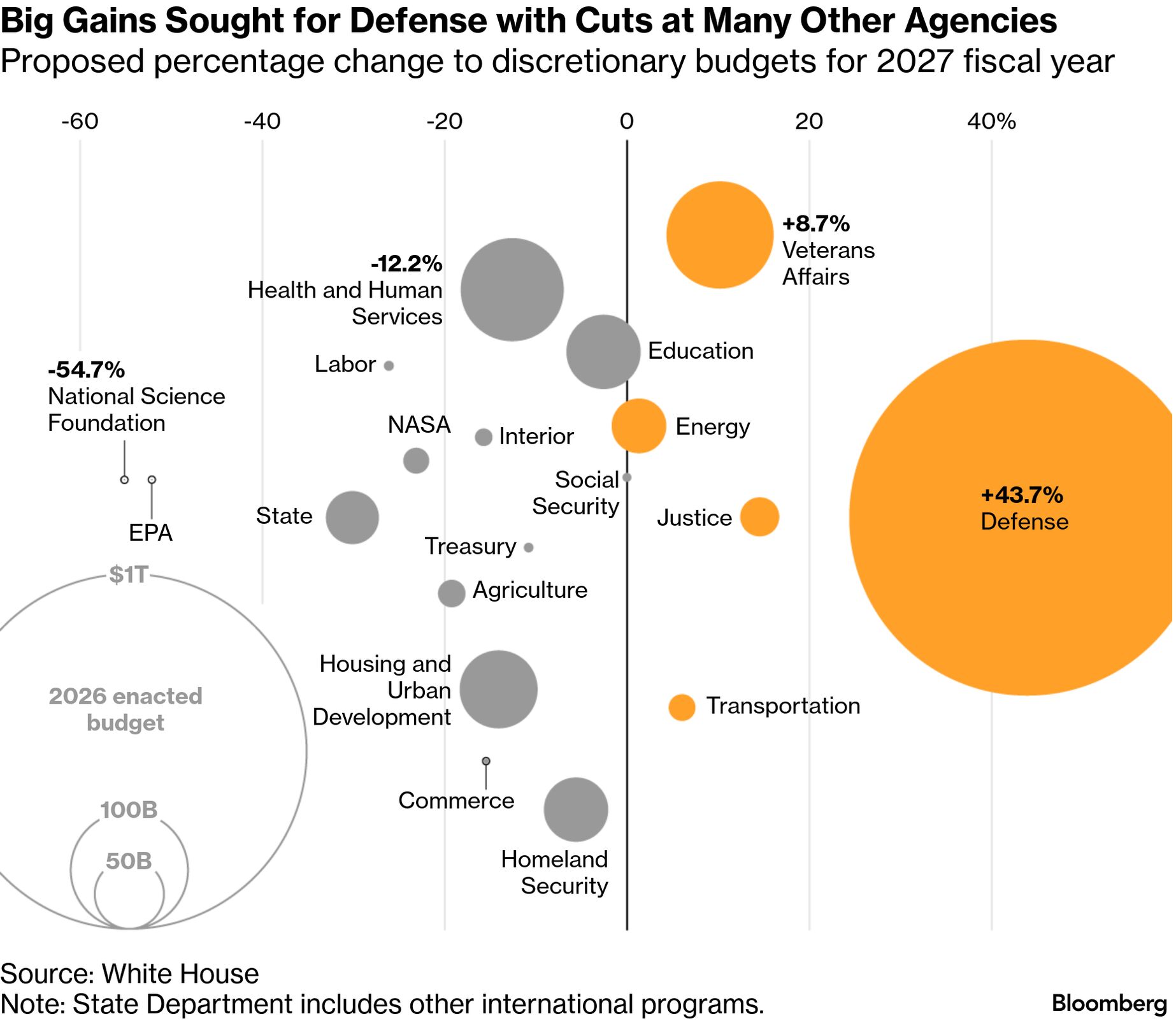 But you need to understand it's a lengthy process subject to multiple changes. For example, as Anthony Capaccio breaks down the White House's $1.5 trillion national security ask, it's important to note that this is just a topline number. We have some nuggets — like how the Pentagon is seeking 85 Lockheed Martin fighter jets — but more specific plans are expected on April 21. And that's before Congress touches it – or ignores it. What happens after Congress approves some topline amount? As I told several clients this week, a good rule of thumb is that it takes nine to 18 months for large and complex pieces of congressional appropriations legislation to reach the point of a contract being awarded. And then if you're then looking at a company that sells to government contractors, say construction equipment needed for the forthcoming Highway Authorization bill for example, it will be another 12-18 months before you see it on a company's income statement. But again, that's just a general rule of thumb. Each agency is different. What To Know This Weekend
War With IranIran shot down a US F-15E fighter jet and a second US plane reportedly crashed in the Gulf region, incidents which marked a significant escalation in the five-week war that's already triggered a global energy crisis. Here's a list of the dozens of refineries, oil fields, gas plants, ports and other energy infrastructure have been damaged by missile and drone strikes, five weeks into the Iran war. The US is doubling, to $40 billion, its commitment to provide reinsurance guarantees to ships willing to travel through the Strait of Hormuz with the addition of new insurance partners. Japan's order for hundreds of Tomahawk missiles from the US is under threat as the American-Israeli war with Iran burns through inventories, the latest example of how the conflict is absorbing military supplies at the expense of defending against Washington's primary strategic rival, China. Today's Top NewsThe Justice Department lost its bid to continue an investigation into building-renovation cost overruns by the Federal Reserve, setting the stage for an appeal that could eventually reach the Supreme Court. Job growth in the US rebounded in March and the unemployment rate unexpectedly fell to 4.3%, suggesting the labor market was stabilizing as the Iran war began. 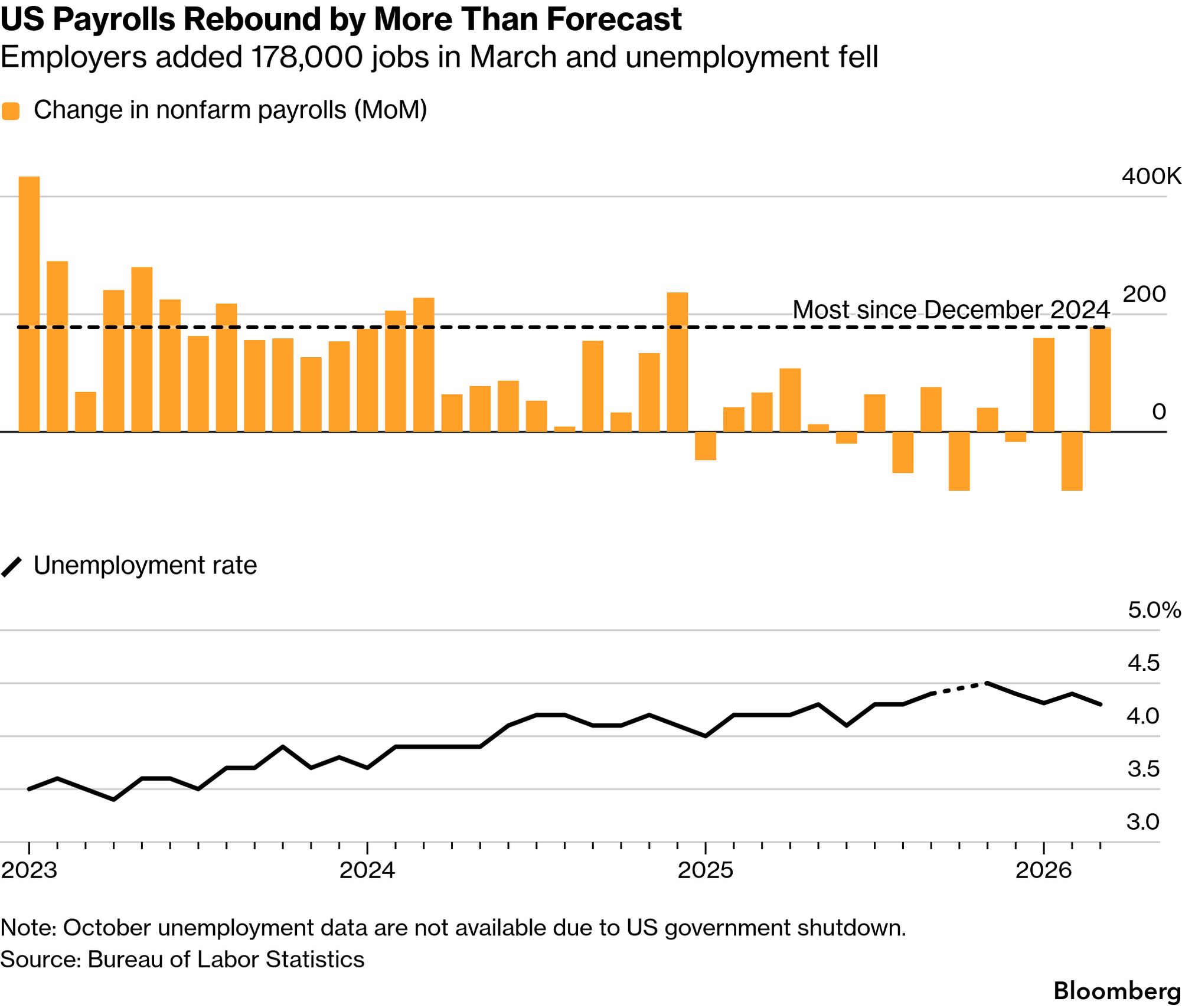 However, services activity shrank in March for the first time in three years as a gauge of new business slumped in the wake of the Iran war. Service providers also were more downbeat on prospects for future business activity. Trump's decision to remove Pam Bondi as attorney general delivers a new disruption to an already embattled Justice Department as it works to advance the administration's policy goals and sometimes controversial prosecutions. The US made a rare move to repatriate a drug fugitive to China, in the latest sign that the world's two largest economies are making progress in anti-narcotics cooperation ahead of a leaders' summit next month. Must Reads From Bloomberg GovernmentAnthropic has formed a federal political action committee that will permit the artificial intelligence company to make campaign contributions to Washington lawmakers and preferred House and Senate candidates in the November midterm elections. It may have sounded like everyone was on board when the top two Republican leaders in Congress announced they'd fund immigration and border enforcement through a party-line budget bill, but getting it through this Congress is far easier said than done, BGov's Lillianna Byington writes. A controversial spy powers law plays an "outsized role" in alerting the president to national security threats, with 63% of articles included in Trump's daily intelligence brief in 2025 containing information derived from the program, according to the Privacy and Civil Liberties Oversight Board. Watch & ListenToday on Bloomberg Television's Surveillance, National Economic Council Director Kevin Hassett discussed the March jobs report, oil market supply disruptions related to the war in Iran and the potential impact of oil prices on the US economy. 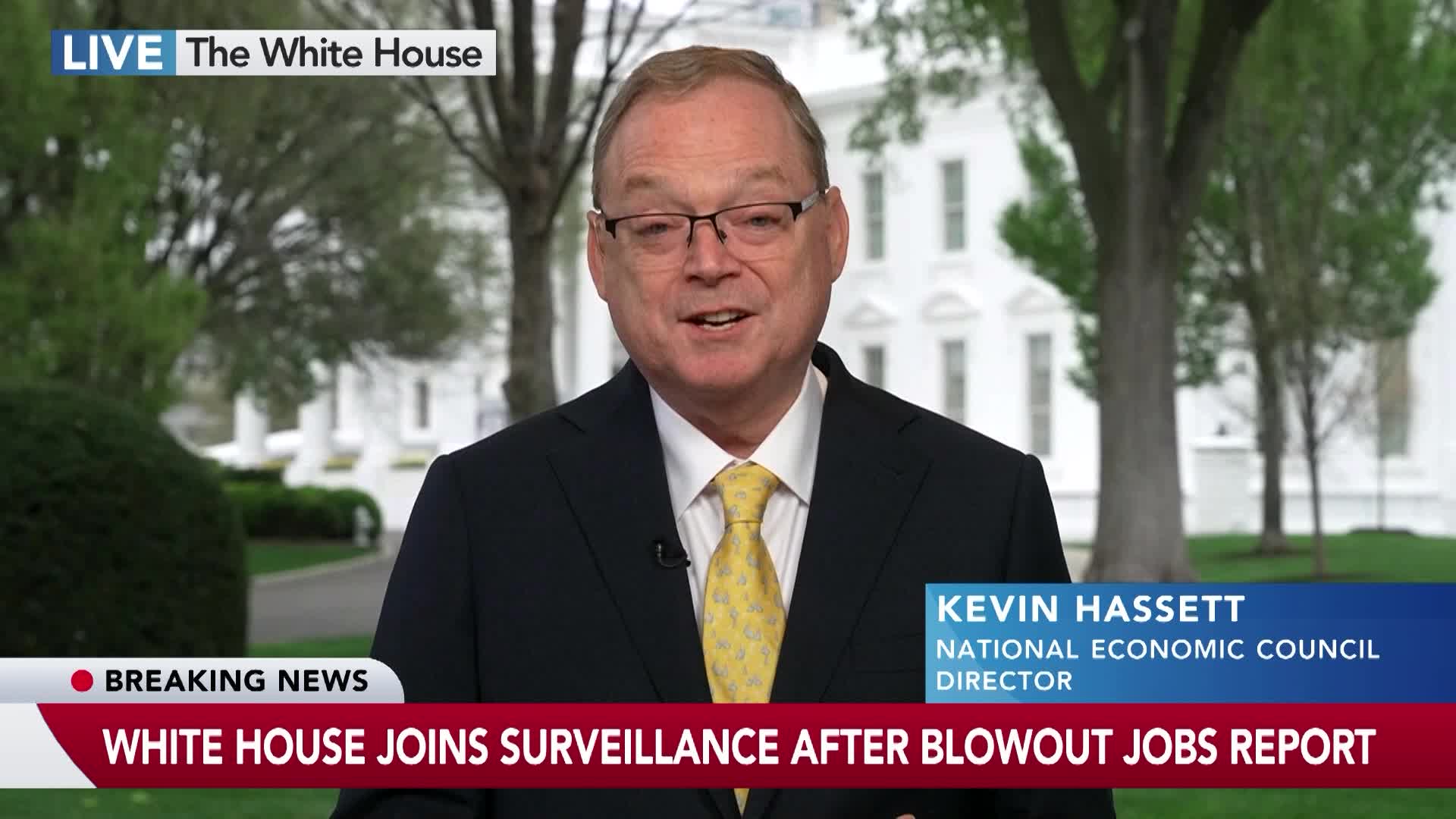  On the Odd Lots podcast, Bloomberg's Tracy Alloway and Joe Weisenthal speak with Scott Bok, the longtime former CEO of the investment bank Greenhill, about how the industry changed in his career, what type of people thrive in it, and how AI could change the nature of the profession. Listen on iHeart, Apple Podcasts and Spotify. Chart of the Day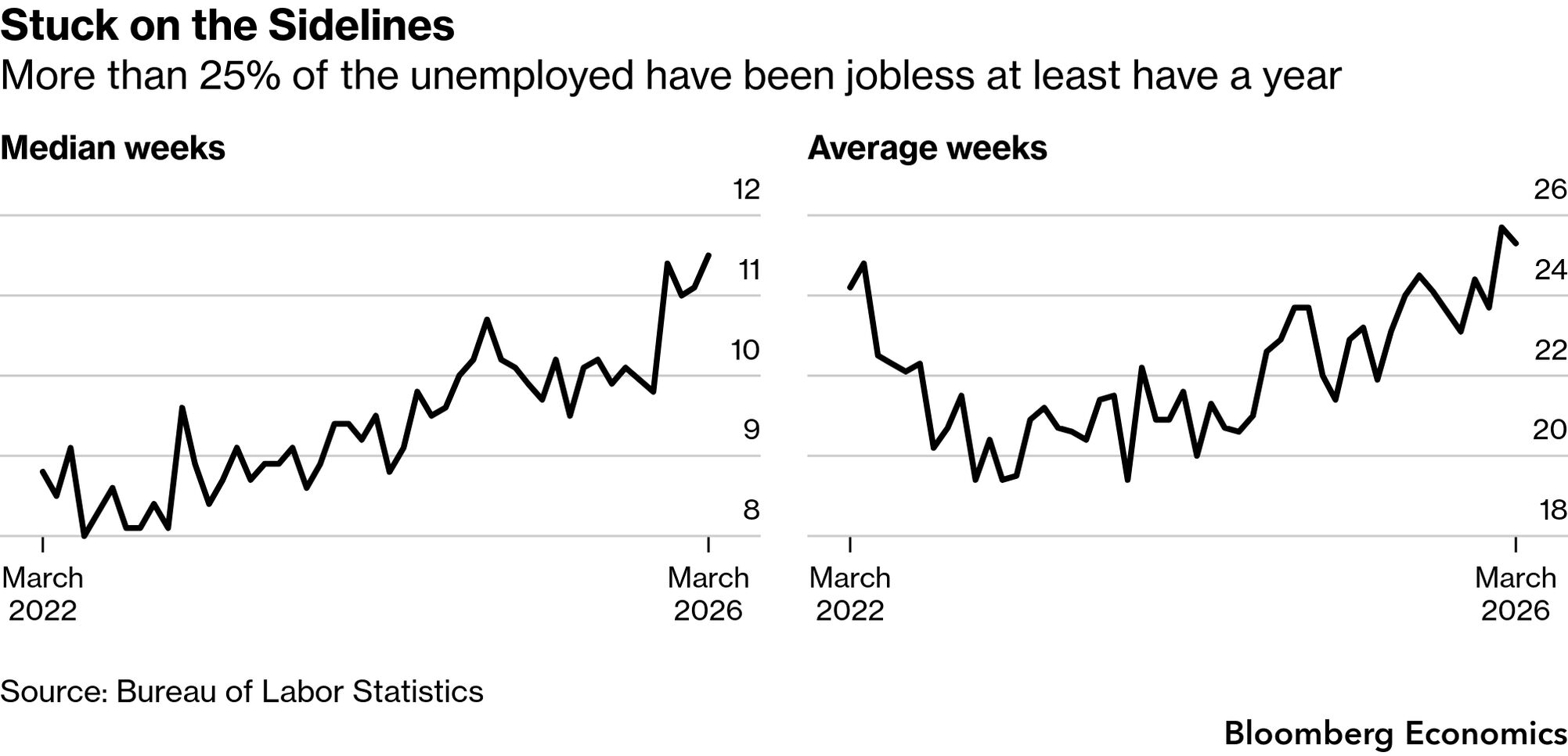 Although US job growth was unexpectedtly strong in March, the labor market may not be as robust as the data suggest. The median number of weeks it took for an unemployed person to find a job rose to 11.5 weeks, the most since late 2021 when the economy was recovering from the pandemic inflicted shutdown. On average, it's taking people about half a year to find work. The figures don't include people who want full-time employment but were working part-time because their hours had been reduced or they were unable to find full-time jobs. It also doesn't include the millions of individuals weren't counted as unemployed because they weren't actively looking for work during the four weeks preceding the survey, or were unavailable to take a job. — Alex Tanzi What's NextThe House and Senate remain on recess next week. The NCAA tournament women's Final Four games kick off tonight and the men's begin tomorrow. Durable goods order in February will be reported on Tuesday. The Federal Reserve's preferred gauge of inflation for February will be reported Thursday. The consumer price index for March will be released Friday. More From BloombergLike Washington Edition? Check out these newsletters:
Explore all newsletters at Bloomberg.com. We're improving your newsletter experience and we'd love your feedback. If something looks off, help us fine-tune your experience by reporting it here. Follow us
You received this message because you are subscribed to Bloomberg's Washington Edition newsletter. If a friend forwarded you this message, sign up here to get it in your inbox.
|



