| Read in browser | ||||||||||||||

Today’s newsletter looks at new research on microplastics, which, in addition to being present in soil, food and the human body, are trapping heat in the atmosphere. Plus, how the conflict in the Middle East has led to soaring EV sales and solar panel imports in South Korea. Subscribe to Bloomberg for unlimited access to all our stories. Microplastics are making global warming worseBy Todd Woody Microplastics in the atmosphere are heating the planet, magnifying climate change impacts, according to new research. Scientists in China and the US found that tiny, colored plastic particles absorb sunlight as winds blow them around the world, trapping heat and contributing to temperature rise, according to the peer-reviewed paper published Monday in the journal Nature Climate Change. 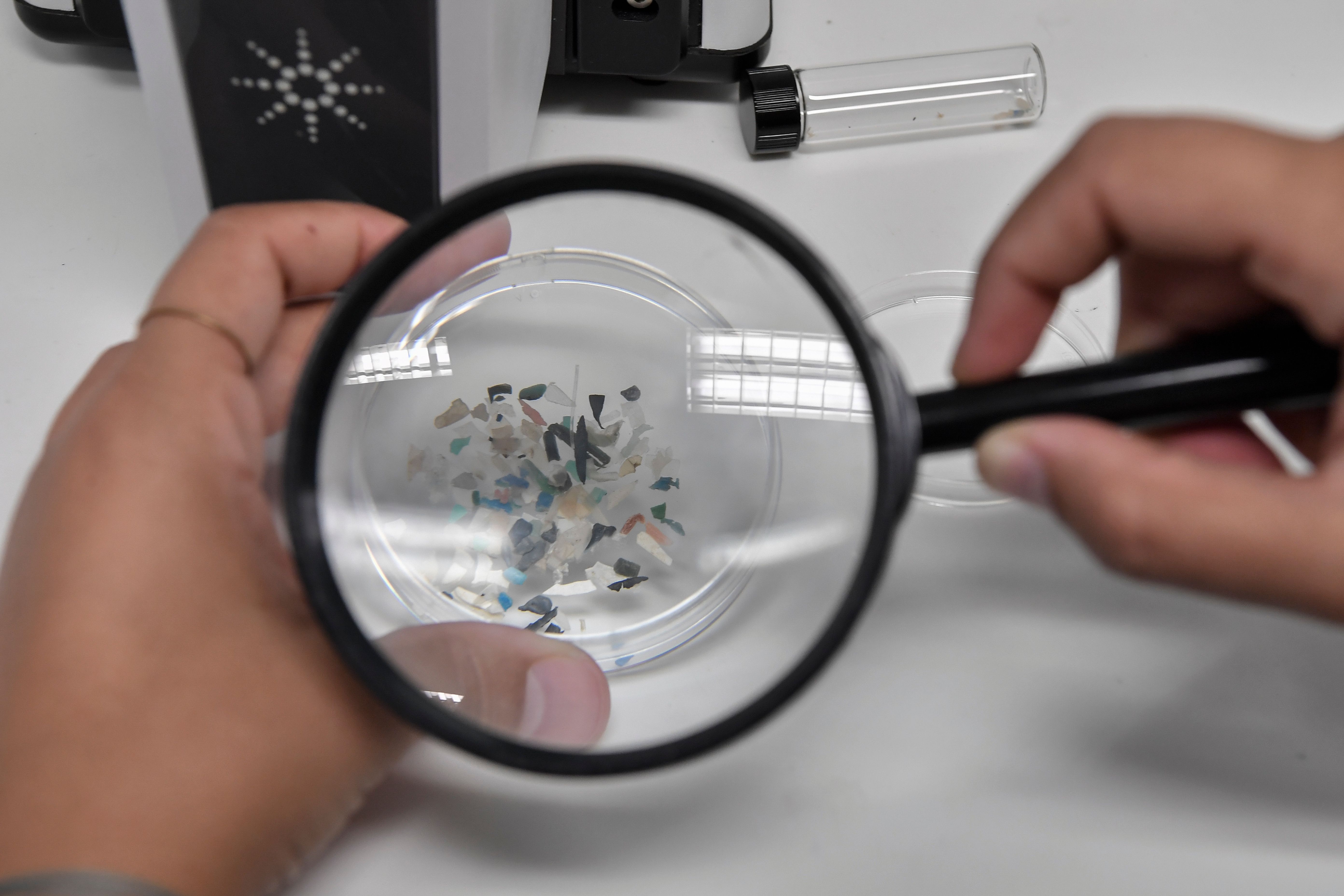
A biologist looks at collected microplastic samples at a marine research center near Athens.
Photographer: Louisa Gouliamaki/AFP/Getty Images
“The plastic problem is not just in our blue oceans, it is also in the invisible skies above us,” Hongbo Fu, a co-author of the study and an atmospheric scientist at Fudan University in Shanghai, said at a press conference. “Climate models need to be updated.” The researchers’ laboratory experiments and atmospheric modeling indicate that airborne plastic pollution has 16.2% of the heat-trapping impact of black carbon, the second biggest contributor to global warming after carbon dioxide. That effect is small on a global scale, according to the scientists, but can be significant in areas with high volumes of plastic, such as parts of the Pacific Ocean. There, plastic particles had 4.7 times the impact of black carbon. Scientists had previously detected the presence of nanoplastics and microplastics, which range in size from a billionth to a millionth of a meter, in the atmosphere. As plastic waste washes into the ocean and litters the landscape, it breaks down into smaller and smaller pieces when exposed to sunlight until winds sweep the particles into the atmosphere, where they become suspended in air currents. The planet is awash in plastic trash and its deleterious consequences for the environment, wildlife and human health is the subject of ongoing study. But past research suggested that microscopic plastic has a negligible impact on global warming, as white-colored plastic particles reflect sunlight. The scientists at Fudan University, however, found that the majority of plastic particles in the atmosphere are colored and trap heat. Drew Shindell, a climate scientist at Duke University and a co-author of the paper, said their experiments break new ground by precisely measuring the rate at which different-colored particles absorb sunlight. He said atmospheric plastic particles either are already dark, or lighter ones darken as they age. “The net effect is warming,” said Shindell.
Read more
Going public$1.3 billion The amount that geothermal developer Fervo Energy Co. is looking to raise in an initial public offering. The Houston-based firm plans to market more than 55 million shares for $21 to $24 each, according to a Monday filing with the US Securities and Exchange Commission. Wake-up call“Today’s surging energy prices are a reminder of the cost of that dependency.” Christine Lagarde President, European Central Bank Lagarde told a climate conference Tuesday that high energy costs should spur Europe to reduce its dependency on imported fossil fuels because the status quo is “clearly unsustainable.” Iran shock boosts EVs, solar in South KoreaBy Heesu Lee and Aaron Clark The Iran-driven energy shock is adding urgency to South Korea’s push to cut its reliance on imported fossil fuels, giving President Lee Jae Myung momentum to push his clean-energy agenda. Electric vehicle sales and solar panel imports have surged since the conflict in the Middle East began in late February, early signs that higher fuel costs and supply risks are reshaping behavior. 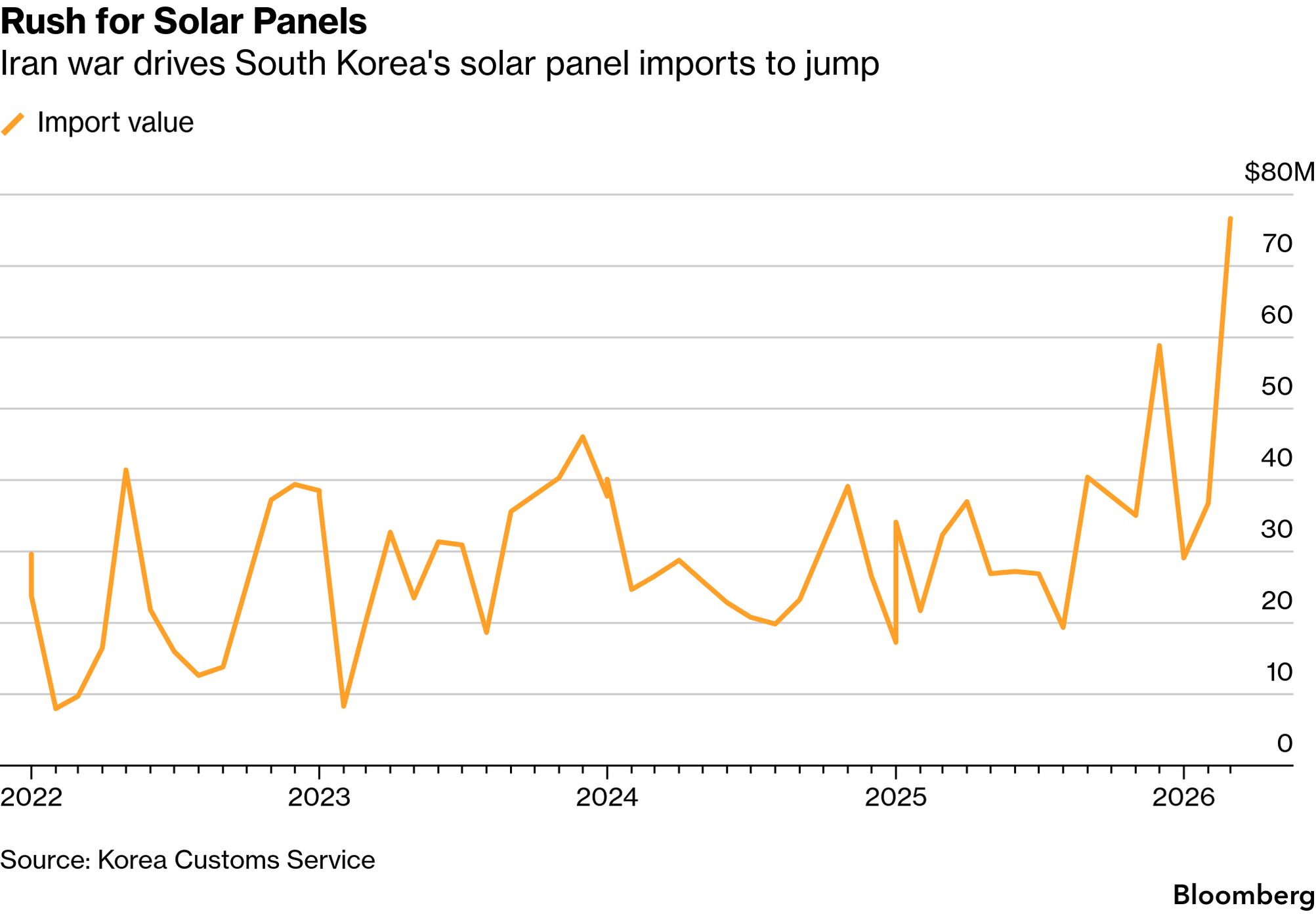
Seoul — which imports the majority of its energy, including 70% of its crude oil via the Strait of Hormuz — has rolled out a supplementary budget with 540 billion won ($365 million) for solar and wind projects, energy storage systems and EV subsidies. The shifting consumer demand and increased fiscal support suggests the crisis is influencing both markets and policy. But core targets — expanding clean power, phasing out coal and reducing gas dependence — predate the conflict, raising questions over the depth of the structural change. President Lee has repeatedly framed the Iran War as a catalyst for faster change. “The Republic of Korea as a whole must move very swiftly toward renewable energy,” he said last month. “Our future will be at a serious risk if were continue to rely on fossil fuels.” Lee’s strategy, laid out before the crisis, centers on a state-led transition. He has pledged to phase out coal by 2040, cut gas use and expand renewables, while his government also set tougher emissions targets. An April roadmap targets a 20% share of renewables in power generation and 100 gigawatts of capacity by 2030, as well as grid upgrades.
Read more
This week’s ZeroWe are living in an increasingly divided world. It took two decades to get to the Paris Agreement, and then global cooperation really lasted only for a decade. One key reason for this fragmentation is US President Donald Trump, who has taken an axe to the rules-based international order that America helped build. This week on Zero, Gordon LaForge, senior policy analyst at think tank New America, tells Akshat Rathi what comes next, and how progress can still be made on climate. Listen now, and subscribe on Apple, Spotify or YouTube to get new episodes of Zero every Thursday. More from Bloomberg
Explore all Bloomberg newsletters. We’re improving your newsletter experience and we’d love your feedback. If something looks off, help us fine-tune your experience by reporting it here. Follow Us
You received this message because you are subscribed to Bloomberg’s Green Daily newsletter. If a friend forwarded you this message, sign up here to get it in your inbox.
|




Strait stalemate heats up
The Iran war may be reigniting. ...