| Read in browser | ||||||||||||||

I’m Jonathan Tamari, senior Washington reporter for Bloomberg Government, and each weekday I’ll be coming to you with inside-the-room reporting and insights that reveal what’s really happening in Washington—and how it impacts you. Email me with feedback and comments here. If this newsletter was forwarded to you sign up here. Today: The government’s AI dilemma, Intel’s next task, and Trump (for once) skips some fights. Neural UproarAre you worried about AI? Optimistic about its potential uses? A bit of both? Welcome to the club. So is the federal government. 
Photographer: Angel Garcia/Bloomberg
The Trump administration is signaling it plans to scrutinize the fast-moving and anxiety-inducing frontier models. But as the president reportedly weighs an executive order on AI regulation, feelings about the emerging tech remain mixed. Around half of Americans have used AI for research, a Quinnipiac University poll found last month, up from 37% a year earlier. At the same time, 83% said they are very or somewhat concerned about AI. While many people are unsold, businesses are plowing ahead — including by hiring “AI evangelists” charged with securing internal buy-in by focusing on AI’s potential instead of fretting about its perils, Kaustuv Basu reports. Within government, debate is raging over what guardrails, if any, should be placed around the disruptive platforms. Congress has signaled a more wary approach. The Senate overwhelmingly voted down a proposed ban on state regulations, opening the door to more rules from statehouses. Trump’s executive actions, meanwhile, have usually aligned with tech industry priorities, Bloomberg Government analysts explained — including by moving to challenge AI laws in individual states. Yet the president has also bucked Republican orthodoxy and signaled he’s happy to have the federal government play a significant role in some private businesses. (See: US Steel and Intel.) White House chief of staff Susie Wiles this week vowed the administration won’t be “picking winners and losers.” “This administration has one goal; ensure the best and safest tech is deployed rapidly to defeat any and all threats,” Wiles posted on X. She weighed in hours after Kevin Hassett, director of the National Economic Council, said the administration was considering a process to review new models, comparing it to the way the FDA tests new medications. But as the government considers how to regulate, it’s also engaged in an AI bonanza. Federal spending on AI grew by nearly 40% between 2023 and 2025, per BGov’s Maika Ito. Nearly 80% of the spending is from the Defense Department. Even as the DOD clashes with Anthropic over using the company’s tech, the department has expanded its use of AI from other companies to sift data and help with decision making. One of the latest moves was a $500 million contract with Meta-backed Scale AI, Jen Judson reported, following a series of other deals earlier in May. AI has also juiced the stock market — a key scorecard in Trump’s mind — despite the economic squeeze of the Iran conflict. But data centers and risks to jobs are also stirring populist concern that AI may turn into another tool that helps the rich get richer while pinching everyday Americans. There’s also worry about nefarious uses — the technology has, for example, made identify theft easier at every step, Jennah Haque writes. For now, the big tug of war is between shoring up national interests and protecting private enterprise; between innovation and security. It’s a complex equation being confronted by regular human intelligence, with all its own benefits and flaws. Top NewsIran is expected to respond in the next two days to the US proposal for reopening the Strait of Hormuz. The shaky ceasefire held Friday morning despite clashes. Trump’s 10% global tariffs were declared unlawful by a federal trade court in the latest blow to his levies and leverage for trade deals. For now the ruling only applies to a narrow group of plaintiffs. 
A worker at a container terminal at the port of Houston in Seabrook, Texas in May 2025.
Photographer: Callaghan O’Hare/Bloomberg
Global food prices reached their highest level in more than three years amid the Iran war disruptions. An entry-level coder in San Francisco would have to earn $162,000 a year to qualify for an H-1B visa under a Trump plan aimed at making it harder for foreign workers to undercut US wages. In his first interview as CEO, Intel’s Lip-Bu Tan said he recognizes the company still has “a long way to go.” Was a Supreme Court lawyer still placing bets after being indicted on charges related to gambling? He reported $1.7 million in 2025 gambling income, raising the question, according to a new filing from prosecutors. In a rare move, Trump is sitting out two fights: fierce GOP Senate contests in Georgia and Texas, despite his success steering Indiana’s primary this week. Both Senate races are critical to deciding control of the chamber. Pope Leo’s sparring with Trump shows the power the pontiff holds in the US, with his inherent understanding of American politics and ability to deliver a message in an accent that shows his Chicago roots, Catherine Lucey writes. The FDA’s plan to remove references to “gender” in regulations has sparked concerns it could affect who is represented in clinical trials. The administration says little will change. A boutique New York law firm is keeping busy by representing politically charged clients: Eric Swalwell, Kilmar Abrego Garcia, and Columbia University. Onetime White House communications director-turned Trump critic Anthony Scaramucci tells Mishal Husain that Wall Street is regretting voting for Trump. Trump’s plan to expand retirement accounts for workers without an employer-sponsored 401(k) faces some key obstacles. Watch This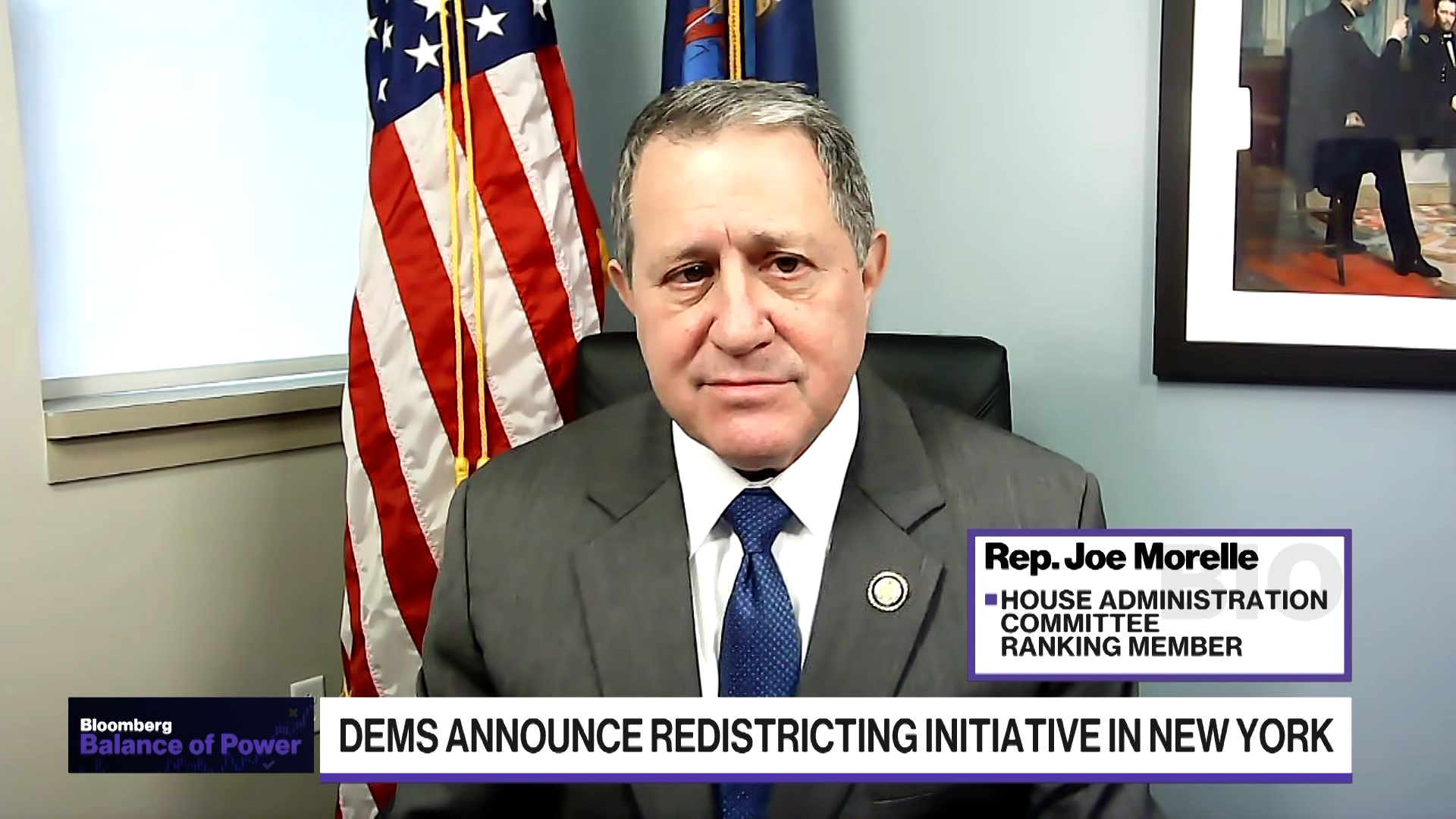 
Representative Joe Morelle (D-NY) voices his frustrations with Tennessee adopting a new map that eliminates the state’s only Democratic congressional seat.
NASA Administrator Jason Isaacman sat down with Tim Stenovec to discuss whether the US needs a lunar base and if NASA can put astronauts on the moon in 2028. 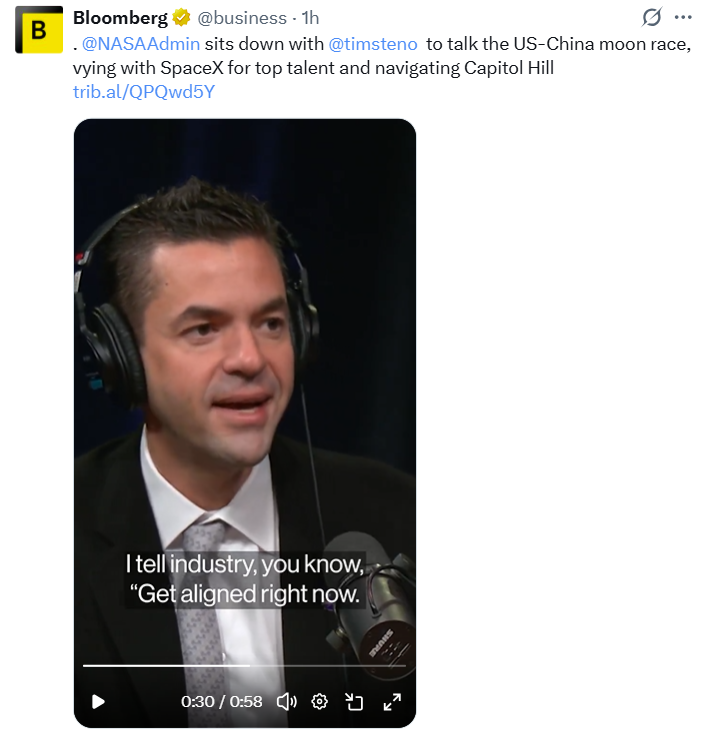
Go Deeper With BGOVVirginia leads all states in new legislation this year, enacting 1,102 bills so far, BGOV’s Claire Hebert writes. More than 5,000 new state laws have already been enacted across the country in 2026. 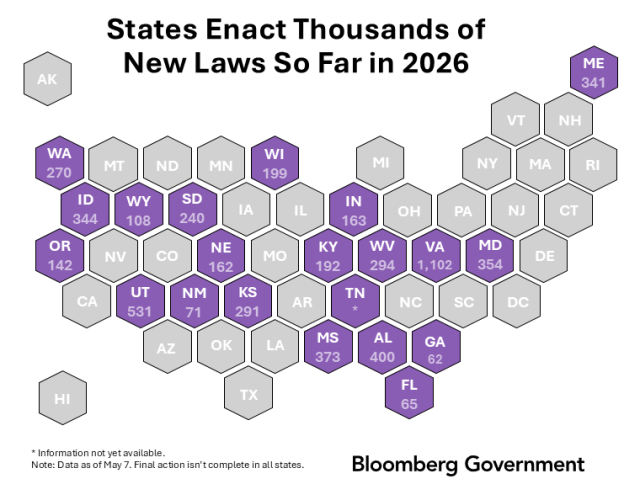
Bloomberg Government: Your Policy Command Center Like what you’re reading? Stay close to what’s unfolding in Washington with exclusive insights, essential data, and expert analysis. Discover BGOVOn Today’s AgendaThe April jobs report will be published Trump will speak in the Rose Garden and attend a LIV Golf dinner Secretary of State Marco Rubio meets with Italian PM Giorgia Meloni Congress returns next week More From BloombergLike Washington Edition? Check out these newsletters:
Explore all newsletters at Bloomberg.com. We’re improving your newsletter experience and we’d love your feedback. If something looks off, help us fine-tune your experience by reporting it here. Follow Us
You received this message because you are subscribed to Bloomberg’s Washington Edition newsletter. If a friend forwarded you this message, sign up here to get it in your inbox.
|




AI isn’t ready for trading
Testing showed models lost money. ...