| Read in browser | ||||||||||||||


I’m Jonathan Tamari, senior Washington reporter for Bloomberg Government, and each weekday I’ll be coming to you with inside-the-room reporting and insights that reveal what’s really happening in Washington—and how it impacts you. Email me with feedback and comments here. If this newsletter was forwarded to you sign up here. Today: Trump’s affordability morass, record-breaking lawsuits, and a new way to track the forces behind AI. Costs UncontrolledRepublicans have an affordability problem — and it’s threatening to get worse. The issue that plagued Joe Biden and powered Donald Trump’s return to power is still the No. 1 concern for voters. Only now Trump is the one taking blame for high prices, and he’s struggling to ease the anxieties. 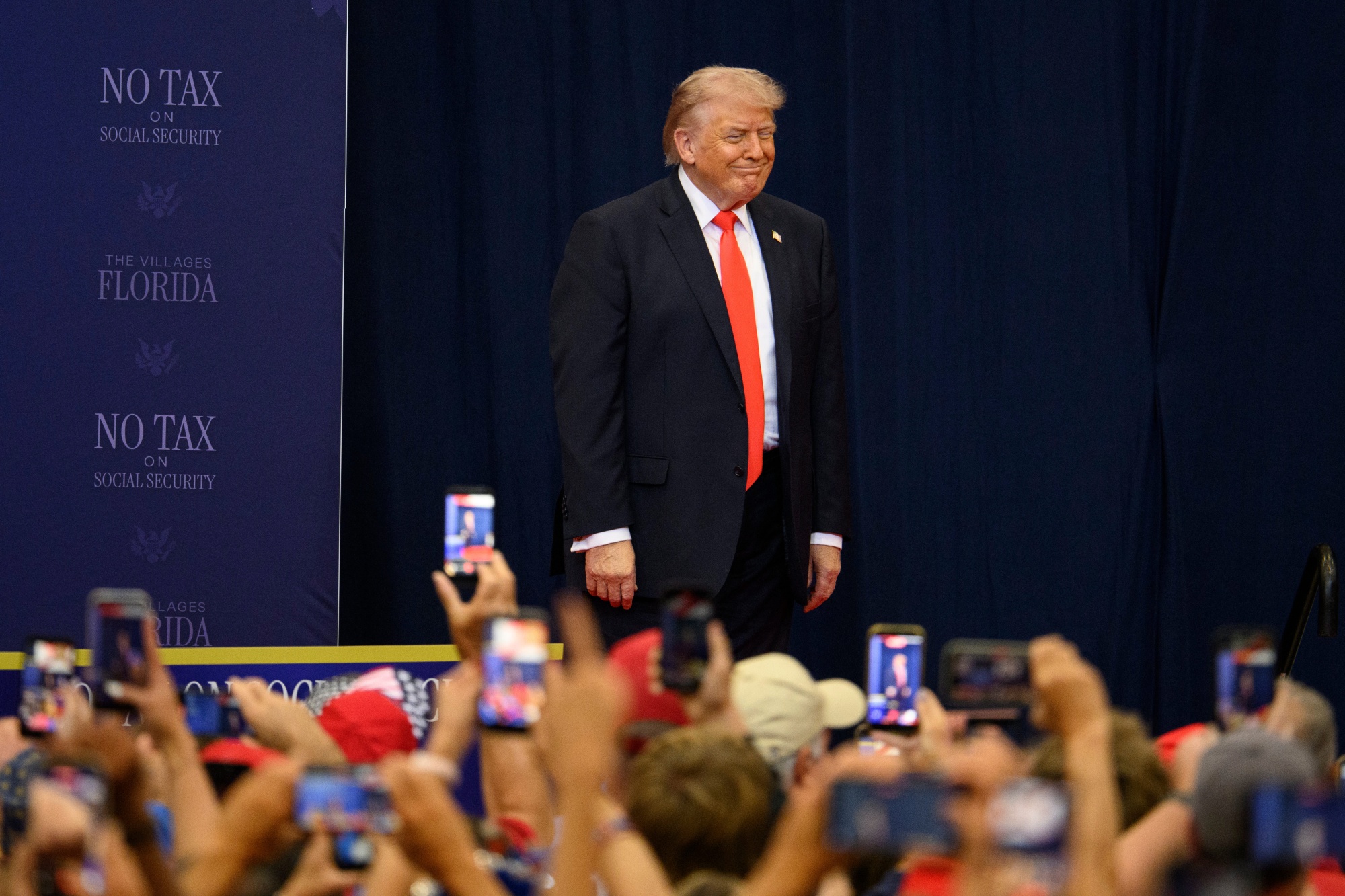
Trump arrives for an event at The Villages in Florida on May 1.
Photographer: Thomas Simonetti/Bloomberg
Two stories out this morning illustrate the topic threatening to sink the GOP in this fall’s midterm elections. “I don’t want to understate it,” Harvard economics professor Kenneth Rogoff told Miles J. Herszenhorn, “but it has the potential to soon get a lot worse.” Amid the economic pressure, Trump is showing new urgency for a deal with Iran, hoping to reopen the Strait of Hormuz. But even if there’s an agreement, analysts warn it will take a long time for energy prices to fall back to earlier levels — with ripple effects continuing to hit transportation, plastic and chemical costs. Meanwhile, the White House’s promised agenda to address cost-of-living worries is struggling to get off the ground, write Katy O’Donnell and Courtney Subramanian. Many plans are stalled, limited, or have been cast aside. A housing affordability bill is stuck in Congress, executive orders on the issue aren’t fully implemented, and Trump has stopped promoting a proposed cap on credit-card interest rates. “The politics are really, really tough for Republicans on the affordability issue now,” said Ryan Bourne, an economic scholar at the Cato Institute. Two of Trump’s most significant decisions — tariffs and the war — are directly tied to rising prices. A poll out this week put a fine point on it: 23% of Americans approve of how Trump is handling the cost-of-living, the Washington Post/ABC News/Ipsos survey found; 76% disapproved. It was the worst rating of any topic they tested. Strong economic growth and jobs numbers haven’t lifted the mood. The administration “is focused on the proven Trump agenda of tax cuts, deregulation, and energy abundance to keep America on a solid economic trajectory,” a White House spokesman told Katy and Courtney. But the president has outwardly often spent more energy on personal pique — taking revenge on fellow Republicans, pursuing perceived enemies, and promoting his building projects — than he has advancing affordability fixes or selling last year’s GOP tax cuts. Trump has also provided a potent — and resonant — symbol for Democrats to attack, relentlessly pushing a White House ballroom buildout while Americans pay more for groceries. Critics say the project funded by donors shows his real priorities. The politics could get rougher for the GOP after they proposed adding up to $1 billion of security upgrades related to the ballroom to an upcoming spending bill, Lillianna Byington reported. That could force Republican lawmakers to go on record supporting the project. (Republicans say the money is strictly for safety and is needed in light of three attempts on Trump’s life.) Trump stood behind the undertaking yesterday when asked how ballroom construction fits with people facing high gas prices, noting that aside from the security funding, the $400 million project is privately financed. “It’s one one-millionth of a percent of what we do,” he told PBS in an interview. “That’s a small deal.” In this election, though, affordability is the big deal. Top NewsThe US is waiting on Iran’s response to a peace proposal this morning, as tensions in the region remain high. Israel struck Beirut for the first time since a ceasefire with Lebanon began last month. Germany’s top diplomat is trying to repair relations with the US after a recent spat between Trump and Chancellor Friedrich Merz, echoing some of Trump’s favorite arguments about the Iran war in an interview with Bloomberg Editor-in-Chief John Micklethwait. It’s shaping up to be the most expensive midterm in history. A new analysis this morning looks at the billionaires fueling the political spending boom. 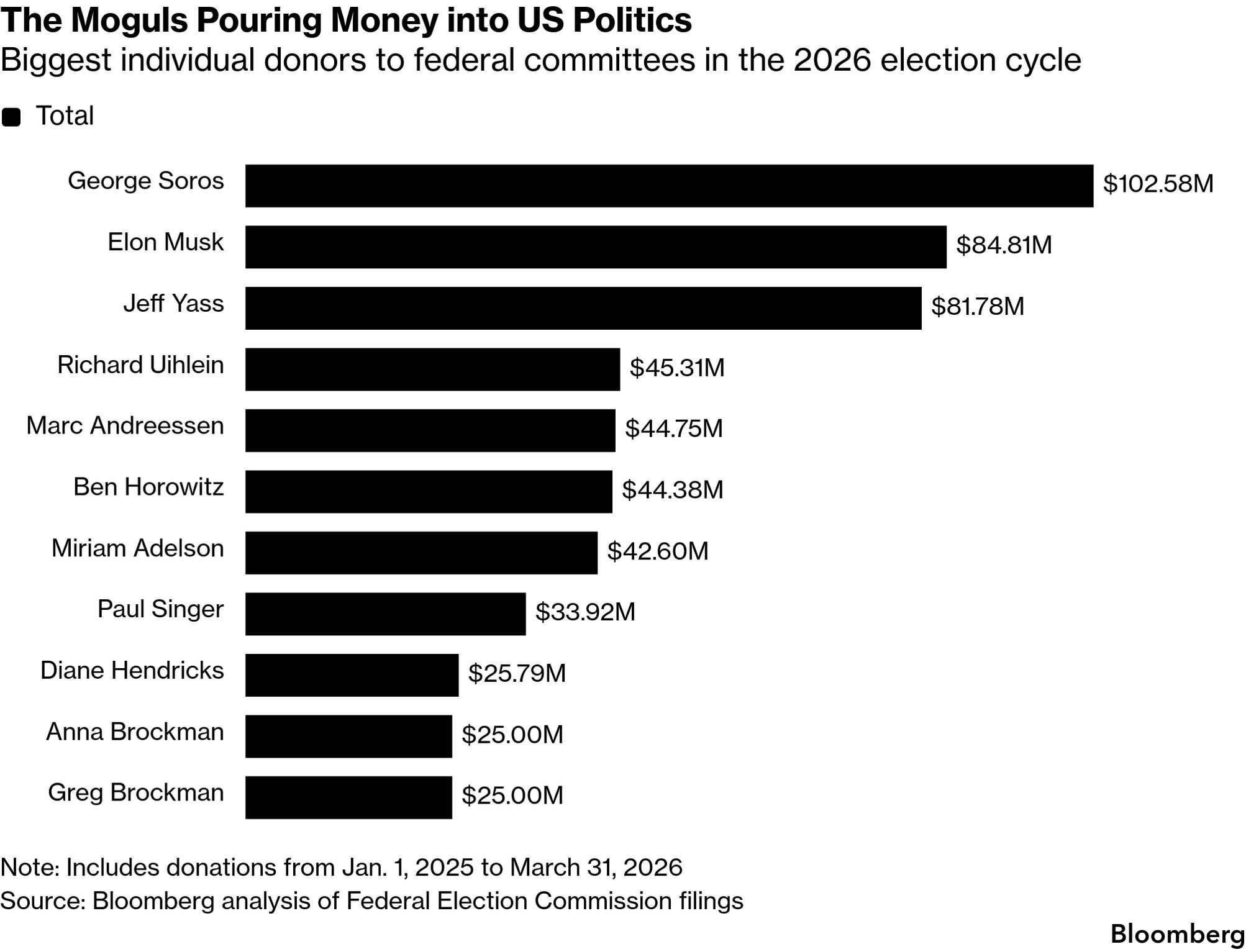
A purported suicide note from Jeffrey Epstein was released by a federal judge Wednesday. Epstein’s former cellmate said he found the note after the sex offender was found unconscious and injured in his cell. Lawyers from top M&A firms provided tips on some of the biggest deals of the last decade to an insider trading ring that made tens of millions in illegal profits, according to federal indictments charging 30 people. Wall Street bonuses are poised to jump again — with some bankers predicted to see 10% to 20% increases in incentive pay. Democratic-led states are teaming up to sue the Trump administration at a record pace, escalating a trend used by both parties. The Pentagon awarded Meta-backed Scale AI with a $500 million contract to help sift through data and assist in decision-making, the latest step in the military’s increasing use of artificial intelligence. GOP moderates fighting for their political lives are cooling on the idea of a third party-line fiscal package. Their opposition threatens Republican hopes for another big legislative achievement before the midterms. 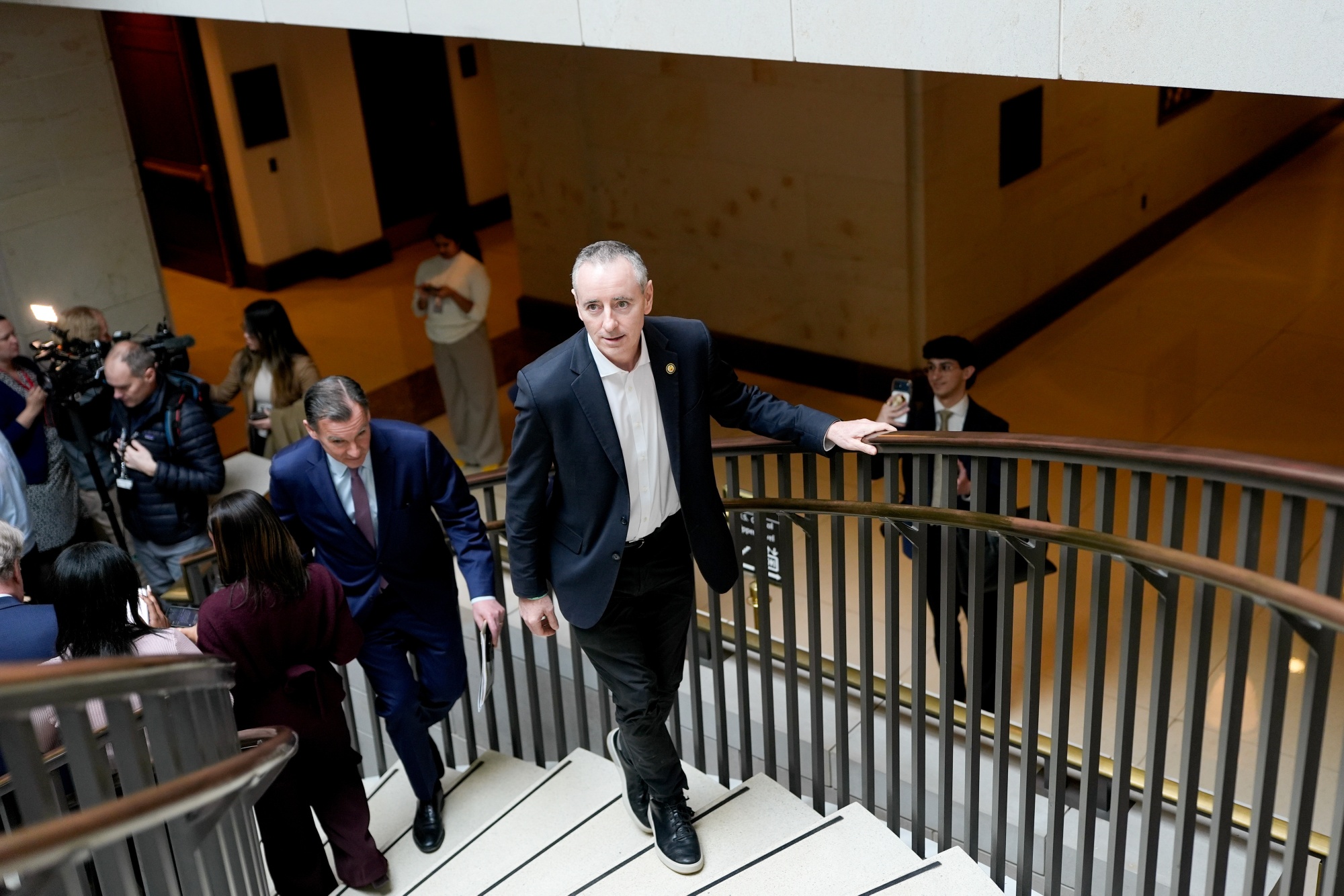
Moderate Republican Rep. Brian Fitzpatrick (Pa.), middle, in Washington Dec. 17.
Photographer: Kent Nishimura/Bloomberg
Is John Roberts running out of patience? The chief justice lamented that Supreme Court arguments are dragging on and suggested possible changes the format. A deadly outbreak on a cruise ship shows a blind spot in virus detection: infections that incubate silently and only surface after it’s too late. GameStop’s CEO says his eBay account was suspended after he offered to sell a pair of socks and other personal items to fund a $56 billion bid for the online marketplace. Kalshi and Polymarket’s surge in popularity have raised concerns far and wide (as we wrote recently). Calls are rising for House lawmakers to introduce legislation to ban themselves from the markets after a similar Senate move. 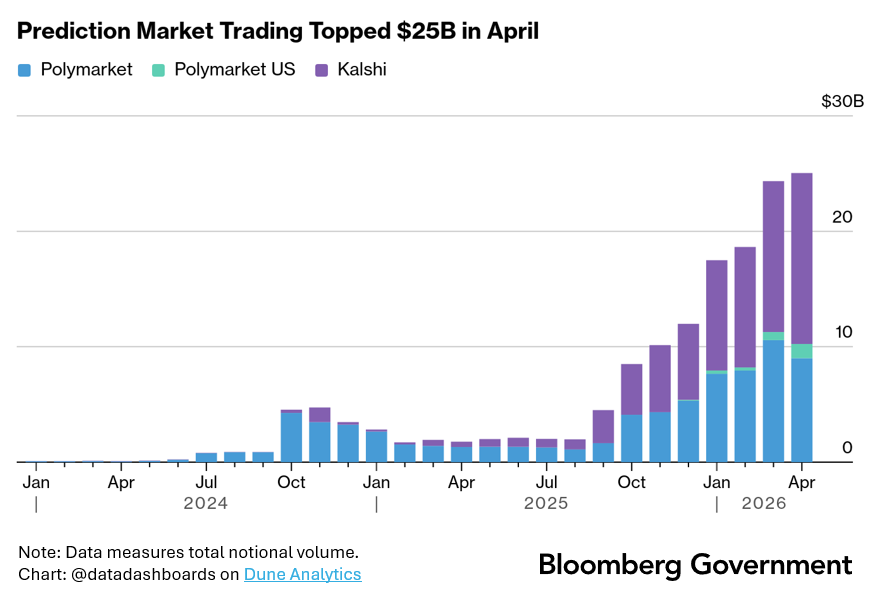
Watch This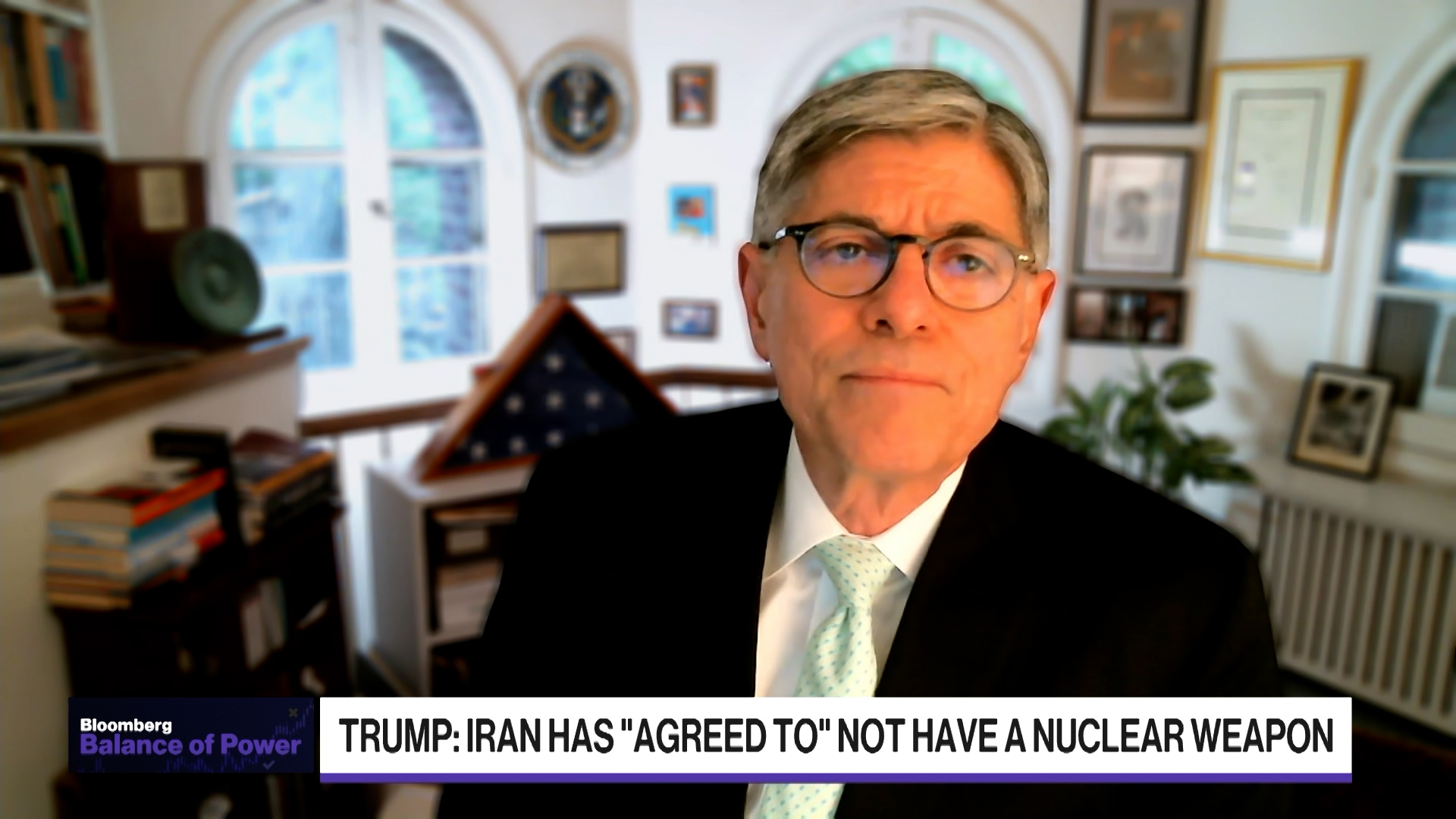 
Former Treasury secretary and US ambassador to Israel Jack Lew says pushing Iran to “zero enrichment” would be a step beyond the 2015 nuclear deal.
Go Deeper With BGOVCheck out Bloomberg Government’s just-launched interactive AI Influence Map to visualize the complex web linking the firms, lobbyists, and forces shaping who builds, controls, and profits from AI. 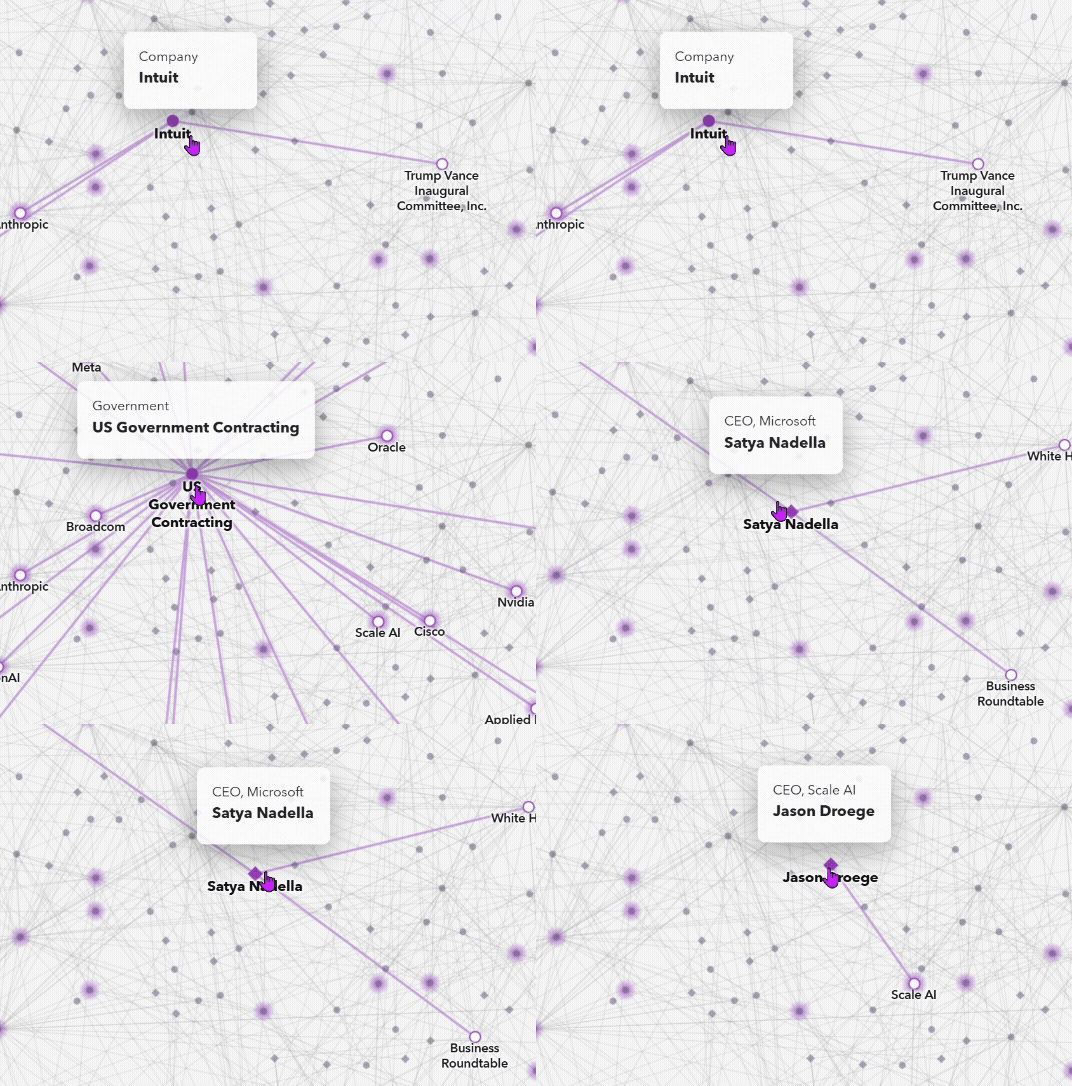
Bloomberg Government: Your Policy Command Center Like what you’re reading? Stay close to what’s unfolding in Washington with exclusive insights, essential data, and expert analysis. Discover BGOVOn Today’s AgendaTrump hosts Brazil’s president Luiz Inacio Lula da Silva at the White House Initial jobless claims for early May are set to be released Secretary of State Marco Rubio is at the Vatican Homeland Secretary Secretary Markwayne Mullin and Defense Secretary Pete Hegseth lead a FEMA Review Council meeting More From BloombergLike Washington Edition? Check out these newsletters:
Explore all newsletters at Bloomberg.com. We’re improving your newsletter experience and we’d love your feedback. If something looks off, help us fine-tune your experience by reporting it here. Follow Us
You received this message because you are subscribed to Bloomberg’s Washington Edition newsletter. If a friend forwarded you this message, sign up here to get it in your inbox.
|



