| Read in browser | ||||||||||||||
 Welcome to Balance of Power, bringing you the latest in global politics. If you haven't yet, sign up here. The war over Iran's nuclear program is accelerating a shift that could reshape global security: more countries are starting to think they need nuclear weapons. From Berlin to Seoul, governments that long relied on US protection are now debating whether they need their own deterrent. Germany and Poland are exploring closer ties to France's nuclear umbrella. Support for an independent arsenal is rising in South Korea. 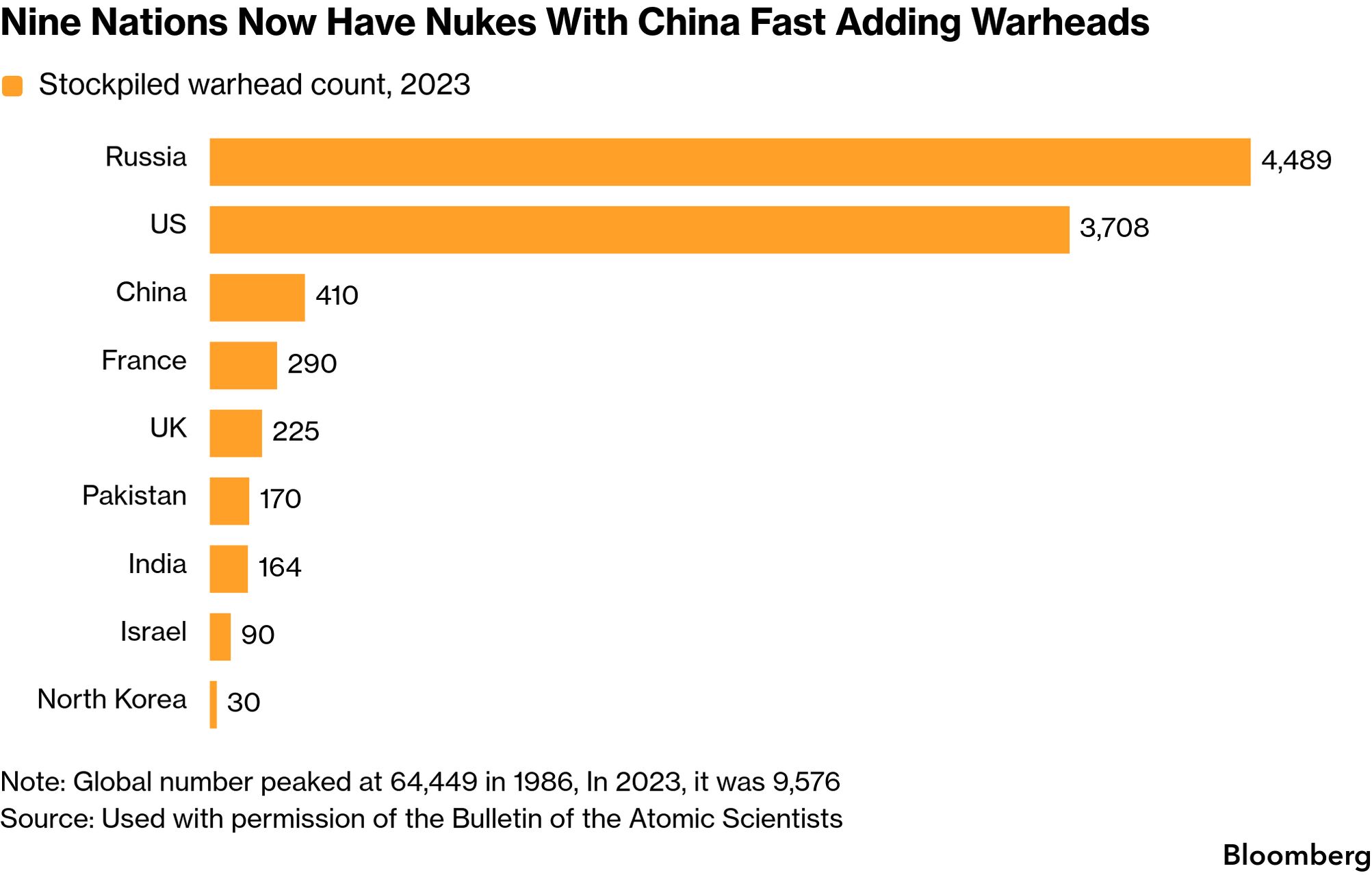 China and Russia are warning about proliferation even as they upgrade their own arsenals. The arms-control architecture built at the end of the Cold War is eroding without replacement. Debate is shifting even in Japan, where nuclear weapons have long been taboo. That's happening as President Donald Trump pairs an aggressive posture toward adversaries with a more transactional approach to US allies. His administration is weighing a return to nuclear testing after more than three decades, while also considering sharing sensitive enrichment technology with Saudi Arabia, according to documents seen by Bloomberg. In January, the Bulletin of the Atomic Scientists moved its Doomsday Clock to 85 seconds to midnight — the closest to catastrophe it's been to date. The conflict with Iran is reinforcing the appeal of nuclear weapons even as US and Israeli strikes are intended to stop Tehran from getting the bomb. They underscore a broader lesson: without an atomic deterrent, even an advanced program may not be enough to prevent attack. Ukraine surrendered the Soviet-era warheads on its soil and later faced invasion by Russia. The US helped topple Libya's leader less than a decade after he gave up his nuclear program. North Korea, by contrast, built a small but viable arsenal that has helped secure its regime despite years of confrontation with Washington. The more nations that get the bomb, the harder it is to control how it's used — and the more dangerous the world becomes. — Peter Martin 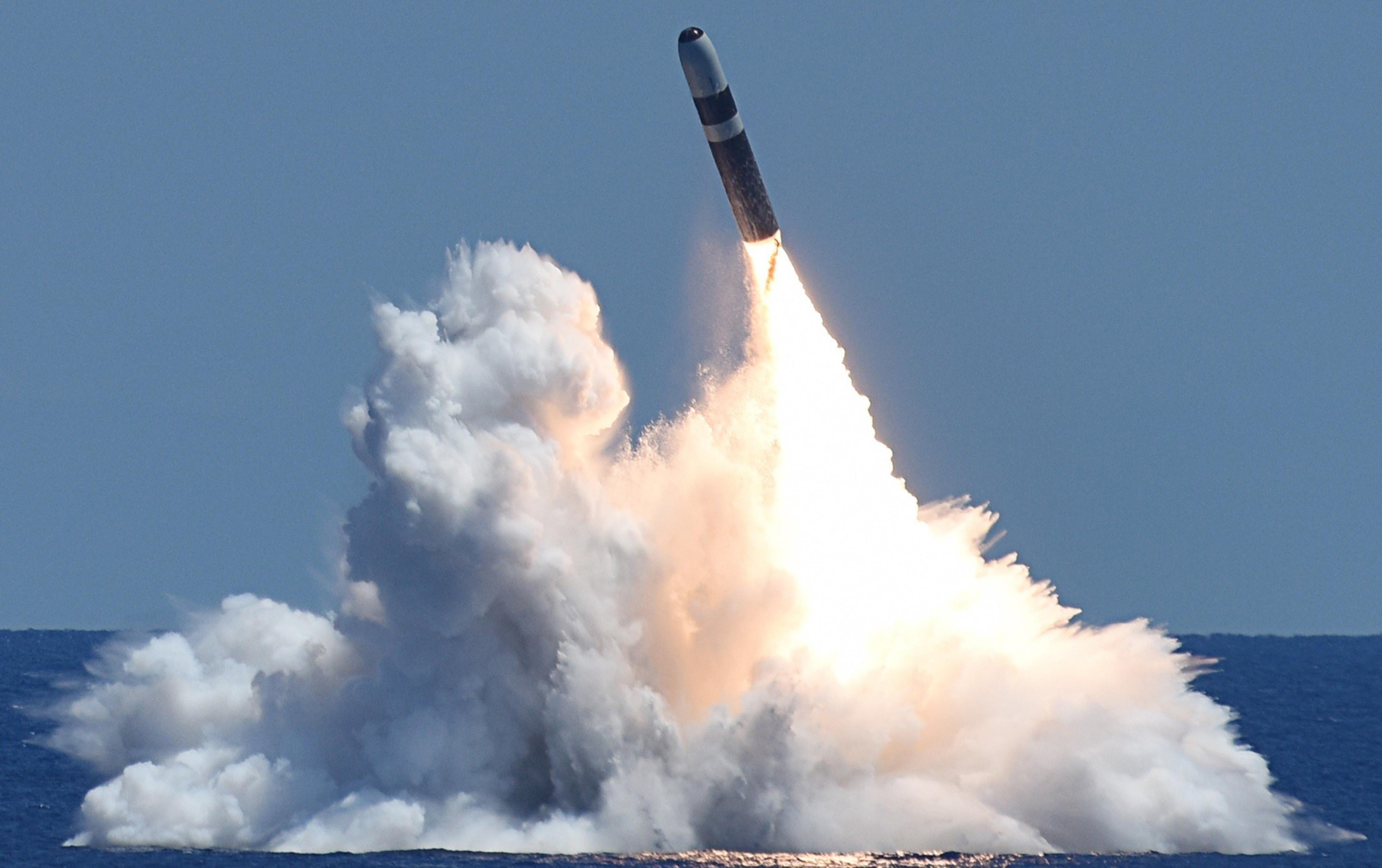 An unarmed Trident II D5 Life Extension missile launches from Ohio-class US submarine USS Alaska during testing in 2018. Source: US Navy Photo/Digital Global Must ReadsMissile strikes ripped across the Middle East over the weekend as Iran and its proxies lobbed attacks at US allies, with neither Washington nor Tehran publicly accepting Pakistan's offer to host talks to end the conflict. The arrival of a US amphibious assault group and the entry of Iran-backed Houthi forces heightened fears of an escalation as the energy industry warned that the crisis hitting global fuel supply is only beginning. 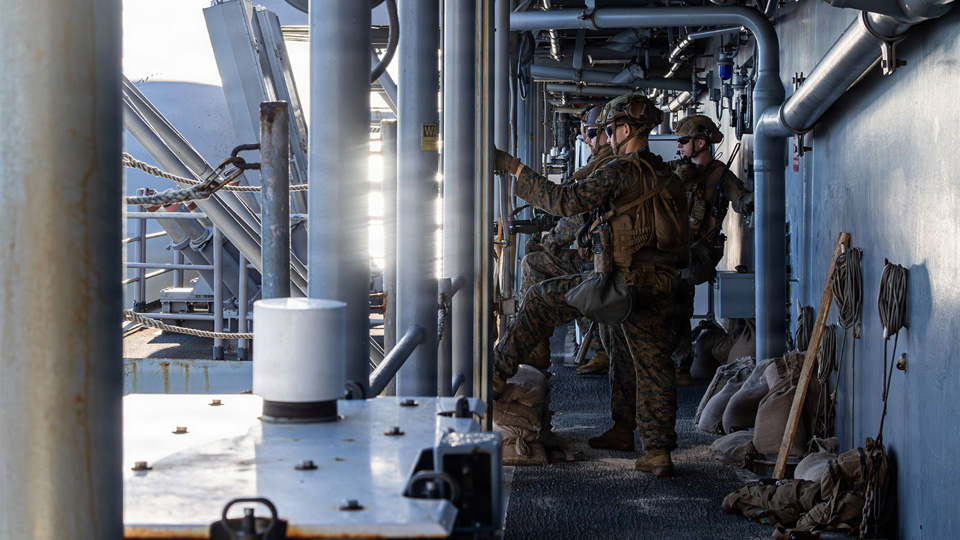  WATCH: The arrival of more US troops in the Middle East is heightening fears of an escalating war. Joumanna Bercetche reports. Finnish officials warned that drone activity is likely to continue in the Nordic country's vicinity after two Ukrainian aerial vehicles strayed into its airspace before crashing yesterday. Ukraine signed a military agreement with Saudi Arabia as President Volodymyr Zelenskiy carried out a tour of Middle East states, seeking to boost ties as uncertainty grows over Western aid for his nation amid the US-Israel war on Iran. María Corina Machado's party headquarters reopened in Caracas after being shuttered since Venezuela's contested 2024 presidential election that drove the opposition leader into hiding. The move underscores a tentative political shift after the capture of Nicolás Maduro by the US, with acting President Delcy Rodríguez having released political prisoners, approved an amnesty law and pledged to shut the notorious Helicoide detention center. President Xi Jinping invited the leader of Taiwan's largest opposition party, Kuomintang Chairwoman Cheng Li-wun, to visit China for the first time in a decade, setting up a meeting one month before Trump's scheduled summit in Beijing. Cheng's April 7-12 trip will give Xi an opportunity to discuss Taipei's purchases of US weapons, which the Chinese leader urged Trump to handle with "utmost caution" in a February phone call. 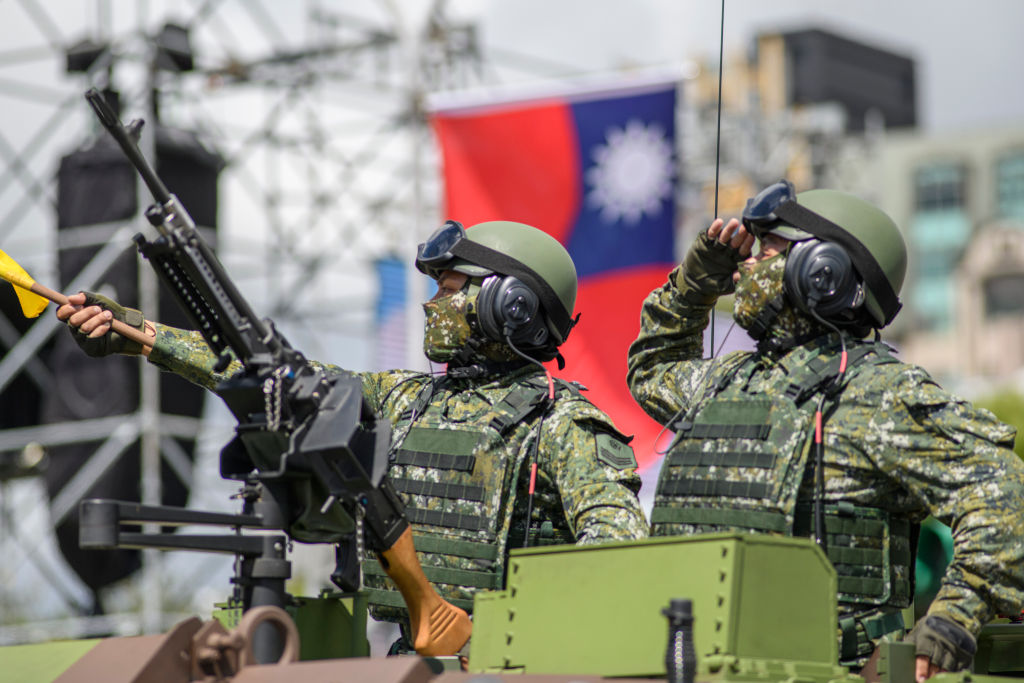 Taiwan military forces parade in front of the presidential palace. Photographer: Alberto Buzzola/LightRocket Prime Minister Viktor Orban's efforts to regain the upper hand in the final weeks of Hungary's election campaign showed cracks in the face of rising opposition support and a string of fresh political scandals. The pro-Kremlin leader has ditched highly scripted closed-door events for open-air stump speeches in an attempt to reverse his ruling party's flagging poll numbers before April 12 elections. That tactic has failed to deliver, with the premier often encountering opponents shouting slogans against his Fidesz party. Mongolian Prime Minister Zandanshatar Gombojav resigned on Friday to try to find a way out of the political deadlock that has gripped parliament. Thai Prime Minister Anutin Charnvirakul is close to unveiling a new cabinet lineup, handing him more power to deal with the challenges posed by the Middle East crisis, which is threatening the Southeast Asian nation's growth outlook. Australia will temporarily halve its tax on fuel to shield consumers from the impact of surging global prices. Sign up for the Washington Edition newsletter for news from the US capital and watch Balance of Power at 1 and 5 p.m. ET weekdays on Bloomberg Television. Chart of the Day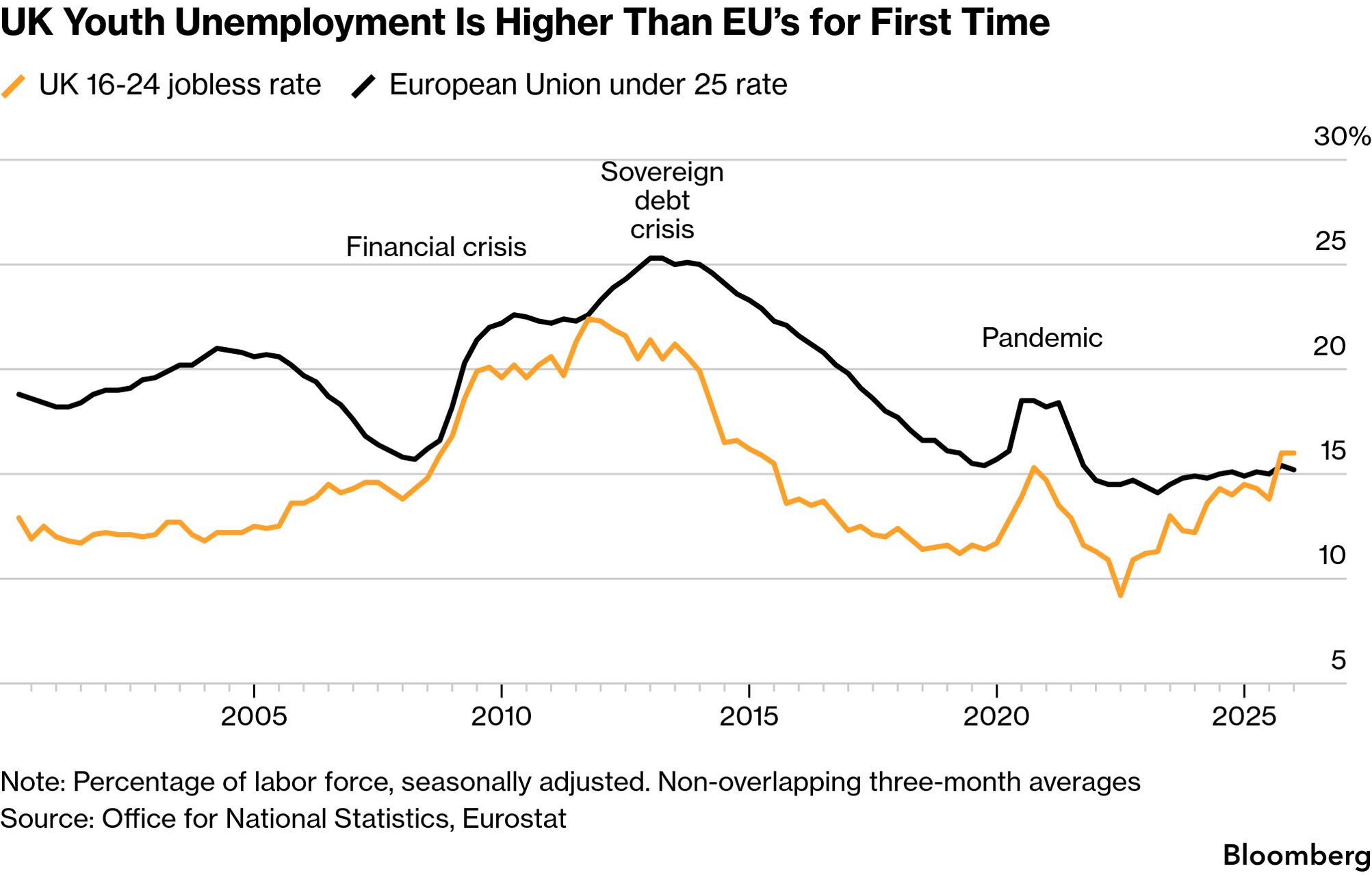 Once a global hub for entry-level jobs, London is now the epicenter of a growing youth joblessness crisis that's threatening to fuel a backlash against Prime Minister Keir Starmer's Labour government in key municipal elections in just over a month. Young people drawn to the British capital for its rich cultural life and opportunities are finding the junior roles that traditionally launched careers, from marketing to HR traineeships, increasingly hard to find in a market upended by artificial intelligence and global turmoil. And FinallyAt a historic auditorium in Washington this week, Silicon Valley executives, Trump administration officials and members of Congress gathered to extol the virtues of AI. Two days later, labor leaders joined a handful of US lawmakers in a hotel ballroom in the same city to strategize how to fight back as AI threatens to displace workers and remake the global economy. The dueling events — one funded by top tech companies, the other sponsored by the powerful labor union AFL-CIO — stood out in a week of AI forums across the nation's capital. Taken together, they highlighted the starkly different views on what role the government should take in shaping AI's future.  A sign at the Mobile World Congress tech show in Barcelona in 2024. Photographer: Angel Garcia/Bloomberg Thanks to everyone who answered Friday's quiz question, and congratulations to Jason M. Brady, who was first to identify Ghana as the country that proposed a United Nations resolution calling for reparations for African slavery. More from Bloomberg
We're improving your newsletter experience and we'd love your feedback. If something looks off, help us by reporting it here. Follow us
You received this message because you are subscribed to Bloomberg's Balance of Power newsletter. If a friend forwarded you this message, sign up here to get it in your inbox.
|




Washington Edition: Trump’s next big decision
Sending ground troops into Iran presents huge risks Read in browser I'm Jonathan Tamari, senior Washington reporter for Bloomberg Government, and each weekday I'll be coming to you with inside-the-room reporting and insights that reveal what's really happening in Washington—and how it impacts you. Email me with feedback and comments here . If this newsletter was forwarded to you sign up here . Today, Trump ponders ground troops, the IRS faces tax season after DOGE and a new moon launch is coming. Is Donald Trump Going to Do it? The biggest question hanging over Washington – and the world – at the start of the week is whether the president is going to send US ground troops into Iran, or if his maneuvering is another example of trying to build negotiating leverage. The risks...