| Read in browser | ||||||||||||||
 Welcome to CityLab Weekly. Sign up here to get the newsletter every Friday in your inbox, and please send us your feedback as we continue to refine our new format. Last week we wrote about the legacy of outgoing Paris Mayor Anne Hidalgo. On Sunday, Emmanuel Gregoire won the race to succeed her as mayor, with just over 50% of the vote in a three-way run-off. Gregoire previously served as deputy mayor to Hidalgo, and is expected to continue her decade-long push for a greener, less car-dependent Paris. "The World Cup of Displacement"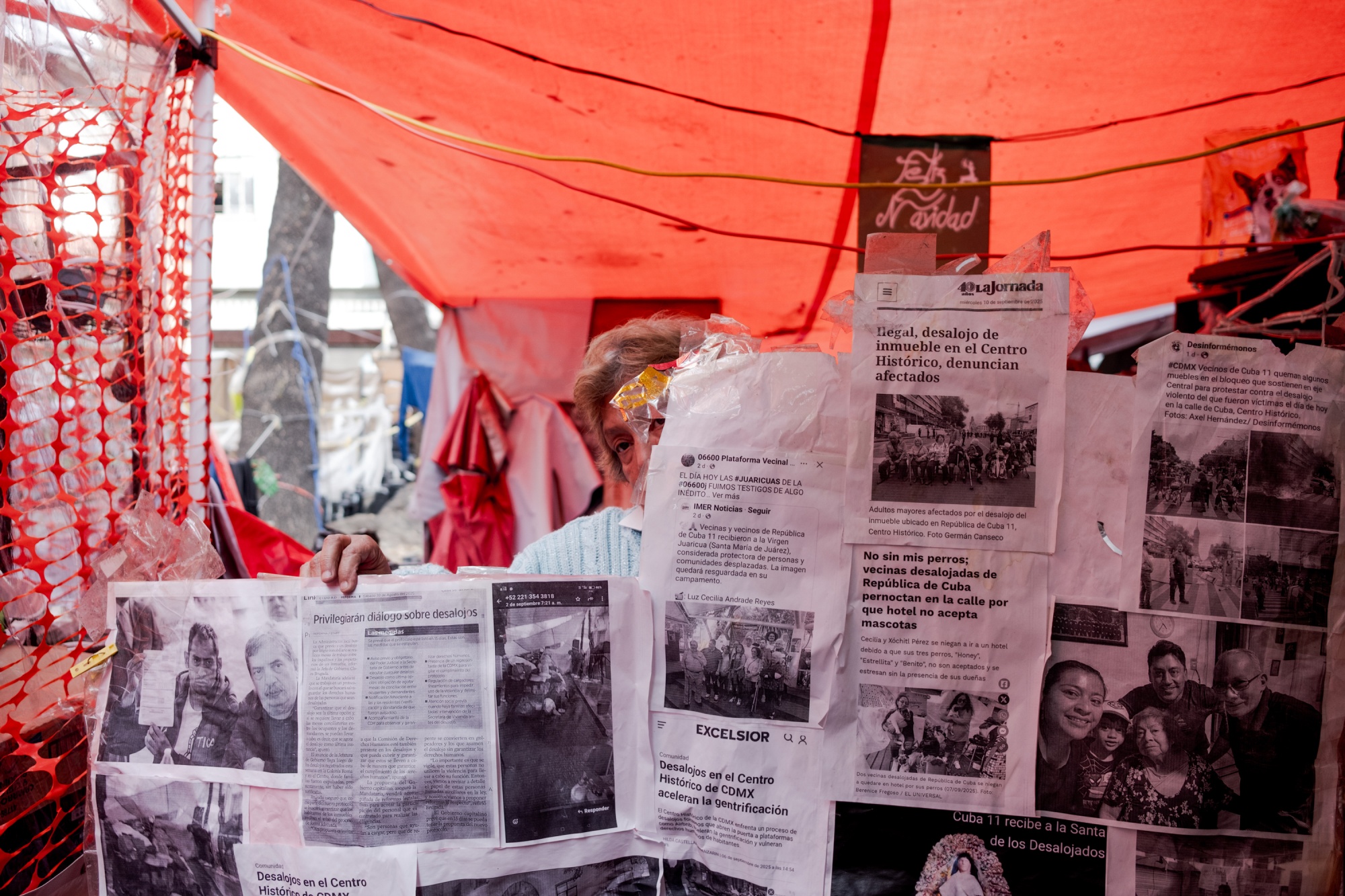 A resident shows articles of her displacement at an improvised camp in Mexico City's historic center. Photographer: Fred Ramos/Bloomberg "Mexico is hot right now." The refrain comes from President Claudia Sheinbaum, referring to the country's rise as a hotspot for both travelers and international investors. But local renters are bearing the brunt of that heat. In Mexico City, landlords looking to capitalize on growing demands for short-term rentals and high-end apartments are increasingly evicting existing tenants — of not just individual units, but entire buildings. Evictions are often done without court orders; they can be sudden or become violent. One renter, Angélica Gómez, told Bloomberg she was given just minutes to vacate her apartment before men in uniform banged on her door with a battering ram and forced her to leave. Such removals are part of a broader trend that's pricing locals out of gentrifying neighborhoods. With the city now gearing up to host several matches for the upcoming FIFA World Cup, experts tell Alex Vasquez and Amy Stillman that tensions will only escalate. 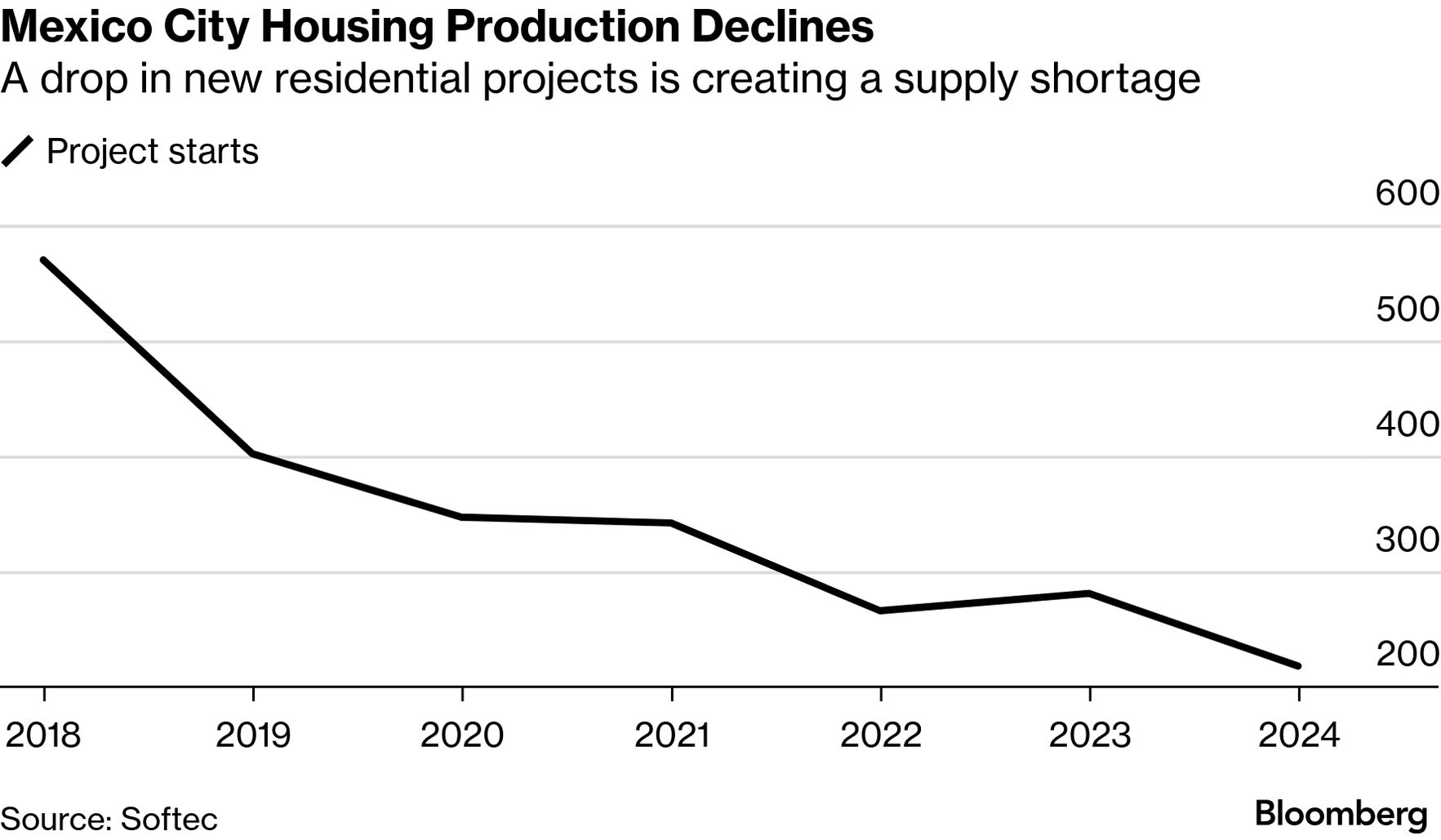 Some protests over the last few years have already turned violent as housing costs spike across Mexico City. Rents have roughly doubled since 2015 in touristy neighborhoods like Condesa, Roma and Juárez, and have also shot up in places that absorb displaced locals. Officials are trying to limit platforms like Airbnb, but they're not the only culprit: The city also faces an affordable housing shortage, and private developers are focused on luxury. As for Gómez, she and her neighbors have set up camp outside their building in the city's historic center, where they sleep, cook, work — and protest. All the while, they're waiting on a court decision or government assistance that may not come anytime soon. Read the story More on CityLabAre urban hives a buzzkill?  Photographer: David Dudley/Bloomberg CityLab The futuristic cities of the past Would congestion pricing work in Chicago? Big dreams for an old rail hub$5 billion The cost of a massive project from Atlanta Hawks owner Tony Ressler to redevelop "The Gulch" — a gritty former rail hub in downtown Atlanta — with a star-studded list of investors. Here's what's in store. Steal this idea?Virginia could become the second US state, after Utah, to help residents lower electricity bills by allowing them to use portable, plug-in solar devices that can be set up on a deck or balcony. Newly passed legislation legalizing balcony solar is expected to be signed into law by the governor and take effect next January, despite pushback from utilities. It would prohibit landlords with more than four properties from blocking such installation. The idea, which is already popular with apartment dwellers in Germany, is catching on in the US amid rising energy costs, with more than two dozen related state bills in progress. What we're taking in
Your weekend listen 🎧Have something to share? Email us. And if you haven't yet signed up for this newsletter, please do so here. More from Bloomberg
Explore all Bloomberg newsletters. We're improving your newsletter experience and we'd love your feedback. If something looks off, help us fine-tune your experience by reporting it here. Follow us
You received this message because you are subscribed to Bloomberg's CityLab Weekly newsletter. If a friend forwarded you this message, sign up here to get it in your inbox.
|




Rubio asks allies for more Iran help
G-7 meeting has echoes of 1975 Read in browser For more than a half-century, leaders of industrial countries have periodically gathered to discuss and maintain the international order. A meeting this week just outside Paris has echoes of the first such conclave in 1975. Oliver Crook , Bloomberg Television's chief Europe correspondent, explains how that old order appears to be breaking down. Plus: The co-founder of Spotify has pivoted to full-body scans (free link!) and the Arc'teryx brand appeals to woodsy types and urban CEOs alike . If this newsletter was forwarded to you, click here to sign up . Fifty-one years ago, the leaders of six countries —France, Italy, Japan, the UK, the US and West Germany—met at the Château de Rambouillet just outside Paris. The presidents and pri...