| Read in browser | ||||||||||||||
 Bloomberg News reports today that the Pentagon has asked for an additional $200 billion from Congress to pay for the war against Iran. In a new World Stage column, Bloomberg Businessweek's Wes Kosova writes about the war's high price for an administration previously focused on cost cutting. Today's newsletter features an excerpt, and you can read the whole article here free. If this was forwarded to you, click here to sign up. The MIM-104 Patriot is widely regarded as the most effective mobile missile defense system in the world. Short for phased array tracking radar to intercept on target—gotta love those military acronyms—it fires interceptor missiles that knock out enemy projectiles with enviable precision. The Patriot is in such demand that its manufacturer, Virginia-based RTX Corp., can't churn them out fast enough. US allies sit impatiently on waiting lists. Ukraine has pleaded for more of them to defend itself against Russia, further straining supplies. All that sought-after technology comes with a hefty sticker price. A complete Patriot system goes for about $1 billion. And that's just for starters. The long-term expense is in stocking up on the single-use PAC-3 interceptor missiles it launches. They're made by Lockheed Martin Corp. and cost about $4 million apiece. (Think of it as the Pentagon's version of costly printer ink refills.) Given the short supplies of interceptors and the high cost to taxpayers each time one is fired, military commanders have tended to use them judiciously.  Photo illustration: 731; photos: Getty Images That is, until President Donald Trump's February attack on Iran. The US launched about 800 interceptor missiles within the opening week of the war to counter Iranian ballistic missiles and drones, a US official told the New York Times, a number that aligns with an estimate by the German defense firm Rheinmetall AG. That tally punctuates the "epic" in operation Epic Fury. It also highlights the cost: more than $3 billion spent on Patriot missiles in a matter of days. To put that figure in context, consider that Ukraine has received about 600 Patriot interceptors in four years of fighting off Russia. Trump has also sent two carrier strike groups to the Middle East, each composed of numerous ships and aircraft and manned by thousands of salaried service members. Add to that the cost of weaponry required to carry out hundreds of offensive strikes to blow up targets inside Iran. Pentagon officials told US lawmakers in a closed-door briefing that the first six days of the war cost more than $11.3 billion. War is always expensive, which is why past presidents sought the public's approval before calling up troops. Trump didn't do that—the assault on Iran even caught some members of Congress and foreign leaders by surprise. And three weeks into the conflict, Trump and his Defense secretary, Pete Hegseth, still struggle to explain the rationale for attacking the country less than a year after the president triumphantly claimed US bombs had "completely and totally obliterated" its key nuclear enrichment facilities. Read more More on the War  Watch: Iran War Not Becoming a 'Quagmire' or 'Forever War,' Hegseth Says In Brief
Stuck in the Strait40,000 That's how many seafarers are estimated to be stuck onboard ships on either side of the Strait of Hormuz, which has been almost entirely shut since the US and Israel began bombing Iran in late February. Half of those are effectively trapped in the Persian Gulf, under the constant threat of attacks. Explainer: How Iran Has Effectively Closed the Strait of Hormuz Retirement and Risk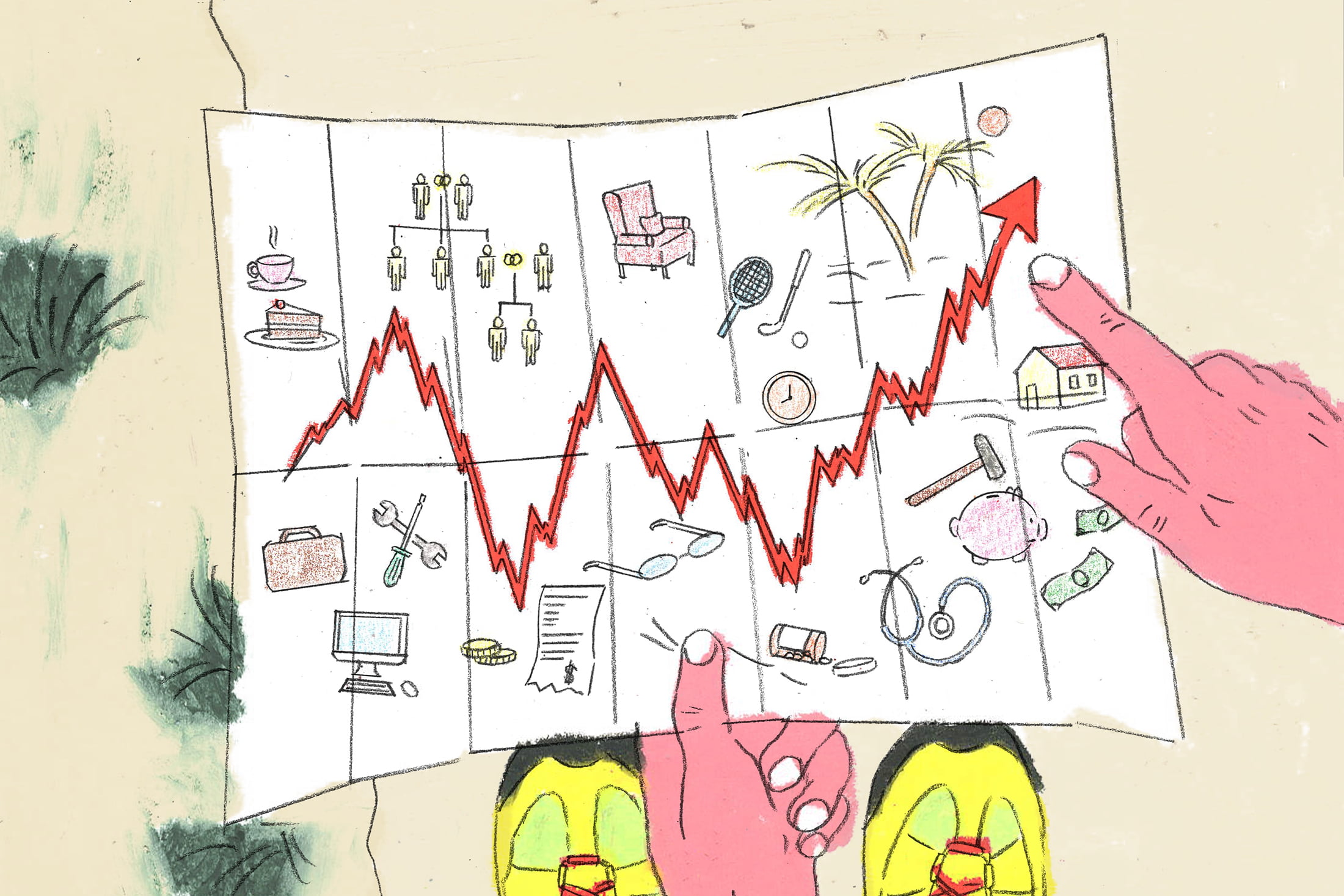 Illustration: Mia Oberländer for Bloomberg Businessweek It's a retiree's nightmare: running out of money late in life. But another scenario is arguably just as traumatic. Imagine a prolonged market downturn that depletes your savings in the years right around when you retire, forcing you to sell stock at a loss to meet living expenses. Even if the market bounces back, great returns on a shrunken pile of investments can't make you whole. Retirement dreams are kneecapped from the get-go. That possibility is called "sequence of return risk," and it can hit in a danger zone stretching from the five years before retirement to the five years after. Without a strategy for dealing with this risk, a stock-heavy saver is vulnerable to a lower standard of living. There's reason to be worried about this now. Markets are on edge, with uncertainty about the impact and length of the war with Iran, artificial intelligence's long-term promise coming under intense scrutiny, and even supposed safe haven assets, such as gold, volatile. And as roughly 10,000 boomers are turning 65 every day—the US Census Bureau says in about four years all of them will be that age or older—that's a lot of retirement money at risk. Suzanne Woolley writes about the importance of protecting against a long downturn: Beware the Retirement Red Zone That Can Derail Your Savings Plan A Better View"I can read a little, and when I look up from my book, I get to watch the ocean and the seabirds and feel the breeze. This is heaven for me. This is what I want." Sharon Lane Retired high school teacher from Orange County, California A growing crop of seniors is selling it all and heading to the high seas, for good. Read the full story here. Play Alphadots!Our daily word puzzle with a plot twist.  Today's clue: Collection of seeds arranged in early spring? More From BloombergLike Businessweek Daily? Check out these newsletters:
Explore all Bloomberg newsletters. We're improving your newsletter experience and we'd love your feedback. If something looks off, help us fine-tune your experience by reporting it here. Follow us
You received this message because you are subscribed to Bloomberg's Businessweek Daily newsletter. If a friend forwarded you this message, sign up here to get it in your inbox.
|




Singapore Edition: Beijing upends the Manus Model
A one-line decree from Beijing just scuttled a bet on Singapore becoming a sanctuary for Chinese AI. ...