| Read in browser | ||||||||||||||

Hello and welcome to Bloomberg’s weekly design digest. I’m Kriston Capps, staff writer and editor for Bloomberg CityLab and your guide to the world of architecture and the people who build things. This week critics got a first look at the new David Geffen Galleries at the Los Angeles County Museum of Art ahead of its May 4 opening. Sign up to keep up: Subscribe to get the Design Edition newsletter every Sunday. 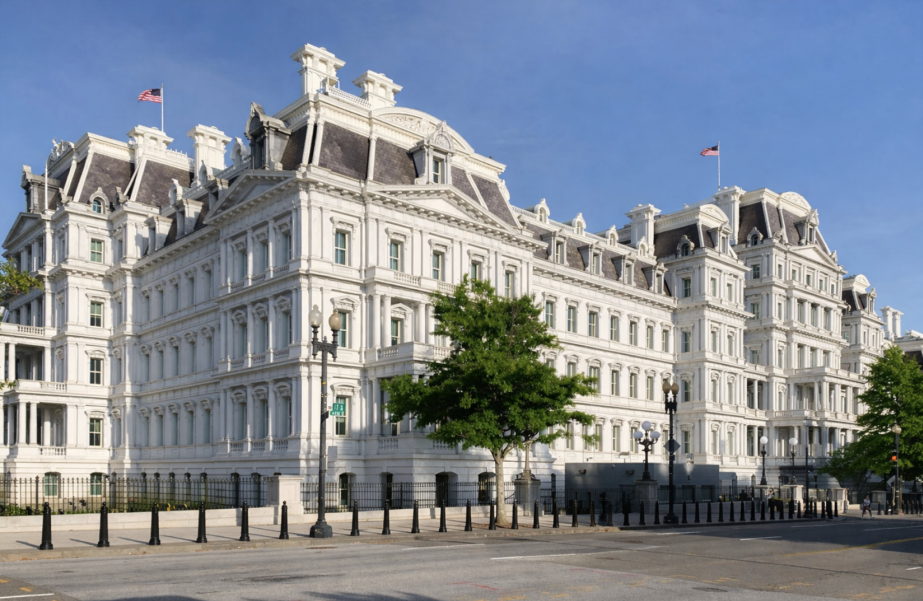
An image of the slate gray Eisenhower Executive Office Building painted white.
Courtesy of the Executive Office of the President Office of Administration
This week the US Commission of Fine Arts held its first hearing on the Trump administration’s proposal for a mega-monumental arch. Underscoring how important these legacy projects are to the president, the administration dispatched Interior Secretary Doug Burgum to deliver the presentation. The commission voted to approve the president’s plan in concept, though not before suggesting some major revisions for the arch. The administration also presented a proposal to paint the Eisenhower Executive Office Building white. This part of the hearing went much better for the White House — considering that its plan calls for inventing a new kind of paint. The EEOB or Old Executive Office Building is a massive administrative building that flanks the White House. It was commissioned by President Ulysses S. Grant as a cabinet building to house the Departments of War and State as well as the Navy. It’s a Second Empire–style building, a slate-gray wedding cake with tiered porticos, mansard roofs and colonnades galore. It took two decades to build, and by the time construction was complete in 1888, it was already out of fashion: Firmly in the Gilded Age, America had moved on to its Beaux Arts era. The Trump administration wants to paint the granite building and its cast-iron railings, cornices and sculptures white. Joshua Fisher, director for both the White House Office of Management and Administration and the Office of Administration, made the administration’s case before the hearing. “The exterior is in great disrepair, with extensive damage, including grime, soot, stains, tar, cracks” and other deficiencies. “Stone masons have assessed the feasibility to adequately clean the facade,” Fisher said. “These experts have told us there is no guarantee the cleaning of the facade will properly restore the building to its original grandeur.” 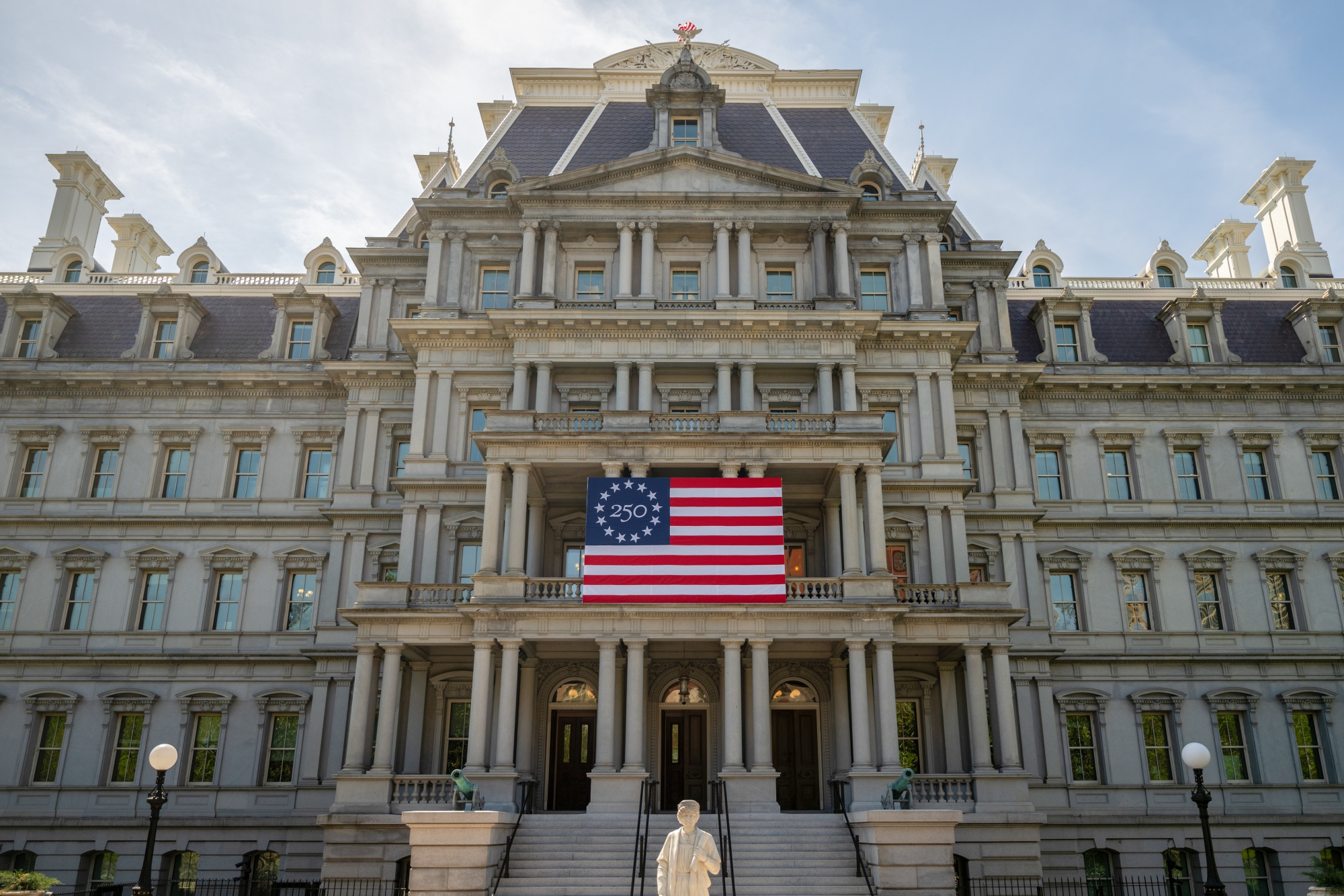
An America 250 flag hangs outside the Eisenhower Executive Office Building.
Photographer: Daniel Heuer/Bloomberg
Painting it white would prevent these problems in the future, he continued, while incorporating the Old Executive Office Building into a greater executive campus, visually consistent with the White House and ballroom. There’s a hitch, according to the nonprofit DC Preservation League, which is challenging the action in court: Painting granite won’t actually work. The administration plans to use a mineral silicate paint, the kind often used for stone such as limestone, sandstone or marble. But granite lacks the necessary calcium carbonate to form a chemical bond with silicate. The firm representing the DC Preservation League in the suit, Cultural Heritage Partners, surveyed 25 building science and architectural preservation experts to evaluate the proposal. Founding partner Greg Werkheiser said that the experts’ consensus opinion is that the plan raises more problems than it solves. 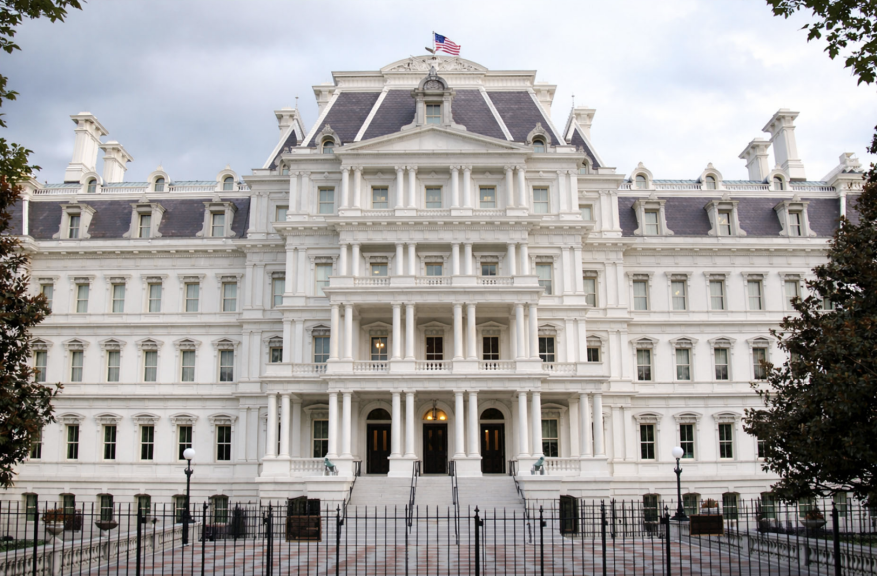
Another image of the slate gray Eisenhower Executive Office Building painted white.
Courtesy of the Executive Office of the President Office of Administration
“All the super magic paint benefits that you heard the administration talk about — it strengthens the stone, it repairs, it forgives sins — all the things you heard them say apply only if that chemical bond occurs,” Werkheiser testified before the commission. “It cannot occur here, because granite is not that type of stone.” Asked to explain what kind of paint the administration would be using, a construction manager for the administration said that they are working with engineers to find the perfect product or develop one. He said that the mineral silicate paint that they will identify will bond with this granite. The White House is working with paint experts across the country, he said. There are other concerns to be addressed here: how a building that has suffered apparent neglect will be regularly painted. Or how a white building will show less grime, pollution, weather and wear than a gray one. Or whether the EEOB was historically intended to be part of a White House “ensemble,” as chair Rodney Mims Cook Jr. put it. But the plan is nevertheless moving forward: With the ongoing litigation still pending, and fundamental disagreement over material chemistry outstanding, the commission approved the concept of painting the building white. Design stories we’re writing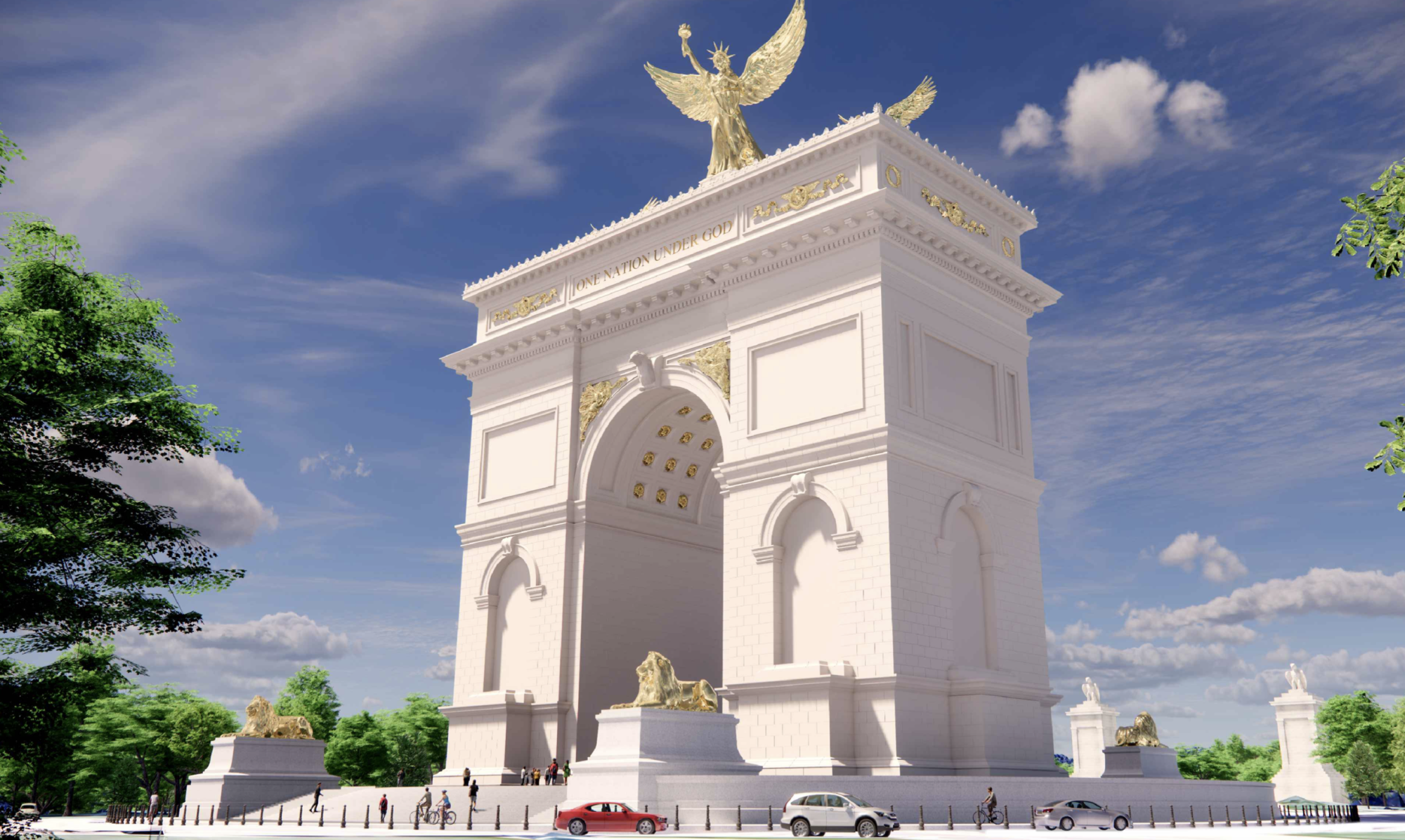
Trump’s Monumental Arch
Photographer: Courtesy of Harrison Design
Trump’s plan for a “Triumphal Arch” took a step closer to becoming reality, with the US Commission of Fine Arts voting to approve the concept. But the actual finished structure may look quite different. One of the commission’s members, vice chair James McCrery — the architect originally appointed by President Donald Trump to design the White House ballroom — had sharp questions for the architect behind the arch. McCrery praised the arch in concept but asked for a number of revisions, including removing the enormous statues on top of the structure and adding openings to its sides (like the Arc de Triomphe). The hearing showed a glimmer of oversight for a board that has sought to fast-track Trump’s legacy projects, despite their overwhelmingly negative reception from the public. 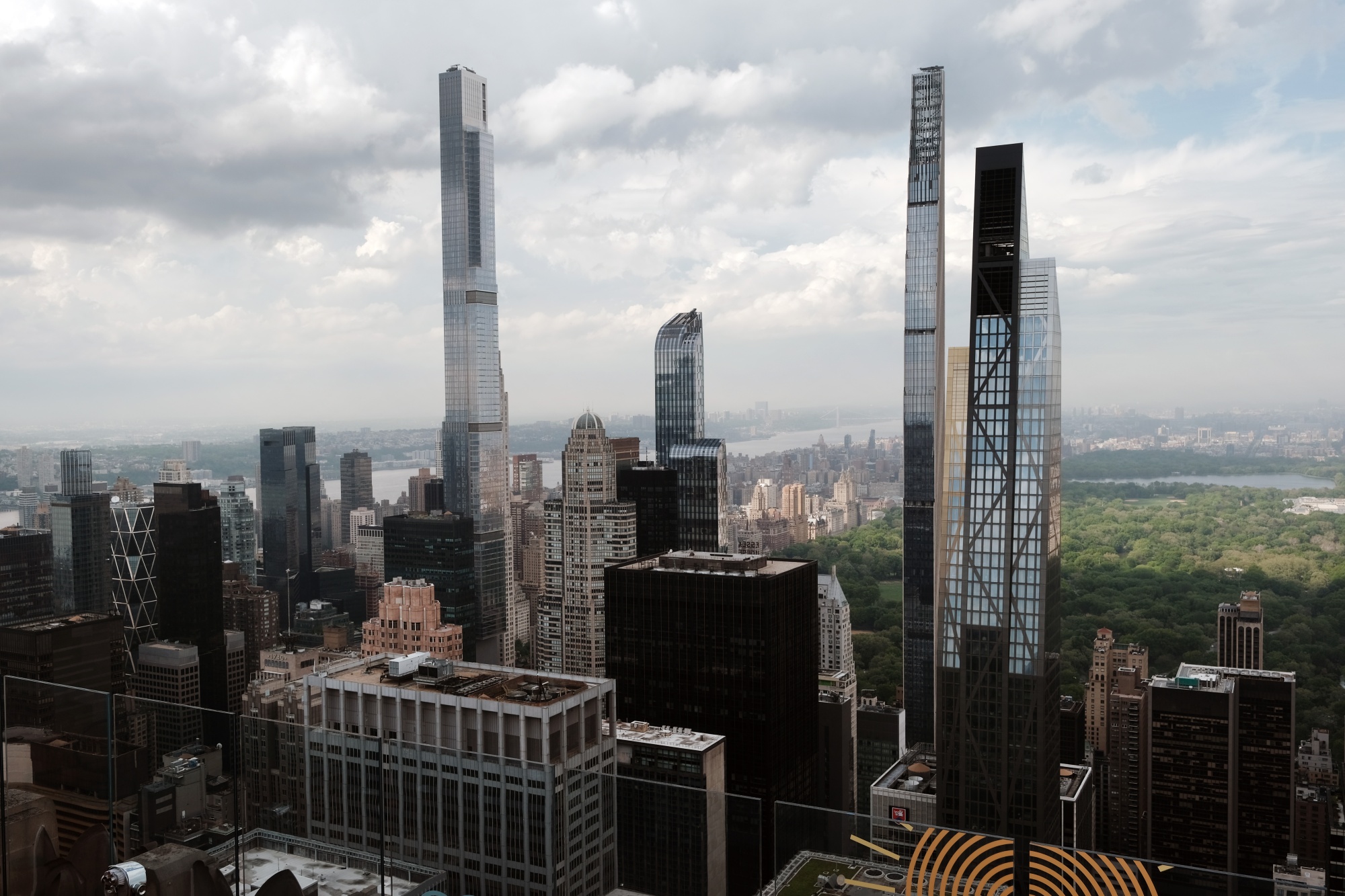
Residential luxury towers stand along Billionaires Row in New York City.
Photographer: Spencer Platt/Getty Images
New York Governor Kathy Hochul proposed a new pied-à-terre tax on second homes worth at least $5 million, raising alarms among New York’s most affluent property owners. The effort comes as New York City Mayor Zohran Mamdani tried to make good on promises to address the city’s budget by taxing its wealthiest residents and owners. As Paulina Cachero reports, almost one-third of New York’s residential stock was owned by non-residents in 2021 — and more than half of homes worth more than $5 million. Design stories we’re readingBjarke Ingels Group and William Rawn Associates revealed their design for the Tennessee Performing Arts Center in Nashville. (The Tennessean) Julia Halperin wrote all the architecture stories for a big “how to be cultured” package, including entries on controversies, Art Deco and classical columns (T: The New York Times Style Magazine) Ian Volner weighs in on the “uncorrected proof” that is the New Museum’s expansion: “In more ways than one, the museum appears to have gotten ahead of itself, neglecting to consider not only how to undertake such an endeavor but why.” (Architectural Record) Oliver Wainwright asks whether the new Peter Zumthor–designed LACMA expansion is worth the carbon embodied in so much concrete. He makes a strong argument but it strikes me as the wrong question for truly singular buildings that are meant to stand for decades. (The Guardian) Aliide Naylor writes about the return of Russia to this year’s Venice Biennale: “We’re starting to see a shift towards collective, wilful amnesia when it comes to Russia’s discernible crimes, facilitating attempts at rehabilitating Russia’s cultural image as the country continues to wage war in Ukraine.” (ArtReview) Have something to share? Email us. And if you haven’t yet signed up for this newsletter, please do so here. More from Bloomberg
Explore all Bloomberg newsletters at Bloomberg.com We’re improving your newsletter experience and we’d love your feedback. If something looks off, help us fine-tune your experience by reporting it here. Follow Us
You received this message because you are subscribed to Bloomberg’s CityLab Design Edition newsletter. If a friend forwarded you this message, sign up here to get it in your inbox.
|




Washington Edition: How Iran is defying Trump
How the regime is sustaining its fight against two stronger foes ...