| Read in browser | ||||||||||||||
Welcome to Balance of Power, bringing you the latest in global politics. If you haven’t yet, sign up here. Chancellor Friedrich Merz hosts Brazilian President Luiz Inácio Lula da Silva in Hanover today, but the real action is to the north on Germany’s Baltic Sea coast. For weeks now, alongside news of war and economic shock, Germans have been gripped by the fate of a stranded whale. The adult male, a 12-meter (40-foot) humpback, was first spotted in early March after straying off course into the relative shallows of the Baltic and getting stuck on a sandbank. It has repeatedly refloated only to get into trouble again, becoming ever weaker. 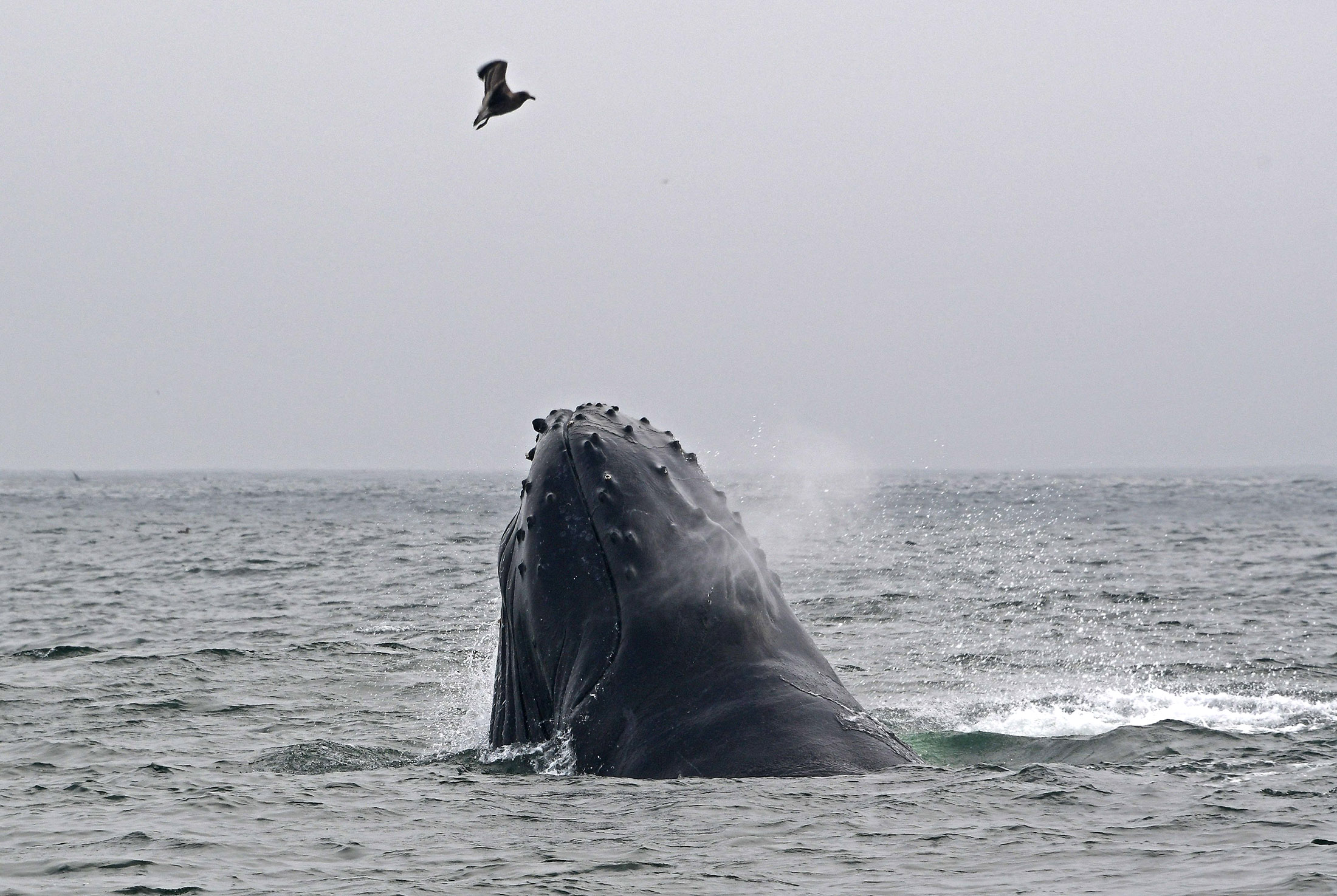
A humpback whale in the more natural habitat of Monterey Bay, California.
Photographer: Eva Hambach/AFP/Getty Images
It’s a tempting allegory for the political fate of Merz, the conservative leader who just can’t seem to catch a break. After less than a year in office, his ratings are abysmal: 80% of respondents in a recent poll said they disapproved of his performance. The reasons are not hard to fathom. His pledge to re-energize the economy has yet to yield results, and measures announced last week to soften the blow of surging oil prices were denounced as too timid or unworkable. They included a 1,000 euro ($1,180) giveaway to workers to be voluntarily paid by employers. Even the federal government said it wouldn’t participate. Merz’s coalition is reduced to infighting reminiscent of the administration it replaced, helping the far-right Alternative for Germany (AfD) lead in polls. Underlining the sense of drift, voters see Berlin as having little influence over the Iran war. Merz, like other leaders, can do little about US President Donald Trump’s global mayhem. It’s a point in common with leftist Lula. In the Baltic, a rescue operation is under way to take the whale back out to the North Sea. But the chances of success remain slim. For Merz, state elections in the former Communist east in September threaten to bring the AfD to regional power for the first time. Time is running short to get his floundering chancellorship back on track. — Alan Crawford 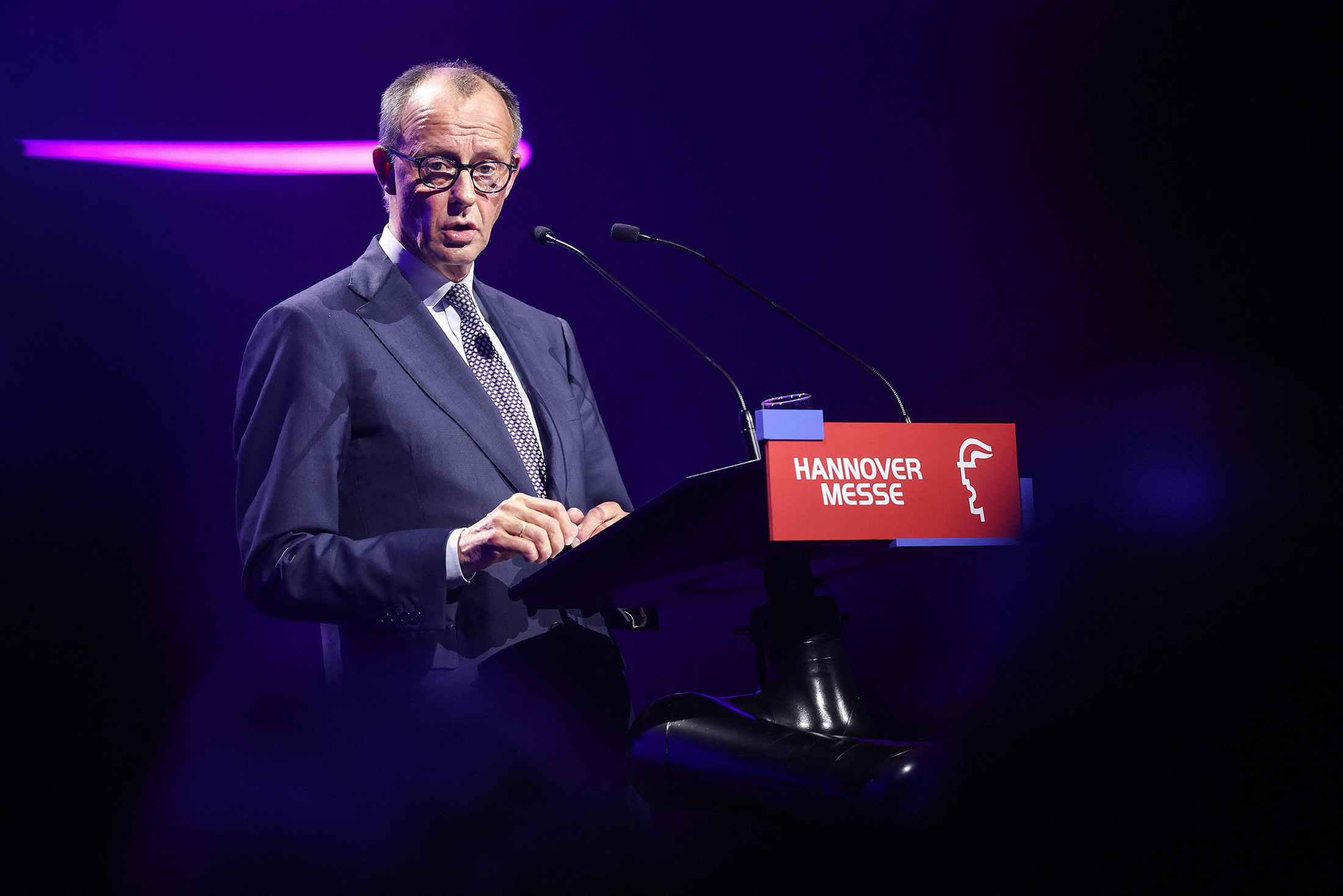
Merz opening the Hanover trade fair yesterday.
Photographer: Ronny Hartmann/AFP/Getty Images
Global Must ReadsTrump and Iranian officials offered disparate views on the next stage of the war, casting uncertainty over whether the two sides would meet for peace talks with a ceasefire set to expire in the coming days. Tensions ratcheted up over the weekend as the US Navy fired upon and boarded an Iranian-flagged cargo ship in the Gulf of Oman even as the US president said he sees chances for a deal this week. Tehran hasn’t decided whether to send diplomats to Pakistan for negotiations. China sent a group of warships to hold drills in the western Pacific Ocean as Japan for the first time joins massive exercises with the US and the Philippines, highlighting tensions between Beijing and Tokyo. The training plan illustrates how China’s navy is becoming more active west of the so-called First Island Chain, which extends from Japan, through Taiwan and down to the Philippines. 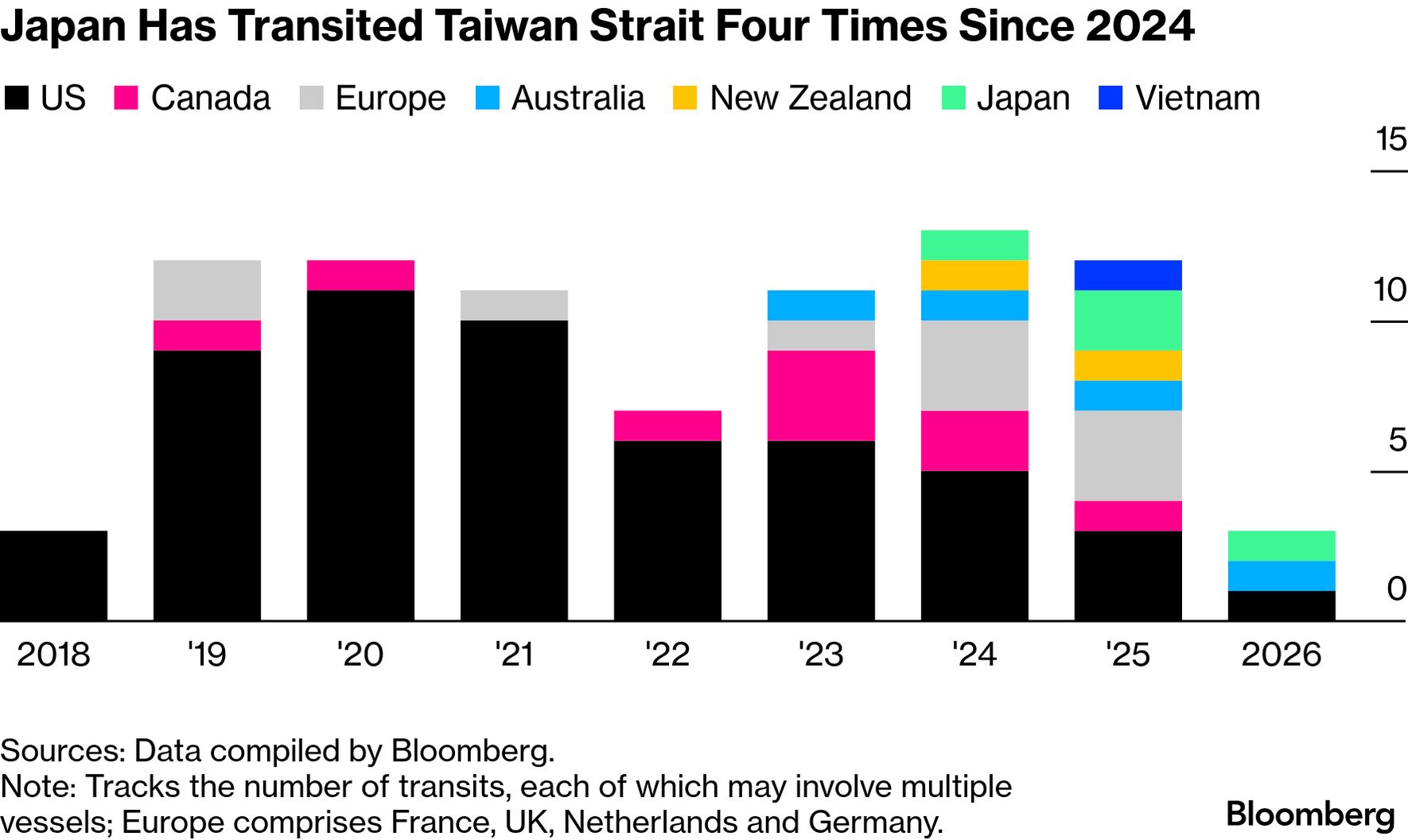
Keir Starmer will make a statement to the House of Commons today to address a fresh dispute over Peter Mandelson’s security vetting clearance as US ambassador, while calls grow for the UK prime minister to resign. Starmer is expected to set out a detailed summary of events surrounding Mandelson’s failed vetting, a day before the senior official he fired over the appointment speaks to lawmakers to give his side. Artificial intelligence is increasingly expected to lower Britain’s level of employment during the next decade, with around half of business leaders polled by Accenture now saying they see net job losses across the UK economy. Entry-level roles are predicted to bear the brunt, threatening to exacerbate the government’s already pressing problem of youth unemployment. Former President Rumen Radev, who opposes sanctions on Russia and military aid for Ukraine, scored Bulgaria’s most overwhelming victory this century in yesterday’s general election and pledged to turn the page on years of political gridlock and corruption. Meanwhile, Hungary’s outgoing government signaled it’s ready to unblock the European Union’s €90 billion loan to Ukraine as soon as this week. 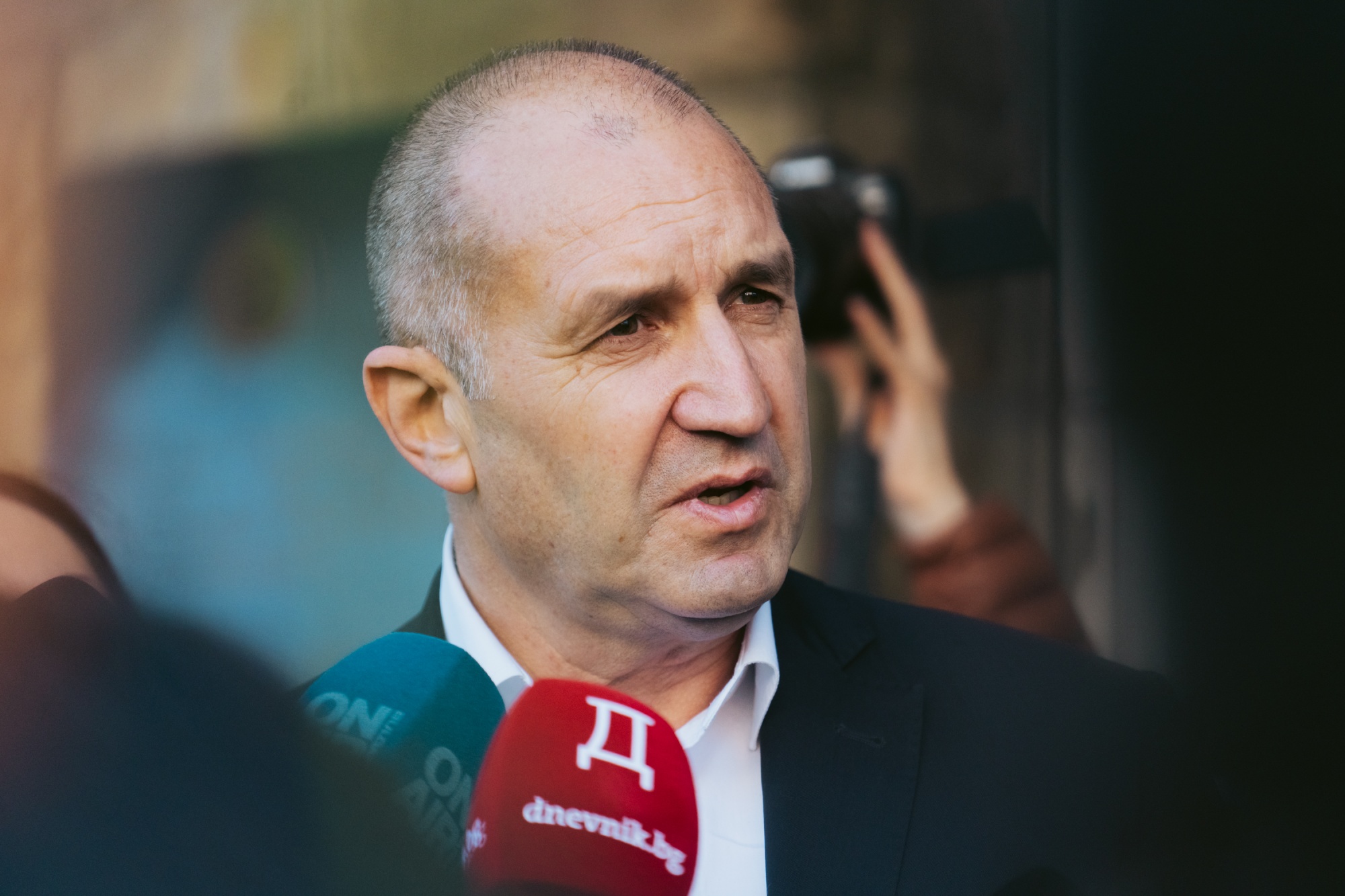
Radev in Sofia yesterday.
Photographer: Michaela Vatcheva/Bloomberg
North Korea said it tested a variant of its flagship ballistic missile in a launch hailed by leader Kim Jong Un with “great satisfaction.” Indian Prime Minister Narendra Modi attacked the opposition after his proposed amendments to expand Parliament were struck down. Romania is bracing for fresh political turbulence with Prime Minister Ilie Bolojan poised to defy calls to resign in a showdown that may lead to a collapse of the ruling alliance. Spanish Prime Minister Pedro Sánchez hosted about a dozen heads of state and government from nations including Mexico, South Africa and Colombia at the weekend as he seeks to build an alliance to counter Trump. Sign up for the Washington Edition newsletter for news from the US capital and watch Balance of Power at 1 and 5 p.m. ET weekdays on Bloomberg Television. Chart of the Day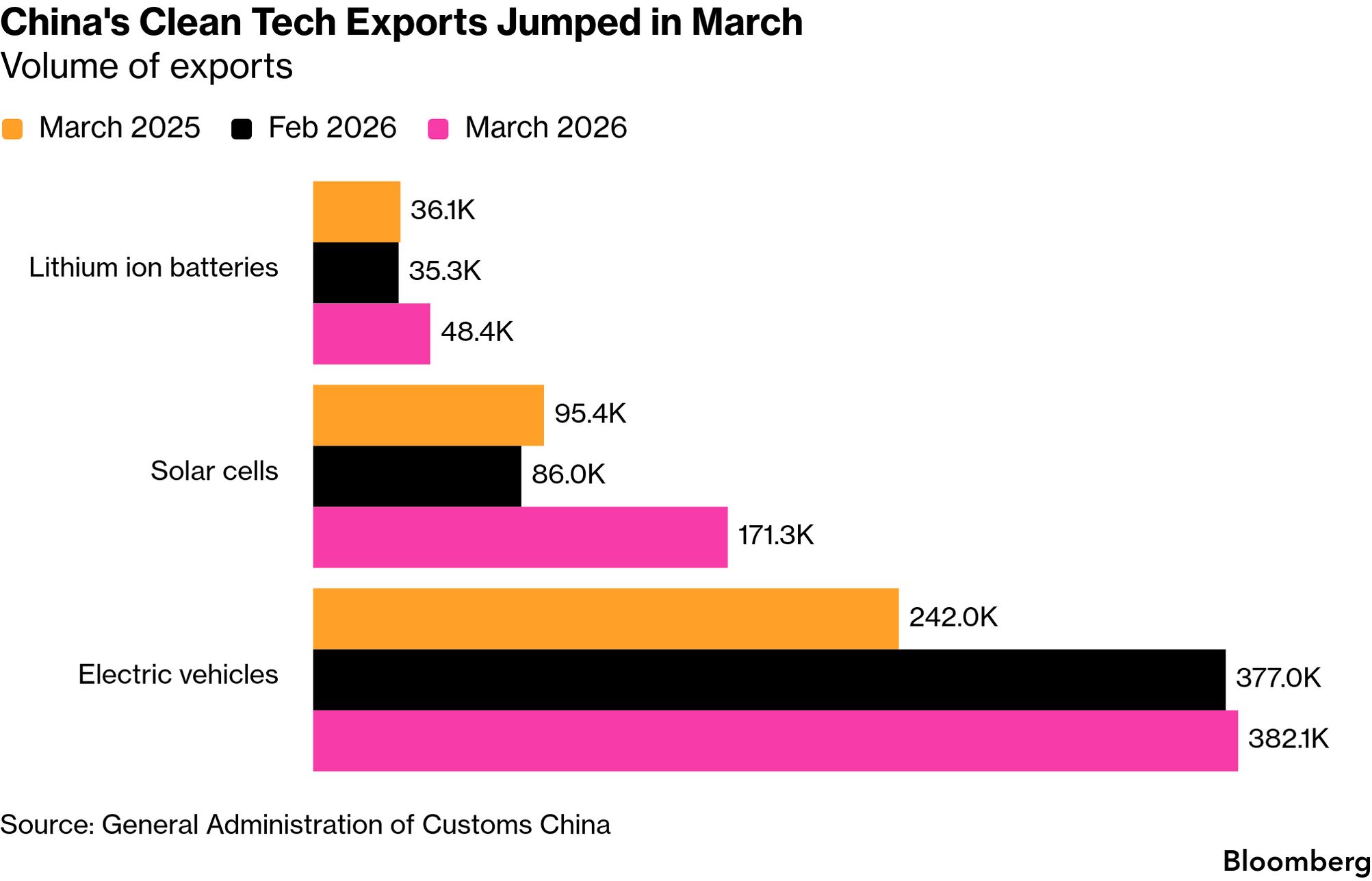
China’s exports of clean technology climbed in March, reinforcing signs that manufacturers are benefiting from rising global demand for alternative energy sources. The data gives the first comprehensive picture since the war in Iran heightened the issue of energy security for countries reliant on fuel imports. The most notable growth came in shipments of lithium-ion batteries and electric vehicles. And FinallyAsia’s emerging economies have borne the brunt of the global energy crisis stemming from the war in the Gulf. Few, though, have felt the pain more acutely than Pakistan. When Mohammad Rizwan leaves for his office in the city of Lahore each morning, there is no power. When he gets home, the electricity is still out. His kitchen gets piped gas only two hours a day, forcing the family to rely on expensive cylinders. The outages have, he says, “taken us back to the stone age.” 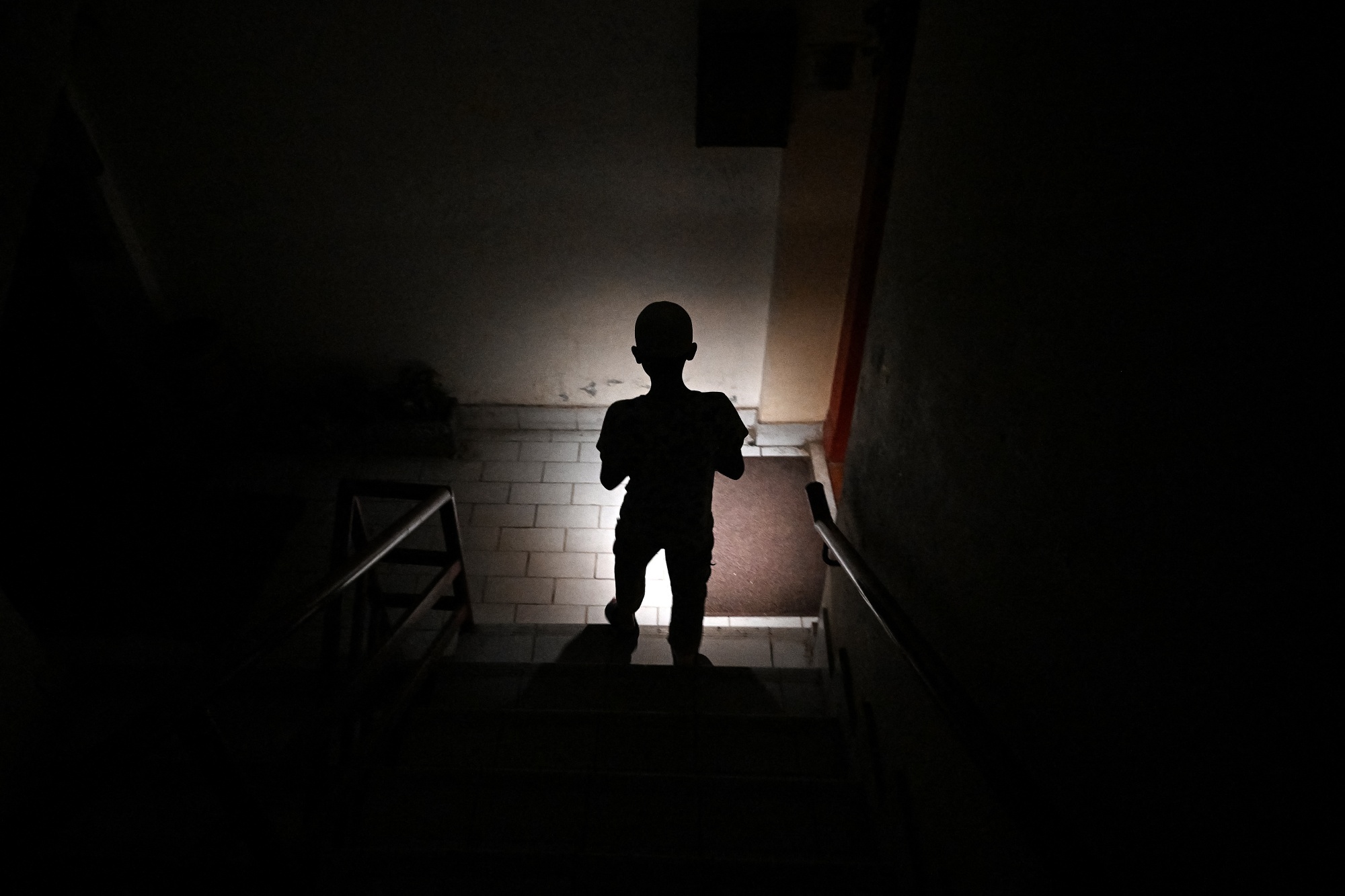
A child uses a mobile phone torch during a power outage in Islamabad on April 15.
Photographer: Aamir Qureshi/AFP/Getty Images
Thanks to everyone who answered Friday’s quiz question, and congratulations to Gaby Sivzattian, who was first identify the head of the Catholic Church as having challenged the Trump administration’s argument that God is on the US’s side in the war on Iran. More from Bloomberg
We’re improving your newsletter experience and we’d love your feedback. If something looks off, help us by reporting it here. Follow Us
You received this message because you are subscribed to Bloomberg’s Balance of Power newsletter. If a friend forwarded you this message, sign up here to get it in your inbox.
|




Washington Edition: How Iran is defying Trump
How the regime is sustaining its fight against two stronger foes ...