| Read in browser | ||||||||||||||

Today’s newsletter looks at two of the world’s biggest players. First, we examine Tesla’s energy storage business, which was flying high until last quarter. Then, we take you to China, where CATL has announced charging speeds as quick as six minutes, and will put cheap, powerful batteries that don’t use lithium into cars hitting the road this year. A reminder that at 10:30 am EDT, our reporters will be answering your questions about how the Iran War will impact the energy transition. Send in your question in advance to [email protected]. Tesla’s wobbleBy Michelle Ma and Kara Carlson For years, one aspect of Tesla Inc.’s business has been growing outside the public eye, its revenue soaring even as the company’s electric car sales sputtered and stalled. Now analysts wonder if Tesla’s quiet money-maker faces problems of its own. The company’s Megapack batteries — powerful enough to keep factories, data centers or the power grid itself humming — have given Tesla a badly needed boost. Much smaller Powerwall units, meanwhile, supply individual homes. As the company spends heavily to ramp up autonomous taxis, and its Optimus robots seem forever a year away, batteries have become an important source of cash. 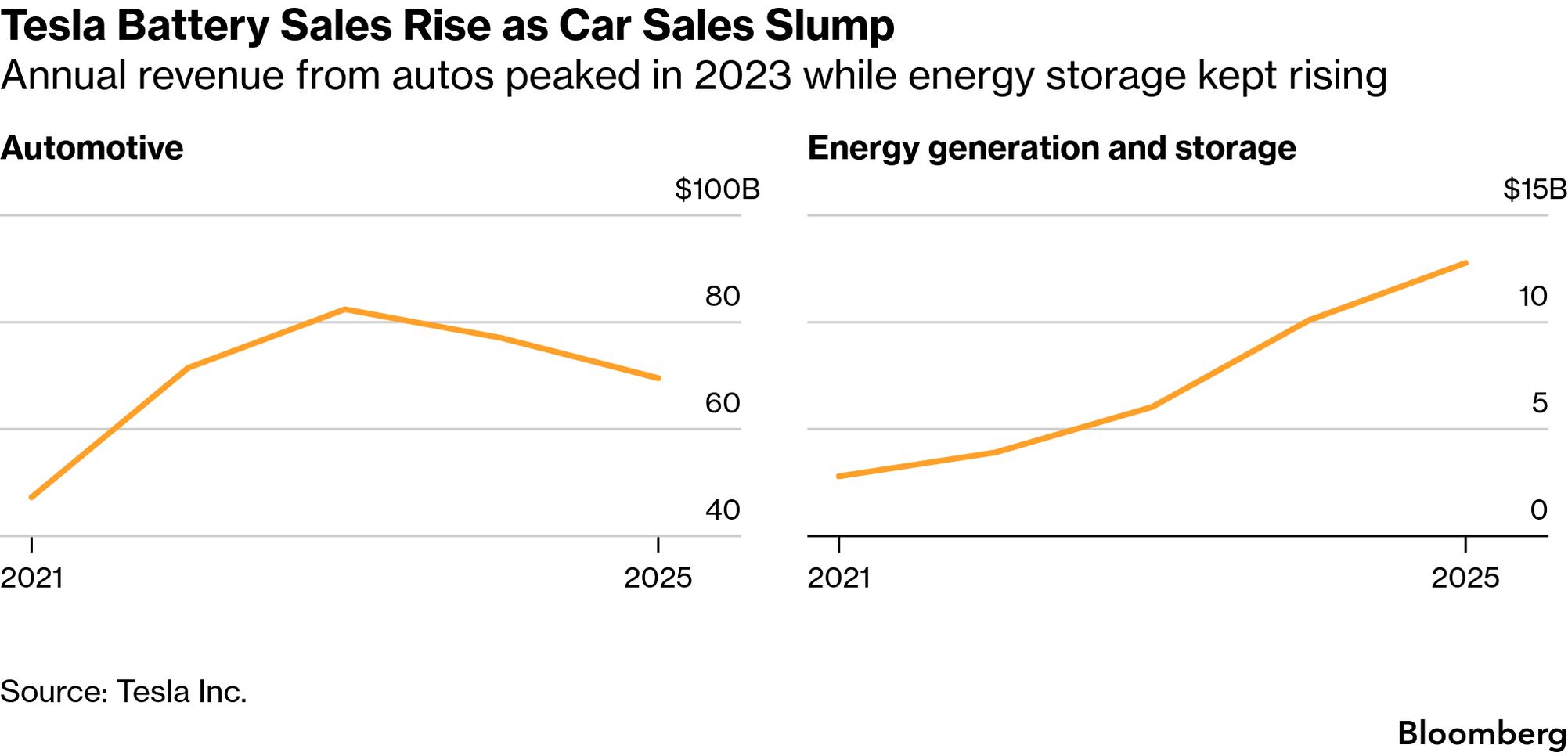
Read more
CATL’s sodium breakthroughBy Annie Lee With a thick outdoor jacket to protect against -30C (-22F) temperatures and bitter winds, Calvin Quek joined car and technology enthusiasts huddled by a test track on the outskirts of a picturesque ski region in Inner Mongolia. They watched Chongqing Changan Automobile Co. electric SUVs and a sleek battery-powered coupe effortlessly navigate icy roads and steep snow-dusted slopes at the facility in Yakeshi, northeastern China. Yet for the crowd at the February demonstration, the most impressive factor was out of view. 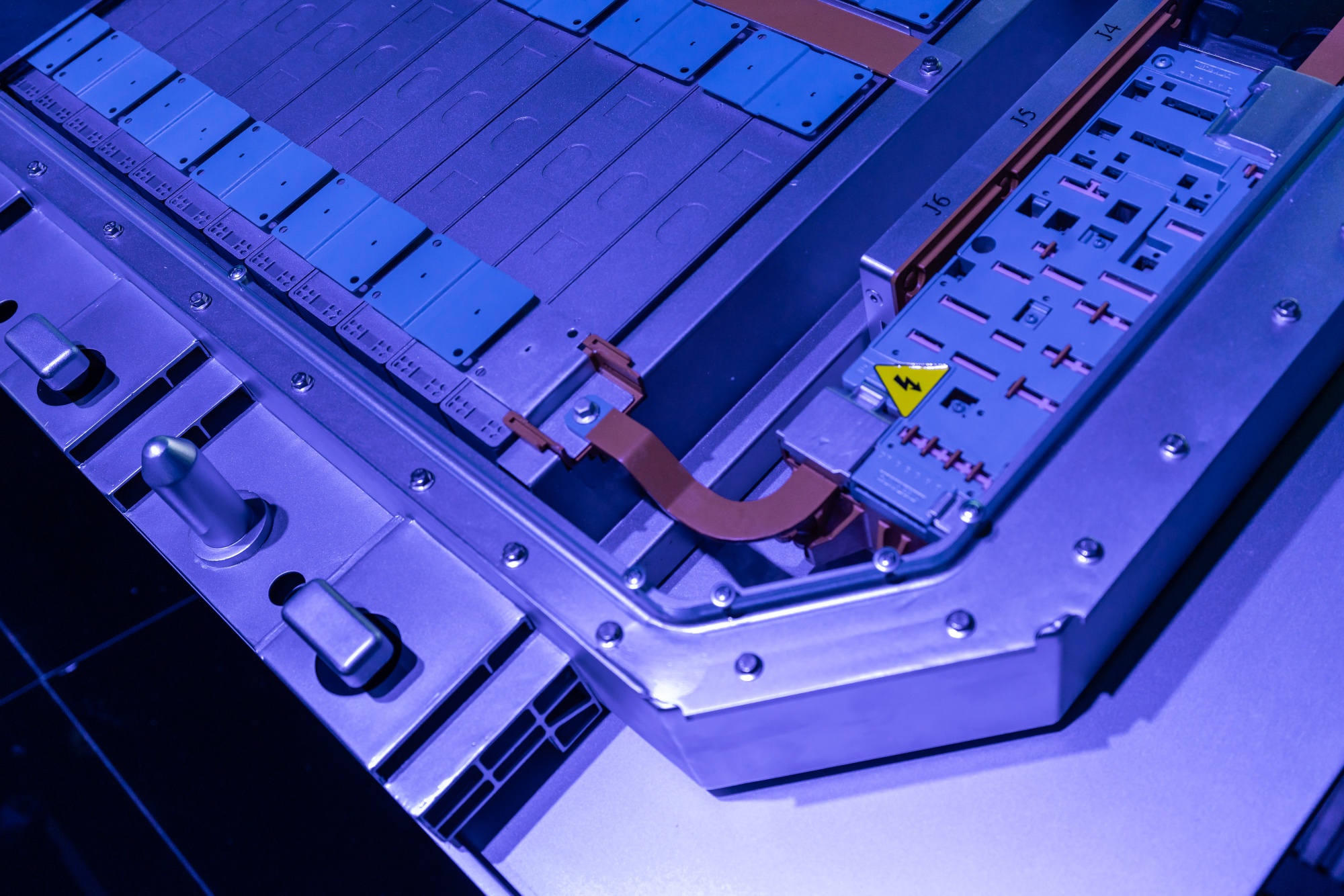
A CATL sodium-ion battery model.
Photographer: Qilai Shen/Bloomberg
Batteries powering the vehicles used sodium as their key raw material component, rather than lithium — the metal that’s become synonymous with electrified transportation and the storage of renewable energy. The tests were a showcase for one of the world’s first mass-production passenger EVs fitted with the alternative technology — an innovation that’s long promised to deliver safer and low-cost rechargeable cells. By the middle of this year, Changan — a state-owned Chinese automaker and a local partner of Ford Motor Co. — will begin sales of models fitted with sodium-ion technology from Contemporary Amperex Technology Co. Ltd., the world’s dominant EV battery manufacturer. Innovations by CATL have increased the energy density of sodium batteries by 50%, overcome engineering challenges, and brought the products to a “milestone stage,” Chief Technology Officer Gao Huan told reporters Tuesday at an event in Beijing. “The era of sodium and lithium shining together has arrived” and the supplier will begin mass-production in the fourth quarter of this year, he said. 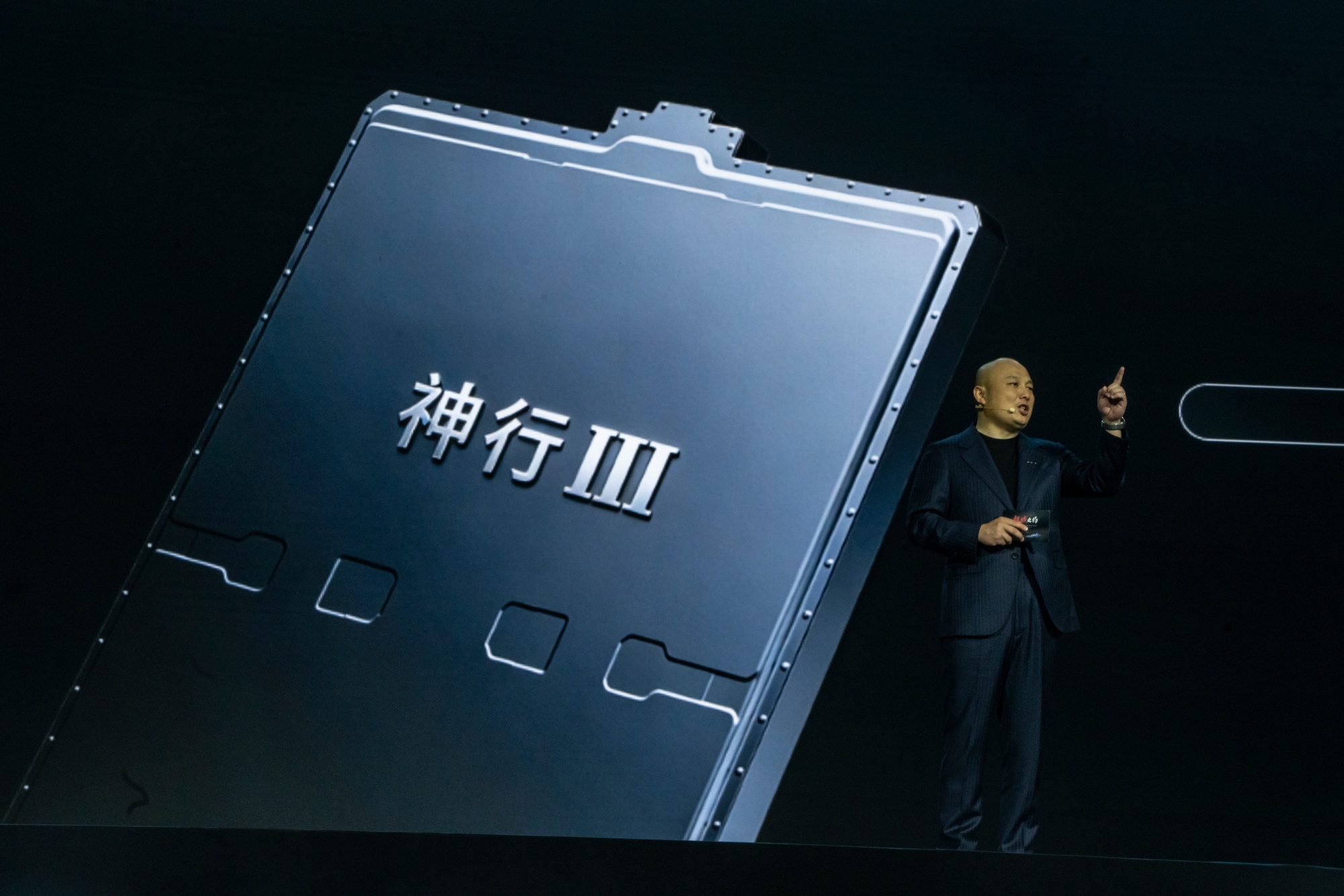
CATL’s Chief Technology Officer Gao Huan.
Photographer: Qilai Shen/Bloomberg
Yet even with recent advances, the sodium sector faces challenges. The technology isn’t likely to compete against lithium on energy density — and therefore on battery performance — and may only achieve cost parity with traditional options around 2030, according to CRU Group, a consultancy. Continued improvement in lithium iron phosphate, or LFP, batteries “poses a moving target for sodium-ion,” said Sam Adham, head of battery materials at CRU.
Read more
Live at 10:30am EDT
Photographer: Angel Garcia/Bloomberg
Clean tech stocks have outpaced the S&P 500 since last year, and public and private investments in green startups have also surged, hitting $22.5 billion in the first quarter of this year. All that was before the Iran war sent oil prices spiraling. Where are investors and companies betting their money amid Trump administration policies and stalled global climate progress? Join Bloomberg journalists Akshat Rathi, Alastair Marsh, Kyle Stock and Olivia Rudgard to discuss what the rest of 2026 might hold for publicly traded green companies, clean energy, and the adoption of clean tech from EVs to batteries. While anyone can listen, Bloomberg digital subscribers and Terminal clients have the exclusive opportunity to ask our team questions to answer in real-time. This conversation will be recorded and made available. Watch: The battery race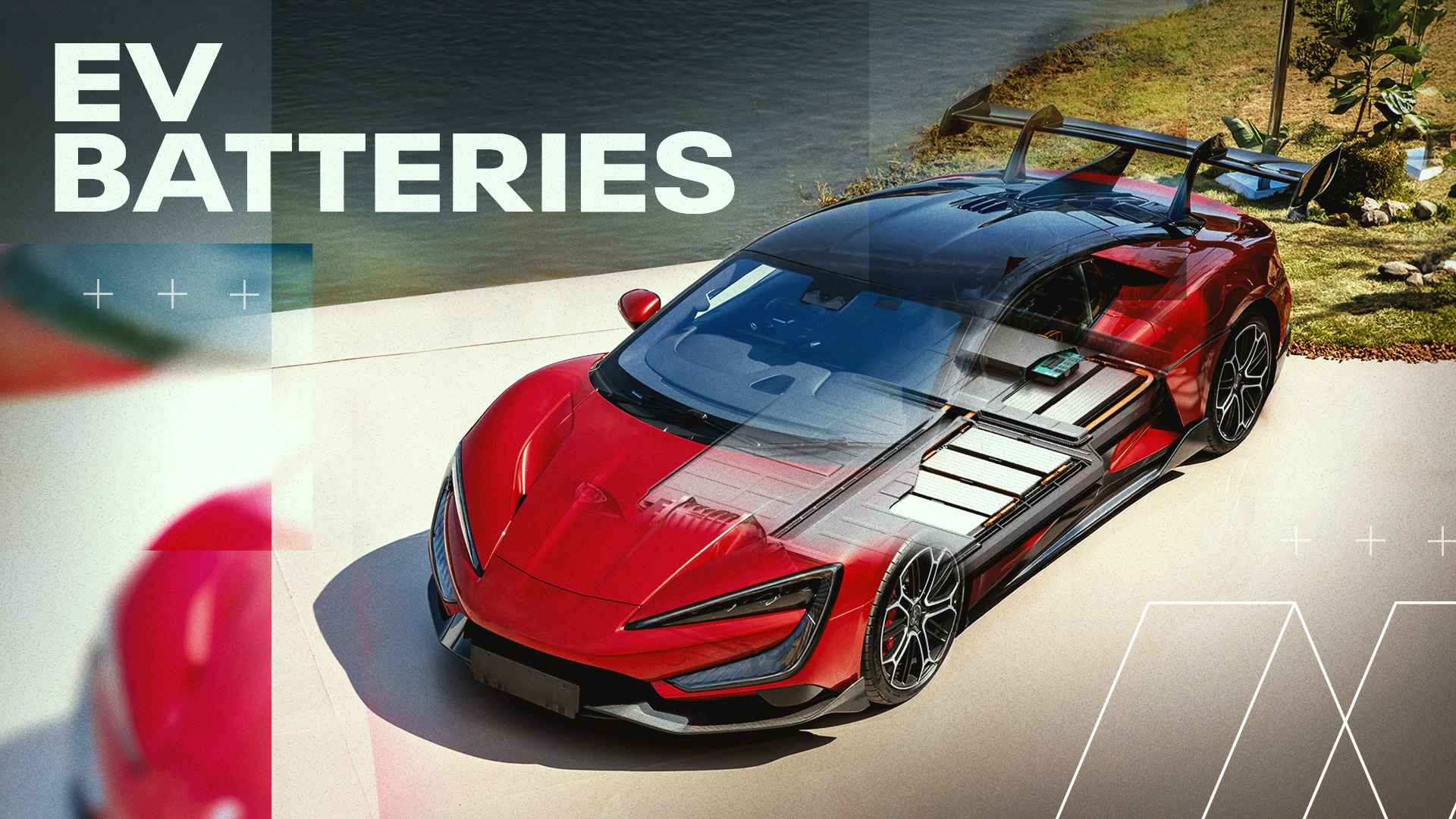 
Takeaways From Day One at BNEF New YorkBy Will Wade, Josh Saul, Lauren Rosenthal and Michelle Ma 
Toby Rice, right, and Karen Fang at the BNEF Summit New York on Tuesday.
Electricity is the new oil AI needs a lot more power, and fast Earlier in the day, Toby Rice, the chief executive officer of natural gas producer EQT Corp., also said as much as 100 gigawatts of additional power may be required for artificial intelligence computing facilities and other large power users. “That’s the energy equivalent of adding over 20 New York Cities,” Rice said. “And we need to add it quickly.” Flexible data centers get priority
Read more
Road to COP31By John Ainger Turkey will use its role as host of this year’s COP31 climate summit to boost clean energy adoption, according to the event’s incoming president, with the Iran war showing how important it is to diversify away from fossil fuels. 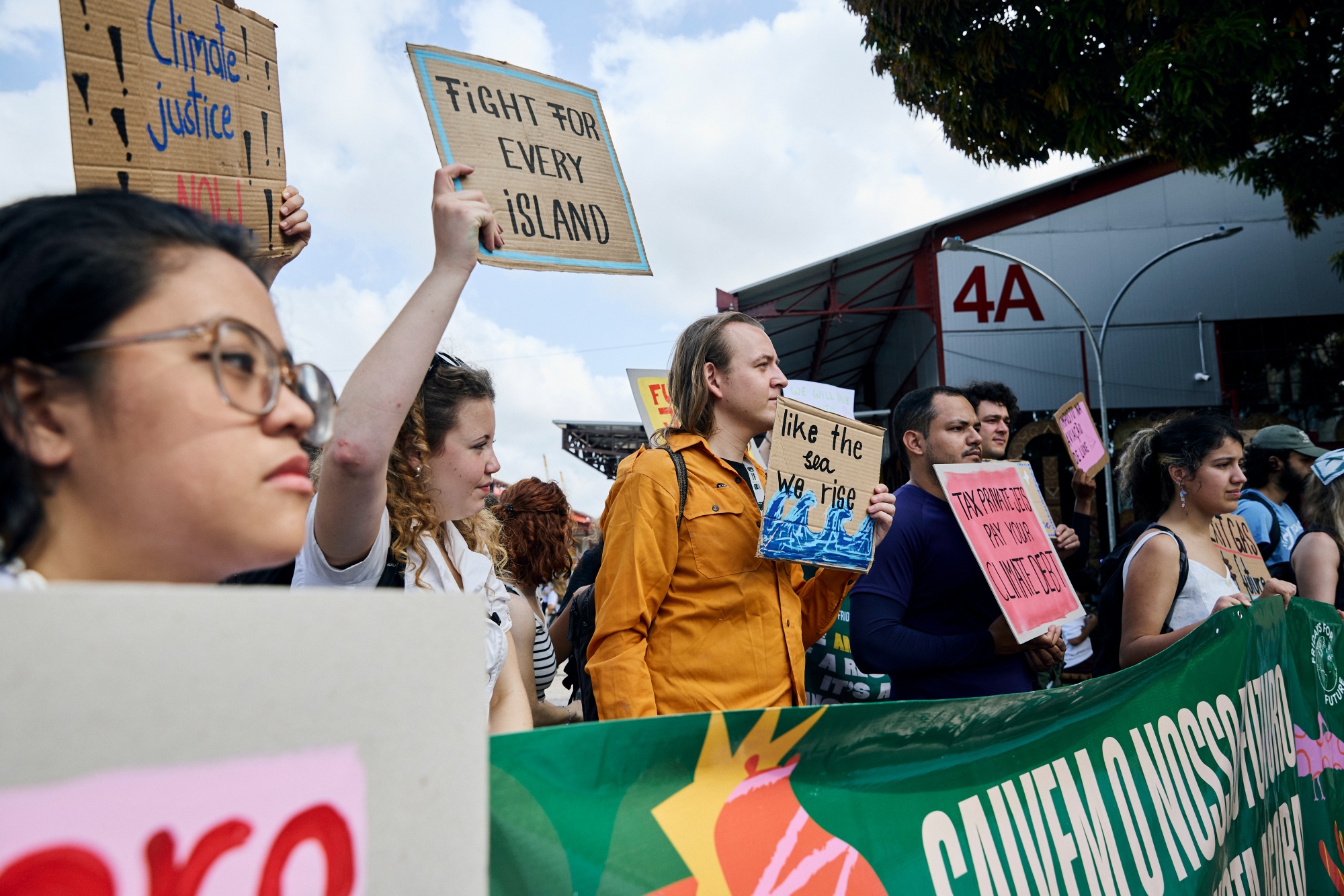
Demonstrators at COP30.
Photographer: Marina Calderon/Bloomberg
Murat Kurum, Turkey’s environment minister who will oversee the talks, said in an interview that even countries whose economies rely on producing fossil fuels will need to shift to greener technologies. That includes nations in the Middle East that have historically blocked efforts to move away from emissions-heavy energy sources, he said. “The world must transition away from fossil fuels, for sure,” Kurum told Bloomberg on the sidelines of the Petersberg Climate Dialogue in Berlin. “The recent crises have indeed showed us how crucial to have energy diversity. You should not be dependent on one single energy source.”
Read more
More from GreenMore from Bloomberg
Explore all Bloomberg newsletters. We’re improving your newsletter experience and we’d love your feedback. If something looks off, help us fine-tune your experience by reporting it here. Follow Us
You received this message because you are subscribed to Bloomberg’s Green Daily newsletter. If a friend forwarded you this message, sign up here to get it in your inbox.
|





The future of green design grows in West Africa
Also this week: What robot cars are actually promising, and Morocco debuts a rocket-shaped tower. ...