| Read in browser | ||||||||||||||
 This is Washington Edition, the newsletter about money, power and politics in the nation's capital. Today, senior domestic policy reporter Ted Mann looks at the return of tariffs. Sign up here. Email our editors here. New RegimeIf anyone still had doubts about Donald Trump's devotion to tariffs – "the most beautiful word," as he's called them– the end of this chaotic week could lay them to rest. One year after he announced his market-shaking "Liberation Day" tariffs and a little more than a month after the Supreme Court shot them down, the president is back with a new strategy for levies on select imports. Trump authorized tariffs of 100% or some drug imports made in countries that lack tariff deals with the US by companies that don't have most-favored-nation-pricing agreements with the administration, Bloomberg's Madison Muller, Rachel Cohrs Zhang and Catherine Lucey report. Most major pharmaceutical manufactures already have made deals. The administration also said it's keeping a 50% tariffs on many imported steel, aluminum and copper products but will simplify the existing regime for goods made with only small amounts of the metals. The changes were made after months of lobbying by companies that said they were unfairly hit by previous duties targeting metals imports. 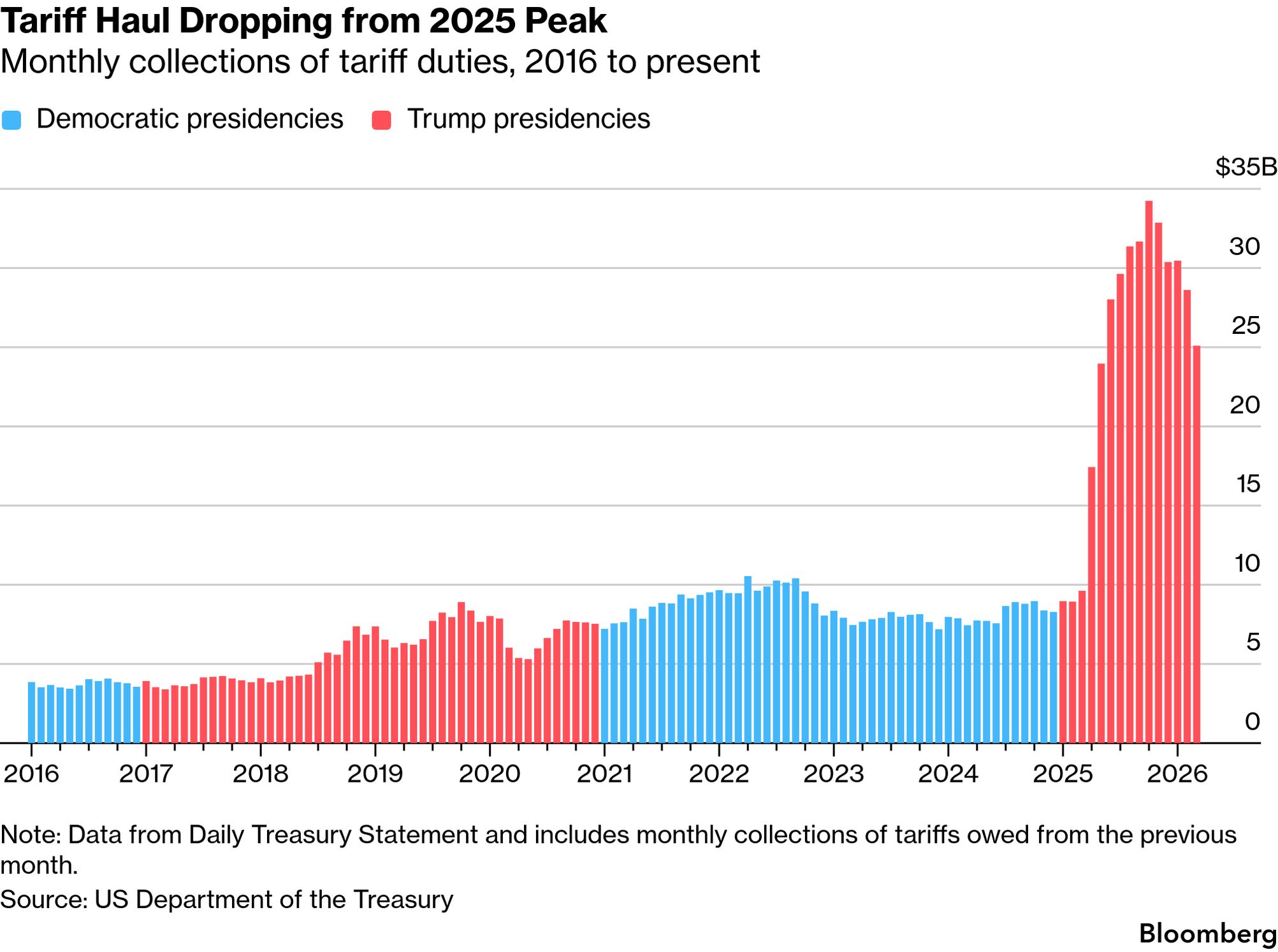 The tweaks to the metal tariffs demonstrate a paradox of Trump's favorite economic tool. The idea sounds simple. We'll charge you to import something rather than make it here. But in practice, imposing the duties can be devilishly complicated. Colleagues Jennifer A. Dlouhy, Joe Deaux and Catherine Lucey highlight a particularly quirky example: discerning what percentage of a package of dental floss is made up of the tiny metal blade that slices the floss. To fix that, the tariff rate will fall to zero if less than 15% of the finished good is made of aluminum or steel. And then there are the complications for importers trying to avoid a sudden jump in price for your product, as Laura Curtis outlines in "A $90 Bottle of Wine Shows Slow-Motion Impact of Trump's Tariffs." The US also is grappling with refunding some $160 billion in levies, plus interest collected under the tariffs ruled illegal by the court. See "How to Get a Tariff Refund: Should a Business Sue, Sell or Wait?" The administration aims to eventually replace the struck-down tariffs with a new regime using a legally tested, though more time-consuming, authorities under the Trade Act. It's a policy that voters don't seem to like. A Pew Research Center poll in February found 60% of Americans disapprove of Trump imposing big tariffs, a view that's remained relatively steady during his presidency. Trump is counting on raising prices on goods from overseas to spur production at home. It's a line of thought that makes trade policy experts and economists wince. But it appears to be as close as it gets to a core belief for the president. — Ted Mann Today's Top NewsTrump ousted Attorney General Pam Bondi, ending a tumultuous tenure as the nation's top law enforcement official after some high-profile stumbles in her efforts to carry out the president's agenda. The US president issued fresh threats on Iranian infrastructure in a bid to pressure Tehran in negotiations, a day after his pledge to continue the war sparked global market and economic turmoil. Trump said he'd sign an order to pay all Department of Homeland Security employees, leading House Republicans to shelve talk of cutting short their Easter recess to try to end DHS's record-long partial shutdown. The share of Americans planning vacations abroad or road trips closer to home fell in March as war in the Middle East rattles international routes and pushes up the cost of fuel. 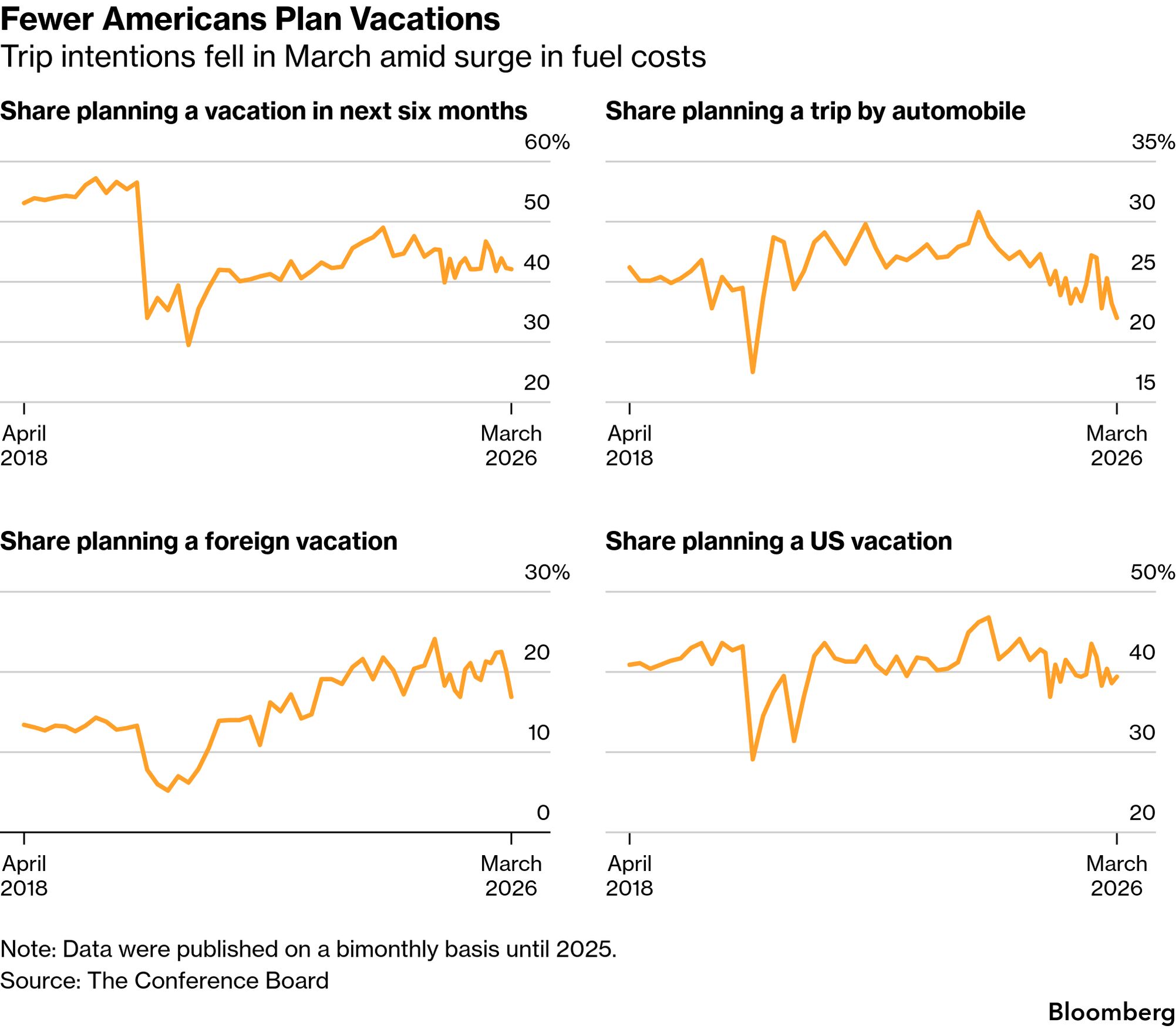 Lawmakers unveiled legislation to crack down on exports of chipmaking tools to China, especially from allies including the Netherlands and Japan, in an effort to help the US further constrain Beijing's technology ambitions. A federal agency issued final approval for the White House ballroom project Thursday — despite a court order days earlier that halted construction, and tens of thousands of public comments critical of the project. The Commodity Futures Trading Commission sued Illinois officials over state efforts to regulate prediction markets, as the multi-billion-dollar industry continues to surge despite some efforts to limit the exchanges. Democratic leaders in Congress sued to block Trump from prohibiting mail-in voting for anyone not on a pre-approved list of citizens to be compiled by the Department of Homeland Security. The US trade deficit widened in February by 4.9% from the prior month to $57.3 billion, which was less than forecast as both imports and exports increased. Initial applications for unemployment benefits in the US fell last week to one of the lowest levels in the last two years, suggesting layoffs remain low. Must Reads From Bloomberg GovernmentFlorida Governor Ron DeSantis signed a sweeping elections law that tracks closely with Republican proposals stalled in Washington, offering an early look at how GOP-led states are advancing policies aligned with Trump's agenda. Lawmakers in Washington are still pushing to enact a crypto regulatory structure this year, even as sharp disagreements between the crypto industry and banks stall negotiations. Watch & ListenToday on Bloomberg Television's Balance of Power early edition at 1 p.m., host Joe Mathieu interviewed Rebecca Grant, vice president for defense programs at the Lexington Institute, about what to expect next in the war with Iran and the president's address last night. 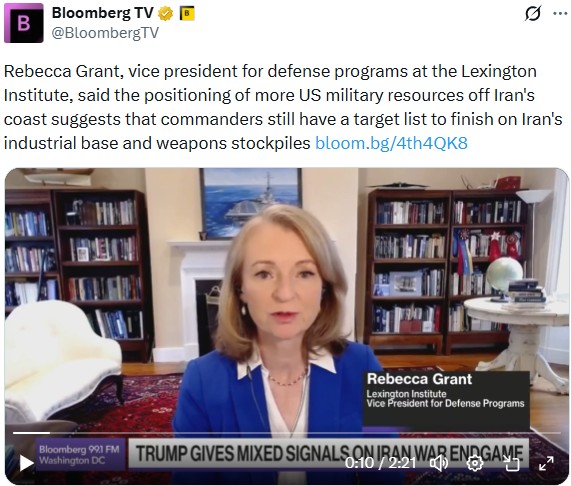 On the program at 5 p.m., he talks with Emily Harding, vice president of the Security & Defense Department at the Center for Strategic and International Studies about the geopolitical implications of the war. On the Trumponomics podcast, host Stephanie Flanders is joined by Bloomberg's Fran Wang, who has spent almost two decades in China covering fiscal policy and economic planning, and Adam Farrar, Bloomberg Economics' senior geoeconomics analyst for Asia-Pacific, to examine how the US-Israel war with Iran provides China with a chance to both widen its global diplomatic sway and study the military tactics of its chief rival in real-time. Listen on Apple Podcasts, Spotify or wherever you get your podcasts.  Chart of the Day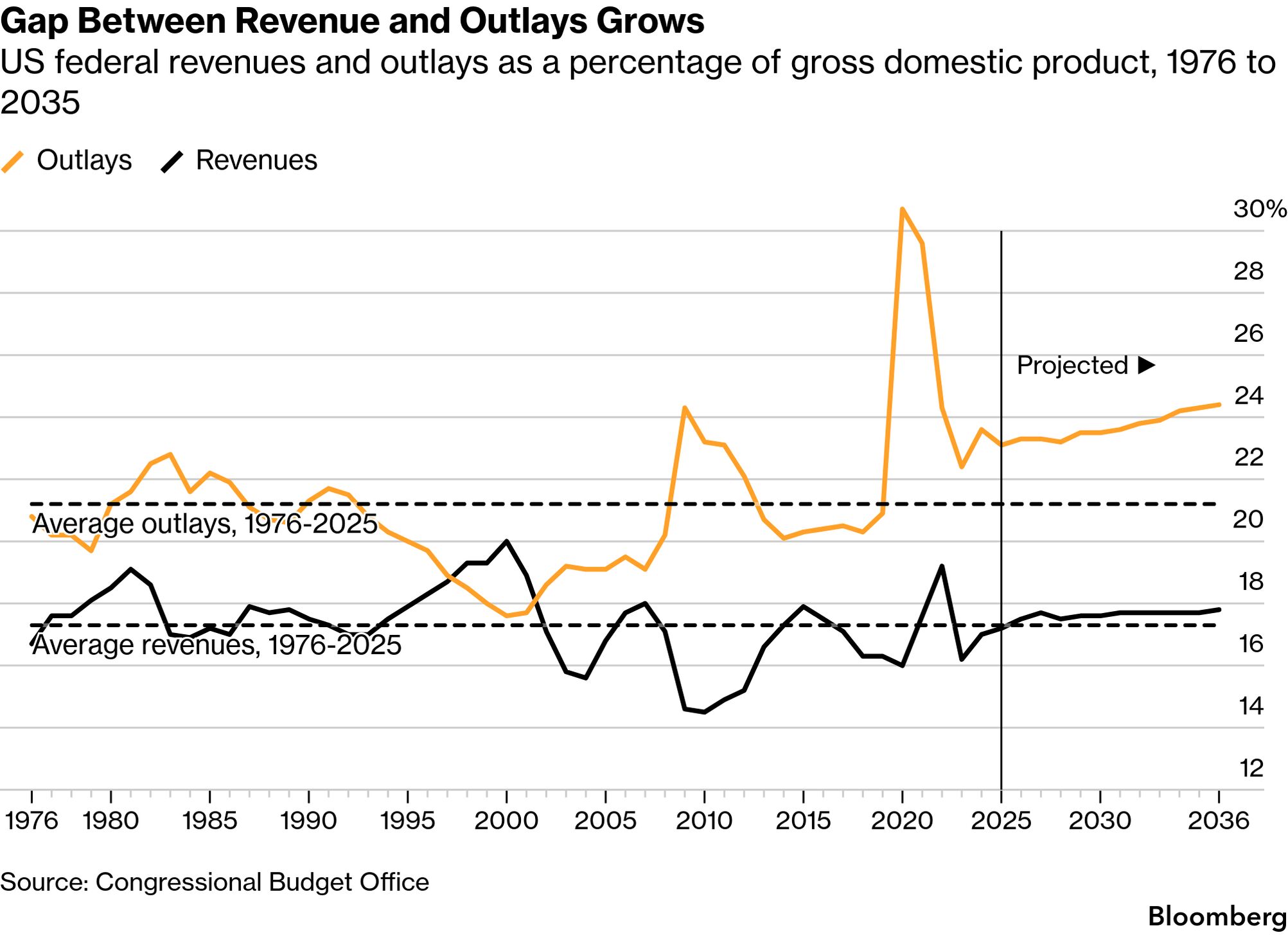 Trump is set to release a fiscal year 2027 budget plan tomorrow that will frame his party's midterm election message around a massive defense buildup, partially paid for by cuts to domestic agencies. But it's not expected to address entitlement programs like Social Security and Medicare that are mostly responsible for driving up future spending levels. As a result, the 2027 proposal isn't expected to include 10-year deficit projections, meaning the White House won't offer a full picture of how it projects the president's policies adding to future deficits. Without any changes to current law, the Congressional Budget Office estimates that budget deficits will grow to $3 trillion by 2036 — by which point the national debt will be 120% of its gross domestic product. — Gregory Korte What's NextThe jobs report for March will be released tomorrow. The White House is set to release its budget request for fiscal 2027 tomorrow. US stock and bond markets will be closed tomorrow for Good Friday. The NCAA tournament women's Final Four games kick off tomorrow and the men's begin on Saturday. Durable goods order in February will be reported on Tuesday. The Federal Reserve's preferred gauge of inflation for February will be reported April 9. The consumer price index for March will be released April 10. More From BloombergLike Washington Edition? Check out these newsletters:
Explore all newsletters at Bloomberg.com. We're improving your newsletter experience and we'd love your feedback. If something looks off, help us fine-tune your experience by reporting it here. Follow us
You received this message because you are subscribed to Bloomberg's Washington Edition newsletter. If a friend forwarded you this message, sign up here to get it in your inbox.
|




Unintended consequences
Trump's speech sends prices to 2008 highs. Read in browser If Donald Trump intended his speech about the Iran war last night to have a reassuring effect on oil markets, Thursday's numbers reflected a distinct lack of success on that front. The 79-year-old president on Wednesday ( and again today ) reiterated his whipsaw social media strategy of threatening continued bombing of Iran—including targeting civilian infrastructure—while saying the war will soon be over. (And like the US m...